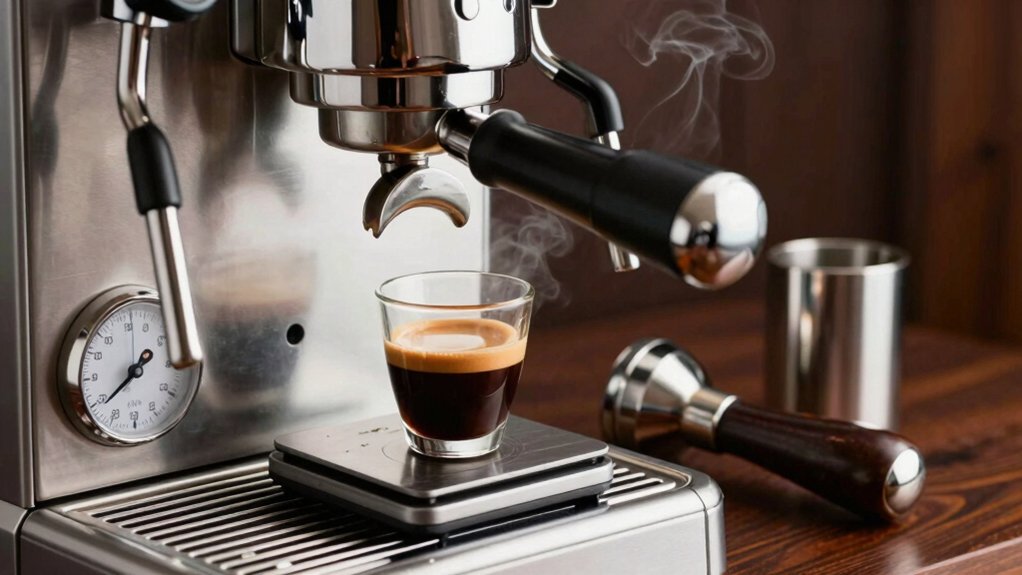
Drop the water temp to about 195 °F and aim for a 22‑second shot to keep bitterness in check. Use a smaller basket with a 14‑gram dose, then grind a bit coarser and tamp slightly lighter to hit that time window without over‑extracting. If the puck looks uneven, switch basket types or adjust grind in small increments. Keep a portable scale handy to log dose, grind, and yield. Continue, and you’ll discover the finer details that perfect your dark‑roast espresso.
Lower Water Temperature for Dark‑Roast Espresso
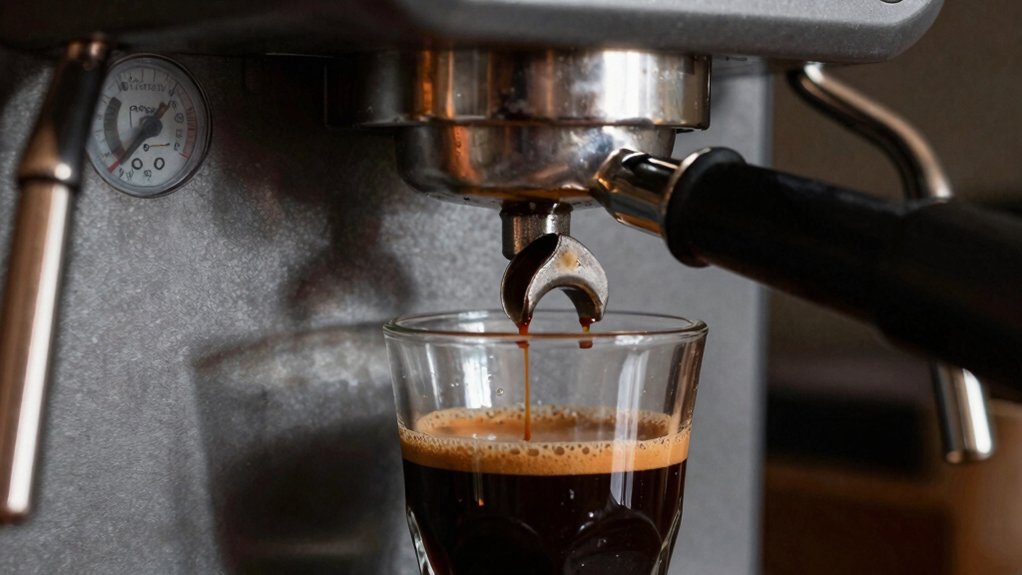
When you drop the brewing temperature to around 195 °F (91 °C) for dark‑roast espresso, you’ll soften the extraction and keep bitterness at bay, aiming for a roughly 22‑second brew. Lower temperature reduces solubility, so the espresso extraction stays within the sweet spot rather than slipping into over‑extraction. You’ll notice brighter chocolate notes and a smoother body, while the typical burnt edge of dark roast recedes. Keep the dose constant—say 18 g in and target about 30 g out—to isolate the effect of the cooler brew temperature. Adjust the grind slightly finer if the shot runs too fast, but avoid major changes; the goal is to let the lower temperature do the heavy lifting, delivering a balanced, chocolate‑forward cup. This approach aligns with how controlled TDS readings and consistent recipe data can help you reproduce results across brews. recipe data
Shorten Shot Time to Keep Bitterness in Check
A shorter shot—about 22 seconds—keeps bitterness in check for dark‑roast espresso by limiting extraction time. You’ll notice the brew stays smoother when you pull a quick shot, especially if you pair it with a lower brewing temperature. Start with a coarser grind size; this slows the flow just enough to hit the 22‑second window without over‑extracting. If the brew still leans bitter, trim the dose or use a smaller basket to keep the yield within a 25‑second cap. Adjust the grind finer only after you’ve locked the shot time, because a finer grind will lengthen extraction and re‑introduce astringent notes. By balancing shot time, grind size, and temperature, you preserve chocolate and molasses flavors while keeping bitterness at bay. Flavor retention can be further supported by choosing a compact, accurate scale to dial in dose and shot time with precision.
Choose the Right Dose and Basket Size
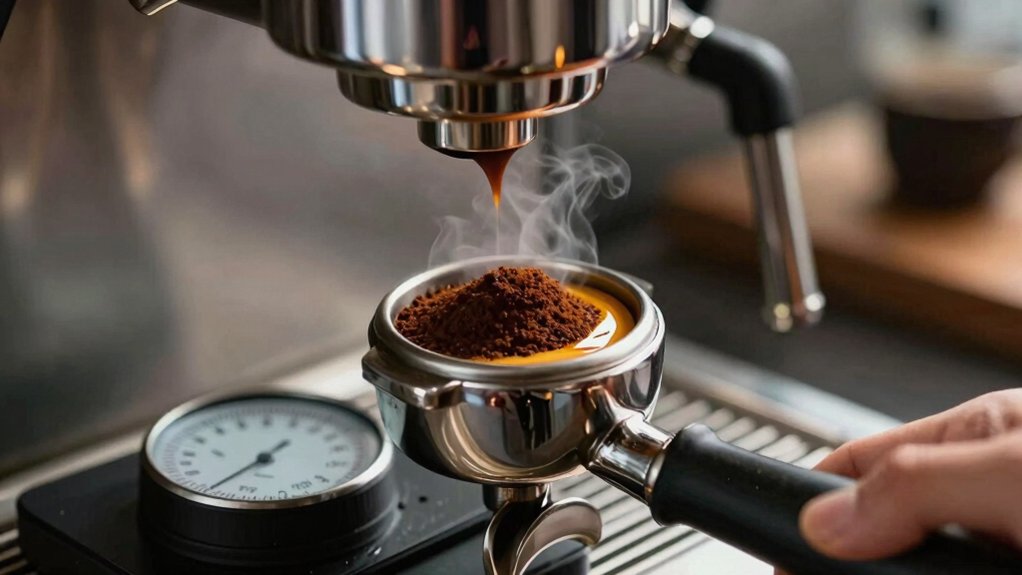
Why settle for a one‑size‑fits‑all dose when a smaller basket can tame bitterness in dark‑roast espresso? You’ll find that a 14 g espresso dose in a compact basket, paired with a 2.5:1 brew ratio, often delivers smoother extraction and less harshness than a 16 g dose in a larger basket. The tighter puck reduces channeling, keeping the water flow even and preventing over‑extraction at the top, which typically spikes bitterness. Regular calibration with a portable scale helps maintain consistent dose accuracy and timing for repeatable results precision measurement.
Fine‑Tune Grind Size and Tamp Pressure for Dark‑Roast Espresso
Choosing a smaller basket and lower dose already set the stage; now you can fine‑tune grind size and tamp pressure to keep a dark‑roast espresso bright and balanced. Start with a coarser grind; it shortens the shot and curbs over‑extraction, keeping bitter notes at bay. If the puck feels too resistant, lighten your tamp pressure by a gram or two—this opens flow channels and prevents channeling. Watch the 22‑second extraction window at 195°F: a slight grind coarsening or a 1‑2‑second reduction can fine‑tune the balance without sacrificing body. If you still taste bitterness, experiment with an even lighter tamp or a marginally finer grind, but stop before the espresso extraction turns syrupy and over‑extracted. Additionally, monitoring the overall motorized consistency of your grinder can help maintain stable grind size distribution for repeatable results grind consistency.
Test, Iterate, and Record Your Dark‑Roast Espresso Recipe
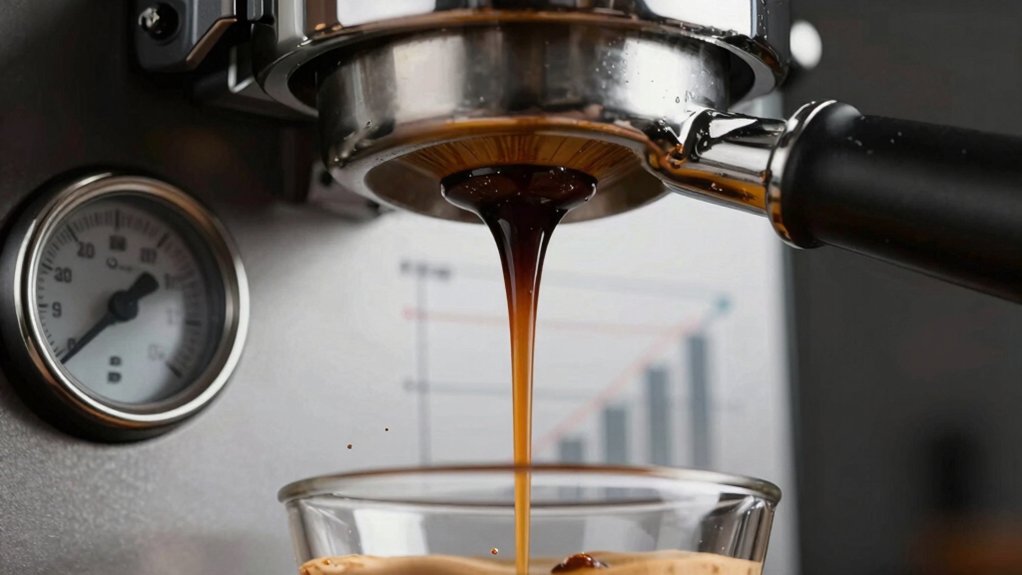
How do you lock in the perfect dark‑roast espresso? Start with a modest dose—14 g in a smaller basket—to keep bitterness low, then pull a shot at ~195°F for about 22 seconds. Record the dose, basket size, grind, temperature, and time in a notebook. If the shot tastes harsh, adjust the grind finer and try a 1:1.5 coffee‑to‑water ratio, keeping the 22‑second window. Switch basket types if the puck looks uneven; a thicker puck often extracts slower, adding bitterness. Taste for chocolate and molasses notes, not sharp acidity. After each trial, log the yield and any flavor shifts. Use those notes to fine‑tune the grind and temperature until the espresso feels smooth, sweet, and consistently repeatable.
Frequently Asked Questions
How Long Do You Extract Espresso Dark Roast?
You should aim for roughly twenty‑two seconds of extraction, give or take a couple seconds. Keep the dose around eighteen to twenty grams, yield thirty to thirty‑three grams, and adjust temperature or grind coarseness if bitterness appears.
What Is the 15-15-15 Coffee Rule?
You follow the 15‑15‑15 rule by dosing 15 g coffee, extracting roughly 15 g liquid, and keeping the initial bloom or contact time around 15 seconds to balance flavor and bitterness.
How to Make Dark Roast Espresso Taste Better?
Start by lowering the brew temperature to around 195 °F, using a coarser grind, and reducing the dose to 14 g in a smaller basket. Aim for a 22‑second shot and a 1:1.5 coffee‑to‑water ratio to highlight chocolate and molasses while cutting bitterness.
What Is the 30 Second Rule for Espresso?
You aim for a 25‑30 second shot, typically pulling 20 g in to about 30 g out. Adjust grind, dose, and temperature so the flow hits that window, balancing flavor and avoiding bitterness.
In Summary
By dialing in lower water temperature, trimming shot time, and matching dose to basket size, you’ll tame the bitterness that often plagues dark‑roast espresso. Fine‑tune grind size and tamp pressure to extract the chocolatey, caramel notes you crave, then keep testing and logging each tweak. Stick to this systematic approach, and you’ll consistently pull a balanced, rich cup that showcases the roast’s depth without the harsh edge.


