
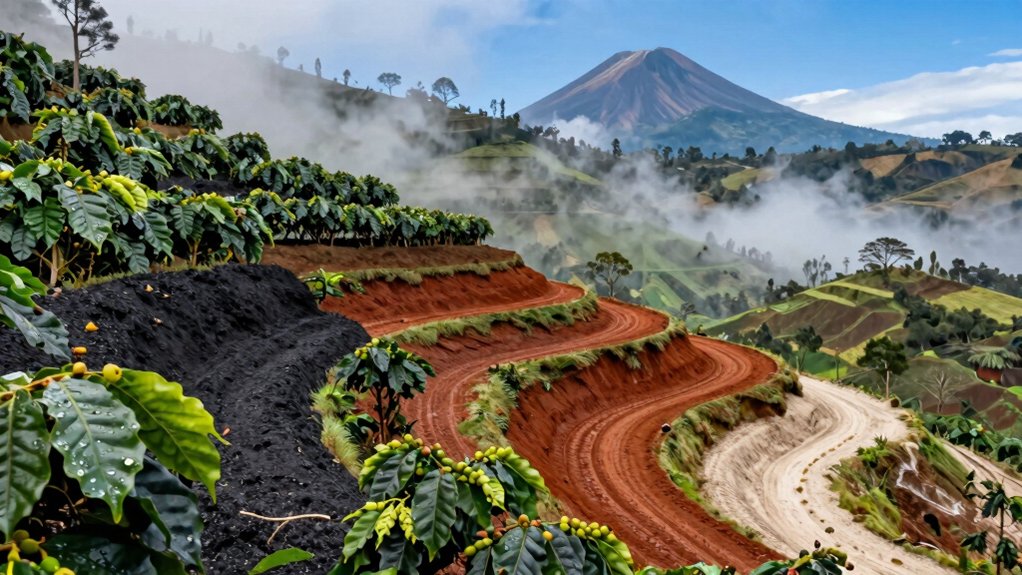
You’ll notice three distinct terroir expressions across Colombia’s Coffee Triangle: the high‑altitude zones (1,200‑2,300 m) on the Andes slopes give washed beans bright citrus and floral notes; the mid‑elevation areas produce a balanced sweet‑fruit acidity with a syrupy honey finish; and the lower slopes yield chocolatey, nutty flavors from natural‑processed beans. Each region’s altitude, slope and micro‑climate shape its signature cup, and the next section shows how genetics and processing amplify those differences.
Colombian Coffee Identity & Global Reputation
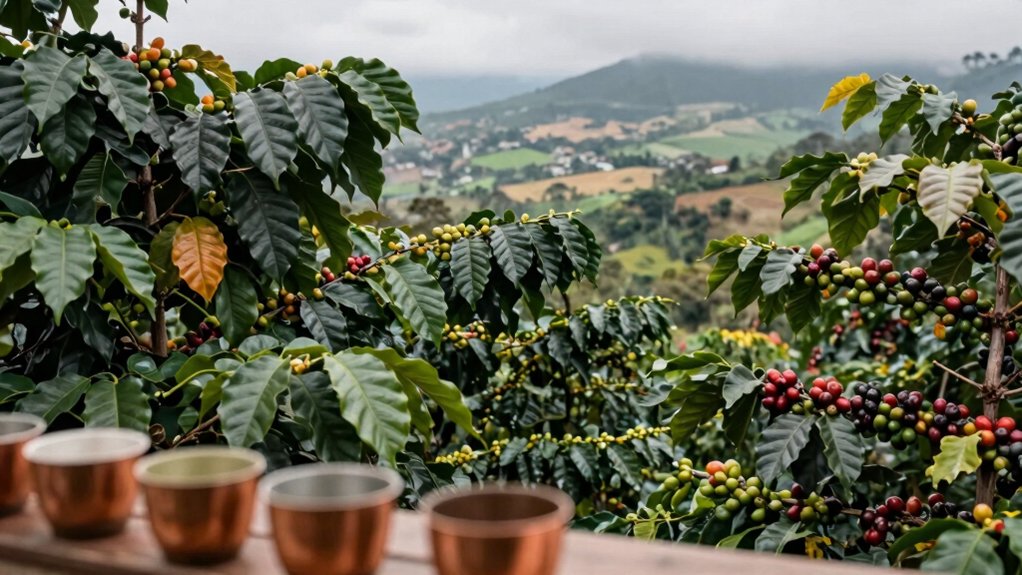
Ever wonder why Colombian coffee feels like a benchmark for quality? You recognize its Colombian coffee identity the when you taste the bright, clean notes of Washed coffee from the Coffee Triangle, where altitude and terroir intersect. The Andes slopes, ranging from 1,200 to 2,300 meters, nurture Arabica beans that carry distinct regional flavor profiles—citrusy and floral at higher elevations, chocolatey and nutty lower down. Honey processing adds syrupy sweetness, while the varied soil across the five zones refines each cup’s character. This blend of altitude, terroir, and processing methods fuels Colombia’s global reputation, positioning its beans as a reference point for excellence in the world coffee market. Food-grade plastic
Varieties, Genetics & Processing Methods of Colombian Coffee
Colombian coffee’s famed brightness and clean acidity stem not only from its altitude but also from the specific Arabica varieties and processing choices that growers employ. You’ll find Colombian Arabica thriving between 1,200–2,300 m, where volcanic soils and cool nights forge altitude‑driven flavor. Bourbon mutations—Pink, Red, Yellow—add fruit, chocolate, or tropical‑honey notes, while Castilla varieties bring robustness to lower slopes. Washed processing preserves crisp acidity, Natural processing yields fuller body and sweet fruitiness, and Honey processing balances both with a syrupy texture. Each method interacts with the terroir, enhancing the distinct character of each farm. By selecting the right variety and processing path, you shape the cup’s final profile while honoring Colombia’s rich genetic heritage. Double-wall classification and preservation of delicate flavors play a part in how these profiles are experienced across different farm cultures and processing techniques.
Flavor Profile, Grading & Market Position of Colombian Coffee
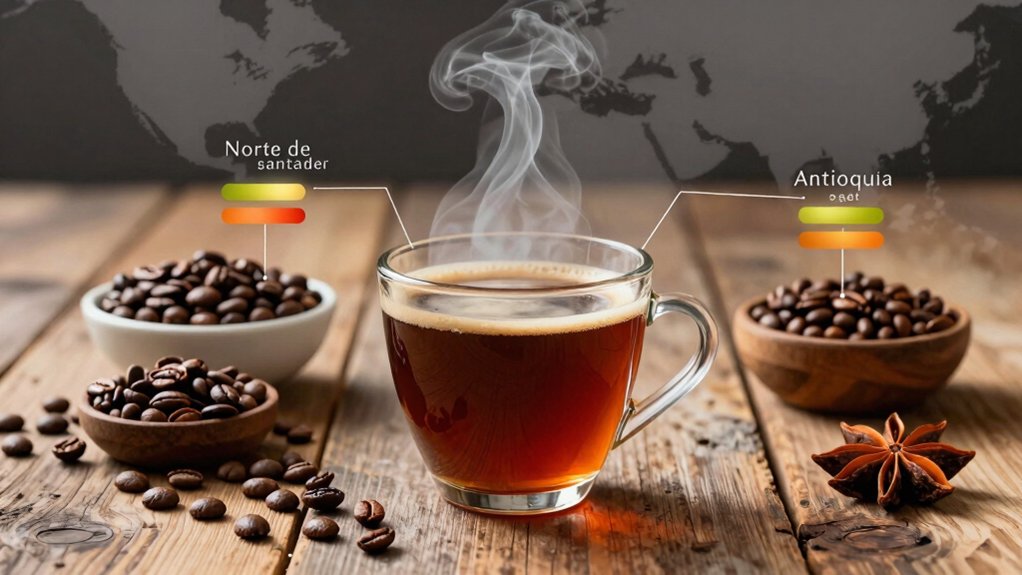
What makes Colombian coffee stand out is its consistently bright acidity, clean mouthfeel, and nuanced fruit‑to‑chocolate notes that shift with altitude, soil, and processing. You’ll notice that Colombian terroir drives flavor profiles across the Coffee Triangle, where volcanic soils and altitude/altitude effect create crisp citrus, red‑fruit, and caramel tones. Washed processing preserves that clarity, while the high‑altitude zones amplify floral sweetness. The ETL-certified safety and quality standards in packaging also help ensure consistent performance and flavor delivery across markets. The FNC’s Excelso grading guarantees ≤12.5 % moisture, 24 defects per 500 g, and a 50 % screen‑15 pass, positioning the beans as premium, reliable supply in global markets.
Variety impact—Typica, Bourbon, Caturra, Castillo—adds subtle body and acidity differences, reinforcing regional differences and strengthening Colombia’s market position.
Frequently Asked Questions
Which Region in Colombia Has the Best Coffee?
You’ll find the top‑quality beans in Nariño and Cauca; their high altitudes, volcanic soils, and natural processing give you bright acidity, vivid fruit, and complex, memorable flavors.
What Is the 15-15-15 Coffee Rule?
You’ll find the 15‑15‑15 rule means at least half of exported Colombian Arabica stays on No. 15 screen or larger, 95% passes No. 14, under 5% falls between No. 12 and No. 14, moisture stays ≤12.5%, and defects stay under 24 per 500 g.
What Coffee Is Good for Gastritis?
You should choose low‑acid, lightly roasted beans—preferably a mild, washed Colombian from high‑altitude regions—because they’re gentler on your stomach and won’t aggravate gastritis symptoms.
What Is Terroir Mapped Coffee?
You map coffee terroir by linking each bean’s flavor, acidity, and body to the specific altitude, soil type, microclimate, and processing method of its origin, revealing how geography shapes taste.
In Summary
You’ve seen how Colombia’s three coffee regions each bring a distinct terroir—altitude, soil, and climate—that shapes the beans’ genetics, processing, and flavor. From the bright acidity of the high‑altitude Andes to the balanced body of the mid‑elevation valleys, each region carves its own niche in the global market. Understanding these differences lets you appreciate the nuance behind every cup and choose the profile that best fits your palate.


