
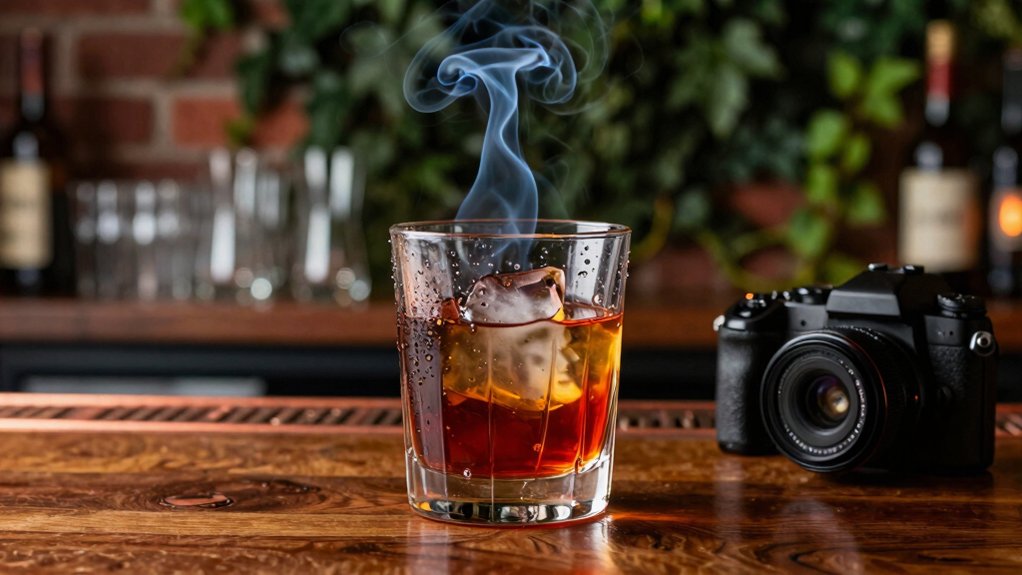
You get a smoky Manhattan when volatile you infuse the bourbon or rye with wood‑derived smoke—whether you torch‑ignite cherry, oak, or pecan chips, trap a plume under the glass, or use smoked ice. The smoke’s charred, savory compounds mingle with the sweet vermouth and bitters, deepening the whiskey’s vanilla, caramel, and spice notes while adding a lingering, sultry aroma. The right wood choice and brief exposure keep the flavor balanced, and if you keep going you’ll discover the full technique and garnish tricks.
Why a Manhattan Is Perfect for Smoke
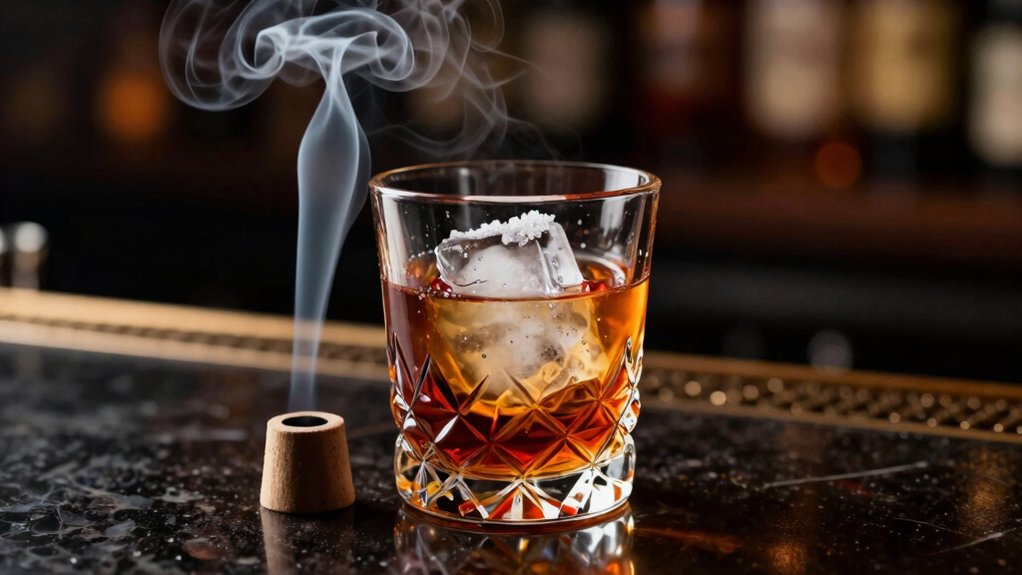
Why does a Manhattan crave smoke? You’ll find that the smoke complements whiskey by adding wood‑derived notes from the bourbon barrel, deepening the core flavors with a savory, charred edge. Aromatic smoke lifts the entire sensory experience, bringing a sultry scent that lingers and meshes with the sweet vermouth and bitters. As you sip, the smoke carries volatile aroma compounds, making the bouquet more pronounced and memorable. In practice, pairing woods like oak, cherry, or pecan mirrors the barrel aging and cherry garnish, reinforcing the flavor profile without overwhelming it. The dramatic presentation builds anticipation, turning each glass into a theatrical moment that feels sublimely enhanced compared to a standard Manhattan, proving why smoked cocktails belong in this classic. wood-derived notes
Choosing Wood That Complements a Smoked Manhattan
Which wood should you pick to give your Manhattan a smoky edge without masking its bourbon backbone? Start with cherry chips if you love the vermouth’s ruby hue and cherry garnish; they add a subtle fruit‑smoke that mirrors the drink’s sweetness.
Choose cherry chips for a subtle fruit‑smoke that enhances the Manhattan’s sweet vermouth and bourbon backbone.
Oak delivers a bold, char‑rich plume that amplifies bourbon’s vanilla and caramel notes, while pecan offers a nutty, medium‑weight smoke that sits comfortably between the two.
Apple wood, being lighter, creates a gentle, fruit‑forward aroma that won’t overwhelm.
Load your smoke lid or chip tray with a modest amount, then briefly expose the glass to the plume before sealing it with smoked ice.
The chilled smoke‑infused ice keeps the flavor balanced and the bourbon backbone front‑and‑center.
DIY Smoke Method Without a Gun
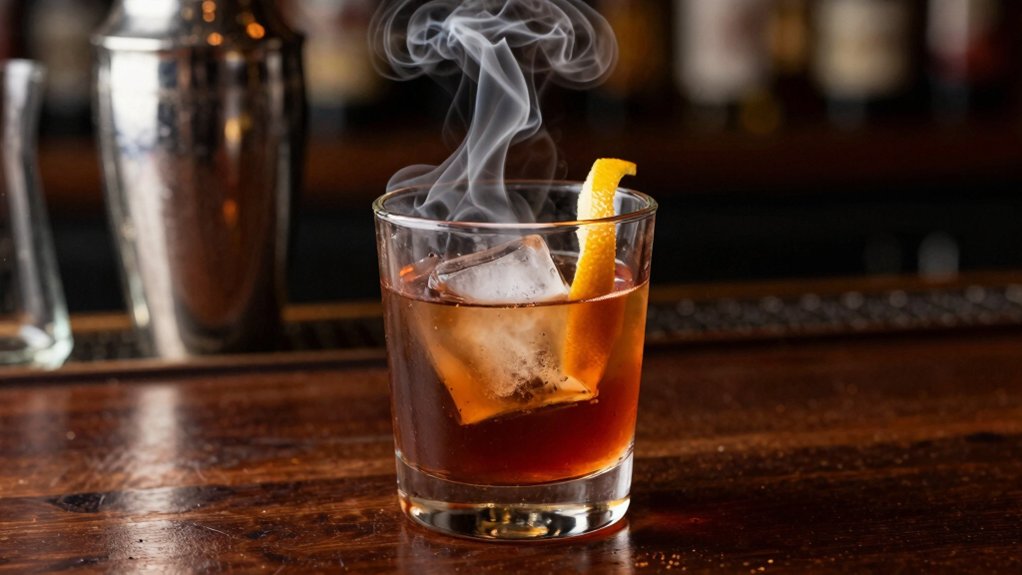
Ever wondered how to give your Manhattan a smoky veil without a pricey gun? Grab a small metal plate, scatter a handful of cherry wood chips or oak pellets, and ignite them with a kitchen torch. As the embers glow, place a coupe over the plate, trapping the fragrant smoke. While the smoke curls, mix bourbon, sweet vermouth, and bitters in a shaker, then chill the blend. When the drink is ready, pour it into the smoke‑filled glass, letting the lingering smoked aroma infuse each sip. Swirl gently to capture the final whiff, then garnish with a cherry or a smoked citrus peel for visual flair. The result is a dramatically scented Manhattan that impresses without expensive gear. Additionally, ensure you have a stable setup with anti-tip considerations for safe practice anti-tip safety.
Making Smoked Ice for Lasting Aroma
You’ll start by infusing water with a gentle smoke at low heat, letting the aroma soak in without boiling it. Choose a wood like maple, hickory, or oak for a rich, complementary flavor that transfers to the ice. This process can be enhanced by using a dedicated heated step or warmer to maintain a steady smoke concentration during infusion self-heating mug to ensure consistent aroma throughout.
Low‑Infused Water Technique
Ever wonder how a Manhattan can keep its smoky whisper long after the first sip? You can achieve that with the low‑infused water technique, which creates smoked ice that releases aroma slowly as it melts. Start by filling a foil pan with water and placing it on a grill or smoker set to 200‑250 °F. Add a handful of wood chips—maple, hickory, or oak—so the smoke stays indirect, avoiding direct flame. Let the water absorb the smoke for 60‑90 minutes, then pour the infused liquid into ice trays and freeze. The resulting cubes carry a subtle, lingering smoke that outlasts regular ice, keeping your Manhattan’s flavor profile rich and consistent from the first to the last sip. smoke-infused water can also be a flexible base for experimenting with different drying times and wood combinations to tailor aromatic intensity.
Low‑Heat Indirect Smoking
The low‑heat indirect smoking method takes the smoked‑water foundation and turns it into solid cubes that release aroma gradually as they melt. You set a grill or smoker to a steady 200–250 °F, lay a foil pan of water in it, and add maple, hickory, or oak chips for 60–90 minutes. The gentle heat infuses the water without cooking it, preserving delicate smoke compounds. This approach echoes the concept of flavor layering found in premium sugar cube applications, where precise control over texture and aroma enhances the final drink Demerara cane sugar and other high‑end cube varieties.
Flavor‑Rich Wood Selections
Which wood best amplifies a Manhattan’s sweet‑bourn and herbaceous vermouth? You’ll find that maple, hickory, and oak each lend a distinct character to smoked ice, letting the bourbon’s caramel notes mingle with vermouth’s botanicals. By smoking water at 200–250 °F for 60–90 minutes, you infuse the liquid with wood‑derived aromas that survive freezing and melt slowly in the glass. The resulting yellow‑tinted cubes release subtle smoke as they chill the cocktail, keeping the aroma alive without drowning the whiskey’s profile.
- Maple – bright, sweet smoke that mirrors bourbon’s vanilla edge.
- Hickory – robust, earthy notes that deepen the vermouth’s herbal bite.
- Oak – classic, woody undertone that grounds the whole drink.
A practical tip is to choose wood types that align with the spirit’s flavor profile and the cocktail’s balance smoked ice selection to ensure the smoke accents rather than overpower the drink.
Selecting the Right Bourbon or Rye Base
Wondering which spirit will let smoke shine without drowning the Manhattan’s balance? Your Bourbon/rye choice sets the backbone for that smoky dance. Pick a budget‑friendly bourbon like Russell’s Reserve 6/10 Year or Four Roses Small Batch—both sit in the $25–$45 range and deliver caramel, vanilla, and a gentle spice that hugs the smoke. If you crave peppery contrast, lean toward an aged or high‑rye bourbon; its bold spice lifts the oak without masking it. For a drier, spicier profile, swap bourbon for rye, which stands up to smoke and keeps the cocktail from turning overly sweet. Skip premium, single‑bottle “special occasion” bourbons—they’ll dominate the vermouth and mute the nuanced smokiness you’re after. Puck Capacity
Sweet Vermouth, Bitters, and Balance Tips
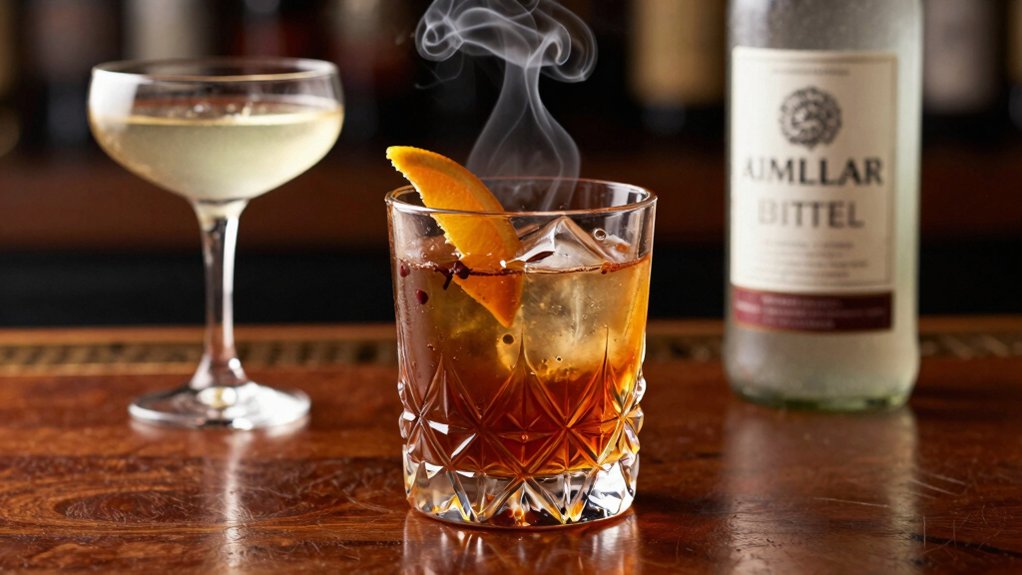
You’ll notice that a silky sweet vermouth can soften the smoke while still letting its caramel‑spice character shine. Bitters add a floral or herbal edge that tightens the aroma, preventing the drink from feeling flat.
Keep the bourbon or rye to vermouth ratio in check, stir gently, and you’ll preserve the smoky balance without overwhelming the palate.
Sweet Vermouth Harmony
Ever wonder why a Manhattan feels smoother when the sweet vermouth takes center stage? You’ll notice its caramelized sweetness softening the smoke, while a higher vermouth‑to‑whiskey ratio balances bitterness and acidity. The vermouth’s vanilla, spice, and citrus oils mingle with the wood‑derived notes, creating a rounded finish that lingers on the nose. Stirring for 20‑30 seconds chills the mix and integrates the flavors, letting the smoke‑present aroma shine.
- Use a richer, full‑bodied sweet vermouth for deeper caramel notes.
- Adjust the vermouth proportion to taste, keeping it higher than dry vermouth.
- Stir briskly for 20‑30 seconds to achieve a silky, well‑integrated cocktail.
Bitters Balance Techniques
When the sweet vermouth takes center stage, the next step is to fine‑tune the bitters that frame the smoke. You’ll want 2–3 dashes of Angostura or another aromatic bitter; this amount sharpens the whiskey’s core while reinforcing the smoky aroma.
Adjust the vermouth or bitters to tilt the drink toward sweeter, drier, or more aromatic profiles, but keep the classic 2 oz whiskey to 1 oz vermouth ratio as a baseline.
Use premium, refrigerated vermouth to preserve its caramel‑fruit sweetness and avoid rancidity that could clash with the smoke.
Stir gently for 20–30 seconds to limit dilution, letting the bitters and vermouth maintain a tight smoke balance that showcases every nuance.
Full Smoked Manhattan Recipe Step‑by‑Step
How does a Smoked Manhattan achieve that unmistakable, wood‑kissed depth? You start by preparing smoked ice: smoke water for 60‑90 minutes, then freeze it into 3‑4 cubes.
Next, choose a wood chip—cherry, oak, or mesquite—and light it with a torch, capturing the plume under a glass lid.
In a mixing glass, combine 2 oz bourbon or rye, 1 oz sweet vermouth, and 2‑3 dashes of Angostura bitters.
Add the smoked ice, stir briskly for 20‑30 seconds, then strain into a chilled coupe.
Finish by letting the lingering smoke settle, letting you sip a perfect smoked cocktail.
- Use a smoking gun for consistent aroma.
- Chill the glass before pouring to lock in vapor.
- Taste before adding garnish, ensuring balance.
Garnish Tricks That Boost Smoky Aroma
What if a simple garnish could turn a smoky Manhattan from good to unforgettable? You can boost the aroma with a few garnish tricks that work while you sip.
Drop a Luxardo Maraschino cherry at the bottom; as it settles, its sugary oils mingle with the smoke, evolving the scent as the drink warms.
Add a smoked citrus peel—its bright oils release under the glass, creating a layered citrus‑wood aroma.
Use a smoked ice cube or a half‑smoked cube; the first few seconds of each sip deliver a concentrated puff without watering down the cocktail.
Finally, trap a thin veil of smoke under the cloche or glass when you serve, letting volatile compounds linger and intensify the momentary aroma.
These garnish tricks make every sip a smoky revelation.
Troubleshooting Common Smoke Problems
Ever notice your Manhattan’s smoke fading too quickly or turning harsh? You’re probably running into one of the usual culprits. First, check your smoked glass technique: the glass must be fully coated, and you should seal it right after lighting the wood. Second, evaluate the wood choice; cherry, oak, or pecan give a gentle backdrop, while stronger woods drown the vermouth and cherry garnish. Third, watch the ice and temperature balance—over‑smoking the ice or mixing hot liquid with cold smoked ice can produce a resinous bite and mute the aroma.
- Use a steady smoke stream and fully coat the glass.
- Stick to light, complementary woods.
- Pre‑chill smoked ice and seal the glass promptly.
Food and Ambiance Pairings for a Smoked Manhattan
Ever wondered which bites and setting amplify a smoked Manhattan’s allure? You’ll find that a charcuterie board with smoked salami, aged cheddar, and a handful of toasted walnuts mirrors the cocktail’s wood‑derived notes without drowning the vermouth’s sweetness.
Add a few pickled onions and a drizzle of honey‑mustard to cut the richness and keep the palate lively.
For ambiance, dim the lights, pull a glass cloche over the glass, and let a thin plume of cherry‑wood smoke curl around the rim.
The visual drama of smoky ice and two Luxardo cherries heightens the experience, while soft jazz or a low‑key blues playlist reinforces the intimate, smoky atmosphere.
Pairing these elements lets you savor every nuanced sip.
Frequently Asked Questions
What Is a Smoky Manhattan?
You make a smoky Manhattan by mixing rye or bourbon, sweet vermouth, and bitters, then infusing the drink with wood smoke—using a smoking gun, smoked ice, or a smoke lid—to give it a lingering, aromatic, woody flavor.
What Are Common Mistakes Making Manhattans?
You over‑smoke, use the wrong ice, skip or mis‑measure bitters, pick dry vermouth, and neglect to chill or cover the glass, letting the smoke escape before you sip.
How Is a Manhattan Supposed to Taste?
You should taste a balanced blend of rich, caramel‑sweet whiskey, herbal vermouth, and bitter spice, with a smooth, slightly smoky finish that lingers, while the cherry garnish adds a bright, fruity note.
What Makes a Cocktail Smoky?
You get smoky notes when you introduce fire‑kissed wood, smoke‑infused ice, or a smoking gun to the drink, letting volatile compounds cling to the glass and mingle with the spirits, bitters, and vermouth.
In Summary
You’ve learned how the right wood, a simple smoke‑infused ice cube, and a quality bourbon or rye turn a classic Manhattan into a smoky masterpiece. By mastering the DIY smoke method, perfecting garnish tricks, and pairing the drink with bold foods and a cozy ambiance, you’ll consistently serve a cocktail that’s rich, aromatic, and unforgettable. Enjoy the lingering smoke on each sip and watch your guests marvel at the depth you’ve created.


