

You’ll see profits climb because workflow training locks in consistent extraction, milk texture, and portion sizes, turning every cup into a premium‑priced product while cutting waste. Baristas finish foundation courses quickly, so they pull shots on time and serve faster during rushes, reducing queues and boosting turnover. Standardized recipes and latte‑art presentation raise perceived value, letting you charge more. AI‑driven metrics then fine‑tune staffing and upselling, so you keep margins high and efficiency steady. Keep going to discover the exact steps you can implement.
Barista Training for Repeat Business & Consistent Quality
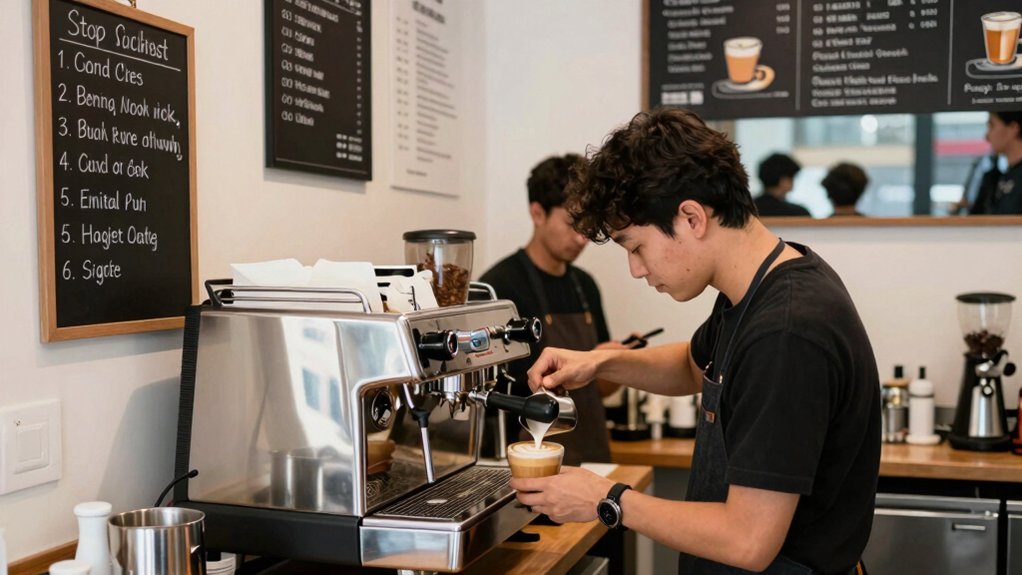
Barista training builds consistent quality by teaching shot timing, milk texture, and standardized recipes.
When new staff finish foundation courses, they gain confidence, cut mis‑timed pulls, and keep service steady during rushes.
You’ll notice faster queues, calmer baristas, and higher throughput, which all drive repeat business.
Emphasizing latte art presentation adds perceived value, letting you charge premium prices and keep customers coming back.
Standardized workflows and clear portion guidance eliminate waste and variability, reinforcing a dependable experience that patrons crave.
Filter Material Quality and its role in maintaining flavor clarity across busy service periods
Cut Waste and Boost Margins via Precise Extraction Training
Ever wondered how precise extraction training can slash waste and lift your margins? You’ll see that tightening grind size, shot timing, and milk texturing cuts discarded drinks dramatically. When every barista follows standardized recipes, portion control becomes second nature, and waste reduction spikes. Your team learns to monitor extraction, so inconsistent dial‑ins disappear, leaving consistent cups and lower ingredient costs. The result is a smoother workflow that protects profit lines while keeping quality high. Process consistency supports scalable service across busy periods.
Accelerate Peak‑Hour Service With Upskilled Baristas
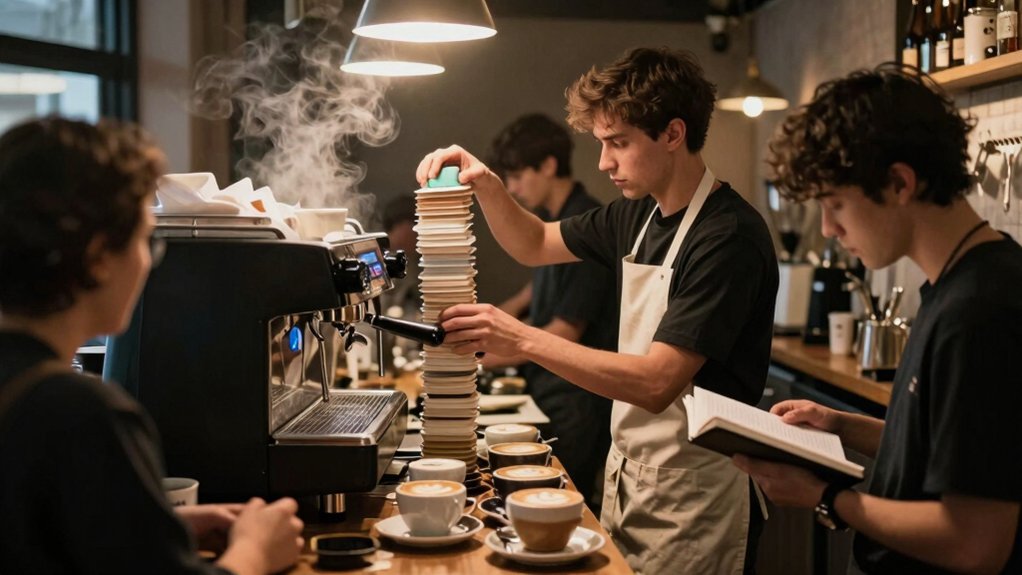
Precise extraction training already trims waste; now channel that discipline into speed when the rush hits. With consistent practice, trained baristas maintain higher throughput without sacrificing quality, and anti-static technology helps keep the work area cleaner during busy periods. You’ll see baristas who’ve completed advanced training zip through peak hours, boosting throughput without dropping quality. Their calm demeanor and sharpened skills let them handle larger volumes, cut queue times, and keep orders accurate. You’ll notice speed and consistency become the norm, even as customers line up.
The same training sharpens customer service, so staff engage patrons while moving fast, preventing satisfaction dips. By anticipating needs and managing lines, they minimize errors that would otherwise slow service. The result is a smoother rush, higher hourly profits, and a reputation for reliable, swift coffee experiences.
Command Premium Prices Through Latte Art Mastery
Ready to turn a simple espresso into a selling point? Mastering latte art lets you upgrade drink presentation instantly, so customers see value before they sip. A striking leaf or heart justifies premium pricing, lifts average spend, and reshapes customer perception of your brand. Train your baristas to pour confidently; they’ll work faster during rushes while keeping each cup Instagram‑ready. The visual boost also fuels word‑of‑mouth referrals, turning one‑off buyers into repeat fans who willingly pay more for the experience. Stainless steel tips resist coffee stains and are easy to clean, supporting durable, long‑lasting performance in busy cafes.
Boost Retention With Clear Barista Growth Paths
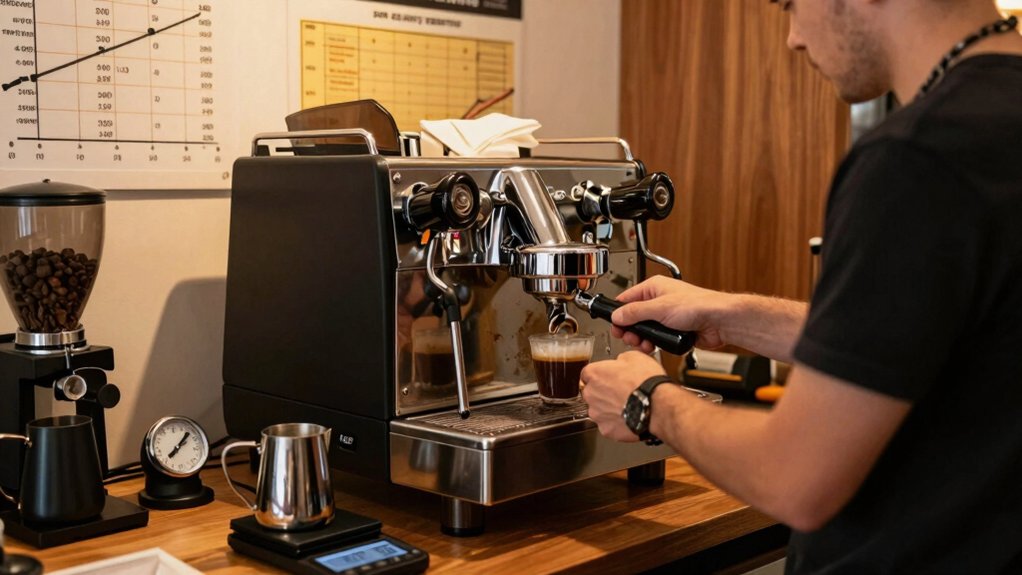
You’ll notice that clear growth milestones give your baristas a roadmap they can actually follow, turning everyday tasks into stepping stones toward leadership.
By structuring skill advancement—from espresso basics to team management—you build confidence and keep talent from looking elsewhere.
Tailoring the training delivery, whether one‑on‑one or in small groups, reinforces those milestones and boosts long‑term loyalty.
Additionally, integrating aroma and extraction-focused metrics from your brew process can help standardize quality across shifts ATC‑equipped and ensure readings remain reliable in varying kitchen conditions.
Clear Growth Milestones
Ever wonder how a clear growth path can keep your baristas on the job longer? By setting concrete growth milestones, you turn vague ambition into measurable progress. Your training programs can map entry‑level tasks—like consistent shot timing—to advanced skills such as latte art mastery. Implementing a structured training plan with documented milestones helps maintain consistent throughput and quality during peak hours, while milestone tracking provides tangible proof of progress to both staff and management.
Structured Skill Advancement
When baristas see a concrete roadmap—from a Foundation Course to certification—they move faster toward mastery, and you reap the benefits. Structured skill advancement gives them clear milestones, so new hires hit consistent pour quality and milk texture from day one. You’ll notice higher throughput during rushes because onboarding shrinks; staff can handle more orders without sacrificing speed. Implementing a formal progression also supports long-term retention by turning temporary staff into skilled team members structured pathway.
Use AI to Capture Barista Performance Data
You’ll see real‑time productivity metrics pop up on your dashboard, letting you spot bottlenecks instantly.
The system automatically flags skill gaps, so you can target training where it matters most.
With those insights, you can adjust schedules on the fly to match demand and keep wait times low.
Real‑Time Productivity Metrics
Real‑Time productivity data streams into a dashboard analytics screen, showing shots pulled per hour, milk‑texturing consistency, and order cycle times. You watch throughput spikes and dips, then trigger coaching alerts the moment a bottleneck—like a delayed grinder start—appears. This data can be analyzed alongside grinder performance metrics to optimize station assignments and training grinder performance metrics. The system benchmarks each barista against team averages, so you spot under‑performers and celebrate top‑liners in the same glance. By aligning staffing with forecasted peak periods, you keep queues short and service smooth. Continuous monitoring also captures customer engagement, letting you balance speed with hospitality while you fine‑tune training and boost profits.
Automated Skill Gap Analysis
Ever wondered how AI can instantly pinpoint a barista’s exact weaknesses? You’ll see AI-based skill gap analysis capture real‑time data on extraction, milk texturing, and pour consistency, then compare each shift to standardized benchmarks. The system flags gaps—like shot‑time variance, texture deviation, or low latte art success rate—so you can assign targeted barista training drills. By aggregating results across sessions, it surfaces team‑wide patterns, letting you tweak curricula for faster skill uplift. New hires benefit from personalized corrective actions that shorten onboarding. The continuous feedback loop drives beverage consistency, cuts waste, and fuels throughput improvement, turning every cup into a profit‑boosting opportunity.
Data‑Driven Scheduling Adjustments
Why settle for guesswork when AI can map every barista’s real‑time productivity and customer interaction? You’ll see AI-driven scheduling turn raw performance data into clear staffing optimization, aligning shifts with peak periods and smoothing out throughput bottlenecks. The system predicts demand spikes, trims over‑staffing, and guarantees the right skill mix, directly boosting hourly profits. You’ll also spot hidden delays, adjust rosters on the fly, and keep wait times low, which lifts average spend per hour. In short, data‑driven scheduling becomes your secret weapon for a smoother, more profitable shop.
- Real‑time insight into peak periods and staff needs
- Immediate fixes for throughput bottlenecks
- Continuous staffing optimization that lifts hourly profits
Leverage Barista Data for Inventory & Staffing Forecasts
Curious about turning your daily sales logs into actionable forecasts? You can feed barista‑generated data into a forecasting engine that predicts demand spikes and quiet periods. By linking sales trends to inventory management, the model tells you exactly how much beans, milk, and pastries to order, cutting waste and avoiding stock‑outs. Simultaneously, data analysis highlights staffing needs, so you schedule more baristas for morning rushes and fewer during lull hours. Fine‑tuning the algorithm with your café’s unique patterns ensures the predictions stay relevant, boosting profitability. The result is a leaner supply chain, happier customers, and a workforce that matches real‑time demand without over‑ or under‑staffing.
Implement Soft Upselling to Raise Ticket Size
Your sales forecasts now tell you exactly when demand spikes, so you can turn that insight into higher ticket values by training baristas to suggest complementary upgrades. Soft upselling feels natural when staff use confident prompts—larger size, seasonal special, or flavor pairing—to boost the average ticket without pressuring the customer. Emphasize premium drinks through menu positioning and eye‑catching displays, turning them into core choices rather than add‑ons. When baristas understand each beverage and can point to latte art or a visually appealing build, they justify higher price points and enrich the customer experience.
- Use short, friendly prompts that fit into peak‑time flow.
- Highlight higher‑margin items on the menu and signage.
- Tie upgrades to standout latte art for perceived value.
Blend Skill and Automation for Faster, Consistent Service
You’ll notice that refined skill automation lets you pull a perfect shot and texture milk in seconds, keeping the line moving.
By streamlining workflow integration, you combine manual expertise with automated tamping or batch brewing, cutting waste and errors.
The result is consistent high‑speed service that satisfies customers and lifts your margins.
Refined Skill Automation
Why settle for a chaotic rush when refined skill meets automation? You’ll see your barista stations run smoother, as automation trims manual steps and your technique guarantees consistency. The blend boosts throughput, cuts waste, and keeps the workflow tight, so peak‑hour orders flow without sacrificing quality. AI‑driven data tells you when to staff each station, preserving margins while delivering authentic service.
- Automatic tampers and batch brewing accelerate prep while you fine‑tune each shot.
- Precise grind and shot timing, reinforced by automation, slash waste and rework.
- Real‑time productivity tracking guides staffing, keeping throughput high and consistency steady.
Streamlined Workflow Integration
How does blending precise barista skills with smart automation transform peak‑hour service? You’ll see a barista workflow that feels effortless because a streamlined workflow pairs your expertise with automated tools.
Standardized recipes lock in portion control and grind calibration, so each shot tastes the same while you move faster.
Batch‑brew stations and milk‑texturing machines handle repetitive steps, freeing you to focus on customer interaction and quality checks.
Real‑time data from AI monitoring tells you when demand spikes, prompting you to adjust staffing or prep levels on the fly.
This integration cuts waste, shortens wait times, and boosts profitability—all while keeping the coffee experience consistent and reliable.
Consistent High‑Speed Service
A well‑trained barista can keep the line moving at peak hour while maintaining espresso quality, because skill and automation work together to speed up each step without sacrificing consistency. Your barista training sharpens grind calibration, extraction timing, and milk texturing, letting you boost service speed and throughput. You’ll stay calm under pressure, manage queues, and engage customers, keeping wait times short and quality high. The result is smoother peaks, lower waste, and higher margins, while customers enjoy reliable drinks that keep them coming back.
- Faster extraction and precise portion control cut waste.
- Consistent milk texturing speeds latte prep and improves taste.
- Streamlined queue handling raises overall throughput and service speed.
Measure Training ROI With Ongoing KPI Tracking?
Ever wonder how you can prove the value of barista workflow training? KPI tracking lets you tie every shot per hour, milk‑texturing consistency, and order‑accuracy gain to concrete outcomes. By monitoring average handle time and throughput during peak periods, you can attribute faster service directly to the training. Dashboards reveal upselling impact—add‑ons and larger ticket sizes rise when staff apply new techniques.
Waste‑reduction metrics—discarded shots, over‑textured milk, incorrect grind settings—show cost savings from calibration and standardization. Regular KPI reviews let you adjust the program, keeping training ROI high and profitability steady. This data‑driven loop ensures each training dollar fuels measurable improvements in speed, quality, and revenue.
Frequently Asked Questions
Why Is Workflow Important in Barista Stations?
You need workflow because it streamlines each step, cuts waste, speeds service, and keeps drinks consistent, so you serve more customers correctly, reduce costs, and maintain higher profit margins.
What Are the Benefits of Barista Training?
You’ll cut waste, speed service, and keep quality consistent, which lifts margins; you’ll boost customer loyalty and spend per visit, retain staff longer, and command higher prices with polished latte art.
How Do I Make My Coffee Shop More Profitable?
You boost profits by upselling with natural prompts, trimming low‑margin items, standardizing recipes, personalizing service, and automating brewing and inventory to cut waste, labor, and boost throughput.
What Is the 80 20 Rule for Coffee?
You apply the 80/20 rule by identifying the 20% of drinks that generate 80% of revenue, then focus your menu, training, and promotions on those high‑margin, high‑demand beverages.
In Summary
By investing in barista training, you’ll see higher repeat visits, tighter margins, and faster peak‑hour service. Mastering extraction, latte art, and soft upselling lets you command premium prices while keeping waste low. Clear growth paths boost retention, and data‑driven staffing cuts labor costs. Track KPIs, and the ROI becomes crystal clear: a more profitable, consistent, and scalable coffee shop.


