

Start by sketching a 5‑10‑year vision that ties espresso mastery and top‑notch customer service to roles like shift‑supervisor, floor manager, and eventually brand owner. Earn SCA or CQI certifications to prove expertise, and log every brew, milk texture, and cupping note in a portfolio. Volunteer for supervisory duties, train teammates during quiet periods, and seek mentors who challenge your palate. Network at cuppings, competitions, and trade shows, sharing your achievements online. Keep building skills and credentials, and you’ll discover the next steps to accelerate your career.
How to Map Your Coffee‑Career Roadmap

Where do you see yourself in five to ten years—owning a café, teaching baristas, or managing a coffee brand? Start by sketching that vision, then break it into milestones that tie customer service mastery to leadership roles. Seek internal advancement: volunteer for shift‑supervisor duties, share training plans, and tell managers your career development goals. Pair each step with relevant certifications to prove expertise and keep you eligible for promotions. Build a diversified skill set—inventory control, technical coffee knowledge, and people management—so you can pivot into roasting, quality control, or education. Network at cuppings and industry meet‑ups to find mentors and discover opportunities beyond your current shop. This roadmap turns ambition into concrete, achievable actions. World Coffee Recipe Cards can complement your learning by exposing you to authentic brewing techniques from around the world and practical, portable guidance for hands-on practice.
Earn SCA or CQI Certifications to Boost Credibility
After sketching your five‑year coffee‑career roadmap, the next step is to back it up with recognized credentials. An SCA Certification signals you’ve mastered core Barista Skills and understand Coffee Quality standards, while a CQI Q Grader credential proves you can assess beans with scientific rigor. Employers often fund these programs because they boost Certification credibility and help maintain consistency across locations. In addition, pursuing certification can align with your use of objective measurement tools like refractometers to calibrate brew strength and quality across shops. credential standards
Master Core Espresso Extraction and Milk‑Steaming Techniques
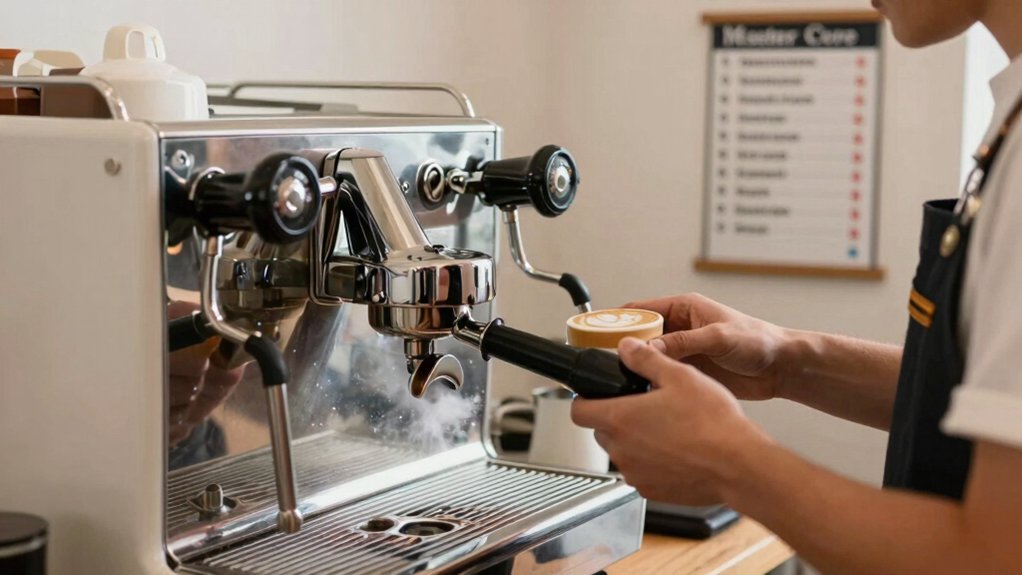
How do you turn a routine pull into a consistently perfect shot? You start by dialing in your grinder: set a 1:2 brew ratio, adjust grind size, dose 18–20 g, and aim for a 36–40 g yield. Keep pressure at 9–12 bar and time extraction at 25–28 seconds. While the espresso brews, watch the crema, sniff the aroma, and note sweetness, acidity, and balance—this sensory evaluation sharpens your palate. In addition, choosing the right filter type can influence flavor notes and body, with paper filters delivering a cleaner profile and metal filters offering a richer mouthfeel environmental impact considerations and compatibility considerations guiding your equipment choices. For milk-steaming, texture the milk into glossy microfoam, avoiding lattice, and stop at 62–65 °C. Practice timed pulls and texturing drills during slower shifts, and seek peer feedback. Consistent practice builds extraction consistency, refines milk-steaming, and elevates your barista training.
Build a Portfolio of Latte‑Art and Cupping Achievements
Consistently documenting your latte-art and cupping work turns everyday practice into a professional showcase. Build a latte art portfolio with high-resolution photos of at least ten drinks, tagging each image with date, pattern, and bean origin. Pair every cup with cupping notes that capture aroma, flavor, acidity, sweetness, and aftertaste, covering a minimum of five coffees. Track consistency metrics for espresso dose, yield, extraction time, and milk microfoam density, noting variations across sessions. Add competition outcomes—placements, judges’ feedback, scores—and any coaching you received to illustrate progress. After each practice, write a brief reflection summarizing goals, feedback, and next steps. This structured record fuels professional development and proves your repeatable quality to employers. SCA standards
Seek Feedback and Mentorship From Senior Baristas

Ever wonder how fast you can sharpen your craft when seasoned baristas give you direct, on‑the‑spot feedback? You should ask for concrete critiques during slower shifts, zeroing in on espresso extraction, milk texturing, and latte art consistency.
Seasoned baristas give on‑the‑spot feedback—critiquing extraction, milk texture, and latte art during slower shifts.
Schedule regular mentorship sessions with senior staff to map career goals, discuss competitions, and review service recovery.
Document the best practices you observe, then mirror those routines to fine‑tune technique and workflow efficiency.
With your mentor, build a development plan that sets measurable milestones—like mastering a specific milk texture or pulling an 18‑22‑second espresso shot—along with clear timelines.
This focused feedback loop accelerates skill development, builds confidence, and positions you for rapid advancement.
Explore how portable tools like the AeroPress Go can influence your on‑the‑line efficiency and consistency during busy service periods portability benefits and leverage those insights in your practice sessions.
Lead Shifts and Manage the Floor to Show Leadership
Ready to step up and run a shift? You’ll showcase leadership by taking charge of shift supervision and floor operations, especially during rush hour. First, scan the line, assign stations, and set clear expectations for each teammate. When a customer escalation erupts, listen quickly, resolve the issue, and debrief the staff to prevent repeats. Use every quiet moment for staff training—demonstrate proper tamping, milk texturing, and POS shortcuts, then let crew practice under your eye. Communicate updates to management in concise briefings, noting any supply gaps or equipment hiccups. By balancing real‑time problem solving with ongoing mentorship, you prove you can keep service smooth, mentor peers, and earn the credibility needed for promotion framing leadership.
Learn Inventory, Cost‑Control, and POS Basics for Promotion
You’ll start by mastering POS tracking techniques, logging each sale and inventory movement in real time.
Then, apply efficiency strategies like shortcut keys and batch processing to cut transaction time and reduce errors.
Together, these skills let you showcase data‑driven results that catch management’s eye and pave the way for promotion.
POS Tracking Techniques
Mastering POS tracking starts with consistently logging every sale, void, refund, and discount so your daily revenue totals stay accurate and reliable. When you tie those logs to inventory management, you spot shrinkage and waste fast, while sales analytics reveal best-sellers and cost of goods trends. Linking those insights to labor scheduling lets you match staffing to peak periods, cutting overtime and boosting service speed. Finally, measuring promotions ROI in the POS shows which discounts truly lift profit, giving you data‑driven arguments for future campaigns and a stronger case for promotion. Capacity considerations from pod storage can inform stock levels during promotions by ensuring you don’t overstock or understock popular items.
POS Efficiency Strategies
Ever wondered how a smooth POS workflow can fast‑track your promotion? Master POS efficiency by handling cash, logging each transaction, and reviewing real‑time reports. Tighten inventory management: scan waste, track usage, and flag discrepancies before they become cost‑control issues. Generate item‑by‑item sales data each hour, then use those numbers for data‑driven decisions on pricing and menu tweaks. Communicate order changes across stores through the POS to boost workflow accuracy and cut shortages. Conduct weekly labor‑vs‑sales analyses, highlighting beverage‑cost trends and waste reductions. Present these insights to supervisors, showing you can drive profit and reliability. This proactive approach signals readiness for shift‑leader or manager roles, accelerating your barista career. Real‑time reports can further enhance decision quality by offering immediate visibility into performance metrics across locations.
Apply Operational Skills to Earn a Café Management Role
You’ll streamline procedures by tightening workflows, reducing waste, and ensuring every shift runs like clockwork.
By mastering inventory management you’ll keep stock levels optimal, cut costs, and demonstrate the data‑driven mindset managers love.
And when you mentor and coach your teammates, you’ll build a high‑performing team that reflects your leadership potential.
Streamline Operational Procedures
Streamlining everyday cafe operations—like pulling perfect espresso shots, texturing milk, handling the POS, and juggling inventory and staff schedules—shows you’re ready to step into a management role. You’ll document each step, then refine your standard operating procedures to boost efficiency. By tracking performance metrics you can prove the impact of your coaching and training, turning raw data into tangible results that impress senior staff.
- Draft quick‑reference guides for peak‑hour workflows, reducing decision latency.
- Conduct short training sprints that align new barista habits with your SOPs.
- Use real‑time dashboards to monitor ticket times, waste, and order accuracy.
- Share weekly performance reports, highlighting improvements and next‑step coaching plans.
Leverage Inventory Management
Your café’s inventory is the pulse of its profitability, and mastering its control signals you’re ready for management. Start by logging every coffee bean, milk, and supply usage, then compare actuals to your stock forecasting model.
Spot variance, cut waste, and tighten cost control—these numbers directly lower COGS and impress leadership. Build solid supplier negotiations: negotiate bulk discounts, set clear delivery schedules, and maintain a FIFO rotation to avoid spoilage.
Produce a weekly inventory management report that highlights COGS, shrinkage, and par levels, then share it with your supervisor. By turning raw data into actionable insights, you demonstrate the operational expertise needed for a café manager role.
Mentor and Coach Staff
When you shift from just brewing coffee to guiding teammates, you turn daily operations into a training ground for future managers. Apply your hands‑on expertise—shift planning, scheduling, quality control—to give junior staff real responsibilities. Pair them with projects like inventory checks or SOP updates, and set clear performance goals such as cutting service times or boosting order accuracy. Regular 1:1 coaching sessions keep mentorship focused and align each mentee’s onboarding path toward leadership.
- Assign a small shift lead role to test decision‑making.
- Track measurable goals and share progress weekly.
- Conduct onboarding workshops on staff development plans.
- Provide feedback that ties daily tasks to café‑manager competencies.
Cross‑Train in Roasting, Brewing, and Quality Control
How can you boost your barista career while mastering the full coffee journey? Start with cross‑training that blends roasting, brewing, and quality control. Take a roasting internship or apprenticeship to learn green‑bean selection, drum and air profiles, and batch roasting. Pair that with mentorship from senior roasters who can guide you through cupping protocols and defect detection, aligning your palate with SCA or CQI standards. Simultaneously, document brewing parameters and QC notes to build a portable portfolio. Seek roles that let you serve customers while running quality checks and small‑batch roasts. This versatile experience shows management you understand the entire supply chain, positioning you for internal promotion or dedicated roasting positions.
Network at Cuppings, Competitions, and Trade Shows
You’ll boost your profile by turning industry events into networking goldmines, showcasing your expertise while you connect with roasters, judges, and peers. Bring a concise pitch and a few samples of your best work to stand out at cuppings and competitions. Then follow up with a quick note or social‑media post to cement the new relationships.
Buildverage Industry Events
Ever wondered how a single event can catapult your barista career? You can turn every cupping, competition, and trade show into a launchpad. By showing up ready to learn, you’ll absorb flavor nuances, sharpen technique, and spark conversations that lead to mentorship and job offers. Share insights on social media, and in‑shop trainings to build credibility and attract followers.
- Attend local cuppings to benchmark palate and meet roasters who can mentor you.
- Enter competitions to showcase latte art, sensory skills, and gain visibility.
- Network at trade shows with suppliers, vendors, and potential employers for leads.
- Engage in equipment demos to spot trends and future shop upgrades.
Showcase Your Expertise
Leveraging the momentum from industry events, start showcasing your expertise by actively participating in cuppings, competitions, and trade shows. At each cupping, demonstrate your palate and technique, then post concise notes and photos on LinkedIn to prove measurable improvement.
In competitions, let your presentation and consistency earn judges’ scores, and use those results as credentials for lead‑barista or trainer roles. While networking, approach roasters, educators, and shop owners, exchange cards, and follow up with personalized messages that reference a specific tasting or score.
Seek mentorship from judges or senior baristas, asking for targeted feedback that drives skill development. Finally, turn every interaction into a concrete practice plan, turning visibility into career advancement.
Grow Your Coffee Brand on Social Media
Ever wonder how a strong visual identity can turn casual scrolls into loyal coffee fans? You can boost Barista career progression by mastering social media growth with branding consistency and community engagement. Start by designing a logo, color palette, and photography style that instantly signal your coffee brand. Then, craft a content strategy that mixes behind‑the‑scenes stories, targeted ads, and live Q&A sessions to convert followers into in‑store guests.
- Share roasting notes and sourcing journeys to educate and build authenticity.
- Use localized ads with clear calls‑to‑action for events or newsletter sign‑ups.
- Feature customer stories and partner collaborations to deepen community ties.
- Track follower growth, saves, engagement rate, and conversion to refine your strategy.
Start a Café or Launch a Coffee‑Consulting Business
If you’ve mapped out a solid business plan and secured financing, the next step is choosing a location and negotiating a lease that aligns with your projected revenue and costs.
Choosing a location and negotiating a lease that matches projected revenue and costs.
As you launch a café startup, focus on menu concepts that match your target market and price them for healthy margins.
Simultaneously, begin equipment sourcing—compare grinders, brewers, and POS systems for reliability and cost‑effectiveness.
Build credibility by earning SCA or CQI certifications and gaining hands‑on experience in roasting or quality control.
Network at local cuppings and trade shows to attract early customers and potential partners.
Keep your barista career trajectory in mind: treat each decision as a chance to showcase expertise, strengthen your brand, and set the stage for sustainable growth.
Plan Ongoing Education to Stay Ahead
Even after you’ve secured a location and opened your café, staying ahead means treating education as a continuous, strategic habit rather than a one‑off achievement. You’ll push SCA Coffee Skills certifications, embed sensory training in daily routines, and seek mentorship that challenges your palate and workflow. Pair hands‑on practice with business courses to balance brewing expertise and leadership.
- Enroll in quarterly SCA or CQI programs to validate skill depth.
- Schedule weekly in‑shop training sessions, using feedback loops for rapid improvement.
- Map a five‑to‑ten‑year vision and discuss targeted responsibilities with management.
- Pursue cross‑training across operations, quality control, and customer service to future‑proof your career.
This ongoing education plan keeps you adaptable, knowledgeable, and ready for the next role in the coffee industry.
Frequently Asked Questions
What Is the Career Progression for a Barista?
You start as a barista, then become lead or shift supervisor, move into store management, advance to regional trainer or roastery specialist, and eventually aim for head roaster, brand director, or coffee educator roles.
How to Become a Faster Barista?
Practice during slow shifts, perfect your timing, and streamline each step. Focus on consistent grinder dosing, precise tamping, and efficient milk steaming. Track your shot times, adjust techniques, and repeat until speed feels natural.
What Are Level 5 Barista Skills?
You master precise espresso extraction, pressure profiling, and crema control; texture milk for intricate latte art; diagnose grind, temperature, and extraction issues instantly; coach staff, enforce hygiene, and shape SOPs—all while tasting cupping‑grade nuances.
What Sells Best in a Cafe?
You’ll sell most when you serve consistent espresso drinks—latte, cappuccino, macchiato—paired with eye‑catching seasonal specials, premium syrups, and limited‑time offers that drive impulse orders.
In Summary
By mapping your goals, earning top certifications, mastering extraction and steaming, showcasing latte‑art, and seeking mentorship, you’ll stand out in any café. Keep networking at cuppings, competitions, and trade shows, and let social media amplify your brand. Whether you open your own shop or launch a consulting side, continuous education will keep you ahead of trends. Stay curious, stay bold, and let your coffee passion drive every next step.


