
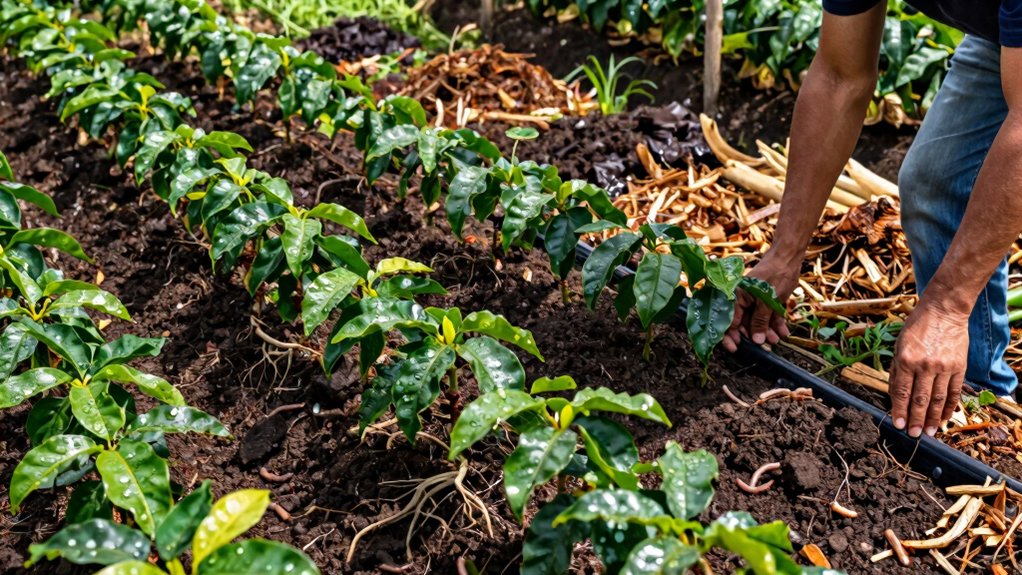
You heal soil naturally by boosting organic matter, protecting microbes, and improving water‑holding capacity. Mulch, cover crops, and reduced tillage keep the ground covered, add carbon, and create pores for roots and insects. A thriving microbial community mineralises nutrients, deepens sweetness and complexity, and suppresses pests. Earthworms and pollinators speed nutrient cycling and boost yields. All these actions rebuild structure, lock carbon, and set the stage for richer, more consistent beans—continue for deeper insights.
Why Soil Health Is the Foundation of Regenerative Coffee
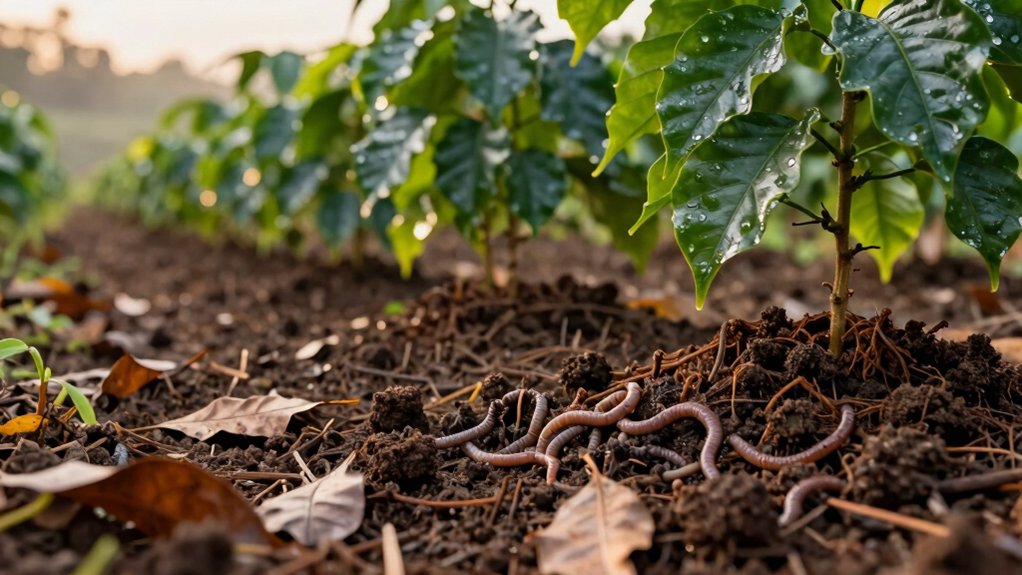
Why does soil health matter so much for coffee? You’ll find that healthy soil underpins every bean, while low fertility, high acidity, and poor water retention choke growth. Regenerative agriculture targets those issues by boosting organic matter, which fuels mineralisation and creates a balanced pore structure for drainage and water retention. When the soil can hold moisture, roots stay hydrated during dry spells, and erosion resistance improves, strengthening the plant‑soil relationship. This resilience translates into higher, more consistent yields over coffee’s 20‑plus‑year harvest cycle. Furthermore, the carbon stored in enriched organic matter reduces the farm’s environmental footprint. In short, solid soil health is the upfront prerequisite that lets regenerative practices flourish and sustain coffee production for decades. Soil health supports long-term productivity and environmental stewardship across regenerative coffee farming systems.
How Mulching, Cover Crops, and Reduced Tillage Rebuild Soil
Ever wondered how a simple layer of mulch or a strip of cover crops can transform a coffee farm’s soil? Mulching keeps moisture steady, curbs erosion, and adds a steady supply of organic material. Cover crops weave a living net that opens pore space, improves drainage, and fights compaction. When you combine these practices with reduced tillage, you protect soil structure and let soil organic matter climb by roughly half a percent, which fuels microbial activity and nutrient cycling for healthier coffee roots. In addition, choosing regenerative practices like selecting compatible, low-impact cultivation tools and materials can further reduce soil disruption and support long-term sustainability in both soil health and biodiversity sustainability practices that align with ecological farming goals.
Why Beneficial Microbes and Organic Matter for Regenerative Coffee
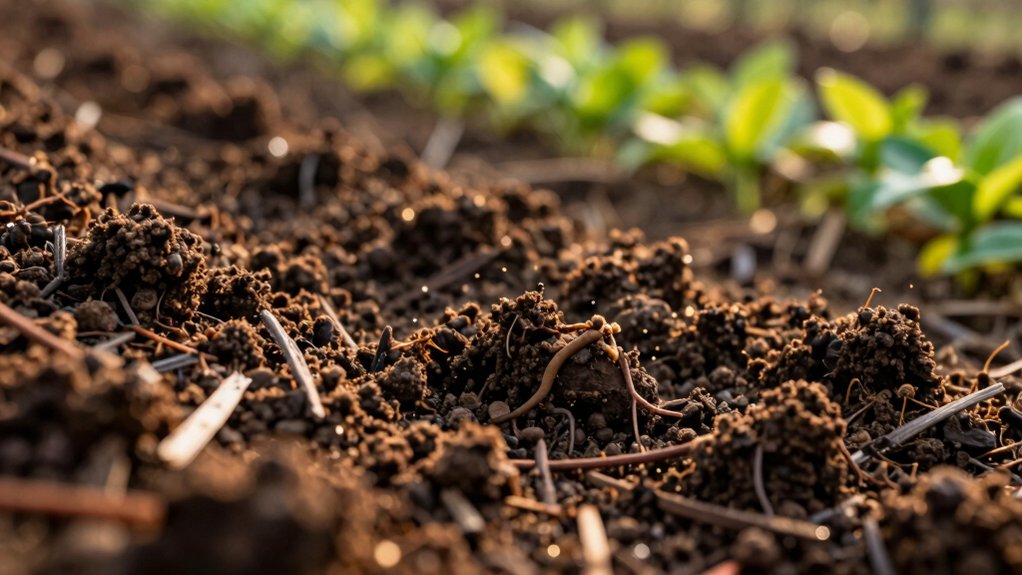
Often, the secret to thriving coffee plants lies in a bustling community of beneficial microbes working hand‑in‑hand with organic matter. When you add compost, mulches, or cover‑crop residues, those microbes mineralise the material, turning it into nitrogen, phosphorus, and potassium that your coffee roots can absorb instantly. This partnership improves soil health by enhancing structure, water retention, and drainage, so the farm resists drought and erosion. A richer microbial community also keeps pathogens in check, creating a balanced ecosystem that supports higher yields and better cup quality. In regenerative agriculture, you continuously feed these microbes with organic matter, sustaining long‑term fertility and keeping the coffee grove productive year after year. Stainless steel bases offer durability and corrosion resistance, supporting consistent tamping performance in busy cafes and roasteries.
What Bugs and Pollinators Do for Your Coffee Crop
You’ll see natural pollinators like bees and birds lift your coffee yield while soil‑living bugs break down organic matter into usable nutrients drip tray design.
Natural Pollinators Boost Yield
Bees and native flies visit every flower, increasing blossoms set into cherries and supporting a more reliable yield. Intercropping coffee with banana or maize creates shade and nesting sites, boosting pollinator numbers and overall biodiversity. Those pollinators improve soil health by encouraging plant vigor, which in turn fuels fruit development and richer cup profiles. By protecting habitats with organic mulches and limiting synthetic inputs, you keep the pollinator community thriving, leading to consistent yields and superior bean quality. ATC-like temperature compensation helps stabilize readings across varying field conditions, ensuring consistent decisions about harvest timing and processing.
Soil‑Living Bugs Enrich Nutrients
Why should you care about the tiny critters beneath your coffee trees? Those soil‑living bugs—earthworms, beetles, springtails—break down organic material, turning coffee‑cherry pulp and manure into fertile compost. Their activity creates pore networks that improve drainage and water retention, letting roots explore deeper zones. As microbes feast on the crumbs left by these bugs, they mineralize nutrients, releasing nitrogen, phosphorus, and potassium right where coffee plants need them. Intercropping and mulching invite pollinators and natural enemies, boosting biodiversity that fuels faster cycling. The richer the biodiversity, the more robust the soil, and the higher your yields. In short, nurturing these critters amplifies composting efficiency, enriches soil, and sustains a thriving coffee ecosystem. Cadmium/lead-free labeling in packaging also helps ensure safer soil-environment practices for sustainable farming.
Integrated Pest Management Reduces Sprays
The bustling community of soil‑living bugs you just learned about also fuels a natural pest‑control network above ground. When you practice Integrated pest management, you let birds, bees, and predatory beetles patrol your shade‑tree understory, cutting out need for chemical sprays. Diverse plantings boost biodiversity, which stabilizes soil health and creates habitats for beneficial insects. Adding organic matter like compost and mulch nurtures the soil microbiome, making coffee plants more resilient to pests. The result? Fewer pesticide applications, richer soil, and higher yields. Caffeine content
Climate‑Resilient Practices for Regenerative Coffee Farms
Ever wondered how a coffee farm can stay productive when droughts strike? You can boost climate resilience by adopting regenerative agriculture practices that protect soil health. Plant ground cover and diverse vegetation to shield the soil from erosion and retain moisture during dry spells. Integrate shade‑grown coffee with a canopy of trees; the shade lowers temperature, reduces evaporation, and nurtures microbial activity that builds organic matter. Choose climate‑resilient coffee varieties and intercrop with other trees or crops to improve soil structure and biodiversity. Agroforestry creates a microclimate that buffers extreme weather, stabilizes yields, and sustains long‑term productivity. By combining these strategies, you create a farm that thrives even when the climate turns harsh. Agroforestry further enhances resilience by integrating multiple species and promoting a balanced ecosystem.
Practical Steps to Improve Soil Health on Your Farm Today
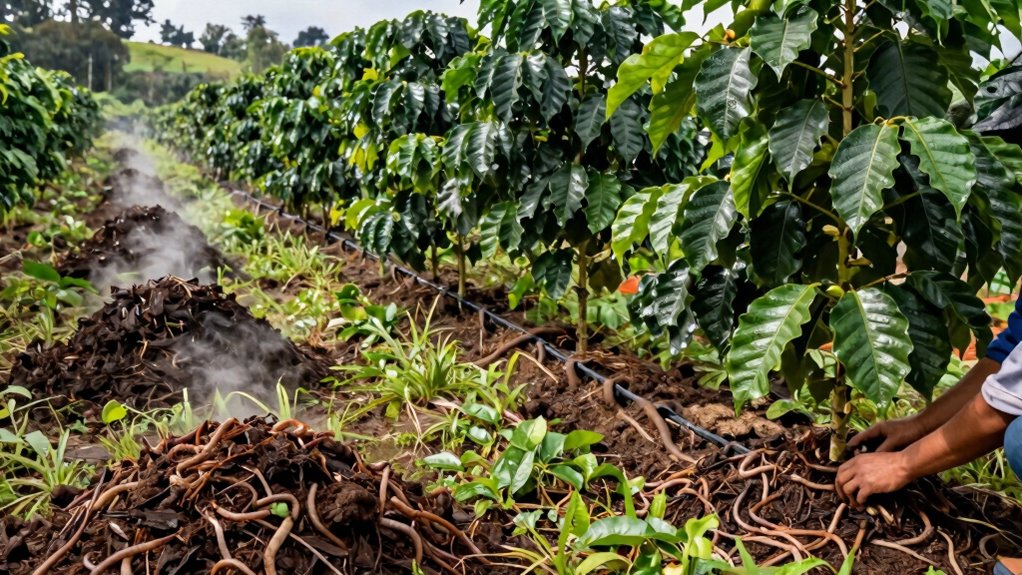
- Apply 5–10 cm of mulch each season
- Incorporate well‑aged compost into planting beds
- Plant cover crops or intercropped legumes annually
- Use green manure and pruning residues as soil amendments
How Healthier Soil Lifts Coffee Quality, Yields, and Farmer Income
When your soil teems with organic matter and thriving microbes, the coffee beans absorb more minerals, giving you richer flavor profiles. Those same healthy roots capture water efficiently and resist drought, so you see steadier, higher yields.
With better crops and lower input costs, your profit margins rise naturally.
Ilized Soil Boosts Flavor
What makes a cup of coffee truly exceptional? When you sip, you taste the story of the soil that nurtured the beans. Healthy soil packed with organic matter creates a robust microbial balance, while a well‑structured profile lets roots access nutrients evenly. This synergy translates into beans that carry richer acidity, fuller body, and nuanced aromatics—qualities coffee lovers chase.
- Soil health fuels consistent nutrient release, sharpening flavor notes.
- Organic matter improves water retention, preventing stress‑induced bitterness.
- Microbial balance enriches mineral uptake, deepening sweetness and complexity.
- Soil structure enhances root depth, allowing beans to develop layered taste profiles.
Higher Yields Raise Income
Ever wondered why greener coffee fields translate into fatter wallets? When you boost soil health with organic matter, you kick‑start nutrient cycling that feeds every coffee plant. Mulching, intercropping, and cover crops keep the ground moist, protect roots, and invite microbes that release nitrogen and phosphorus right where the plants need them. The result is sturdier vines, bigger cherries, and a steadier harvest that resists drought and pests. Those higher yields let you sell more beans at premium prices, especially when certifications recognize your regenerative practices. In turn, your income potential rises while input costs drop, creating a virtuous cycle where each harvest funds the next round of soil‑building investments. This synergy turns healthier soil into a reliable profit engine.
Why Soil Health Matters for Every Link in the Coffee Supply Chain
Why does soil health matter to every link in the coffee supply chain? You’ll see that healthy soil fuels robust plant growth, better water retention, and climate resilience, which translate into higher yields and richer flavor for roasters. Regenerative agriculture and organic farming boost soil organic matter, biodiversity, and pest‑suppression, creating a foundation for sustainable coffee production. When you manage pH, drainage, and fertilization correctly, microbes thrive, mineralisation improves, and income steadies from farm to cup. Digital soil metrics let you track progress, linking soil health directly to producer income and reliable supply for buyers.
- Enhanced nutrient cycling and water use efficiency
- Greater biodiversity that suppresses pests naturally
- Consistent flavor profiles for premium coffee buyers
- Higher farmer earnings and stable market demand
Frequently Asked Questions
How Does Regenerative Agriculture Improve Soil Health?
You boost soil health by planting cover crops, adding compost, reducing chemicals, and intercropping shade trees, which nurture microbes, increase organic matter, improve structure, retain moisture, and enhance nutrient cycling.
Do Coffee Grounds Help the Soil?
Yes, coffee grounds boost your soil. They add organic matter, improve structure, retain moisture, and supply micronutrients, while fostering microbes that enhance nutrient cycling and overall soil health.
What Does Gabe Brown Do for a Living?
You’re looking at a farmer‑educator who runs a diversified ranch, teaches workshops, writes, and demonstrates regenerative practices—cover crops, diverse rotations, minimal tillage, and integrated livestock—to restore soil health.
Why Are Farmers Against Regenerative Farming?
You resist regenerative farming because you see high upfront costs, complex certification, limited knowledge, financing gaps, and short‑term yield drops that threaten your immediate profitability and risk tolerance.
In Summary
By nurturing your soil, you’re not just growing coffee—you’re cultivating resilience, flavor, and profit. Healthy microbes, cover crops, and minimal tillage lock in nutrients, boost water retention, and attract pollinators, buffering your farm against climate shocks. The result? richer beans, higher yields, and stronger incomes for you and every link in the supply chain. Keep investing in soil health, and watch your coffee farm thrive naturally.


