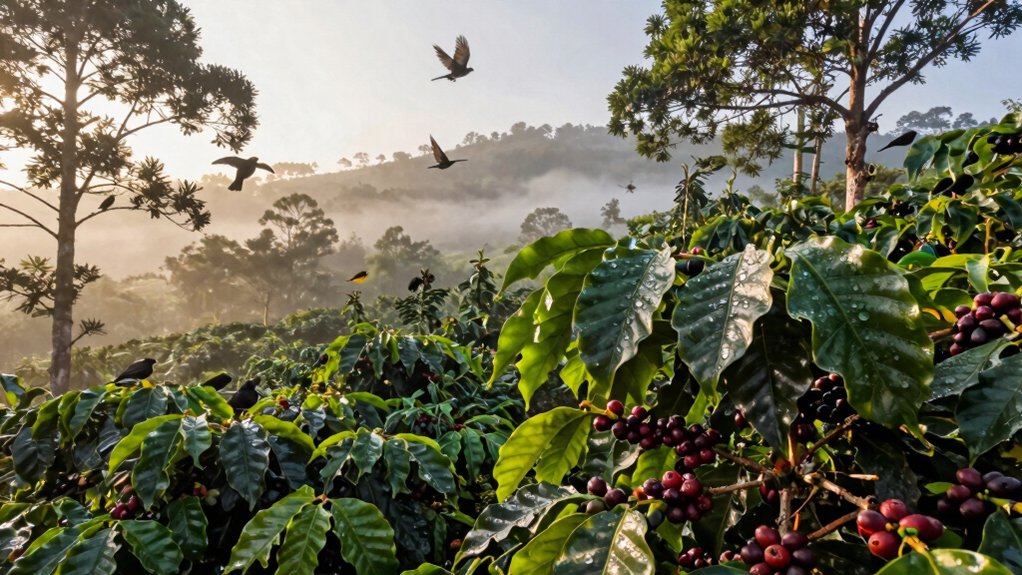
Look for the Smithsonian‑SMBC Bird‑Friendly label, which guarantees 100 % shade‑grown, 100 % organic beans from farms with at least ten tree species, three canopy layers and an average canopy height of 40 feet. Verify the label on the packaging and check that the roaster lists the specific farm or region, confirming native‑species diversity and no synthetic pesticides. Prioritize roasters that share farm‑level provenance and audit links, and you’ll discover more details on choosing truly habitat‑friendly coffee.
Understand Core Bird‑Friendly Certification Criteria
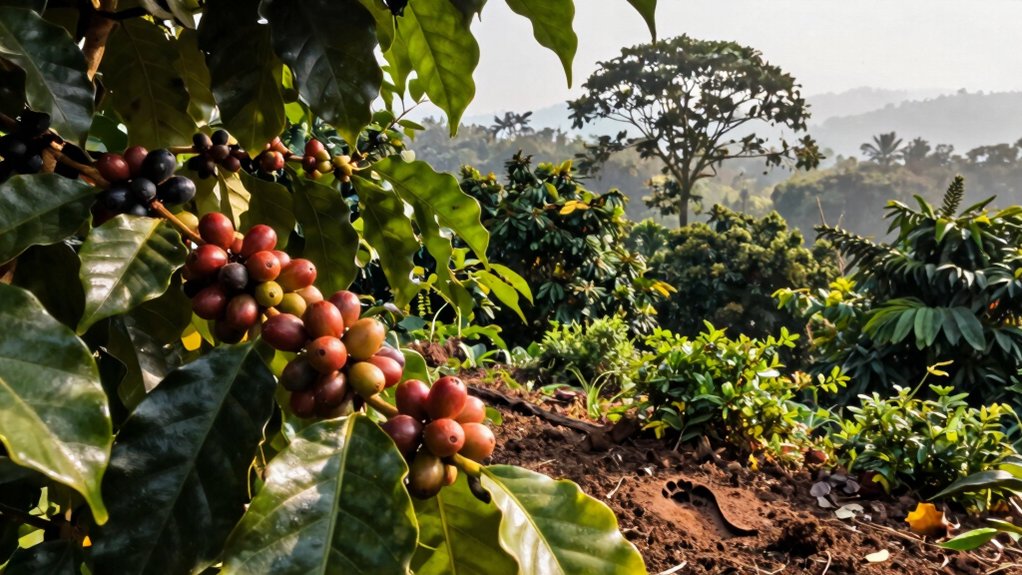
What makes a coffee truly bird‑friendly? You look for Bird Friendly certification, which guarantees shade‑grown farms with at least 40 % canopy coverage and trees 40 feet tall. The farm must host three canopy layers and ten different tree species, with 60 % of those trees being native species to boost biodiversity. Organic farming is mandatory—no synthetic pesticides or chemicals touch the beans. The land also needs wildlife buffers, such as native vegetation along streams, preserving insect populations that feed birds. A third‑party certification inspection checks canopy structure, species diversity, and long‑term ecological sustainability. By confirming these criteria, you ensure your coffee supports thriving bird habitats while delivering quality beans. Certification criteria
Identify Shade‑Grown Species & Canopy Rules
Ever wondered which trees actually qualify for a Bird‑Friendly shade canopy? You’ll need at least ten tree species, a three‑layer canopy, and a minimum shade cover of 40 %. The canopy must average 40 feet in height, and at least 60 % of those trees must be native species. This mix creates a biodiverse habitat that supports over 240 bird species, far more than sun‑grown farms. A well‑planned planting plan that includes Strix temperature‑controlled methods can help manage shade and temperature for optimal bird habitats native species.
Compare Bird‑Friendly, Rainforest Alliance & Organic Labels
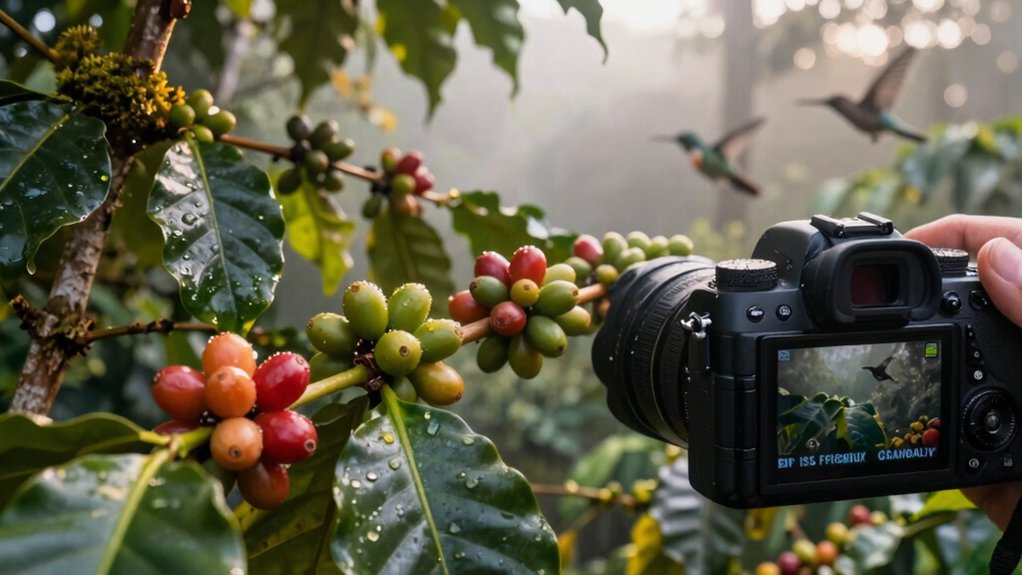
Bird Friendly is the strictest: it demands shade‑grown coffee with at least 40 % canopy cover, three canopy layers, a 40‑foot height, ten native tree species, and it must also carry Organic certification.
Rainforest Alliance also requires Organic certification but focuses on broader sustainability, including biodiversity programs, fair labor, and community benefits, without insisting on the multi‑layer canopy or native‑species mix that Bird Friendly mandates.
Organic certification alone guarantees no synthetic pesticides, yet it says nothing about canopy structure, shade diversity, or birds/habitat protection.
When you see the Bird Friendly seal, you know the farm prioritizes birds/habitat and a rich canopy; the Rainforest Alliance seal signals overall ecological and social standards; the Organic label assures chemical‑free production. Bird‑friendly criteria provide a higher standard for habitat quality in coffee sourcing.
Filter Bird‑Friendly Beans by Country of Origin
You’ll want to start with shade‑rich nations like India, Ecuador, and Peru, where multi‑layer canopies dominate. Look for farms that list native shade species such as mahogany, guava, or cedar, which boost habitat quality. Finally, compare canopy coverage levels—countries with at least 60 % native shade trees give you the strongest Bird‑Friendly guarantee. The presence of diverse shade species can also correlate with more resilient coffee ecosystems and better bird habitats over time shade diversity benefits.
Shade‑Rich Nations
Wondering which origins give you the best bird‑friendly coffee? Shade‑rich nations such as India, Ecuador, and Peru excel at producing Bird Friendly, shade‑grown beans because their farms maintain dense canopy layers that nurture biodiversity and robust bird habitat.
While Brazil and Vietnam dominate sun‑grown markets, the multi‑tiered canopies in these countries support a richer avian community and often include native tree planting.
Still, origin alone isn’t a guarantee; look for certified shade‑grown labels and farm practices that prioritize ecological health.
- India – high canopy cover, native species reforestation.
- Ecuador – diverse altitude zones, strong biodiversity programs.
- Peru – community‑run farms, extensive shade‑rich ecosystems. Bird‑friendly certification
Shade Canopy Species
When you filter bird‑friendly beans by country, the shade canopy species become the deciding factor. Look for farms that list native tree species in their shade canopy; a diverse mix—often ten or more species—signals strong biodiversity and a healthy bird habitat. Bird Habitat certification typically demands at least 60 % native shade trees, multiple canopy layers, and trees tall enough to shelter birds, so a high canopy cover percentage is a reliable proxy for habitat quality. Countries like India, Ecuador, and Peru usually grow shade‑grown coffee with rich, multi‑layered canopies, while Brazil and Vietnam lean toward sun‑grown beans with sparse cover. Prioritizing shade‑grown coffee from regions that meet these criteria ensures you support robust ecosystems and vibrant avian populations. Bird Habitat certification serves as a benchmark for evaluating habitat quality and biodiversity in shade-grown coffee systems.
Canopy Coverage Levels
How much canopy cover does a coffee farm need to truly protect birds? You’ll find that Bird Friendly certification demands at least 40 % canopy coverage and trees 40 feet tall. Origin matters: Brazil and Vietnam usually offer sun‑grown beans with limited shade, while India, Ecuador, and Peru often deliver shade‑grown coffee that boosts habitat quality. When you filter by country, you’re essentially selecting for richer canopy coverage, which supports more birds and healthier ecosystems. Remember, even shade‑grown Robusta can rival Arabica in bird diversity, but full‑sun Robusta falls short. Canopy Coverage data can guide better farm‑level decisions and help you identify truly bird‑friendly options at the point of purchase.
- Prioritize Bird Friendly‑certified beans from India, Ecuador, Peru.
- Check the label for canopy coverage percentages.
- Use origin as a quick proxy when detailed shade data aren’t available.
Prioritize Bird‑Friendly Relationship‑Based Roasters
Looking for roasters who truly support bird habitat? Choose those that highlight Bird Friendly partnerships with smallholder farms and show farm‑specific sourcing on their packaging. You’ll see farmer names, farm locations, and shade‑grown details that prove direct trade connections. Roasters who publish farm visits, harvest stories, and ongoing commitments let you trace each bean to a community that protects birds. Prioritize brands that list the exact farms or regions they source from, rather than vague sustainability buzzwords. Subscription services that clearly label Bird Friendly‑certified options make it easy to stay consistent. By focusing on transparent, relationship‑based sourcing, you ensure your coffee dollars reinforce habitats and empower the farmers who nurture them.
Choose Transparent Buying Channels for Bird‑Friendly Coffee
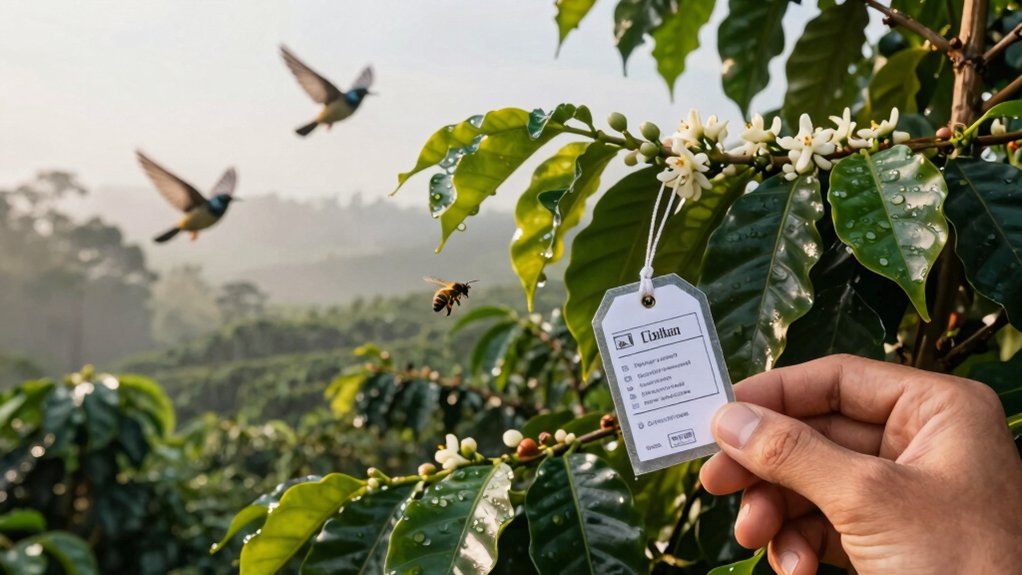
You should look for roasters that openly share their Bird‑Friendly partnerships, listing farm names, regions, and certification status. Pick channels that display verified certification labels and detailed shade‑grown requirements, so you can confirm the coffee meets the 60 % native shade and organic standards. When you buy online, cross‑check the product page’s Bird‑Friendly claim with the official listing or the farm importer for validation. Build confidence by seeking roasters that disclose supply chain details, including farm-by-farm certifications shade-grown.
Transparent Roaster Partnerships
Often the most reliable way to ensure your Bird‑Friendly coffee truly supports shade‑grown habitats is to choose roasters that openly share farm‑level sourcing details. Transparent roaster partnerships let you see which farms or cooperatives supply the beans, the regions they span, and the shade‑grown practices they employ. You’ll spot farm‑level provenance, traceable lots, and third‑party auditing links that prove sustainable coffee standards. When a roaster lists tree‑species diversity and organic status for each lot, you know the canopy is protected and the birds thrive.
- Check the roaster’s website for a sourcing map that names farms and regions.
- Verify that each lot has a traceable ID and a link to third‑party audit reports.
- Choose subscription services that provide farm‑by‑farm provenance and ongoing transparency updates.
Verified Certification Labels
Ever wonder which certification truly guarantees a coffee’s shade‑grown habitat? Look for the Bird Friendly certification, a Smithsonian SMBC label that demands 100% shade‑grown, 100% organic beans. Verify that farms meet the minimum criteria: at least ten tree species, three canopy layers, canopy height of forty feet or more, and no synthetic pesticides. Choose products that display these certification labels clearly, because they signal a true bird habitat commitment. Compare them to Rainforest Alliance; Bird Friendly emphasizes stricter canopy density and organic standards. When you shop, favor roasters or retailers that disclose sourcing to farms holding the Bird Friendly label or strong shade‑grown/organic practices. Transparent buying channels protect birds and guarantee the quality you seek.
Frequently Asked Questions
How Is Coffee Carbon Footprint Measured in Bird Habitat Certified Farms?
You measure the carbon footprint on Bird Habitat Certified farms by calculating emissions from cultivation, processing, transport, and energy use, then converting those totals into CO₂‑equivalents per kilogram of coffee.
Do Bird Habitat Certified Coffees Support Local Farmer Cooperatives?
Yes, you’ll find bird‑habitat‑certified coffees often sourced through local farmer cooperatives, because the certification prioritizes community‑driven stewardship, ensuring growers share profits and maintain sustainable practices together.
Can Bird Habitat Certified Beans Be Decaffeinated Without Losing Certification?
Yes, you can decaffeinate Bird Habitat Certified beans, but you must use a water‑based or CO₂ process that doesn’t alter the coffee’s origin, organic status, or habitat‑preservation criteria, preserving certification.
What Is the Price Difference Between Bird Habitat Certified and Conventional Coffee?
You’ll typically pay $2‑$4 more per pound for Bird Habitat Certified coffee than conventional beans, because the certification adds costs for habitat‑friendly farming practices, audits, and sustainable sourcing.
Are There Third‑Party Audits Confirming Bird Habitat Certified Claims?
You can trust third‑party audits; independent organizations like Rainforest Alliance and BirdLife International verify Bird Habitat Certified claims, providing transparent reports and certifications that confirm the coffee meets their ecological standards.
In Summary
Now that you’ve grasped the certification basics, checked shade‑grown species, compared labels, and filtered by origin, you can zero in on roasters who truly prioritize bird‑friendly practices. Choose brands that are transparent about their supply chain and support habitat restoration. By buying through clear, accountable channels, you’ll enjoy great coffee while protecting the birds and ecosystems that make it possible.


