
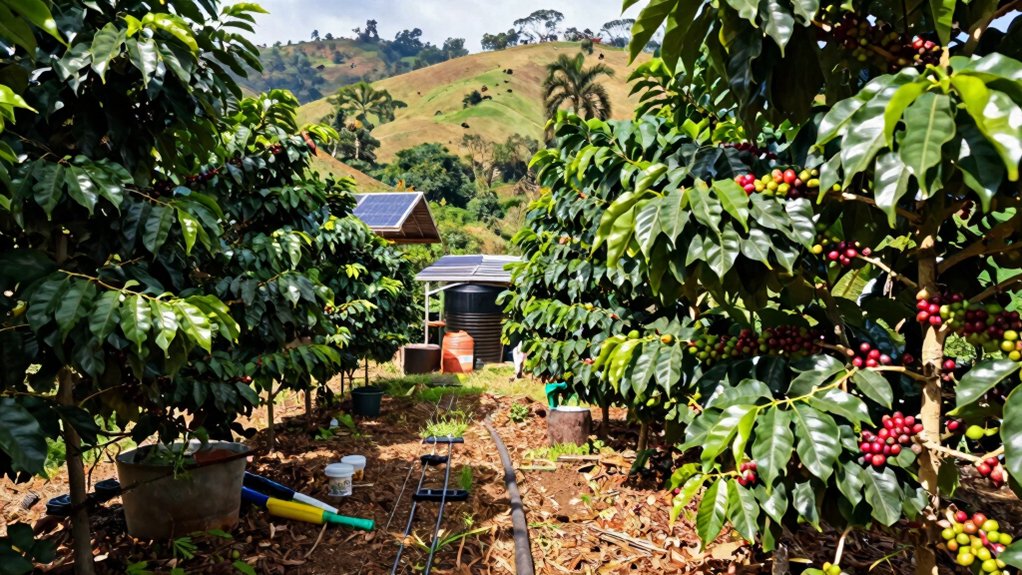
You protect the planet by picking shade‑grown coffee that creates canopy layers for birds, insects and mammals, while trees filter sunlight, cool microclimates and curb pests without chemicals. Water‑smart methods like drip irrigation, mulch and rain‑water harvesting keep rivers clean and reduce erosion. Organic and fair‑trade certifications ban synthetic inputs and ensure fair livelihoods, and climate‑smart agroforestry boosts carbon sequestration, soil health and resilience. Keep exploring to discover how these practices weave together for a healthier planet.
How Shade‑Grown Coffee Boosts Biodiversity for Sustainable Coffee Farms
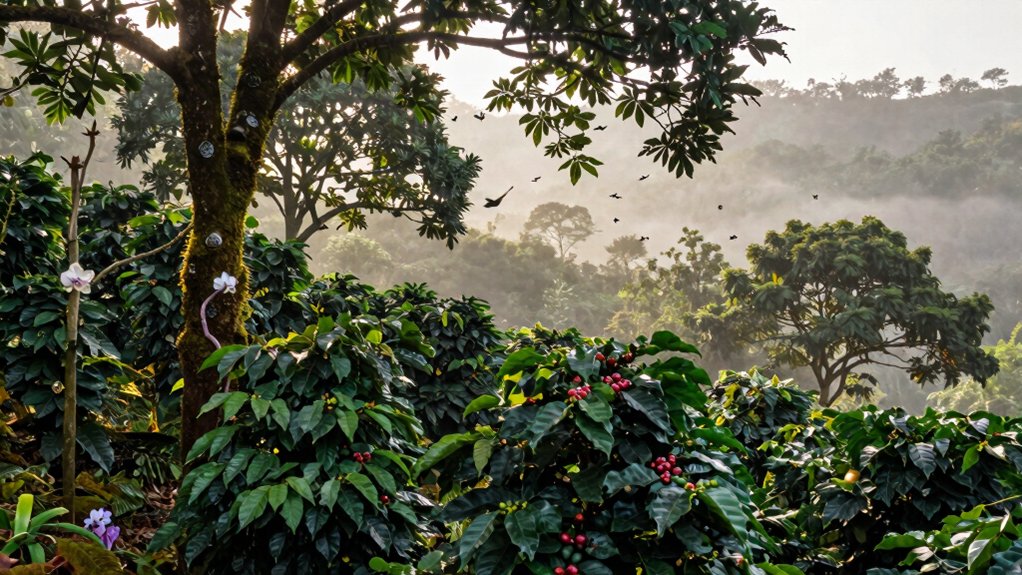
Ever wondered how a coffee farm can become a thriving wildlife sanctuary? You’ll see that shade-grown coffee creates a multi-layer canopy that welcomes birds, insects, and mammals, turning the field into a biodiversity hotspot. The trees filter sunlight, cool the microclimate, and naturally curb pests, reducing chemical sprays.
By integrating agroforestry, you boost carbon sequestration and improve soil health, while habitat conservation supports long‑term resilience. Shade-grown systems also enrich the soil with leaf litter and root networks, fostering robust nutrient cycles.
When you practice sustainable farming this this approach, you balance production with ecosystem services, delivering a coffee crop that thrives alongside a vibrant, protected natural community. Double-layer stainless steel filter
How Water‑Smart Practices Keep Rivers Clean for Sustainable Coffee Production
Shade‑grown coffee already shows you how a vibrant canopy can protect the land; now let’s see how the same farms keep the water clean. You’ll notice water stewardship starts with drip irrigation, which delivers moisture straight to roots, slashing water use efficiency and cutting runoff reduction. Mulch and rain‑water harvesting further limit erosion, while agroforestry and shade‑grown trees provide sediment control and protect watershed health. Organic farming eliminates synthetic chemicals, so fewer contaminants seep into streams. In processing, you adopt water conservation techniques, choosing dry methods when possible and recycling wash water, which trims wastewater generation. Together, these practices create a cleaner river system, safeguard downstream ecosystems, and preserve the quality of your coffee beans. Ecocert COSMOS certification and other third‑party verifications can also help ensure the sustainability claims align with real soil, water, and biodiversity protections.
Why Organic & Fair‑Trade Labels Matter for Sustainable Coffee?
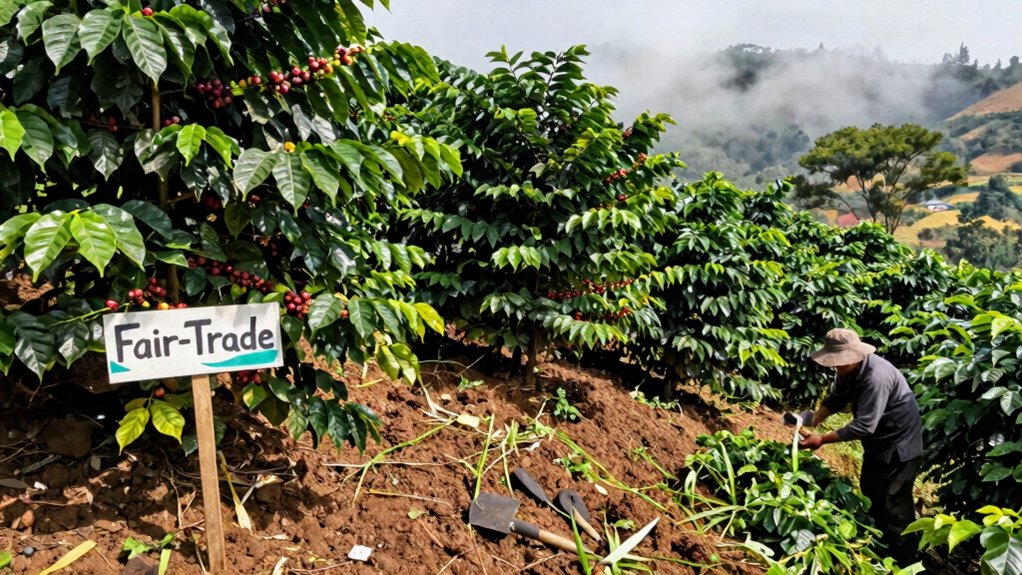
Why do organic and Fair‑Trade labels matter for sustainable coffee? You’ll notice that organic farming bans synthetic pesticides and fertilizers, which safeguards soil health and water quality for nearby communities. When you choose a fair‑trade certified cup, you support a system that guarantees farmers fair prices, bolstering livelihoods and community development. These certifications—organic, fair trade, Rainforest Alliance—act as clear signals in the supply chain, guiding ethical sourcing decisions. Roasters increasingly partner with certified growers, creating market demand for environmentally responsible coffee farming. Your awareness of climate impact and social equity drives this shift, turning each purchase into a vote for environmental protection, healthier soils, and a more just coffee industry. 100% Arabica sourcing in light roasts further emphasizes crisp, clean flavors tied to origin and craftsmanship.
What Climate‑Smart Actions Like Agroforestry Offer for Sustainable Coffee?
How can a coffee farm become climate‑smart? By blending coffee trees with shade trees and other crops, you create an agroforestry system that boosts soil health, fertility, and biodiversity while delivering climate resilience. A key consideration is selecting durable, food-safe materials for any farm infrastructure and equipment, such as 304-grade stainless steel components, which resist corrosion and support long-term hygiene and performance 304-grade stainless steel across freezing and cleaning cycles.
| Benefit | Mechanism | Outcome |
|---|---|---|
| Carbon sequestration | Canopy expansion & shade‑grown coffee | More carbon stored, cooler microclimate |
| Soil health | Leaf litter, compost, nutrient cycling | Reduced erosion, richer soil |
| Biodiversity | Habitat for wildlife, varied crops | Stronger ecosystem, pest control |
| Livelihoods | Diversified income, partnership support | Sustainable incomes, community stability |
These actions let you protect soil, capture carbon, and support wildlife, all while securing sustainable livelihoods for growers.
How Climate‑Smart Community Programs Strengthen Sustainable Coffee Chains
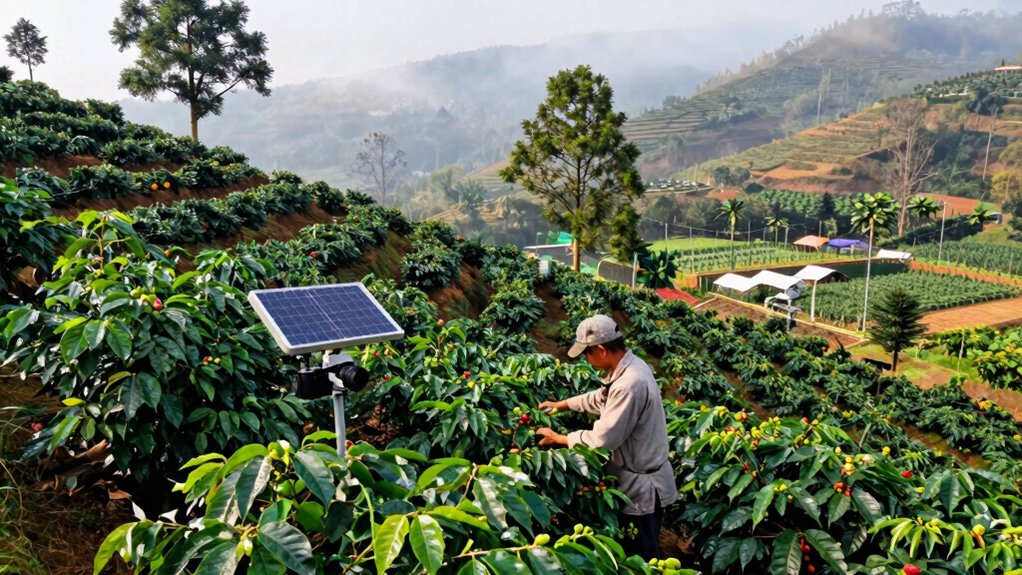
Ever wonder how community programs can turn a coffee chain into a climate‑smart, resilient network? You’ll see that climate‑smart community programs empower 110,000+ AAA farmers across 14 countries with agronomist‑led training, soil and leaf analyses, and tailored fertilization. By embedding agroforestry and shade‑grown coffee, they boost soil health, carbon sequestration, and biodiversity while cutting erosion. Water use reduction comes from milling projects like Jardín, Colombia, which slash pollution by over 60 % and free 200 farmers from four hours of labor each day. These initiatives knit together sustainable coffee chains, strengthening resilience and delivering measurable environmental gains. Portafilter Size Compatibility
Frequently Asked Questions
How Does Coffee Farming Impact the Environment?
You see coffee farming erodes soil, pollutes water with chemicals, drives deforestation, and harms biodiversity; it also releases carbon, disrupts habitats, and makes ecosystems vulnerable to climate extremes.
What Are the Benefits of Sustainable Coffee?
You gain richer flavor, lower carbon footprints, healthier soils, and water savings, while supporting fair wages, biodiversity, and resilient farms that protect ecosystems and sustain long‑term coffee production.
What Are the Benefits of Coffee Farming?
You’ll find coffee farming creates jobs, boosts rural economies, preserves ecosystems through shade trees, sequesters carbon, supports biodiversity, improves soil health, and provides farmers with fair‑trade income and community development opportunities.
What Are the Sustainable Farming Practices for Coffee?
You practice use shade trees, conserve water with efficient irrigation, adopt organic methods, improve soil with compost and cover crops, rotate plantations, and support fair‑trade networks to ensure sustainable coffee farming.
In Summary
By choosing shade‑grown, water‑smart, organic, and fair‑trade coffee, you’re protecting forests, clean rivers, and resilient communities. Those climate‑smart practices—agroforestry, renewable energy, and local empowerment—reduce emissions and boost biodiversity. Every cup you sip supports a healthier planet, proving that sustainable coffee isn’t just a label—it’s a powerful, collective action that safeguards our environment for generations to come.


