
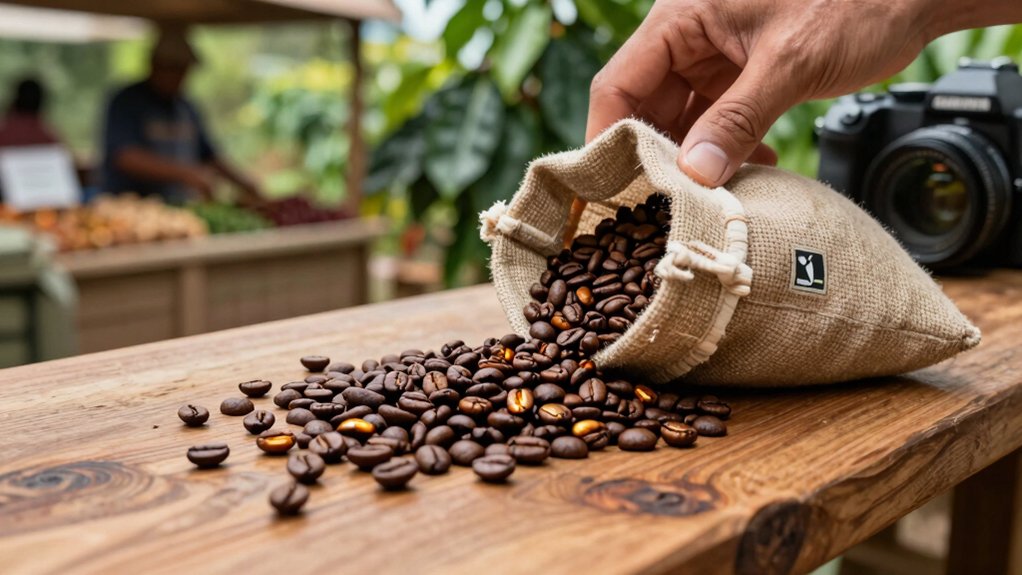
You support ethical coffee when you choose Fair Trade because it guarantees a transparent price floor indexed to the market, a premium that funds schools, clinics, and infrastructure, and strict, independent audits that trace every dollar from farm to cup. Standards on environmental, labor, and social practices are continuously monitored, and rapid corrective actions protect the supply chain’s integrity. Democratic cooperatives manage the premium, ensuring farmers have a voice and funds reach real community projects. Keep exploring to discover how these safeguards keep Fair Trade trustworthy.
What Makes Fair Trade Coffee Ethical? – Core Principles
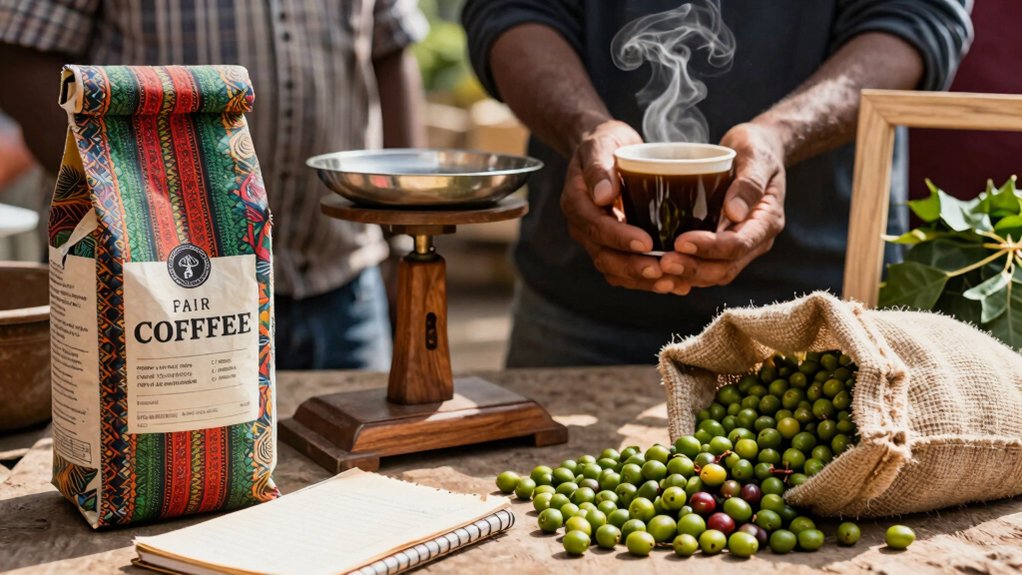
How does Fair Trade coffee earn its ethical label? You get it through Fair Trade certification, which guarantees a minimum price that shields you from market crashes. On top of that, a Fair Trade premium flows to your farmers/cooperatives, earmarked for community development projects like schools, clinics, and training. Third‑party audits verify that you meet social and environmental standards, banning harmful agrochemicals and encouraging sustainable practices such as intercropping. These audits also ensure long‑term relationships between you, buyers, and certifiers, fostering trust and stability. While premiums may sometimes be pooled rather than paid directly, the collective voting process lets you decide how the money improves livelihoods, reinforcing the ethical foundation of the coffee you enjoy. Certification standards further underpin transparency and accountability across the supply chain.
How Fair Trade Coffee Sets Transparent Price Floors for Farmers
Ever wondered how a transparent price floor protects your coffee farmer’s income? Fair Trade sets a clear price floor of $1.40 per pound, indexed to the New York Coffee Exchange, so you see exactly what baseline you’ll receive. On top of that, a 20‑cent premium per pound funds sustainability projects, and you watch those funds flow through cooperatives that practice democratic governance. Certification guarantees record-keeping, ensuring premiums reach the intended community needs despite market volatility. In practice, this price floor is complemented by structured governance that helps ensure funds are used as planned and that farmers have a voice in how premiums are invested cooperative governance.
How Independent Audits Verify Real Community Benefits in Fair Trade Coffee
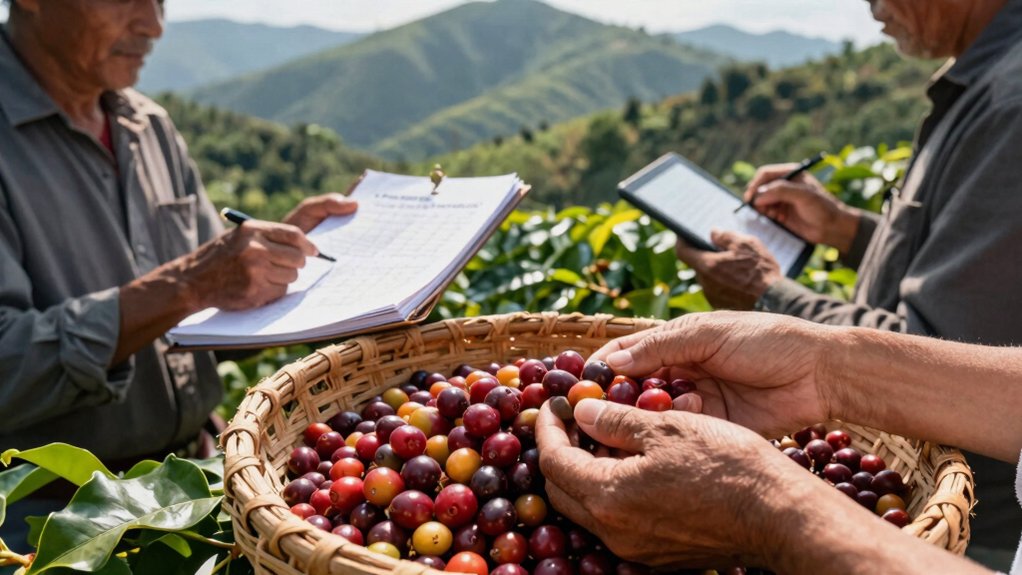
When independent auditors step onto a Fair‑Trade coffee farm, they don’t just check paperwork—they verify that the $0.20‑per‑pound premium is actually reaching the community projects voted on by the cooperative. You’ll see Fair Trade USA and other certifiers demand detailed record‑keeping, so auditors can trace each premium dollar from the export ledger to a new well, school, or training center. Their third‑party verification visits cooperatives, interviews leaders, and inspects bank statements, ensuring transparency and adherence to social standards. By cross‑checking invoices against community‑benefit plans, auditors confirm that premiums fund collective infrastructure rather than individual payouts. This systematic scrutiny helps you trust that the fair‑trade label delivers real, measurable improvements for the people who grow your coffee. verified premium tracking further strengthens confidence in how funds are allocated and monitored through independent audits.
How Premium Funds Are Managed and Allocated by Fair Trade Cooperatives
You’ll see how premium allocation transparency lets you track every cent that goes into community development projects, while the cooperative’s governance structure ensures those funds are voted on collectively. This system often highlights certifications like Fair Trade and Organic that accompany investments in social and environmental outcomes. premium allocation transparency also helps verify that the money truly supports the intended social outcomes.
Premium Allocation Transparency
How do premium funds actually get to the projects that matter? You’ll see that Fair Trade premiums flow through cooperatives that are democratically run, so every farmer votes on premium usage. The standards demand rigorous record‑keeping, so you can trace each dollar from the cooperative’s ledger to social investment goals like education or healthcare. Transparency isn’t just a buzzword; it’s built into governance, with regular audits and public reports that show how much goes to facilities versus direct services. By insisting on clear accounting, the system lets you verify that the money supports the community’s priorities, not just administrative overhead. This openness helps you trust that your cup of coffee truly funds ethical development. record-keeping
Community Development Projects
Transparency turns premium funds into real community change. You watch Fair Trade premiums flow into community development projects that cooperatives design and fund. Through democratic governance, members vote on allocating money to social services, education, healthcare, and environmental sustainability initiatives. In 2021, partners contributed $31 million, which cooperatives like COSURCA, La Voz, CECOVASA, and CECOCAFEN turned into schools, clinics, clean‑water systems, and training for alternative livelihoods. Data tracking and public reporting ensure that funds reach the intended programs and communities, not just individual farms. Every dollar is tracked, with transparent accounting and evidence‑based decisions that ensure the benefits reach the whole producer village, not just individual farms. By pooling resources, you help build resilient communities, improve living standards, and protect the ecosystems that sustain coffee production. Transparent accounting supports trust and accountability in how premiums are allocated and monitored.
Cooperative Governance Structures
Ever wonder who decides where Fair Trade premiums go? You’ll find that Fair Trade governance rests on cooperative governance structures that keep every member in the loop. Cooperatives hold the premium funds, then use democratic decision‑making to allocate them. Member voting determines whether money supports education, healthcare, infrastructure, or quality‑improvement projects, ensuring that allocations reflect collective priorities, not individual payouts. FLO standards require meticulous record-keeping and regular reporting, so cooperative transparency stays high and auditors can trace every dollar. Only small growers in these democratically run cooperatives qualify for certification, which means private estates and multinationals are excluded from direct premium distribution. This system lets you see how your coffee’s premium fuels community growth while staying accountable and fair. Clear, documented procedures with transparent records help ensure trust and ongoing improvement across the cooperative.
How Traceability Systems Prevent Misallocation of Fair Trade Coffee Funds
Why should you trust that Fair Trade coffee premiums reach the projects they promise? Traceability lets you follow each batch from farm to cup, linking premiums directly to cooperatives. This transparency is reinforced by third-party audits that verify that development funds are allocated to approved initiatives traceability standards.
Why Continuous Monitoring Is Critical for Trust in Fair Trade Coffee?

Traceability shows the money’s path, but only continuous monitoring guarantees it stays on track. You’ll see that ongoing audits create real‑time transparency, linking premiums directly to community projects and confirming that governance remains democratic. Monitoring catches price‑floor breaches or misallocation by intermediaries before they erode trust, while certification bodies rely on that data to validate compliance.
Each audit reinforces accountability, showing consumers that every bean respects environmental, labor, and social standards. When standards drift, rapid corrective actions protect the integrity of the supply chain and preserve the promised benefits—education, healthcare, infrastructure. By embedding monitoring into every step, you ensure that fair‑trade claims stay credible and that the coffee you enjoy truly supports the people who grow it.
Frequently Asked Questions
Is Fair Trade Coffee Really Fair?
You’ll find Fair Trade coffee isn’t perfectly fair; it lifts many growers, but premiums often miss direct wages, small farms benefit more than large estates, and bureaucratic costs can dilute its impact.
What Is the 15-15-15 Rule for Coffee?
You pay at least a 15‑cent premium above the base price, guarantee a minimum fair price, and add a 15 % uplift for sustainable practices and quality improvements under Fair Trade standards.
Is Fairtrade Actually Ethical?
You should know that Fair Trade can be ethical when premiums truly fund community projects and cooperatives practice transparent, democratic governance, but its effectiveness varies, and some farmers still miss living‑wage guarantees.
What Makes Coffee Ethically Sourced?
You ensure coffee is ethically sourced when you verify transparent supply chains, fair farmer wages, sustainable farming practices, third‑party certifications, and community‑benefiting premiums that genuinely improve workers’ lives.
In Summary
You’ll see that fair‑trade coffee isn’t just a label—it’s a system that guarantees farmers a living price, backs it with independent audits, and channels premium funds into community projects. Traceability keeps money where it belongs, and ongoing monitoring preserves trust. By supporting this model, you help create a transparent, accountable supply chain that truly benefits growers and their communities.


