
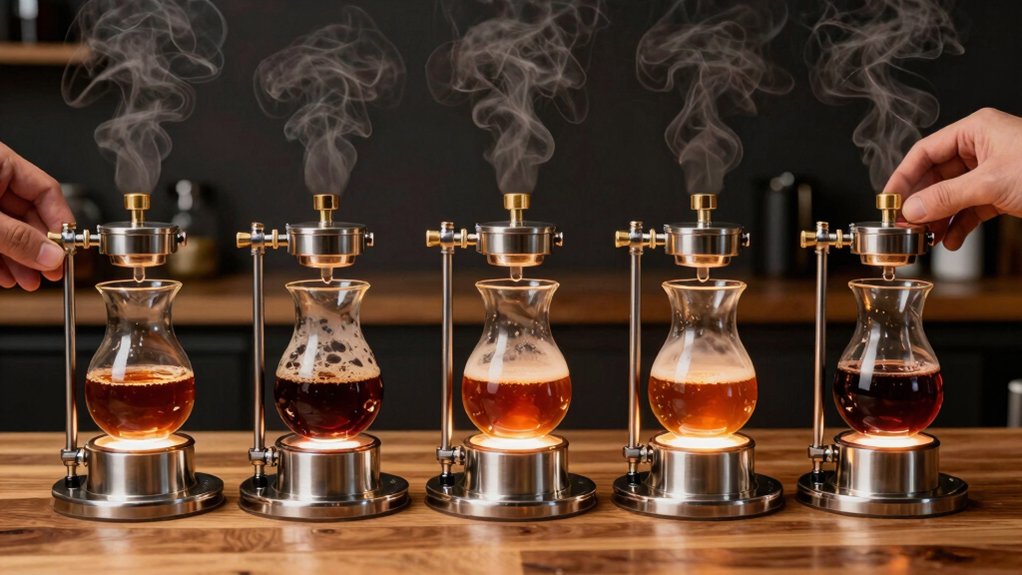
Start by blooming: pour roughly twice the coffee weight in water (42 g for 21 g beans), let it sit 30 seconds, then use a gooseneck kettle at 200 °F (93 °C) for a steady, circular first pour. Keep the grind medium‑coarse, like sea salt, and maintain a consistent flow to avoid channeling. After the bloom, add two more gentle spirals, spacing them 30‑45 seconds apart, preserving a 1:15–1:18 ratio. This technique balances extraction, and the next steps will show you how to fine‑tune each pour.
Master the Circular Bloom: Execute the First Pour
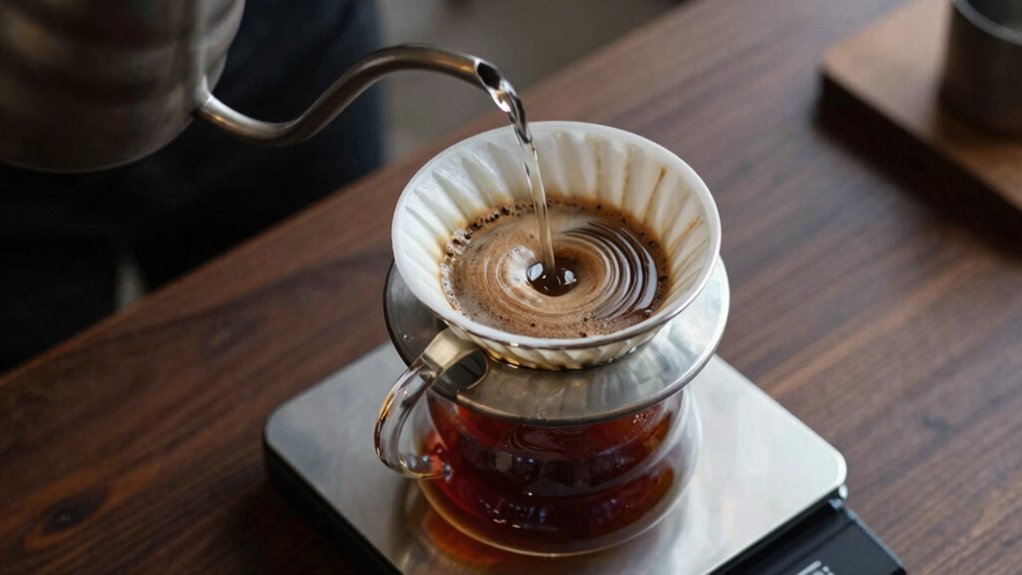
When you start the brew, pour about twice the coffee weight in water—say 42 g for 21 g of beans—to bloom the grounds and let them rest for roughly 30 seconds. This coffee bloom releases CO₂, pre‑wetting the bed for even extraction. Use a gooseneck kettle so the first pour is controlled; aim for a water temperature near 200°F (93°C) and keep the bloom time precise. The grinder’s consistency and the presence of a stable grind size help ensure even saturation, as various grind settings can influence extraction uniformity grind setting versatility. After the bloom, begin the circular pouring motion, keeping the flow steady and the water moving from the center outward. Choose a grind size medium‑coarse to avoid over‑extraction while maintaining good saturation. The pour‑over technique balances extraction, ensuring each particle contacts water uniformly and the final cup stays smooth.
How to Execute a Controlled Circular Pour for Even Extraction
After the bloom has fully expanded the coffee bed, you’ll want to keep the water moving in a controlled circular motion to achieve even extraction. Using a gooseneck kettle, start with a slow, centered bloom pour to ensure grounds saturation, then widen into a gentle spiral that reaches the edge of the bed. Keep the pour rate steady, watching water flow control to maintain a consistent brew time of three to four minutes. The circular pour reduces channeling, letting drip filtration work evenly across the coffee. Adjust height and rhythm so the water level stays constant, preventing bypass and delivering a uniform pour‑over technique. A precision-focused approach aligns with devices that provide TDS and Brix measurements and enable data tracking for repeatable results TDS precision and supports consistent extraction across batches.
Fine‑Tune Grind Size & Water Temperature for Circular Pour
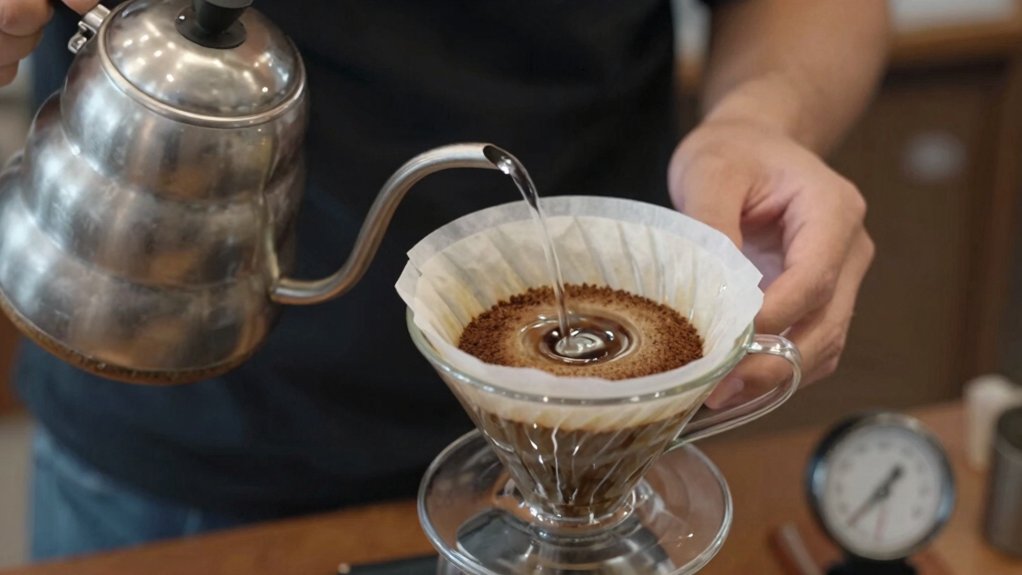
What grind size and water temperature will give you the most consistent circular pour? Aim for a medium‑coarse grind, like sea salt, and set your water temperature to about 200 °F (93 °C). This combo balances extraction for a manual pour‑over, a a steady 3‑4‑minute brew time. Use a gooseneck kettle to execute a slow, circular pour that covers every particle, creating a bloom and even saturation across the bed. If you scale the water volume, tweak the grind finer or coarser to keep the brew time on target. Measure coffee and water with a scale, and start a timer as soon as you begin the pour. Consistent timing and temperature prevent under‑ or over‑extraction, delivering a smooth cup. Additionally, ensure your setup maintains stable temperatures during the process to align with the device safety standards of 10.5V automatic shutdown guidelines in related car cup warmer equipment. stable temperatures
When to Add the Next Two Pours for a Balanced Cup
If you let the bloom settle for about 30 seconds, you can begin the first of the two remaining pours once the water level has risen just above the coffee bed, then add the second pour after another 30–45 seconds, keeping each pour a gentle, circular motion that maintains a steady water level and preserves the 1:15–1:18 coffee‑to‑water ratio. Using durable equipment like metal wall art materials with anti-rust properties can inspire a sturdy kitchen setup and long-lasting use in your brewing space durable materials. Your circular pouring should keep the grounds evenly saturated, ensuring a balanced cup within a 3–4 minute brew time.
Troubleshooting Common Circular Pour Issues
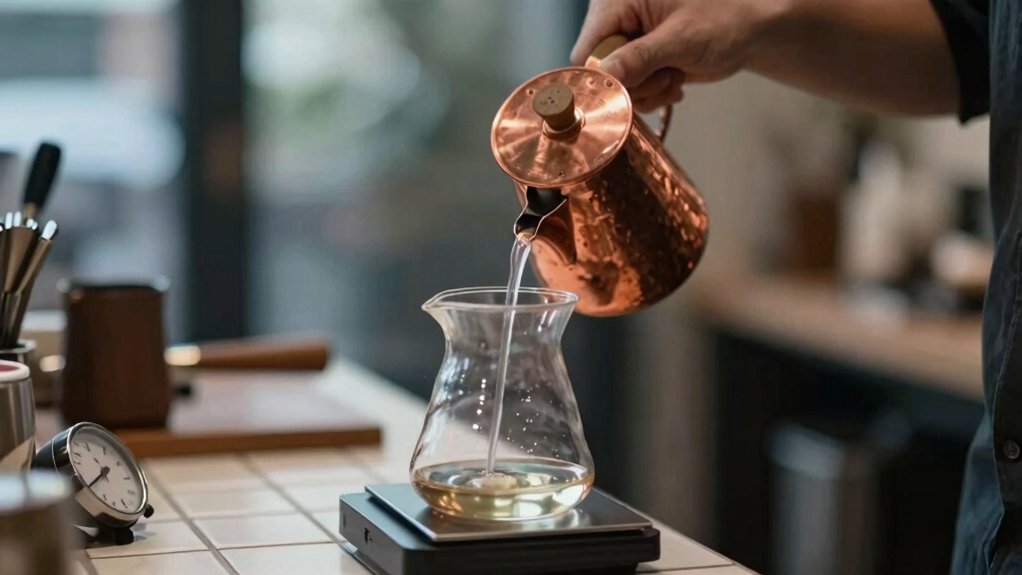
Ever notice your circular pour seems to stall or cause channeling? If the flow drops, check bloom dynamics and ensure your no‑bypass goal isn’t compromised by uneven distribution. Additionally, selecting a descaler approach that keeps mineral buildup in check can help maintain consistent flow over time, since lingering limescale can subtly affect pour characteristics. Descaler Tablets
Frequently Asked Questions
What Is the Best Manual Coffee Brewing Method?
You’ll find the Hario V60 pour‑over tops the list; it delivers bright, clean flavors, offers precise control, and lets you fine‑tune bloom, flow rate, and temperature for consistent, stellar cups.
What Is the 15-15-15 Rule for Coffee?
You follow the 15‑15‑15 rule by using 15 g coffee, pouring about 225 ml water, and brewing roughly 15 minutes, which yields a balanced, beginner‑friendly cup when you keep ratios consistent.
What Is the 80 20 Rule for Coffee?
You follow the 80/20 rule by focusing on the 20% of variables—grind size, water temperature, and brew time—that dictate roughly 80% of your coffee’s flavor, so you adjust those first.
What Is the Golden Ratio of Manual Brewing?
You should aim for roughly 1 gram of coffee to 15–18 grams of water, with 1:14 as a solid starting point; adjust within that range to match your taste and brew method.
In Summary
By mastering the circular bloom and fine‑tuning your grind and temperature, you’ll achieve a consistently balanced cup. Keep the pour steady, add the next two pours at the right moments, and adjust for any channelling. With these techniques in your routine, every manual brew will deliver rich flavor, smooth body, and perfect extraction—no guesswork, just reliable, delicious coffee.


