
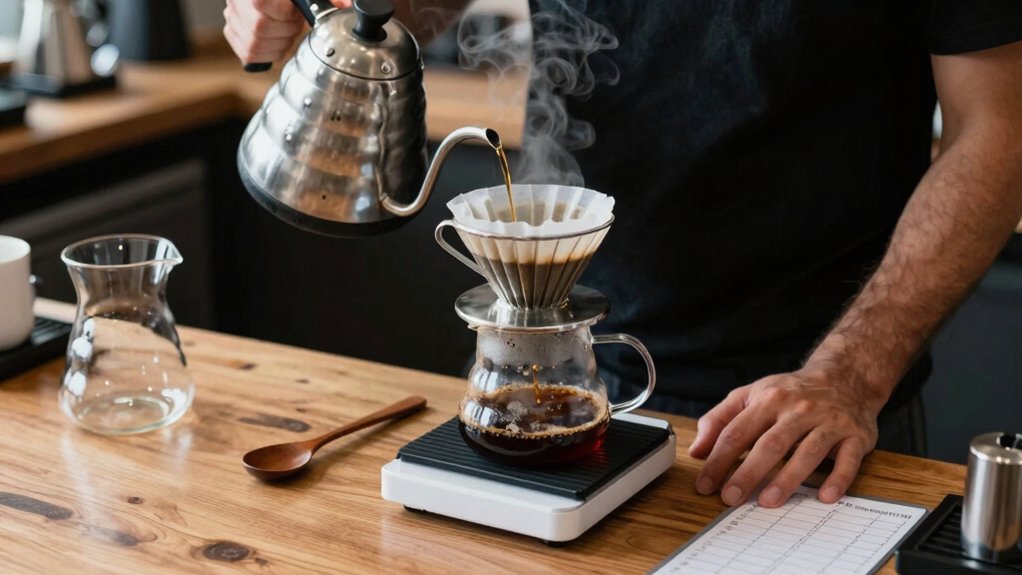
Start with a 1:15 coffee‑to‑water ratio to lock in a balanced cup, then adjust to suit your taste. Try a 1:17 ratio for a milder, sweeter profile, or go to 1:13 for a fuller body and richer mouthfeel. If you want a stronger brew, use 1:12, and for a light, delicate cup, aim for 1:18. Fine‑tune grind size, water temperature, and flow to keep the flavor consistent, and you’ll discover even more nuances.
Start With a 1:15 Coffee‑to‑Water Ratio for a Balanced Cup
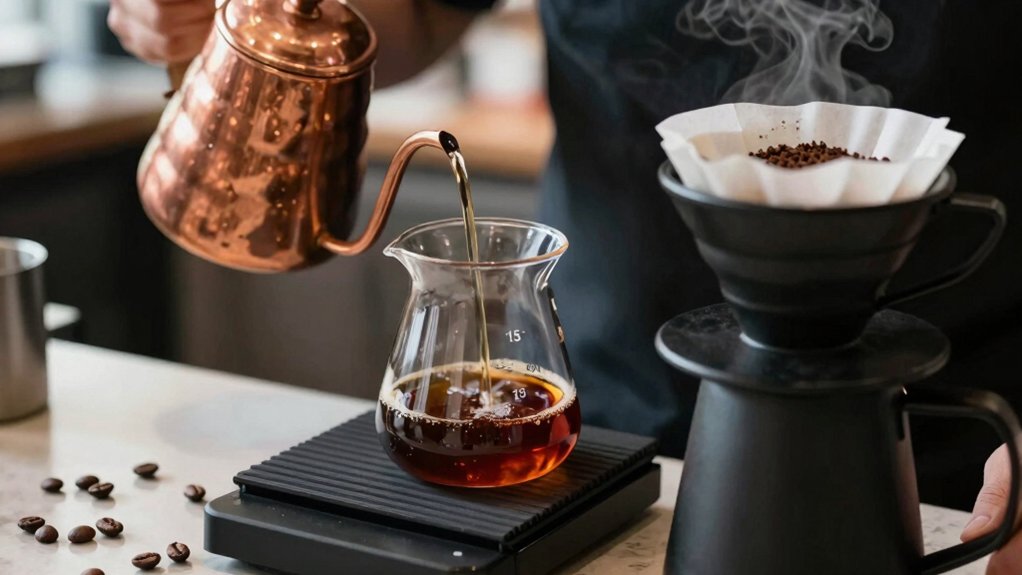
Looking to hit that perfect balance? Start with a 1:15 ratio—one gram of coffee to fifteen grams of water—to guide a smooth cup. Grab your scale, weigh 20 g of coffee for a 300 g brew, then add 300 g of water. Use a consistent grind size for pour‑over or drip; too fine clogs, too coarse weakens.
Pour‑over once the water reaches the right temperature, keeping the flow steady to extract evenly. Weight‑based measurements lock in the balance, so each brew repeats the same flavor profile.
Adjust within the 1:15‑1:18 window if you want a stronger or milder cup, but the 1:15 start gives a reliable, well‑rounded base. In setups that pair a refractometer with a scale, you can track extraction trends and fine‑tune your ratio for repeatable profiles extraction tracking across multiple brews.
Try a 1:17 Ratio for a Milder Flavor Profile
Want a softer cup without sacrificing body? Try a 1:17 coffee-to-water ratio for a milder flavor that still holds sweetness. Measure 16.7 g coffee for a 284 g (10‑oz) pour‑over, then adjust grind size to a medium‑fine consistency so water flows evenly.
Keep water temperature around 195‑200 °F to promote gentle extraction balance. As you brew, watch the drip rate; a steady stream signals that the immersion brewing phase is on track.
If the cup feels too weak, dial in by moving to 1:16; if it’s too strong, shift to 1:18. This fine‑tuning lets you control brew strength while preserving the delicate profile you’re after.
Try a 1:13 Ratio for a Fuller Body
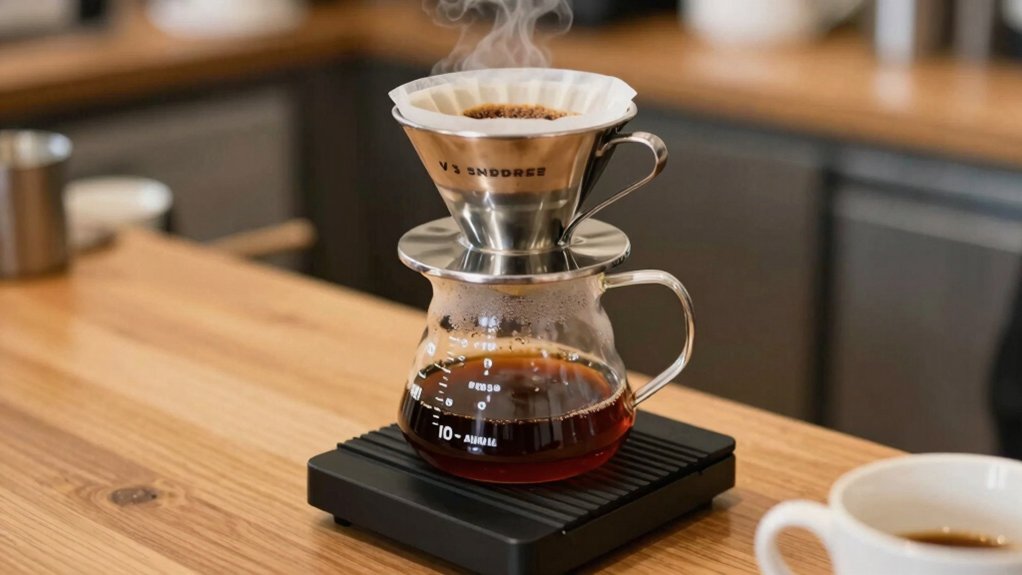
Ever considered how a tighter 1:13 coffee‑to‑water ratio can deepen your brew’s body? Using 26 grams of coffee with 338 grams of water (26 × 13 = 338) gives you a noticeably fuller body compared to a 1:15 or 1:18 ratio. This approach aligns well with brew methods like a French press or pour‑over, where a finer grind size and longer contact time help balance extraction. Measure your grams of coffee and grams of water precisely to keep the 1:13 proportion consistent. Brand compatibility with popular coffee makers like Keurig, Ninja, Mr. Coffee, and Breville can influence how you apply this ratio in different machines. Experiment with brew methods, noting how the richer mouthfeel and sweetness evolve, and fine‑tune the grind or brew time until the fuller body matches your taste.
Try a 1:12 Ratio for a Stronger Cup
Why not boost your brew’s intensity with a 1:12 coffee‑to‑water ratio? You’ll use about 19–20 g coffee coffee and 235 g water for a 12‑oz (355 g) cup, giving a stronger cup than the usual 1:15–1:18. In a French press, the 1:12 ratio pushes concentration while keeping extraction balanced. Choose a slightly finer grind size to maintain proper extraction without over‑extraction, and watch the water amount so the coffee mass stays consistent. If the brew turns bitter or harsh, make a taste adjustment by moving toward a 1:13–1:15 ratio. This tweak lets you fine‑tune flavor while preserving the bold body you’re after in your coffee brewing. Extraction can guide how the grounds release flavors as you adjust ratios and timing.
Try a 1:18 Ratio for a Light, Delicate Brew
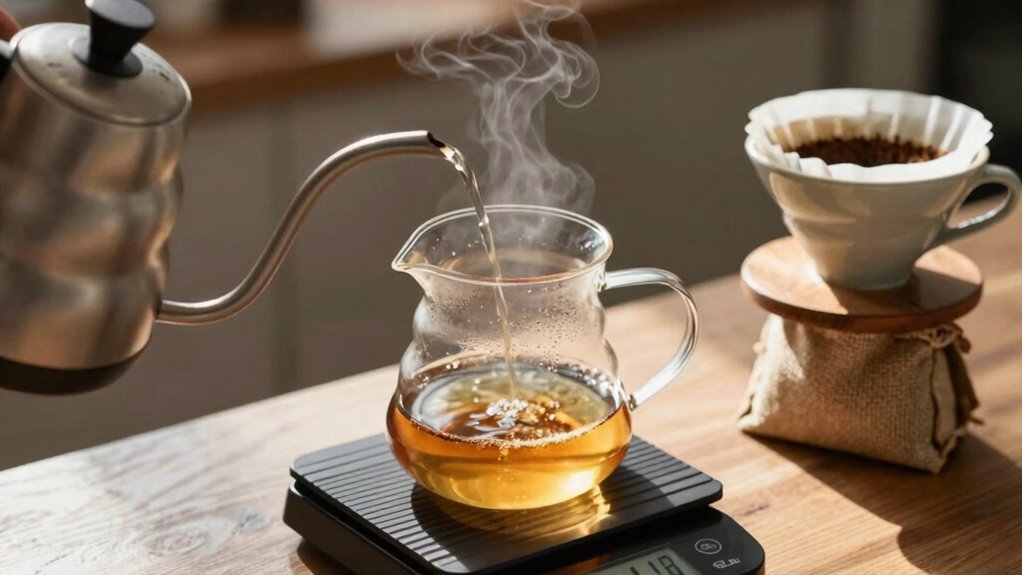
If the 1:12 ratio feels too intense, dialing back to a 1:18 coffee‑to‑water proportion gives a lighter, more delicate cup. You’ll need 1 g of coffee for every 18 g of water, so a 300 g serving uses roughly 16.7 g of coffee grounds. This coffee-to-water ratio sits at the upper edge of the Golden Ratio, delivering a light brew that highlights bright notes. Choose a slightly finer grind size if you want more body, but keep it consistent with your brew method—whether you’re using a pour‑over, Aeropress, or French press. Accurate scale measurements are essential for brewing basics; they let you fine‑tune the ratio. If the cup feels too weak, move toward 1:17 or 1:16 for extra sweetness without adding bitterness. Brewing control helps you consistently hit the lighter, brighter profile you’re aiming for.
Frequently Asked Questions
How Does Grind Size Interact With Coffee‑To‑Water Ratio?
You’ll notice that finer grinds extract faster, so you need a lower coffee‑to‑water ratio to avoid over‑extraction, while coarser grinds need a higher ratio to achieve enough flavor without under‑extracting.
Can I Use a Different Bean Origin With the Same Ratio?
Yes, you can use a different bean origin with the same ratio; just keep the grind size and brew time consistent, then adjust if the flavor feels too weak or overly intense.
What Temperature Range Works Best for Each Ratio?
You should brew at 195‑205 °F for most ratios; for 1:15 use the lower end, 1:13–1:14 stay near 200 °F, and for stronger 1:12 push toward 205 °F.
Should I Adjust Brewing Time When Changing Ratios?
Yes, you should tweak brewing time when you change ratios. Higher coffee‑to‑water ratios need shorter contact to avoid over‑extraction, while lower ratios benefit from longer steeping for balanced flavor.
How Does Water Hardness Affect Extraction at These Ratios?
Hard water’s calcium and magnesium bind to coffee acids, slowing extraction. At higher ratios you’ll notice under‑extraction, while lower ratios may still taste balanced. Adjust grind size or add a pinch of salt to compensate.
In Summary
By tweaking the coffee‑to‑water ratio, you can fine‑tune every cup to match your taste. A 1:15 mix gives you balance, while 1:17 leans toward mildness. Want more body? Go 1:13. For a stronger brew, try 1:12, and for a light, delicate profile, aim for 1:18. Experiment with these ratios, and you’ll discover the perfect brew that suits your palate every time.


