
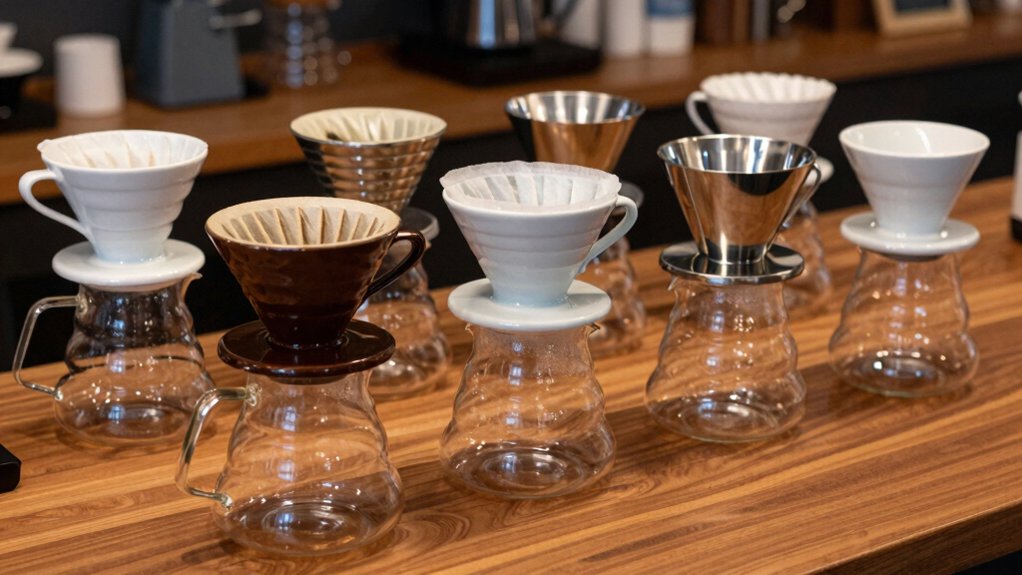
Pick a filter that matches your brew size—#1, #2, #4, or #6 cones for V60, Chemex, or Kalita Wave, flat‑bottom paper for Wave, disc for Aeropress, metal mesh or cloth for reusable options. Thicker paper (up to 0.28 mm) slows flow, adds body and acidity, while thinner, high‑porosity bamboo/abaca gives clarity. Bleached paper cuts oils for a clean cup; unbleached or oxygen‑bleached retain richer flavors. Rinse and pre‑heat paper to ditch papery notes, and scrub mesh or cloth after each use. Adjust grind and brew time to the filter’s porosity, then you’ll see how each choice shapes flavor, consistency, and sustainability.
Choose the Right Pour‑Over Filter for Your Brew

Choosing the right pour‑over filter starts with matching the filter size to your brewer’s capacity—cone filters #1, #2, #4, and #6 correspond to 1‑cup, 2‑6‑cup, 8‑12‑cup, and larger batches, while flat‑bottom baskets fit Kalita Wave‑style devices. You’ll pick a filter material based on flavor goals: paper gives a clean cup, metal lets more oils through for richer body, and cloth balances both. Bleached filters remove papery notes, but unbleached brown filters can add a subtle flavor unless you pre‑wet/rinse them. Pre‑wetting also heats the brewer and steadies extraction. Consider device‑filter pairings: V60 works with conical paper, metal, or cloth; Kalita Wave prefers flat‑bottom, and Aeropress uses disc filters. Matching these choices ensures consistent taste across your pour‑over brewers. Filter material quality and texture can influence oil preservation and sediment filtration, so selecting filters that balance flavor clarity with body is essential.
How Filter Material Determines Porosity & Flavor
What makes a pour‑over filter taste different? The filter material sets porosity, which controls how quickly water flows and how much oil and micro‑grounds pass through. Thicker paper (up to 0.28 mm) slows drawdown, yielding a fuller body and higher acidity, while a denser, low‑porosity sheet gives clarity but can taste thinner. Pre‑wetting eliminates papery notes and helps the filter seal, reducing uneven extraction. Unbleached filters often impart a faint, papery flavor, whereas oxygen‑bleached ones let fewer oils through, delivering a cleaner cup. Your choice of material also shapes mouthfeel; a well‑balanced paper reduces harsh, papery texture and lets nuanced flavor shine. Adjusting these variables lets you fine‑tune both porosity and flavor. Power outlets and built‑in features on the carts can influence how consistently you can pre‑wet and prepare multiple filter batches during service.
Bamboo, Abaca, and Eucalyptus Fibers: Porosity Explained
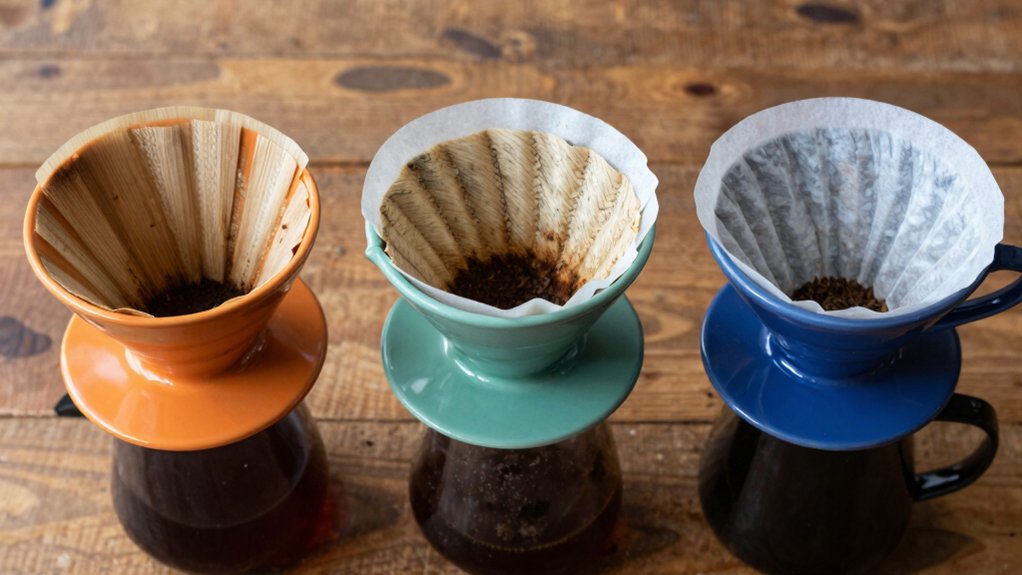
Ever wondered why some pour‑over filters feel silkier and deliver brighter notes while others produce a heavier, more muted cup? Bamboo fibers and abaca fibers are the longest in the blend, creating high porosity that lets water flow smoothly and extracts aromatic oils efficiently. Eucalyptus pulp, with its short fibers, packs tighter, lowering porosity and slowing drawdown. When you choose a filter with 0.15 mm thickness, the lofty porosity of bamboo and abaca yields a clean, crisp cup and excellent brew clarity. Thicker 0.28 mm options, especially those rich in eucalyptus pulp, trap more fines, adding body but muting brightness. Balancing porosity and filter thickness lets you fine‑tune extraction for the flavor profile you crave. Regularly checking the material composition helps ensure you’re selecting a filter that aligns with your preferred brew method and taste, particularly when comparing pore structure porosity and thickness across different blends.
Bleached vs. Unbleached Paper Filters: Flavor & Pre‑Wetting
You’ll notice that pre‑wetting a filter washes away papery flavors and helps it sit snugly, which can smooth out the cup, while choosing a compostable paper micro-filter can further reduce bitter oils for a cleaner finish. unbleached paper
Papery Flavor Mitigation
Ever wondered why your pour‑over sometimes tastes like cardboard? That papery flavor often comes from unbleached filters, which can leave a faint, earthy note. The quick fix is pre‑wetting: pour a thin stream of hot water over the filter, let it sit, then discard the rinse. This rinse pre‑wet removes residual paper particles, eliminates air pockets, and stabilizes filtration taste. Oxygen‑bleached filters, being white, already reduce paper flavor, but a brief pre‑wet still sharpens clarity and balances extraction. Both eco‑friendly options benefit from this simple step, giving you a cleaner cup without sacrificing sustainability. Use pre‑wetting every brew, and you’ll notice a smoother, more nuanced coffee profile. Educational panels from comprehensive brewing guides emphasize how precise parameters like grind size, water temperature, and proper filtration can influence extraction and flavor balance, underscoring the value of methodical practice in home brewing.
Bleach Type Impacts
Papery notes vanish once you pre‑wet, but the filter’s bleaching method still shapes the cup. Bleached filters come in two flavors: chlorine‑bleached and oxygen‑bleached.
Chlorine‑bleached paper strips away most oils, delivering a feather‑light brew but raising eco‑ concerns.
Oxygen‑bleached filters stay white, pass fewer micro‑grounds, and keep the cup cleaner while staying compostable.
Unbleached brown filters let a subtle papery flavor linger, adding body and a rustic feel, yet they’re the most eco‑friendly because they’re made from renewable fibers.
- Chlorine‑bleached: minimal oils, light cup, poor environmental record.
- Oxygen‑bleached: milder taste, cleaner cup, compostable, eco‑friendly.
- Unbleached: richer body, papery flavor, fully compostable, sustainable.
Choosing the right bleach type balances flavor impact with pre‑wetting habits and eco‑friendly options. Bleaching method and pre‑wetting influence both cup profile and sustainability considerations.
Pre‑Wetting Benefits
Why pre‑wet a filter? You rinse the paper, cut papery flavors, and prime the filter material for even preheating. The water “wets” the fibers, letting bloom/coffee oils flow smoothly and preventing a dry, gritty bite. In practice, using ATC-like temperature compensation devices in refractometers highlights how precise the measurement environment can be, underscoring the need for consistent brewing workflows and data tracking across gear. Filter characteristics influence extraction behavior, and a well‑prepped filter helps ensure more consistent tasting notes and brew data.
| Filter Type | Flavor Impact | Rinse Needed |
|---|---|---|
| Unbleached | Rich, fuller cup with more oils & micro‑grounds | Yes – generous pre‑wet |
| Oxygen‑bleached | Cleaner, milder cup, fewer papery notes | Light pre‑wet |
| Chlorine‑bleached | Lightest cup, minimal oils, least eco‑friendly | Minimal |
Metal Mesh Pour‑Over Filters: Pros, Cons & Best Use Cases
You’ll notice that a metal mesh filter gives your coffee a richer body and fuller mouthfeel, thanks to the extra oils and fines it lets through.
Because it’s reusable, you cut down on waste and save money over time, though you’ll need to clean it thoroughly to avoid off‑flavors.
Just make sure the filter fits your brewer, or the flow rate and extraction could get off‑balance.
Reusable Body and Mouthfeel
Metal mesh pour‑over filters give you a richer, fuller body and a more pronounced mouthfeel because their fine mesh lets more oils and coffee fines pass into the cup. You’ll notice a silkier brew texture that feels like a café‑style espresso shot, and the reusable nature means each brew builds on that depth without extra waste. The metal filters let the oils and fines linger, creating a lingering, velvety finish that paper filters can’t match. When you experiment with grind size and pour speed, you can fine‑tune the intensity, keeping the mouthfeel consistent batch after batch.
- The lingering oil‑kissed body makes every sip feel indulgent.
- You feel the texture of fines dancing on the tongue, adding complexity.
- The reusable design gives you confidence that each cup is both rich and sustainable.
Eco‑Friendly Reusability
A handful of key benefits make metal mesh pour‑over filters a standout choice for eco‑conscious coffee lovers. Their reusability slashes waste and cuts long‑term cost compared with paper filters, while the richer oils and fines they let through give a fuller body. To keep performance high, you’ll need to rinse and scrub the metal filters after each brew, treating them like a cloth. This care pays off in sustainability and flavor consistency, especially when you brew daily and want a greener routine.
| Aspect | Metal Mesh |
|---|---|
| Reusability | Unlimited cycles, low waste |
| Cost | Higher upfront, lower long‑term expense |
| Flavor | Fuller, darker, cloudier brew |
Choose metal filters when you prioritize eco‑friendly habits, durability, and richer coffee.
Cloth Filters: Fiber Types, Reusability & Flavor Impact
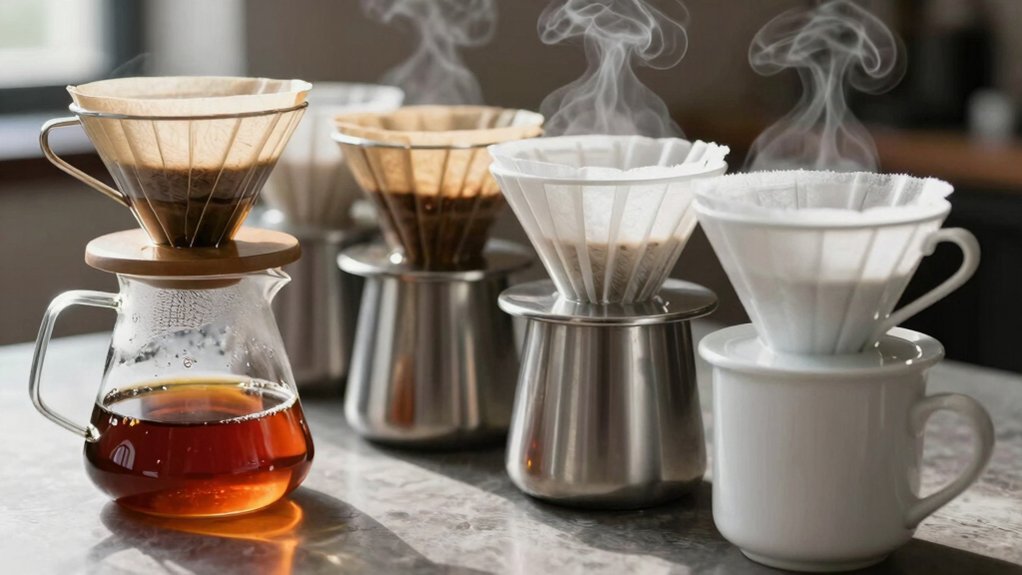
Ever wondered why a cloth filter can make your pour‑over feel richer and more textured? Cloth filters trap more fines and oils, giving a fuller-bodied, cloudier cup. The fiber types—cotton, hemp, linen, nylon—each shape mouthfeel and flavor absorption, so you can tailor the taste profile. Since they’re reusable, you’ll notice a heavier mouthfeel and deeper flavor impact compared to paper. Proper cleaning and maintenance keep the filter performing and prevent off‑flavors.
- Boil or rinse the cloth before first use to awaken its fibers.
- Rinse after each brew, then deep‑clean weekly to remove oil buildup.
- Store dry in a breathable container to preserve shape and flavor integrity.
How Conical Filters Shape Extraction Dynamics
How does a conical filter shape your extraction? You’ll notice that cone‑shaped filters guide water toward a central drain, boosting flow rate while shortening contact time. That faster drainage brightens the cup and can mute body, so you must match the filter size—#1, #2, #4, or #6—to your brew device capacity for consistent extraction. A snug brew device fit prevents overflow and channeling, letting the filtration material—paper, metal, or cloth—perform as intended. Paper cones trap fine particles, metal cones let more oils through, and cloth cones balance retention and flow. By choosing the right cone‑shaped filter and ensuring a tight fit, you control extraction dynamics, shaping flavor, clarity, and overall brew quality.
Flat‑Bottom Filters: Influence on Body and Clarity
Why does a flat‑bottom filter often give you a cleaner cup? Its even surface forces water to spread uniformly, extending saturation time and promoting consistent drawdown. The result is a brighter body with less muddiness, because the filter capacity and weave control how much sediment passes through. When you match the filter size to your basket, bed uniformity improves, preventing channeling and over‑extraction.
Flat‑bottom filters spread water evenly, extending saturation and delivering a brighter, cleaner cup.
- Tighter‑knit filters boost clarity but slow drawdown, giving a crisp, clean body.
- Looser‑knit filters speed up brew, sacrificing some brightness and uniformity.
- Proper sizing ensures even flow, preserving flavor balance and preventing overflow.
Adjust Grind, Dose & Brew Time for Different Filter Thicknesses
Flat‑bottom filters give you a clean cup, but the real fine‑tuning comes when you match grind, dose, and brew time to the paper’s thickness. If you’re using a thin 0.15 mm bleached filter, go for a coarser grind size and a 16 g dose; the faster flow rate will need a longer brew time—about 3 minutes—to pull full extraction. For a dense 0.28 mm unbleached filter, switch to a finer grind, bump the dose to 19 g, and shorten brew time to 2½ minutes because the thicker paper slows flow. Always prewet the filter to settle the paper and stabilize flow rate. Adjust bloom volume (30–45 ml) and temperature (93–95 °C) accordingly, and you’ll hit the target 2.5‑3‑minute window with balanced clarity and body.
Rinse & Pre‑Heat Paper Filters to Eliminate Papery Tastes
You’ll want to rinse the paper filter with hot water to strip away papery flavors before brewing. A quick pre‑heat of the filter holder, carafe, or mug steadies temperature and promotes even extraction. Make sure the filter sits snugly so the water flows smoothly and the taste stays clean.
Rinse To Remove Papery Flavors
Ever wondered how a quick rinse can banish that papery aftertaste? A hot‑water rinse pre‑wets the paper filter, eliminates air pockets, and boosts heat transfer, so your brew extracts flavor cleanly. Whether you use bleached or unbleached filter type, the rinse neutralizes papery flavors and stabilizes flavor extraction. Skipping this step often leaves a faint cardboard note, especially with unbleeted filters that cling to fibers.
- Feel the difference when the first sip is crisp, not muted.
- Enjoy the confidence of a consistent, balanced brew every time.
- Relish the ritual of a simple rinse that transforms your coffee ritual.
Pre‑Heat For Better Extraction
A quick rinse does more than mute papery notes; it also pre‑heats the filter and the brewing vessel, setting the stage for a more efficient extraction. When you hot‑water pre‑wet a paper filter, you eliminate papery flavors and boost taste neutrality. The dripper preheat stabilizes temperature, reducing filtration impact and allowing coffee grounds to release solubles uniformly. A brief rinse also primes the filter’s pores, preventing uneven flow that can over‑extract or under‑extract.
| Aspect | Effect |
|---|---|
| Pre‑heating | Maintains optimal brew temperature |
| Rinse | Removes papery taste, saturates filter |
| Paper filters | Provide consistent filtration impact |
| Dripper preheat | Enhances extraction uniformity |
Fit Filter Securely
Why does a snug, pre‑wetted paper filter matter? When you pre‑wet the filter, you heat the filter holder and melt away papery flavors, so the pour over starts with a clean canvas. A snug filter fit eliminates air pockets, prevents channeling, and holds the dripper seal tight during the bloom technique. Press the filter into the dripper with a spoon, then swirl hot water to pre‑heat and pre‑wet. You’ll notice steadier flow, richer aroma, and consistent extraction.
- The warm, wet filter feels like a gentle hug for your coffee grounds.
- A tight seal stops leaks, keeping every drop where it belongs.
- No channeling means each sip tastes pure, without bitter edges.
Sustainability: Biodegradability, Reuse & Environmental Impact
How much does the environmental footprint of your pour‑over filter matter to you? If you choose unbleached brown paper filters, you get a compostable option that pairs with coffee grounds, but a slight paper taste may appear unless you pre‑rinse. Chlorine‑bleached filters, by contrast, carry harmful byproducts and rank lower on environmental impact.
Metal and cloth reusable filters excel at waste reduction; they keep more oils for richer bodies and cut ongoing costs, though they demand thorough cleaning and may be brand‑specific.
Both reusable filters and compostable paper choices lower landfill contribution, yet metal’s durability often outweighs the convenience of single‑use paper. Consider oil retention, waste reduction, and overall impact when deciding which sustainable path fits your routine.
Testing & Comparing Filters: Recording Sensory Notes & Making the Right Choice
When you weigh sustainability against flavor, the next step is to see how each filter actually tastes. You’ll follow a testing methodology that isolates filter taste by sipping water‑only brews, noting any detectable difference as a taste impact. Record drain time and flow rate, then match those numbers to your grind size—slow flow can choke a brew, while fast flow may under‑extract. Compare the results across filter types, from Aeropress to Chemex, and let the data guide your choice.
Taste filters by sipping water‑only brews, recording flow, and matching results to grind size for sustainable flavor decisions.
- The moment you taste a clean cup, you feel confidence in a filter that leaves no residue.
- Watching the drip slow down, you sense the balance between extraction and bitterness.
- Seeing a consistent flow rate, you trust the grind size and filter combo for repeatable perfection.
Frequently Asked Questions
Do Paper Filters Affect Coffee Acidity Levels?
Yes, paper filters lower coffee acidity because they trap many of the oily compounds that contribute to a brighter, more acidic taste, giving you a smoother, less sharp cup.
Can Metal Filters Be Used With Espresso Machines?
Yes, you can use metal filters with espresso machines, but ensure they fit the portafilter size and don’t block water flow. They’ll let more oils through, giving a richer, fuller‑bodied shot.
How Does Filter Shape Influence Crema Formation?
You’ll see that a broader, flatter filter lets more coffee oils and fine particles pass, boosting crema thickness, while a narrow, conical shape restricts flow, yielding thinner, lighter crema.
Are Reusable Cloth Filters Safe for High‑Temperature Brewing?
Yes, reusable cloth filters are safe for high‑temperature brewing as long as they’re made from food‑grade, heat‑resistant fibers. You’ll avoid metal leaching, but rinse thoroughly and replace when they start to fray.
What Is the Best Way to Store Used Filters to Prevent Mold?
Store used filters in a sealed container or zip‑lock bag, then refrigerate or freeze them. Dry them thoroughly first, and avoid leaving them in damp, warm places where mold thrives.
In Summary
Now that you’ve explored materials, porosity, and brew tweaks, pick the filter that matches your taste and eco‑values. Rinse paper for clarity, experiment with metal mesh for body, and keep notes on flavor shifts. Adjust grind, dose, and timing to suit each filter’s thickness. With a little testing, you’ll consistently brew the perfect pour‑over that hits your palate and aligns with your sustainability goals.


