
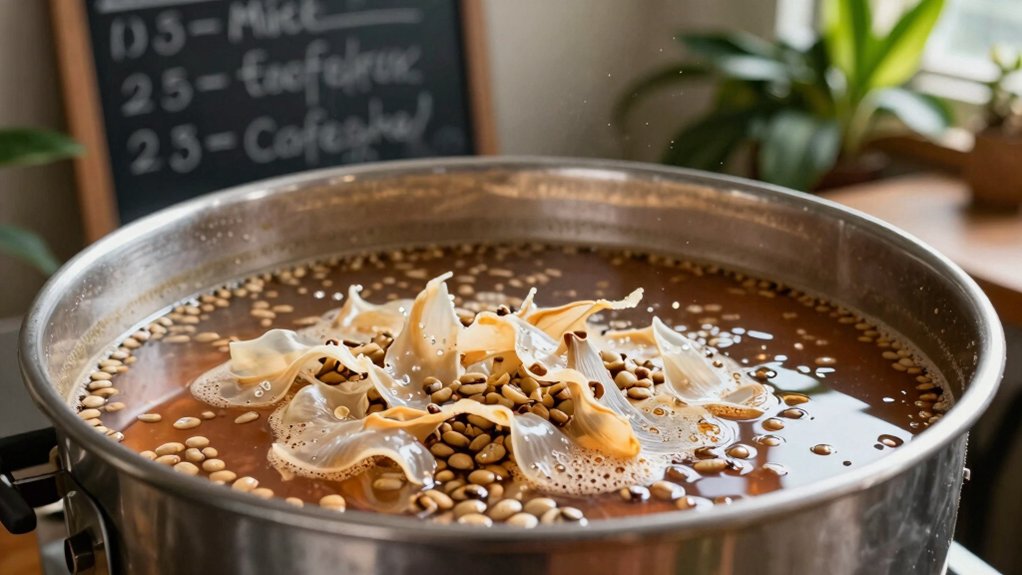
You’ll find that short fermentations (12‑24 h) keep the mucilage sticky, giving you a crisp texture and bright acidity, while longer fermentations (48‑72 h) break down polysaccharides, boost lactic acid, and develop fruitier, fuller‑bodied notes. Temperature and oxygen control speed or slow microbial peaks, shaping how much mannitol, volatile aromatics, and sugars are produced. Over‑fermentation can lead to harsh sourness or off‑flavors, so monitoring pH, temperature, and visual cues is essential. Keep reading to discover how to fine‑tune these variables for your desired roast and brew style.
Why Fermentation Time Is the Key to Coffee Flavor
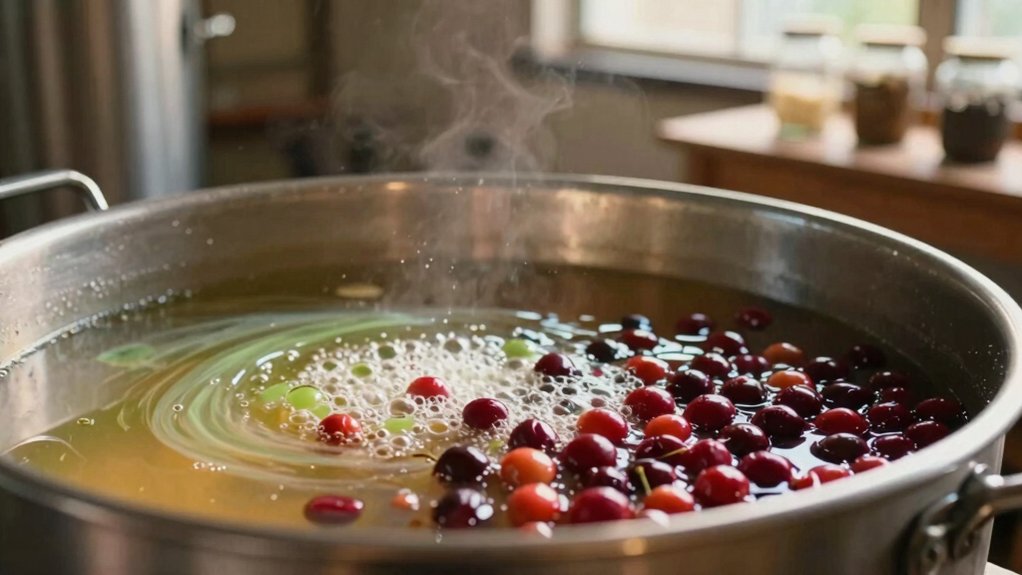
Why does fermentation time matter so much? In wet processing, the length of fermentation time dictates how many microbial metabolites cling to the bean. Longer spans boost lactic acid, mannitol, and other metabolites that lift floral and fruity aromas, while also feeding the pool of Maillard precursors that later fire during roasting. Those precursors shape in‑cup fruit notes and deepen flavor complexity. You’ll notice that a 12‑hour soak yields a crisp, controlled acidity, whereas a 48‑hour fermentation can unlock a livelier, more nuanced profile. The choice between demucilaged and depulped beans further tweaks microbial dynamics, altering metabolite retention. Managing washing and soaking steps lets you fine‑tune this balance, preserving bright flavors or tempering excess intensity. Fermentation science highlights how temperature and microbial activity interact to mold final cup characteristics.
Fermentation Time Basics: Short vs. Long in Wet‑Processed Coffee
You’ll notice that a short fermentation spikes microbial activity early, giving you a clean, bright acidity, while a longer run lets flavor compounds build up, adding depth and fruitiness. The texture shifts from crisp to a fuller body as the microbes linger, and the acidity balance moves from sharp to more rounded. Keep an eye on the beans’ surface—once the stickiness disappears, you’ve reached the sweet spot for either approach. Understanding how these stages align with your chosen processing method readily informs seasonal menu planning and helps guide taste-based decisions in your cupping routine.
Microbial Activity Peaks
When you choose a short fermentation—typically 12 hours—microbial activity peaks early, producing modest amounts of lactic acid and mannitol that give the beans a clean, subtle acidity. A brief fermentation duration keeps the microbial community in check, so surface metabolites remain light and easy to wash away. If you extend the time, the same microbes keep producing lactic acid, but the buildup of surface metabolites intensifies, especially under warm temperature control. Higher temperatures accelerate the enzymatic pathways, shortening the peak but increasing acidity quickly.
Conversely, cooler conditions slow the peak, allowing you to fine‑tune lactic acid levels without overwhelming the bean’s natural flavors. Balancing these variables lets you shape the coffee’s final profile before the next processing step, while considerations of grind setting diversity and consistency—key factors highlighted in grinder design discussions—can influence how these flavors are expressed in the cup. grind setting diversity
Flavor Compound Accumulation
Ever wondered how the length of wet‑process fermentation reshapes a coffee’s flavor palette? You’ll notice that a longer fermentation duration boosts microbial metabolites like lactic acid, which mingle with mannitol and other sugars. Those metabolites feed the Maillard reaction precursors, so when you roast, the beans release richer, fruit‑forward notes. Simultaneously, the extended soak intensifies volatile compounds, adding floral and berry aromas that would stay muted in a short run. You can gauge the process by feeling for any stickiness before rinsing; a clean surface means the microbes have done their work. Temperature control and oxygen management can further fine‑tune the balance, but remember that washing can strip away some of those prized metabolites, softening the final flavor profile. Fermentation duration influences how these compounds accumulate and interact, shaping the ultimate aroma and taste profile.
Texture and Acidity Balance
How does fermentation length shape the coffee’s mouthfeel and acidity? In wet processing, fermentation time directly tweaks texture and acidity balance. Short fermentations—12‑24 hours—keep the pulp’s sugars intact, yielding a crisp, clean texture and a bright, sharp acidity. Longer fermentations—48‑72 hours—let microbes break down more polysaccharides, producing rounder, fuller mouthfeel and richer, fruity acidity. Temperature and oxygen also matter: cooler runs slow microbial metabolites, giving you tighter control over texture, while warmer conditions accelerate acid and sugar breakdown, softening texture and amplifying acidity. After fermentation, demucilaging and washing strip excess metabolites, fine‑tuning the final cup’s texture and acidity balance. Adjusting fermentation time lets you sculpt the exact mouthfeel and acid profile you desire. Fermentation dynamics influence how process conditions translate into flavor outcomes across different lots and coffee varieties.
Fermentation Time & Mucilage Breakdown: Moisture Loss & Bean Texture
Why does fermentation time matter for moisture loss and bean texture? In wet processing, fermentation duration dictates how fully mucilage breakdown proceeds, which directly controls moisture loss and the resulting bean texture. Short fermentations leave sticky mucilage, trapping water and yielding a softer, uneven surface after drying. Longer fermentations—typically 12–72 hours—allow enzymes and microbes to dissolve mucilage, freeing water so the beans dry more uniformly and develop a firmer, smoother texture. If you demucilage before fermentation, you shorten the timeline and reduce water use, but you also alter moisture loss dynamics, often producing a denser bean surface. Precise control of fermentation duration prevents excess metabolites that could hinder mucilage breakdown, ensuring consistent moisture loss and a desirable bean texture a key quality factor.
Fermentation‑Time‑Driven Microbial Dynamics: Bacteria & Yeasts at Different Durations
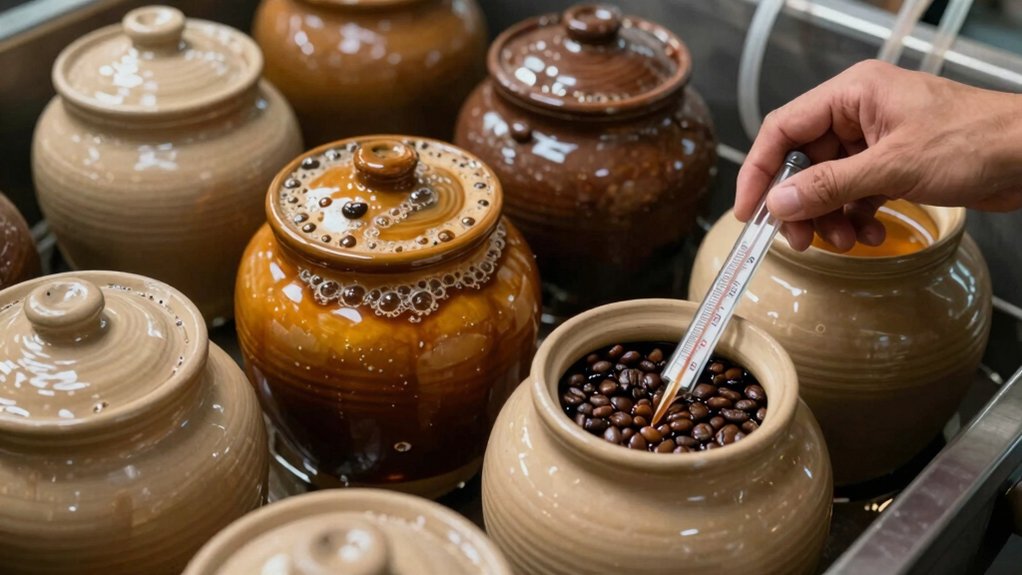
When you extend the fermentation period, the microbial community on the beans shifts dramatically: short fermentations favor fast‑growing yeasts that produce modest amounts of ethanol and CO₂, while longer fermentations allow lactic‑acid bacteria and slower‑acting yeasts to dominate, generating higher levels of lactic acid, mannitol, and aromatic VOCs. This shift reshapes microbial dynamics and the bean’s surface chemistry. Measurement Markings help quantify how fermentation times relate to liquid outcomes and the resulting aroma profile.
What Flavors Emerge When Fermentation Runs Long?
Ever notice how a longer fermentation can turn a coffee’s flavor profile into a bright, fruity orchestra? When fermentation time stretches beyond the usual 12‑hour window, microbial metabolites like lactic acid and mannitol build up, sharpening the cup’s acidity and lending a clean, tangy bite. Those metabolites also feed Maillard reaction precursors, so you’ll taste pronounced fruity notes—think ripe berries, citrus zest, and tropical melon—emerging from the bean’s interior. The extended microbial activity heightens aromatic VOCs, delivering floral whispers that mingle with the fruitiness. If you control the process well, the result is a lively, complex cup; let the microbes run unchecked, and off‑flavors can creep in, masking the desired brightness. Foam
Cup‑Profile Impacts of Fermentation Length: Brightness, Fruitiness, Body
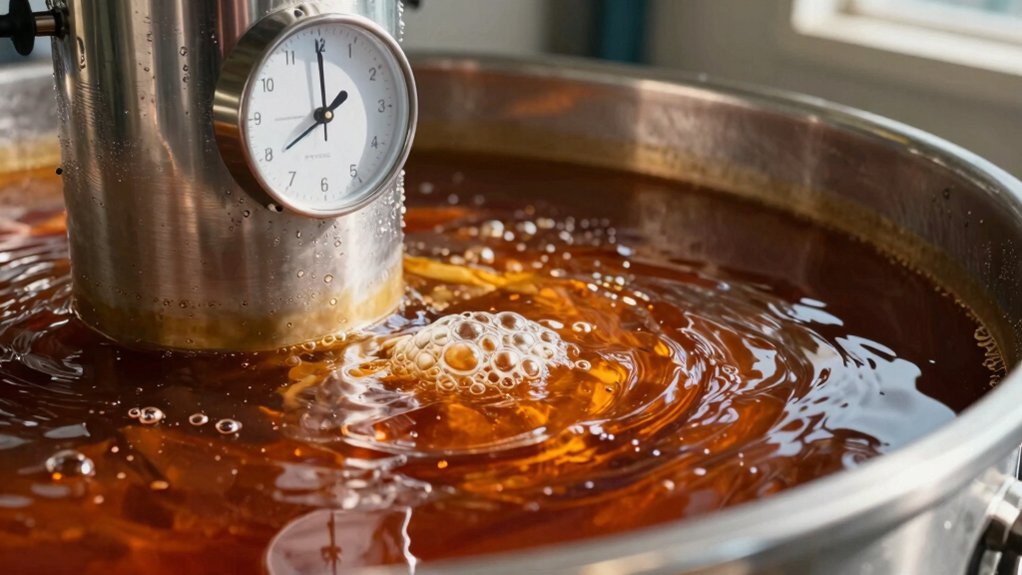
You’ll notice a brighter acidity when you let the wet fermentation run longer, especially if you keep temperatures cool and oxygen low. The extended time also amplifies fruity aromatics, turning subtle notes into vivid, lingering flavors.
Meanwhile, the body can become richer and more textured, but over‑extending the process risks introducing off‑flavors.
Brightness Boost, Longer Fermentation
Can longer fermentation truly brighten your cup? When you extend the fermentation duration, you give microbes more time to produce metabolites that lift acidity and overall brightness. Controlled water conditions keep enzymatic activity in check, preserving the lively perception you crave. Here’s how each factor plays out:
- Microbial metabolites increase, adding sharp, clean notes.
- Enzymatic activity shifts sugar‑acid balance, sharpening the palate.
- Water conditions regulate temperature, preventing muddiness.
- Fermentation duration fine‑tunes brightness without off‑flavors if monitored.
Fruitiness Amplified, Extended Fermentation
What happens when you let wet‑process beans ferment a little longer? You’ll notice the cup brightness surge as fermentation duration boosts microbial metabolites like lactic acid and mannitol, which amplify fruit‑forward flavors.
In wet processing, extended fermentation shifts bean metabolism—more glucose, fructose, and amino acids—enhancing sweetness and a crisp, vibrant acidity.
The extra time also nurtures volatile compounds, giving you a brighter, more aromatic brew without sacrificing body, provided you control the process.
If you start with demucilaged pulp, the longer stay allows richer microbial activity, preserving those floral and berry notes.
When managed well, the result is a lively cup where brightness and fruitiness dance together, while mismanagement can introduce off‑flavors and turbidity.
Over‑Fermentation Risks: Off‑Flavors, Excessive Acidity, Bean Defects
Ever wondered why a wet‑process coffee suddenly tastes funky or medicinal? When fermentation duration stretches past the sweet spot, microbial metabolites pile up, turning your brew into a chemistry experiment gone wrong. You’ll notice off‑flavors that scream spoiled, medicinal, or even moldy, while excessive acidity overwhelms the palate and masks any fruitiness. Bean defects appear too—slimy, sticky cherries cling to the seed, and the bean’s structure weakens, making roasting a gamble.
- Prolonged lactic and acetic acid buildup
- Unbalanced pH leading to harsh sour notes
- Residual pulp causing plate‑like aromas
- Physical bean damage that reduces uniform roast
These risks underline why tight control of fermentation time is non‑negotiable.
Controlling Fermentation Time: Temperature, pH, Aerobic vs. Anaerobic Strategies
You’ll set the fermentation temperature to balance speed and flavor, keeping it cool for nuanced notes or warming it up for brighter acidity.
Adjust the pH gradually with water or acid washes to steer microbial activity and avoid off‑flavors.
Choose aerobic conditions for faster breakdown and aromatic lift, or go anaerobic to develop distinct fruity acidity and tighter control.
Temperature Control Strategies
How temperature steers wet‑process fermentation is the key to shaping coffee’s acidity and aroma. You’ll notice that a few degrees can cut fermentation time in half, while a cooler bath stretches it, letting nuanced flavors emerge. Stable temperature control prevents over‑fermentation, keeping unwanted residues out of the tank and guiding microbial activity toward desired aroma compounds.
- Set a target range – 20‑24 °C for balanced notes, 25‑28 °C for bright acidity.
- Use insulated tanks – they buffer external fluctuations, preserving your chosen profile.
- Monitor continuously – sensors feed real‑time data, letting you adjust heat quickly.
- Pair with oxygen management – limited O₂ at higher temps favors specific microbes, sharpening flavor development.
pH Management Techniques
When you keep the pH in the ideal range, you lock in the desired acidity and block off‑flavors, because pH shifts directly mirror the microbes’ activity on the mucilage. You’ll monitor pH every couple of hours, adjusting fermentation temperature and oxygen exposure to steer microbial activity. Cooler temperatures slow acid production, giving you a longer window for mucilage breakdown; warmer temps accelerate it, so you must act fast to avoid over‑acidification. A simple table helps you see the levers:
| Lever | Effect on pH |
|---|---|
| Fermentation temperature | ↑ temp → faster acid drop |
| Oxygen exposure | ↑ O₂ → quicker pH shift |
| Mucilage breakdown rate | Faster breakdown → sharper pH change |
Balancing these factors keeps the brew bright and consistent.
Aerobic vs. Anaerobic Approaches
Keeping pH stable is only half the battle; the next lever to master is oxygen exposure. In wet processing you can swing between aerobic fermentation and anaerobic fermentation to shape fermentation time and flavor development. Aerobic runs speed up reactions, pushing fruity notes, while anaerobic limits oxygen, coaxing deeper, sometimes more nuanced compounds—provided you keep temperature control tight to avoid off‑flavors.
- Oxygen level – open tanks for aerobic, sealed for anaerobic.
- Temperature – lower temps (15‑18 °C) slow both, high temps (22‑24 °C) accelerate.
- Duration – aerobic 12‑24 h, anaerobic 24‑48 h, adjust for desired complexity.
- Flavor focus – aerobic → bright, fruity; anaerobic → body, depth.
Coffee‑Specific Fermentation Monitoring Tools (pH Meters, Temperature Loggers, Visual Cues)
A good fermentation workflow relies on three simple tools: a pH meter, a temperature logger, and keen visual observation. You’ll use pH meters to watch acidity shift as mucilage breaks down, linking those changes to fermentation timing and the final cup’s acidity. Temperature loggers record heat profiles, because warmer batches speed microbial activity and can shorten the wet process coffee cycle. Visual cues—slime loss, gloss, color darkening—let you confirm what the numbers say and decide when to stop. Combining these data streams gives you a multi‑parameter control loop, reducing off‑flavors and delivering consistent results.
| Tool | What it tracks | Why it matters |
|---|---|---|
| pH meters | Acidity levels | Signals mucilage breakdown and aroma development |
| Temperature loggers | Heat profile | Controls microbial speed and flavor intensity |
| Visual cues | Bean gloss, slime, color | Provides immediate, intuitive feedback |
| Fermentation timing | Duration of each phase | Balances complexity and consistency |
| Wet process coffee | Overall batch quality | Integrates all parameters for optimal roast |
Fermentation Time Across Varieties & Regions: Choosing the Right Length for Your Roast & Brew Style
How long should you ferment each batch? You balance fermentation time with temperature control, regional variation, and your desired brew style. A 12‑hour cool ferment can preserve acidity, while a 48‑hour warm soak boosts microbial metabolites for fruity notes. Over‑fermenting risks off‑flavors, so adjust based on bean variety and climate.
- Cold, low‑oxygen (12‑24 h) – sharp acidity, clean cup.
- Moderate warmth (24‑36 h) – balanced sweetness, subtle fruit.
- Warm, high‑oxygen (36‑48 h) – intense floral volatiles, rich body.
- Extended warm (48‑72 h) – strong fruit, potential bitterness if unchecked.
Use these brackets to match your roast profile and brewing method, remembering that water quality and altitude shift outcomes. Tailor each batch, and you’ll consistently hit the flavor development you crave.
Frequently Asked Questions
What Is the 15-15-15 Rule for Coffee?
You follow the 15‑15‑15 rule by spending fifteen minutes sniffing the coffee, fifteen minutes sipping deliberately, and fifteen minutes noting and comparing flavors, keeping each stage focused and structured.
What Is the Wet Fermentation Process of Coffee?
You soak pulped beans in water, letting microbes break down the mucilage for 12‑72 hours. You control temperature, oxygen, and duration to shape acidity, aroma, and overall flavor before drying.
What Is the #1 Coffee in the World?
You’ll find the world’s #1 coffee in the specialty rankings—Ethiopian Yirgacheffe, especially the washed, high‑altitude lots—because its bright acidity, floral aroma, and clean cup dominate global taste panels.
What Is the 80 20 Rule for Coffee?
You apply the 80/20 rule by focusing on the 20 % of processing factors—mainly fermentation time, mucilage removal, and washing—that generate roughly 80 % of your coffee’s flavor and acidity differences.
In Summary
You’ve seen how tweaking fermentation time lets you dial in the exact flavor profile you want. Short washes keep the beans bright and clean, while longer fermentations coax deeper, fruitier notes—but they also risk off‑flavors if you go too far. By monitoring temperature, pH, and microbial activity, you can fine‑tune each batch, matching the process to your variety, region, and desired roast. Mastering this timing is the key to consistently stellar coffee.


