
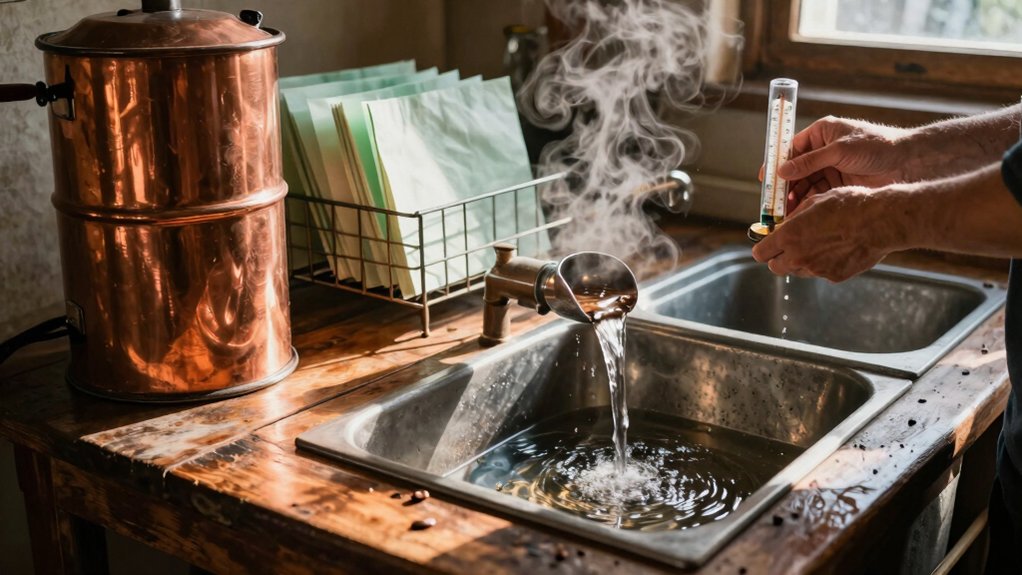
You need clean, temperature‑controlled water—usually 2–3 L per kilogram of beans—to pulp, ferment, and rinse away mucilage. Fresh water prevents off‑flavors and unwanted microbes, while a warm, steady flow spikes enzyme activity for efficient mucilage breakdown. Keep the temperature stable to preserve flavor consistency, and use a continuous rinse for uniform results or a batch wash for tighter control. Managing the water‑to‑bean ratio and recycling will cut waste and boost sustainability, and the next sections will show you how to fine‑tune each step.
Why Water Is Central to Washed Coffee Processing
Why does water matter so much in washed coffee processing? You rely on water to loosen and rinse the mucilage that clings to beans after fermentation. During the 12‑72‑hour fermentation, water penetrates the pulp, allowing microbes to break down the mucilage.
After fermentation, a steady flow of water washes the beans, flushing away the softened layer and carrying beans through sorting screens. This washing step is essential for moving from depulped beans to clean parchment, and it consumes large volumes of clean water.
Because of that demand, sustainability becomes a concern—wastewater must be treated or recycled to avoid environmental impact. Modern methods like Becolsub or Ecomill aim to cut water use while preserving the same flavor‑enhancing effects.
Water Quality Essentials for Pulping and Fermentation
Water quality drives both depulping and fermentation, so you must start with fresh, clean water to avoid off‑flavors and unwanted microbes. During pulping, you use clear water to wash away pulp and mucilage without introducing contaminants that could alter the bean’s profile. Proper filtration on the intake and mindful recycling of water can reduce demand and ease wastewater management, while on-site treatment helps meet environmental standards. Implement filtration on the intake and recycle water when possible, reducing demand and easing wastewater management. Treat effluent with on‑site filtration or recycling to meet environmental standards and keep the process sustainable. By monitoring water quality and applying proper filtration, you protect flavor clarity, control waste, and support efficient pulping and fermentation. Filtration improves efficiency and sustainability throughout the process.
How Temperature‑Controlled Water Improves Mucilage Removal
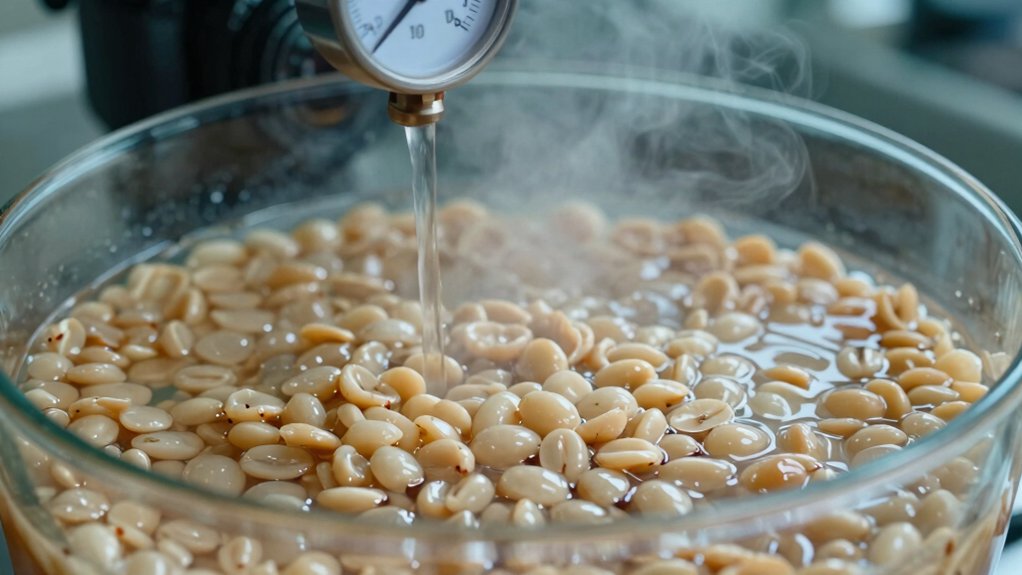
You’ll notice that keeping the water at a precise temperature spikes enzyme activity, so the mucilage breaks down consistently. The warm, controlled flow softens the pulp without bruising the beans, cutting the mechanical effort you need during washing. This stability also curbs unwanted microbes, preserving flavor and repeatability across batches. Guide Mode helps operators target optimal extraction profiles during processing, ensuring consistent outcomes across batches.
Optimized Enzyme Activity
When you keep the wash water within the optimal temperature window, you boost the activity of pectinase and other enzymes that break down mucilage, speeding its removal without stressing the bean. The use of controlled heat also supports consistent enzymatic action across batches, reducing variability in cup profiles. Temperature control helps maintain fermentation stability, ensuring that mucilage breakdown remains uniform and predictable across lots. Maintain temperature within the enzyme‑optimal range (≈ 30‑35 °C). Monitor pectinase activity to ensure rapid mucilage breakdown. Align temperature control with fermentation stability for consistent wash efficiency.
Consistent Mucilage Breakdown
Keeping the wash water in the 30‑35 °C window not only fuels enzyme activity but also stabilizes the mucilage’s texture, letting you rinse beans more cleanly and faster. You’ll notice that a steady temperature sharpens enzymatic action, so the mucilage softens uniformly during fermentation. This consistency prevents pockets of thick slime, speeds rinsing, and protects the parchment from uneven drying. Stable heat also curbs unwanted microbes, keeping off‑flavors at bay and delivering repeatable wash cycles that boost throughput without sacrificing quality. SCA standards buffer the sampling process by aligning cupping practices with industry benchmarks, reinforcing reliability across sessions.
Control Water Flow: Continuous Rinse vs. Batch Wash Techniques
With a continuous rinse, you keep water moving steadily, ensuring uniform mucilage removal across the entire lot and smoother water‑flow control. A batch wash lets you isolate each batch, timing each cycle for precise off‑flavor management, but it can cause water usage spikes and require more recycling effort. Continuous rinse: steady flow, consistent mucilage removal, higher efficiency. Batch wash: segmented baths, tighter flavor control, variable water consumption. Water flow control: impacts brightness, cleanliness, and overall cup quality. ATC
Calculate the Ideal Water‑to‑Bean Ratio for Small‑Scale Farms
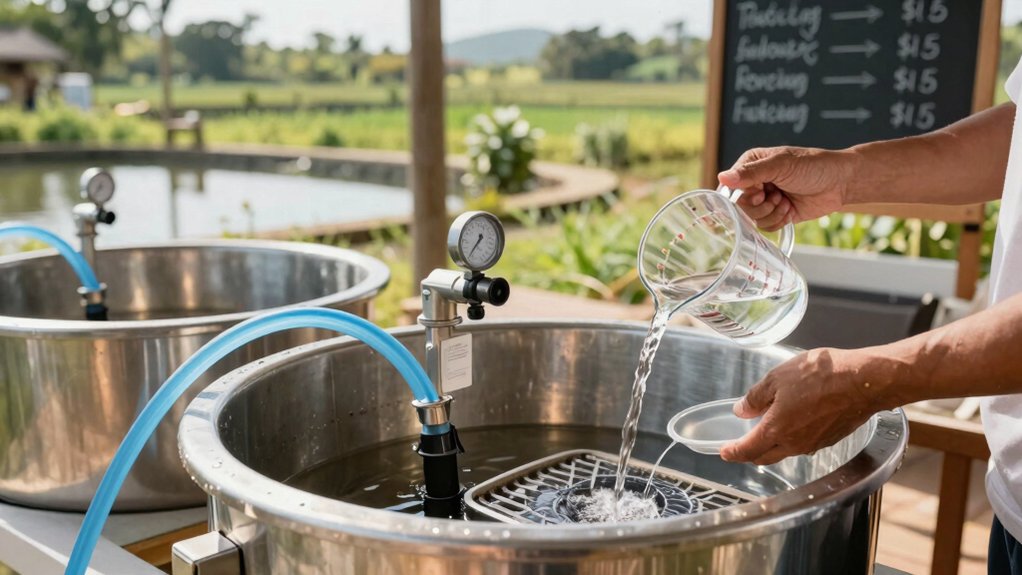
Wondering how much water you really need per kilogram of green coffee? On small‑scale farms you can hit a sweet spot by targeting a water‑to‑bean ratio of 2–3 L/kg. Keep the fermentation water use just enough to fully submerge the mucilage, then rinse efficiently to protect flavor and cut wastewater management costs. Measure each batch, adjust for equipment size, and avoid over‑washing that strips the cup profile. Removable tanks with wide openings and clear measurement marks, like those found in some coffee makers, can help streamline filling and monitoring during processing and cleanup. Water tank design influences thermal stability and extraction quality, so choose equipment with good insulation and reliable heating paths to maintain consistent results across batches.
| Stage | Approx. L/kg |
|---|---|
| Depulping | 0.5 |
| Fermentation | 1.0–1.5 |
| Mucilage removal | 0.5 |
| Final rinse | 0.5 |
Stick to these numbers, monitor flow, and you’ll balance flavor, sustainability, and labor on your farm.
Minimize Water Waste: Recycling and Filtration Strategies
Ever wondered how you can slash freshwater use while still achieving a clean cup? You can cut water demand dramatically by installing on‑site recycling loops that treat and reuse water for every stage—de‑pulping, fermentation, and final washing. Pairing bio‑digesters with ultrafiltration removes organic load, while sand or anthracite filtration captures fine particles. The result is a closed‑loop system that slashes wastewater discharge and lowers utility costs. Integrated wastewater treatment nutrient recovery ensures effluent meets environmental standards.
- Bio‑digesters + ultrafiltration: break down pulp, then filter out macromolecules.
- Sand/anthracite filtration: strips suspended solids before water reuse.
- Integrated wastewater treatment: recovers nutrients and ensures effluent meets environmental standards.
Implementing these strategies lets you recycle water efficiently, keep your coffee quality high, and meet sustainability goals without compromising flavor.
How Water‑Based Fermentation Shapes Your Coffee’s Flavor?
You’ll notice that the sugars released from mucilage during fermentation give your coffee a natural sweetness. In addition, using a long-handled scoop design can help you precisely measure and transfer coffee grounds into tall containers during processing long-handled design.
Mucilage Sugar Release
How does the mucilage’s sugar burst during water‑based fermentation shape your coffee’s flavor? As the mucilage dissolves, mucilage sugars feed enzymes that break down cell walls, releasing acids and volatile compounds. Good water quality keeps the fermentation steady, letting you control acidity and sweetness. The longer the sugar surge, the more enzymes can act, producing bright notes and a smoother mouthfeel. You’ll notice a cleaner cup when the sugar release balances acidity with subtle fruit‑derived volatiles, while over‑extraction can mute complexity.
- Mucilage sugars fuel enzymatic breakdown, creating bright acidity.
- Water quality regulates microbial access, shaping volatile compound development.
- Controlled sugar release enhances sweetness and mouthfeel in the final cup.
Fermentation Microbial Activity
Why does the microbial community thriving in submerged fermentation matter for your cup?
The microbes you nurture drive mucilage breakdown, releasing sugars and alcohols that shape acidity, aroma, and sweetness.
Good water quality—clean, properly aerated, and temperature‑controlled—selects the right yeast and bacteria, ensuring consistent microbial activity.
You’ll notice the fermentation duration, from 8 to 48 hours, directly influences how far enzymatic fermentation proceeds; longer periods deepen flavor but risk off‑notes if the microbes over‑process.
Watch for the tactile cue of easy mucilage removal between fingers; it signals that enzymatic action has reached the desired endpoint.
Flavor Brightness Enhancement
Ever wondered how the water‑based fermentation in washed coffee can sharpen your cup’s acidity and clarity? During fermentation, microbes and enzymes dissolve the mucilage, turning the bean’s surface into a clean canvas. When you control water management—temperature, flow, and duration—you steer microbial activity toward bright, lively acidity. The subsequent washing process rinses away any remaining mucilage, letting the bean’s intrinsic flavors shine with crisp brightness. Fine‑tuning exposure, such as double fermentation or open‑air rests, lets you dial in the exact level of acidity you crave, while consistent mechanical paddles and long channels guarantee uniform results across batches.
- Enzyme‑driven mucilage breakdown boosts brightness
- Precise water management shapes acidity profile
- Thorough washing removes residues for clean flavor
Choose Between Open‑Air and Underwater Fermentation
When you decide between open‑air and underwater fermentation, consider how much control you need over the process.
In pulped natural fermentation, the mucilage stays on the beans while you expose them to ambient temperature, humidity, and airflow. Open‑air fermentation relies on surface microbes, so you’ll see shorter, often 24‑hour cycles, but variability can creep in with weather shifts.
Underwater fermentation submerges the mucilage‑coated beans, letting you manage water temperature, oxygen levels, and microbial activity. Submerged fermentation can extend 12 to 72 hours, delivering more uniform breakdown and cleaner flavor profiles.
Choose open‑air if you prefer a quick, low‑tech approach and accept natural fluctuations. Opt for underwater when you want tighter water control and consistent mucilage removal.
Dryer Choice and Post‑Wash Moisture Management
Where do you start after the wash? You move straight into moisture management, aiming for 11–12% moisture through post‑wash drying. Choose a drying method that matches your scale and resources. Raised beds let you sun‑dry beans, but you must turn them constantly and watch for mold.
After washing, immediately manage moisture, targeting 11‑12% via sun‑dry or mechanical drying, matching scale and resources.
Mechanical dryers tumble beans in heated air, cutting drying time for large lots while demanding precise temperature control to avoid over‑drying. Your goal is to bring beans from 65–75% moisture down to the target range without creating uneven pockets that could spoil flavor.
- Raised beds: low‑cost, labor‑intensive, needs frequent turning.
- Mechanical dryers: fast, energy‑heavy, requires monitoring.
- Target moisture: 11–12% for stable, high‑quality coffee.
Low‑Water Variants Within Washed Coffee Processing
How can you cut water use without sacrificing the bright, clean flavors that define a washed coffee? You can turn to low‑water variants of washed processing that replace long, water‑filled fermentations with rapid mucilage removal techniques. Open or dry fermentations often finish within 24 hours, sometimes stretching to 72, but they keep beans out of continuous water contact.
Systems such as Becolsub and Ecomill mimic the classic washed profile while slashing wastewater generation. Many producers now pair these methods with water recycling, treating and reusing the limited water that touch the beans.
Troubleshooting Common Water‑Related Issues in Washed Coffee Production
You’ll want to start by checking water quality, because poor pH or contaminants can stall fermentation. Keep an eye on fermentation timing; too short or too long can leave excess mucilage or uneven flavor.
Finally, monitor drying moisture levels to avoid over‑drying or under‑drying, which both affect bean stability.
Water Quality Management
Ever wonder why a simple change in water can ruin a batch of washed coffee? You’ll notice that water quality drives fermentation, mucilage breakdown, and overall cup clarity. If the water carries high microbial load or hard minerals, enzymes stall and off‑flavors appear. Regularly test pH, alkalinity, and water hardness, then adjust dosing with proper sanitation agents and enzyme aids. Keep a log of temperature swings and treat wastewater to avoid cross‑contamination. Consistent water parameters let you predict mucilage removal and maintain clean fermentation, preserving the coffee’s origin character.
- Test hardness and microbial load before each wash cycle.
- Use calibrated sanitizers and enzyme supplements to balance pH.
- Recycle or treat wastewater to protect downstream processing.
Fermentation Timing Control
Why does water quality swing your fermentation clock? When you feed inconsistent or dirty water into the tank, microbes react unpredictably, stretching or shrinking fermentation timing. You’ll notice mucilage clinging longer or slipping off too fast, which throws off post‑harvest processing consistency. To keep the clock steady, monitor water pH and temperature, and replace water if it looks cloudy.
Stir the beans regularly; gentle agitation distributes microbes and prevents pockets of over‑ or under‑fermentation.
If you’re short on water, shorten the immersion window and rely on tactile checks—feel the mucilage between your fingers every few hours. Consistent agitation and clean water together give you a reliable fermentation timeline and protect flavor integrity.
Drying Moisture Monitoring
How do you keep moisture levels steady from the moment beans leave the washing tank to the final parchment? You must track moisture content throughout drying, whether on raised beds, patios, or mechanical dryers. Aim for 10–12% moisture, and adjust temperature and airflow—drum dryers at 120–140 °F work well. Turn beans frequently to avoid moisture pockets, and use a handheld moisture meter each shift. After drying, let beans rest under canvas for 20–30 days, then run a final check before parchment removal. Consistent monitoring prevents uneven drying, reduces defects, and safeguards cup quality.
- Measure moisture content regularly with a calibrated meter.
- Rotate beans on raised beds to ensure uniform drying.
- Spot‑check for moisture pockets before the resting period.
Frequently Asked Questions
How Is Washed Coffee Processed?
You remove the cherry skin and pulp, then ferment the beans for 12‑72 hours, wash off the mucilage, and finally dry them to about 10‑12 % moisture before storage.
What Is the 15-15-15 Rule for Coffee?
You follow the 15‑15‑15 rule by using 15 g coffee, 15 g water, and a 15‑second bloom; it gives a balanced extraction baseline you can tweak for grind size, temperature, or taste.
Is 9.5 pH Water Good for Coffee?
Yes, 9.5 pH water works fine for coffee; it’s mildly acidic, keeps extraction balanced, and won’t harshly affect flavor, as long as its mineral content and overall chemistry stay appropriate.
What Country Is Known for the Best Coffee?
You’ll find the world’s best coffee in Ethiopia, Kenya, and Colombia—each delivers distinct, high‑quality beans, from Ethiopia’s complex heirloom flavors, Kenya’s bright acidity, to Colombia’s balanced sweetness.
In Summary
You’ve seen how every stage of washed coffee hinges on water—its quality, temperature, flow, and volume. By monitoring those factors, you’ll strip mucilage cleanly, keep beans uniform, and avoid defects. Adjust the water‑to‑bean ratio to your scale, pick the right fermentation style, and stay vigilant for leaks or temperature spikes. Mastering water control lets you consistently produce bright, clean coffees that showcase the farm’s true character.


