
You flush whole coffee cherries with CO₂, creating an oxygen‑free, pressurized environment that speeds up mucilage breakdown and boosts ester formation inside the intact fruit. This anaerobic fermentation releases aromatic compounds that were locked in, giving you bright, wine‑like notes, tropical fruit, berry and floral aromas, and a lively, front‑loaded cup. The result shifts the flavor from a roasted‑nutty baseline to a vivid, fruit‑forward profile, and if you keep going you’ll discover how to apply it yourself.
What Is Carbonic Maceration Coffee?
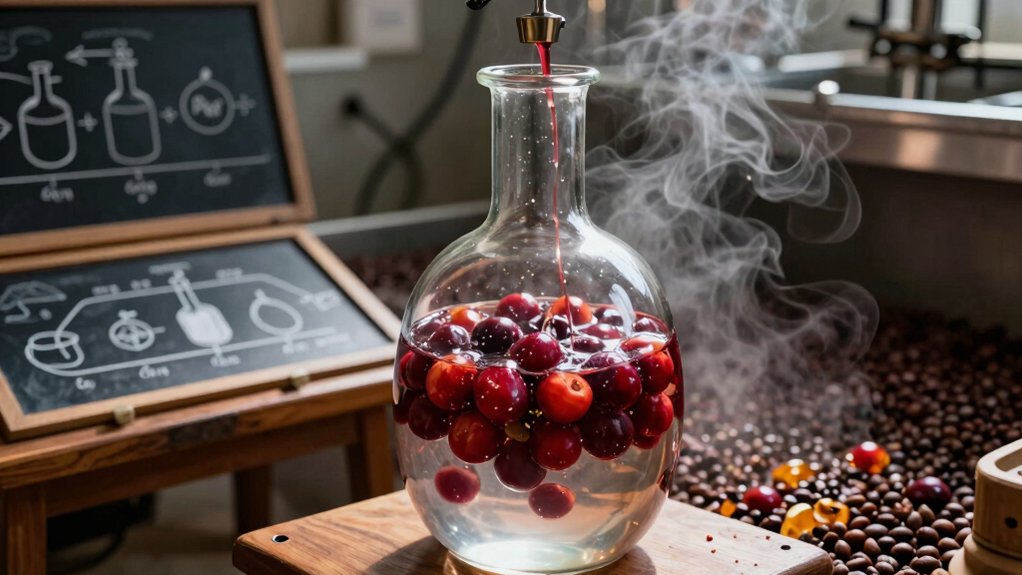
What’s carbonic maceration coffee? You start with whole cherries sealed in a vessel, then perform CO₂ flushing to create an oxygen‑free, pressurized environment. This anaerobic fermentation begins inside the intact fruit, letting the mucilage break down without external microbes. As CO₂ displaces air, you gain tight fermentation control, steering flavour transformation toward bright, wine-like notes. The process releases aromatic compounds that would otherwise stay locked in the cherry, delivering tropical fruit, berry, and floral aromas. Because the cherries stay whole, the pulp and mucilage interact directly with the beans, intensifying juiciness and sometimes adding a subtle lactic acidity. Careful temperature monitoring and roaster attention preserve these nuances while preventing off‑flavours. ATC temperature control helps maintain consistent results across batches.
CO₂‑Rich Cells: Faster Mucilage Breakdown & Ester Boost
In carbonic maceration, the CO₂-rich environment accelerates mucilage breakdown and enhances ester formation CO₂-rich environment.
What Taste Differences Appear When Using Carbonic Maceration Coffee vs. Traditional Methods?

The rapid mucilage breakdown and ester surge created by a CO₂‑rich environment translate directly into a coffee that bursts with bright, aromatic fruit. In carbonic maceration, this heightened aromatic profile often carries through into the cup with a cleaner finish than traditional methods fermentation controls, highlighting the fruit-forward character while maintaining balance. When you compare carbonic maceration to traditional coffee processing, the flavor profile shifts from the classic, roasted‑nutty baseline to a vivid, fruity tableau. You’ll notice pronounced fruity notes—tropical berries, citrus, even gingerbread—paired with a clean lactic acidity that feels syrupy on the palate. The aroma leans toward perfumed, wine‑like scents rather than the usual earthy or chocolatey hints. Because the fermentation occurs inside the intact mucilage, you get a more front‑loaded, lively cup, though the variability can be higher and off‑flavors appear if the process isn’t tightly controlled.
Practical Steps to Implement Carbonic Maceration Coffee in Small‑Scale Production
Starting with a sturdy, airtight container, you’ll load whole, intact cherries, seal the vessel, and flush it with CO₂ until the internal atmosphere is fully oxygen‑free. Next, set a temperature‑control unit at 20‑25 °C, monitor the anaerobic fermentation, and record the fermentation duration—usually 24‑48 hours for a bright flavor profile. After the cycle, depulp, rinse, and dry the beans as usual, then package with a note about carbonic maceration to highlight the unique coffee processing. The use of an IP-rated, durable setup helps ensure contamination‑free conditions during fermentation. oxygen‑free environment is critical to prevent unwanted aerobic activity and to preserve the targeted fruity and wine‑like profiles identified in controlled experiments. | Step | Parameter | Goal |
| —— | ———– | —— |
|---|---|---|
| 1 | Sealed vessel & CO₂ | Oxygen‑free environment |
| 2 | Temperature control | Consistent 20‑25 °C |
| 3 | Fermentation duration | 24‑48 h for desired profile |
Follow these steps in small‑scale production and you’ll achieve a fruit‑forward, wine‑like coffee without over‑fermentation.
Frequently Asked Questions
What Does Carbonic Maceration Do to Coffee?
You get brighter, fruit‑forward notes, higher acidity, and a juicy mouthfeel; the CO₂‑sealed fermentation inside whole cherries creates wine‑like aromatics while shortening roast development to preserve those fresh flavors.
What Is the 15-15-15 Rule for Coffee?
You aim for roughly 15% extraction yield, 15% roast development, and about 15 seconds of contact time, adjusting grind, dose, and brew time to balance sweetness, acidity, and body in the cup.
What Is the #1 Coffee in the World?
You’ll find Panama Geisha consistently crowned the world’s #1 coffee, its luminous aroma, tea‑like sweetness, bright citrus, and silky body earning top scores and premium auction prices across specialty markets.
What Are the Benefits of Carbonic Maceration?
You get brighter, wine‑like notes, tropical fruit aromas, and a juicy, syrupy body; acidity stays lively, uniqueness spikes, and you can command a premium market position—though you must manage cost and fermentation risk.
In Summary
Now’ve seen how carbonic maceration speeds up mucilage breakdown, pumps up ester formation, and reshapes coffee’s flavor profile with brighter acidity and fruitier notes. By swapping traditional fermentation for CO₂‑rich cells, you’ll get a cleaner, more consistent cup while preserving nuance. Implementing this technique on a small scale is straightforward, and the payoff—enhanced aroma and a distinct taste—makes it a compelling tool for any coffee innovator.


