
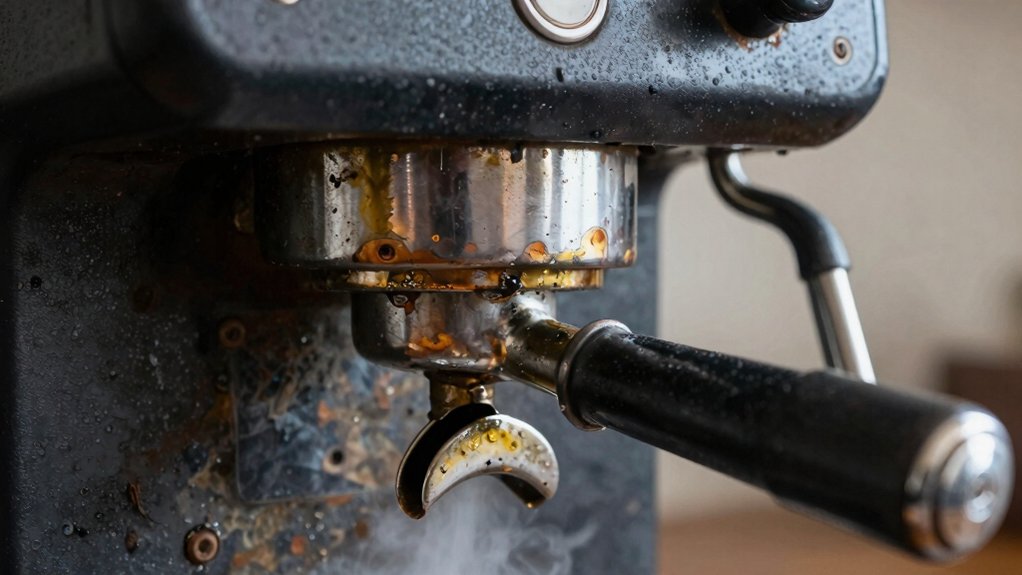
You’re getting weak, uneven froth because scale from hard water and milk residue are clogging the steam passages, the wand tip may be worn or blocked, and low boiler pressure or a failing heating element isn’t delivering enough steam. Crusted milk and mineral deposits narrow the nozzle, while degraded O‑rings let steam leak. If you keep going, you’ll discover how to test, clean, and maintain the wand for reliable frothing.
How to Quickly Test If Your Steam Wand Is Frothing

Wondering whether your steam wand is actually frothing? Turn on the machine and listen for steady hissing. If steam pours but the milk stays flat, you likely have a steam tip blockage or partial obstruction in the wand. First, purge the wand for five seconds; observe whether the stream strengthens. A weak or uneven flow after purging points to residue clogging the nozzle. Next, detach the steam tip, inspect the tiny holes, and clear any debris with a pin or brush. Reattach, purge again, and test with a small milk volume. If frothing returns, the issue was the blockage. If steam still fails to produce foam, check the boiler pressure and water supply, as the problem may lie beyond the wand. Regular maintenance and cleaning of components like the gooseneck spout can help prevent similar issues by ensuring consistent water flow.
How Scale and Milk Residue Clog a Wand That Won’t Froth
If you’ve confirmed the wand isn’t frothing because of a blockage, the next likely culprit is buildup from scale and milk residue. Hard‑water minerals, especially calcium carbonate, deposit as scale that narrows the steam wand’s passages, throttling steam flow.
Simultaneously, milk residue coagulates at high temperature, forming solid protein crusts that cling to the inner walls and the tiny holes of multi‑hole tips. Each time you skip a thorough purge or leave cleaning gaps, these deposits thicken, leading to progressive clogging.
Milk residue hardens into crusty deposits, thickening with each missed purge and causing progressive clogging.
The combined effect reduces steam pressure, yields weak froth, and may eventually stop frothing altogether. To prevent this, run regular descaling cycles, soak removable tips in appropriate cleaners, and purge the wand after every use. Proper cleaning techniques ensure the internal passages stay free of mineral and protein buildup.
These habits keep the steam wand clear and maintain consistent frothing performance.
How Wand Tip Shape and Length Influence Frothing Quality
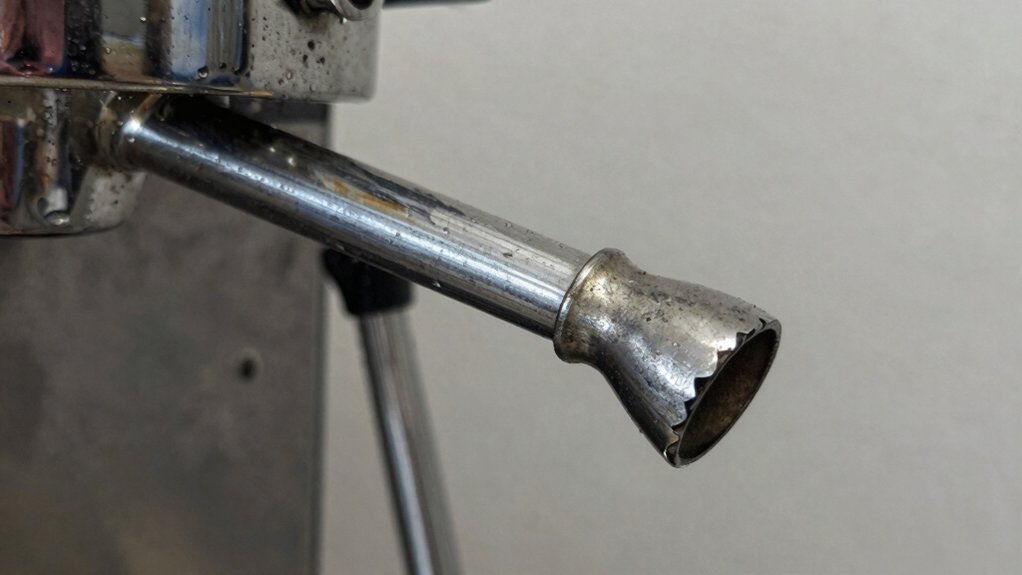
Because the wand’s tip shape and length dictate how steam meets milk, they directly affect frothing quality. A single‑hole steam wand tip delivers a concentrated jet that heats milk quickly and creates a tight, glossy microfoam, while a multi‑hole tip spreads steam, giving a gentler texture and larger bubbles. Longer tips give you better leverage and a wider angle for air injection, so you can introduce more air without splashing. However, tip wear narrows the holes, distorting flow and leaving your froth thin or uneven. Scale buildup around the tip also clogs passages, choking steam and reducing pressure. Clean the tip after each use and replace it when wear or scale compromises steam flow, and you’ll keep frothing quality consistent. Using durable, waterproof tips and maintaining proper cleaning routines can also prevent steam flow issues, ensuring consistent performance over time.
How Boiler Pressure, Temperature, and Hard Water Stop Frothing
Boiler pressure, temperature, and water hardness are the hidden trio that can sabotage your frothing.
Boiler pressure, temperature, and water hardness quietly undermine your frothing performance.
When boiler pressure drops to 1‑2 bar, the steam wand can’t push enough steam through the milk, so you get thin bubbles instead of velvety microfoam.
Low boiler temperature or a failing heating element throttles heat transfer, leaving the steam weak and the milk lukewarm.
Hard water accelerates mineral deposits, especially calcium carbonate, which narrow the steam passages and coat the heating element.
Those scale deposits further reduce heat efficiency, dropping steam output and causing erratic pressure.
The result is a sluggish wand, uneven froth, and a cup that never reaches that silky texture you expect.
Additionally, filter material quality can influence the buildup of mineral deposits and the overall maintenance of your espresso machine.
How to Maintain Your Machine and Replace O‑Rings for Consistent Frothing
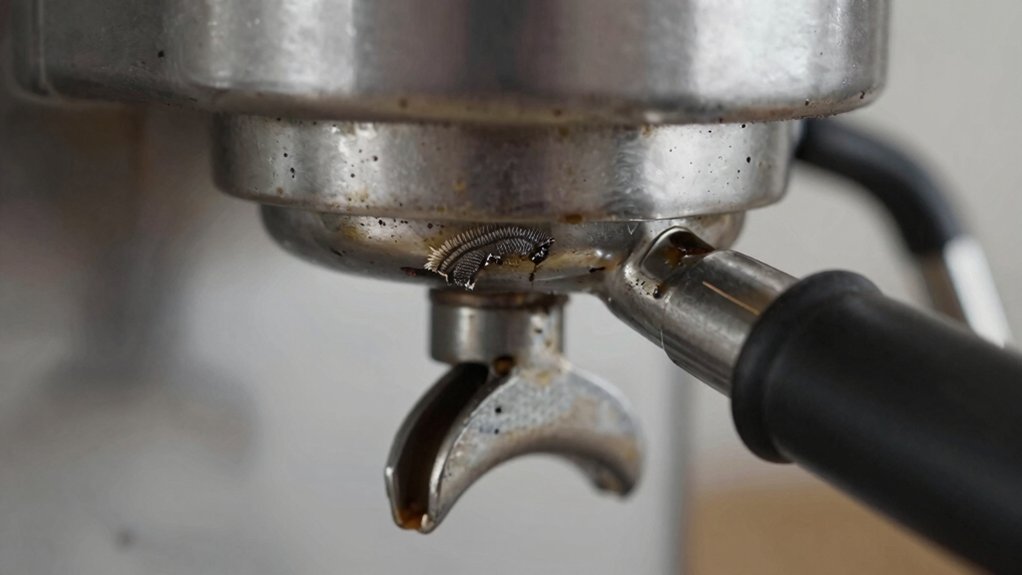
Ever wondered why your steam wand sputters or loses pressure? Keep five spare O‑rings on hand and replace them on the valve shaft and around the knob whenever you notice leaks or a drop in pressure. To swap, pull the shaft out, scrub the grooves clean, slide in two fresh O‑rings, and dab a little food‑safe silicone lubricant to help them seat. Proper material quality and construction, such as using stainless steel and food-grade components, can also impact long-term seal integrity. Descaling every two to three months—more often if your water is hard—removes mineral buildup that slows steam and causes drips. After reassembly, purge the system and test the wand to confirm a tight seal and steady flow. Finally, keep the top cover and wand connections snug but not overtightened to protect the seals and ensure reliable frothing.
Frequently Asked Questions
Why Is My Espresso Machine Steam Wand Not Working?
You’re probably dealing with a blockage, scale, or a pressure issue—clean the wand tip, descale the boiler, and check that the heating element and connections are intact.
What Are Common Frother Problems?
You’ll see blockages from milk residue or mineral scale, worn tip holes, hard‑water scaling, leaking o‑rings, and insufficient cleaning—each reduces steam flow, pressure, and microfoam quality.
What Are the Common Delonghi Problems?
You’ll see worn O‑rings, cracked rubber seals, mineral buildup, clogged wand tips, and scale‑narrowed passages as the most common Delonghi problems, plus occasional warranty‑related service issues.
What Is the Average Lifespan of an Espresso Machine?
You’ll typically get five to fifteen years from a home espresso machine and ten to twenty years from a commercial unit, assuming you descale regularly, replace worn seals, and keep the steam wand clean.
In Summary
By now you’ve seen that a failing steam wand usually stems from clogs, worn O‑rings, or improper pressure and temperature. Keep the wand clean, descale regularly, and swap out any stiff O‑rings to maintain consistent frothing. Adjust the boiler settings if you have hard water, and choose the right tip shape for your milk. With these habits, you’ll keep your espresso machine humming and your cappuccinos perfectly creamy.


