
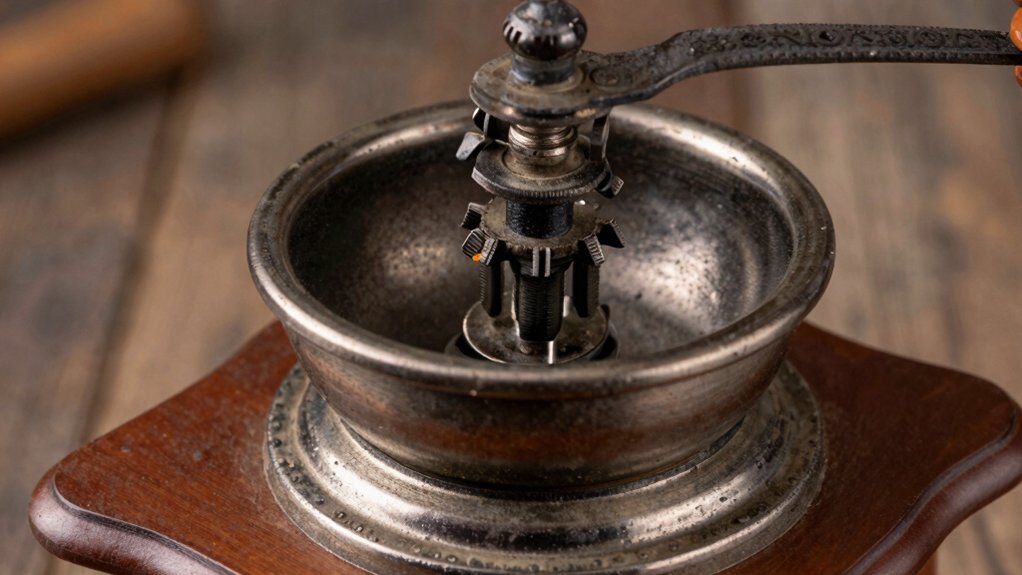
Sharp burrs instantly bring your antique grinder back to life by slicing beans cleanly, which restores a tight, uniform grind distribution and cuts heat buildup. The sharp edges prevent erratic fines, so you avoid channeling and over‑extraction, keeping flavor bright and consistent. Larger, cooler burrs preserve aroma while the flat geometry narrows particle size. If you keep them well‑seasoned and maintained, you’ll see steady extraction and richer taste—plus, there’s more to explore about optimizing performance.
How Sharp Burrs Revive Antique Grinder Performance
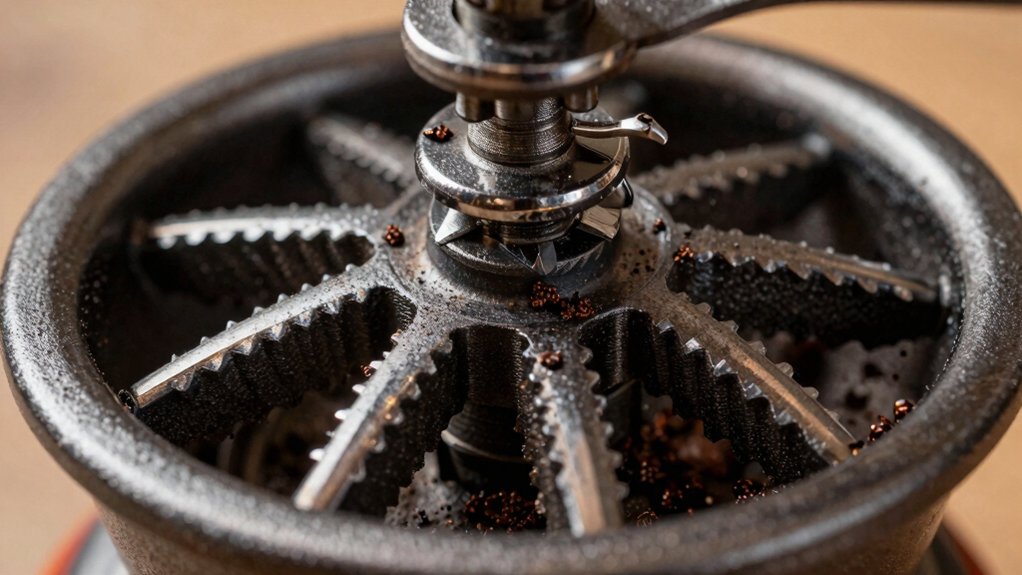
Ever wondered why a freshly sharpened burr can make an old grinder feel brand‑new? When you install sharp burrs, the grind distribution snaps back to a tight, uniform pattern, wiping out the erratic particle spread that dull teeth create. Those crisp edges slice beans cleanly, so you get fewer fines and a steadier extraction time. You’ll notice wear restoration almost instantly—criss‑cross wear drops, slipping stops, and the grinder regains its original efficiency. Proper seasoning and maintenance keep oil buildup at bay, preserving the burrs’ cutting power and aroma. Regularly inspect for chips or dullness, follow the maker’s guidelines, and you’ll keep your antique grinder performing like it’s fresh off the factory line. Utilizing anti-static technology can further enhance the cleanliness and efficiency of your grinding process.
Why a Single‑Modal Grind Gives You Consistent Extraction
You’ll notice that a single‑modal grind gives every particle a similar size, so water flows evenly through the coffee bed. A consistent grind size also reduces streaks during extraction, ensuring a cleaner, more uniform flavor profile. This uniformity prevents channeling and keeps extraction efficiency steady from shot to shot. As a result, you get consistent flavor and avoid the bitterness of over‑extraction or the sourness of under‑extraction.
Uniform Particle Size
Why does a single‑modal grind matter? You’ll notice that uniform particle size creates a predictable surface‑to‑volume ratio, so water extracts each particle at the same rate. Sharp burrs cut cleanly, keeping the distribution tight and eliminating excess fines that would otherwise speed extraction and cause channeling. When burr sharpness stays high, grind consistency improves, and the coffee bed stays even, letting water flow steadily. If the burrs dull, the particle range widens, introducing larger chunks and more fines, which disrupts that balance. By maintaining a single‑modal grind, you protect the brew from over‑extraction and under‑extraction, ensuring every cup tastes as intended. This is why you should prioritize burr sharpness and monitor grind consistency regularly. Additionally, using a high-quality burr grinder with consistent filtration ensures that your grind remains uniform over time, further improving extraction quality.
Consistent Extraction Efficiency
How does a single‑modal grind keep your extraction steady? When flat burrs stay sharp, they slice beans into a tight, uniform size range. That grind uniformity forces water to flow evenly, eliminating channeling and balancing contact time for every particle. The result is extraction consistency: no over‑extracted fines, no under‑extracted larges, just a predictable flavor profile. Additionally, dosing funnel compatibility can support consistent dosing practices, further enhancing extraction stability.
Sharp Burr Geometry: Shaping Particle Size and Shape
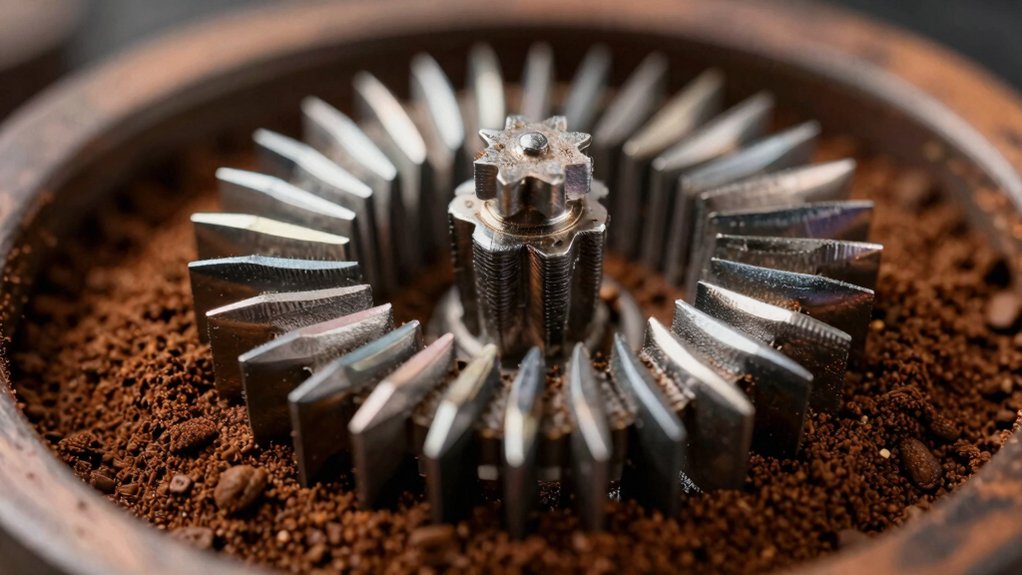
Ever wondered why a flat burr grinder with sharp geometry delivers such clean, consistent coffee? You’ll notice that burr geometry directly sculpts particle size, giving you grind consistency that translates into bright flavor and steady extraction. Sharp teeth bite evenly, producing uniform shapes and cutting micro‑fines that normally add bitterness. Tight tooth spacing narrows the size distribution, while worn burrs broaden it, creating dust and uneven particles. By keeping the burrs sharp, you lock in a stable grind profile, so each cup tastes the same. Additionally, organic standards ensure the burrs are free from contaminants that could impair performance.
How Larger Burrs Reduce Heat and Preserve Aroma
Ever noticed that a grinder with larger burrs stays cooler while you grind? You’ll feel the difference instantly: the motor hums, the beans tumble, and the temperature stays low, protecting delicate flavors. Larger burr size means more cutting edges, so friction drops and grind heat barely rises. That low heat preserves volatile aromatics, keeping the brew bright and nuanced. In commercial settings the cooler operation sustains throughput without sacrificing taste. The precision-machined construction further enhances heat resistance and ensures consistent performance.
Sharp Burrs vs. Conical Designs: Cutting Fines and Bitterness
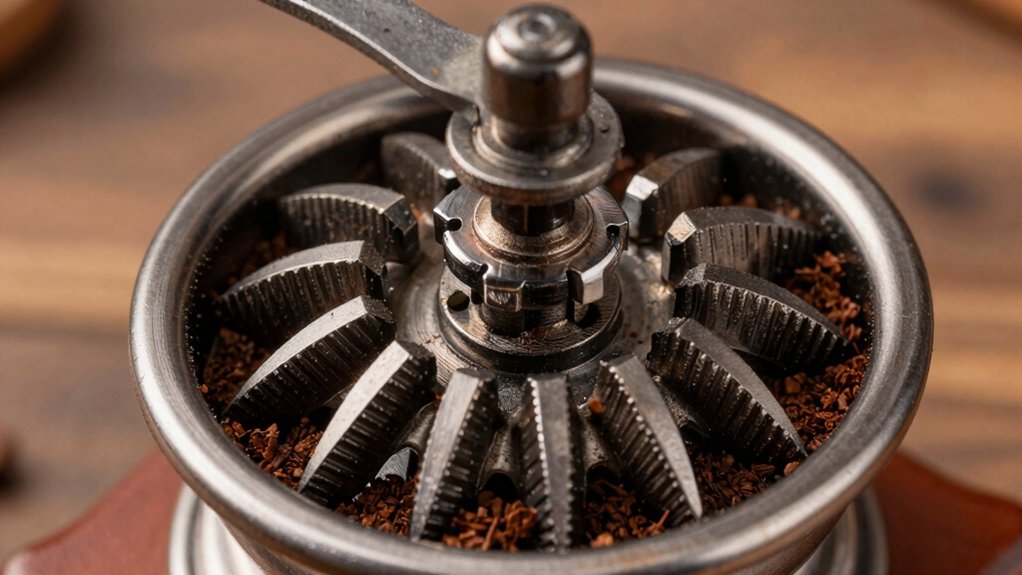
Cooler grinding with larger burrs sets the stage for the next factor that shapes your cup: the sharpness of the burr edges. When you swap a conical set for sharp flat burrs, you’ll notice a tighter particle distribution and far fewer fines. Those micro‑fines usually slip through the puck, over‑exacting and leaving a bitter aftertaste. Sharp burrs shear beans cleanly, producing uniform shards that preserve acidity and floral notes, while conical designs tend to generate irregular fragments that boost bitterness. By choosing sharp flat burrs, you cut the fine‑particle load, keep extraction even, and let the coffee’s true character shine without the harsh, over‑extracted edge. This edge control translates directly into smoother, brighter espresso shots. Additionally, micro‑foam quality can be impacted by the consistency of particle size, which is better achieved with sharper burr edges.
Identify Wear Patterns: Dullness, Chipping, Erosion
What signs should you look for when your burrs start to fail? You’ll notice a dull, matte surface, chips jagged edges, and uneven erosion across the grinding zone. These wear cues signal rising friction, slower grinding, and a drift toward finer particles that can sour your brew. By detaching the burrs and feeling for rough spots, you can catch the problem before flavor suffers.
- Dullness – a loss of sharp edge that creates inconsistent grind size.
- Chipping – broken fragments that produce irregular shapes and excess fines.
- Erosion – surface pitting that reduces cutting efficiency.
- Overall wear – increased friction and slower grind, demanding finer settings.
Spotting these patterns early lets you replace the burrs, preserving steady performance and clean extraction.
When Burr Wear Starts to Skew Grind Consistency
When your burrs start to wear, the grind loses its uniformity and you’ll notice more fines slipping into the batch.
Those extra fines push the flavor profile away from the intended balance, often making espresso taste overly bitter.
You’ll see this shift as inconsistent extraction and a loss of the clean, nuanced notes you expect.
Diminished Grind Uniformity
Dull burrs disrupt the grinder’s geometry, so the particle size spread widens and extraction becomes uneven. You notice grind uniformity slipping as burr wear reshapes the cutting edges, and the particle distribution turns chaotic. The once‑tight curve spreads into a ragged line, making each shot taste different. To picture the impact, imagine:
- A smooth river turning into a jagged stream, each ripple representing a stray particle.
- A clock’s gears grinding unevenly, causing timing errors in extraction.
- A painter’s palette where colors bleed, mirroring mixed particle sizes.
- A traffic jam of grounds, clogging the chute and slowing flow.
Replacing the burrs restores the original geometry, tightening the distribution and bringing back consistent flavor.
Increased Fines Production
Worn burrs crank up fines production, turning a smooth particle spectrum into a cloud of ultra‑fine fragments that boost surface area and invite over‑extraction. When burr wear accelerates, you’ll notice a sudden surge in ultra‑ particles particles that disrupt grind consistency. Those fine shards slip through the dosing basket, creating uneven pockets that over‑extract and mute flavor clarity. Flat, sharp burrs keep fines production low, preserving a stable size distribution and preventing channeling. The LeBrew study showed that worn burrs generate unstable particle spreads, compromising shot predictability. By replacing burrs on schedule, you curb fines production, lock in grind consistency, and maintain a balanced extraction profile without the need for constant adjustments.
Flavor Profile Deviation
Ever notice how a shot that once sang bright and floral suddenly turns bitter or sour? When your burrs wear, the grind size distribution widens, and extraction stability falters. You’ll taste a bitter‑sour shift because fines and uneven particles over‑extract, while larger chunks under‑extract. The flavor map you trusted collapses into a jagged terrain of acidity spikes and lingering bitterness. Restoring sharpness tightens the cut, steadies the grind, and brings the brew back to its original harmony.
- Flat burrs create a sea of micro‑fines, amplifying bitterness.
- Uneven particles cause erratic extraction times, spawning sour notes.
- Sharp burrs deliver uniform particles, preserving bright acidity.
- Re‑sharpened burrs re‑establish extraction stability, eliminating the bitter‑sour shift.
How to Tell When Burrs Need Replacement?
How can you tell your grinder’s burrs are past their prime? You’ll notice burr wear when the metal looks dull, chips, or scratches appear. Those signs cause an uneven grind, forcing you to grind finer for the same brew. Listen for louder grinding sounds or slower performance; increased friction signals wear and a looming replacement necessity. If the grounds clump and fines rise, extraction becomes uneven and bitter. Check the burrs visually—any chips, damage, or obvious wear means you should replace them, not sharpen. Follow the manufacturer’s guidelines or ask your dealer to confirm compatibility. Acting quickly restores consistent particle size, flavor clarity, and optimal brewing results.
Measure Grind Stability With a Particle Analyzer
Ever wondered how to quantify the steadiness of your grind? A particle analyzer like ParticleGo lets you see grind stability in real time by charting the particle size distribution. When burr wear creeps in, the distribution widens, fines spike, and extraction becomes erratic. Flat, sharp burrs keep the curve tight and single‑modal, preventing channeling and preserving consistency. By comparing single‑dose versus hopper runs, you spot subtle shifts that signal emerging wear, letting you replace burrs before flavor suffers.
- Load a fresh dose, record the baseline distribution.
- Switch to a hopper batch, note any broadened peaks.
- Track fines percentage over multiple brews.
- Correlate changes with visual burr wear and schedule maintenance.
Thumbprint Whirl Test: Quickly Assess Grind Fineness
Curious about a fast, visual cue for espresso grind fineness? You can run a thumbprint whirl test right after pulling a Peppina shot. Press your thumb lightly on the wet puck; watch the swirl. Clear, pronounced whirls mean the burrs left a coarser grind, while faint or absent whirls signal the fine particles you need for espresso. Adjust the grind setting until the whirl pattern sits in the sweet spot—just enough motion to indicate proper particle size without over‑coarseness. The test gives instant feedback, letting you fine‑tune burrs before brewing.
| Observation | Whirlpool Visibility | Recommended Action |
|---|---|---|
| Strong, clear whirls | High | Coarser grind; reduce burr setting |
| Moderate whirls | Medium | Ideal grind fineness; keep setting |
| Weak or no whirls | Low | Too fine; increase burr setting |
| No visible whirls | None | Grind may be overly fine; re‑evaluate |
Sharpen or Recoat Vintage Burrs – Which Restores Performance?
Need you faced with a vintage grinder that no longer delivers the clean, consistent espresso you expect, deciding between sharpening the burrs or applying a modern coating is key. Sharpening can strip protective layers, risking uneven grind consistency and exposing burr wear. Recoating with TiN, TiCN, or DLC adds a hard barrier, boosting wear resistance and friction reduction, which often restores performance without sacrificing the original geometry. Inspect the burrs: if chips or severe wear dominate, replacement may be safer. If the metal is intact but dull, coating restoration can extend life and preserve flavor clarity.
Vintage grinder dull? Choose coating over sharpening to preserve geometry, boost wear resistance, and restore espresso consistency.
- Examine burr edges for chips or flattening.
- Test grind consistency on a single dose.
- Choose coating restoration for minor dullness.
- Opt for replacement when burr wear is extensive.
Maintenance Hacks to Extend Burr Life and Flavor Fidelity
You’ll keep your grinder humming smoothly by cleaning the burrs after each batch and checking for chips before they affect grind size.
Season the fresh burrs with a modest dose of medium‑roast beans to lock in consistent particle distribution and curb early flavor drift.
Burr Maintenance Tips
A clean grinder is the foundation of consistent flavor, so regularly wiping the burrs removes oil and residue that would otherwise dull the edges and cause uneven grind size. Good burr maintenance keeps your sharp burrs humming and preserves grind consistency, especially on antique machines that demand gentle care. Follow these quick habits to extend life and maintain flavor fidelity:
- Brush after each use – use a soft, dry brush to sweep away coffee dust and oils; avoid water or detergents to prevent rust.
- Season with medium roast beans – run a light load of beans through fresh steel burrs to reduce fines and stabilize extraction.
- Inspect weekly – look for dull spots, chips, or wear; replace damaged burrs immediately to avoid off‑flavors.
- Stick to OEM parts – use manufacturer‑recommended burrs; aftermarket upgrades can misalign geometry and void warranties.
Flavor Preservation Strategies
Ever wonder why your antique grinder still delivers café‑shop quality after years of use? You can keep that edge by treating burr wear as a cue, not a failure. Clean the chamber after each roast, dry‑wipe with a lint‑free cloth, and skip water—oil builds up and dulls the grind. When you install fresh burrs, run a short batch of medium‑roast beans; this seasoning burrs process stabilizes the first grind and locks in flavor preservation. Watch for slower grinding, excess fines, or a matte surface; those signs mean it’s time to replace or re‑coat. Choosing TiN or DLC‑coated burrs adds durability, maintaining sharpness and consistent particle size, so every cup retains its intended aroma and taste.
Longevity Enhancement Practices
Keeping burrs sharp isn’t just about flavor preservation; it’s the backbone of long‑term performance. You’ll notice that regular cleaning and maintenance keep oil from accumulating, which otherwise speeds burr wear and blunts edges. When you season fresh burrs with a batch of medium‑roast beans, you wipe away manufacturing residues and lock in a consistent grind profile. Avoid water—dry brush or cloth is enough—to preserve the sharp fracture surfaces. In high‑volume sessions, schedule cooling breaks; the cooler temperature maintains material hardness and slows dulling.
- Brush dry after each use.
- Run a 10 kg bean “seasoning” batch after installation.
- Pause every 30 minutes for a short cool‑down.
- Inspect for dull, chipped, or scratched surfaces and replace promptly.
Choose the Right Burr Size and Material for Your Antique Grinder
Which burr size and material you pick will dictate how smoothly your antique grinder performs. You’ll find that a larger burr size adds cutting edges, boosting speed and consistency, while a flat burr shape yields uniform particles for classic brewing.
For burr material, high‑carbon steel offers superior sharpness retention on older machines, giving you reliable grind quality compared with coated or ceramic options. If you need extra wear resistance, consider TiN or DLC coatings; they cut friction and extend lifespan without sacrificing performance.
Pair the right burr size with a durable burr material, season your grinder regularly, avoid water, and use non‑oily beans to keep sharpness intact and grind stability steady.
Frequently Asked Questions
What Is a Ghost Burr Grinder?
You’re looking at a ghost burr grinder when its burrs are worn or chipped, producing uneven particle sizes, inconsistent extraction, slower grinding, higher friction, and possible heat buildup that ruins flavor.
How Does Burr Size Affect Grind?
You’ll notice that larger burrs give you more cutting edges and faster grinding, reducing heat and preserving aromatics, while smaller burrs produce finer particles, increasing surface area and extraction speed.
Which Is Better, a Flat or Conical Burr Grinder?
You’ll find flat burrs superior for espresso because they deliver uniform particles and fewer fines, while conical burrs offer versatility for drip and pour‑over, making them better for broader brewing styles.
Why Is Costco Getting Rid of Its Coffee Grinders?
You’re seeing Costco pull grinders because they’re clearing out low‑turnover, older models to make space for newer, higher‑demand units, cutting warranty risk, and improving overall inventory efficiency.
In Summary
By swapping in sharp burrs, you’ll instantly revive your antique grinder’s speed, consistency, and flavor. The precise geometry cuts evenly, reduces heat, and preserves aroma, while larger burrs keep bitterness at bay. Test the grind with the thumbprint whirl, then decide whether to sharpen or recoat the originals. Keep the burrs clean and properly aligned, and pick the right size and material to maintain that vintage charm and perfect extraction every time.


