
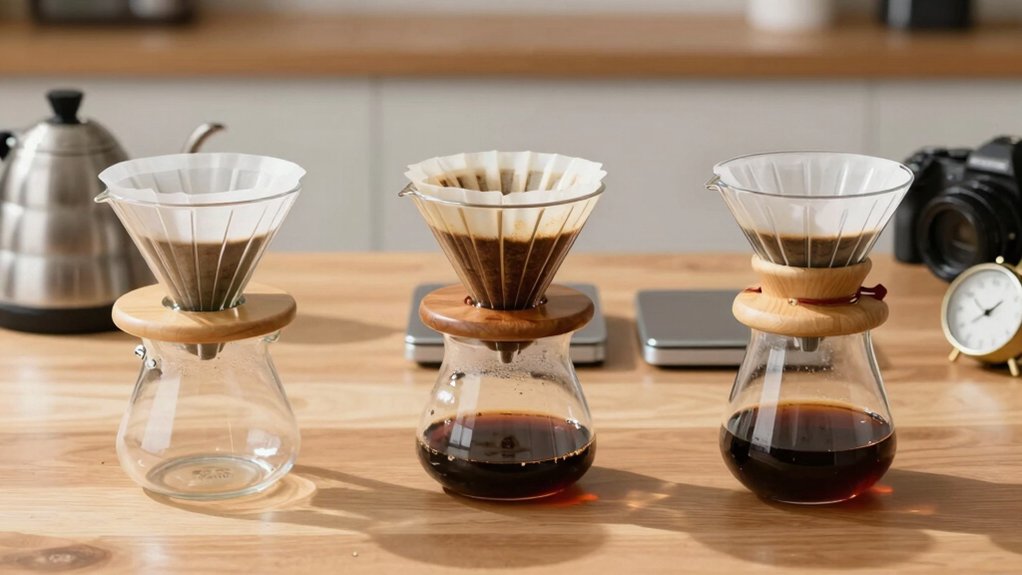
You’ll notice the V60’s gooseneck and thin paper filter let water flow fast, so you use a finer grind and a two‑minute brew for a richer, body‑filled cup, while the Chemex’s tall glass and thick paper slow extraction, needing a coarser grind and a four‑to‑six‑minute pour for bright, clean acidity. The V60 is cheaper, easier to clean, and scales by mug size, whereas the Chemex costs more, holds larger batches, and requires careful rinsing. Keep going to discover each detail.
Design & Pouring: Chemex Glass vs. V60 Gooseneck
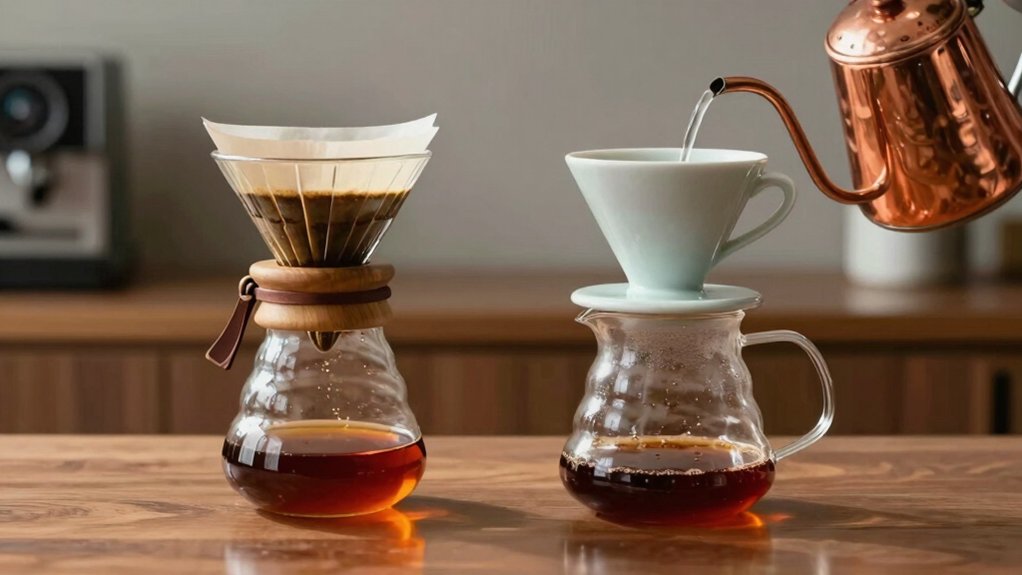
Because the Chemex is a glass carafe with a wooden collar and leather tie, its design centers on a tall, square‑folded paper filter that creates a thick wall inside the vessel, while the V60’s gooseneck‑shaped cone sits directly on a cup or carafe and uses a thin, conical filter that fits tightly around the brew. You’ll notice the Chemex spout design is long, channeling air away and preventing lock‑up as water pushes through the dense filter.
In contrast, the V60’s gooseneck lets you hover the kettle close to the coffee, and its ridges promote rapid drainage. The glass carafe feels sturdy and forgiving, whereas the gooseneck demands steadier, precise pour‑over control to hit the right extraction.
Both setups rely on filters, but the Chemex’s thick wall and V60’s tight cone shape dictate how you manage flow, temperature, and timing. Filter Design affects how water interacts with grounds, influencing extraction rate and clarity.
Choosing the Right Filter: Chemex Thick Paper vs. V60 Thin Paper
Where does the filter you pick shape your coffee’s character? With Chemex filters, the thickness of the paper traps more oils and fines, giving you a lighter body and bright, crisp flavor clarity. You’ll notice citrus‑forward notes and a cleaner cup, but you must rinse the thick paper thoroughly to avoid a papery aftertaste.
V60 filters are thinner, letting more oils through for a fuller aroma and smoother mouthfeel. Their fine paper works best with a finer grind size and a shorter brew time, delivering a nuanced profile without sacrificing clarity.
Choose Chemex thick paper for a pristine, airy brew, or V60 thin paper when you want richer oils and a quicker, more aromatic extraction. You can also consider how the different Chemex models, such as the Classic Series and Ottomatic, influence flavor extraction and consistency across batches filter compatibility and design durability.
What Grind Size and Brew Time Work Best for Each Brewer?
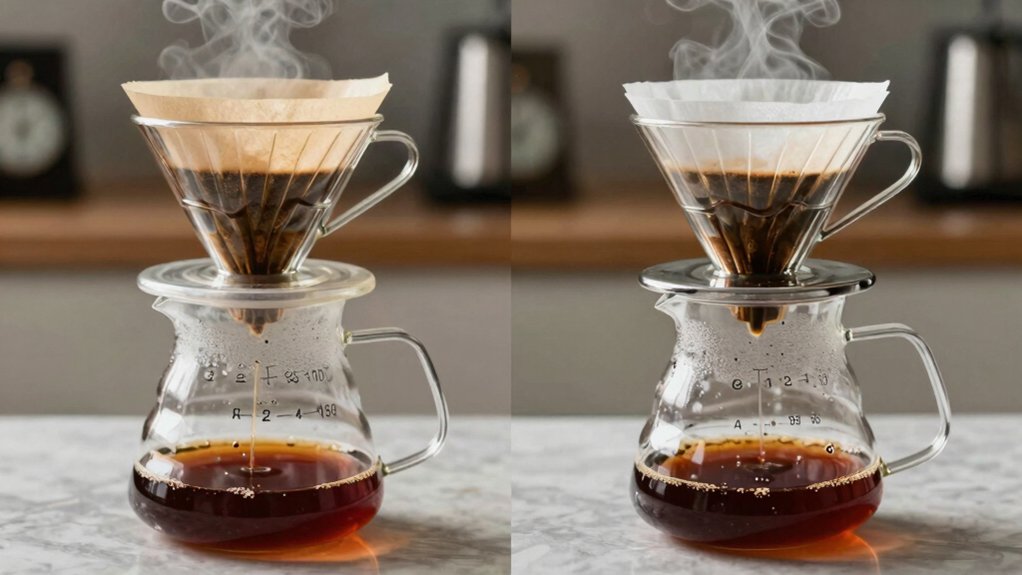
What grind size and brew time will give you the best balance of flavor for each brewer? For the V60 you’ll want a finer grind (around 15 on a Baratza Encore) and a brew time of roughly two minutes. The thin filter and fast flow demand a medium‑fine grind to keep extraction time short and even. With a Chemex, choose a coarser grind (around 20) and aim for four to six minutes of brew time; the thicker paper slows the pour, so a coarser grind prevents over‑extraction while preserving sweetness. VIKROM and GSI Outdoors mugs provide heat-resistant, rugged options that support quick sipping on the trail carabiner clip attachment for hands-free portability, which can influence how you pace your pour and manage heat during brew sessions.
Chemex vs V60 Flavor Profile: Bright Clarity vs. Body‑Rich Sweetness
Switching from grind size to taste, the Chemex and V60 each carve a distinct flavor identity. The Chemex’s thick, square‑folded paper filter strips away oils, delivering brightness and a crisp, fruit‑forward flavor profile that lets single‑origin notes shine with clean clarity. Its coarser grind speeds flow, so you taste a lighter body and pronounced acidity. The V60’s thinner filter and tighter fit preserve more oils, giving the cup body‑rich sweetness and a smoother mouthfeel. The finer grind balances the quick pour, highlighting floral nuances while maintaining enough body for depth. Date tracker on lid
Capacity: Chemex Bulk vs. V60 Solo Brewing
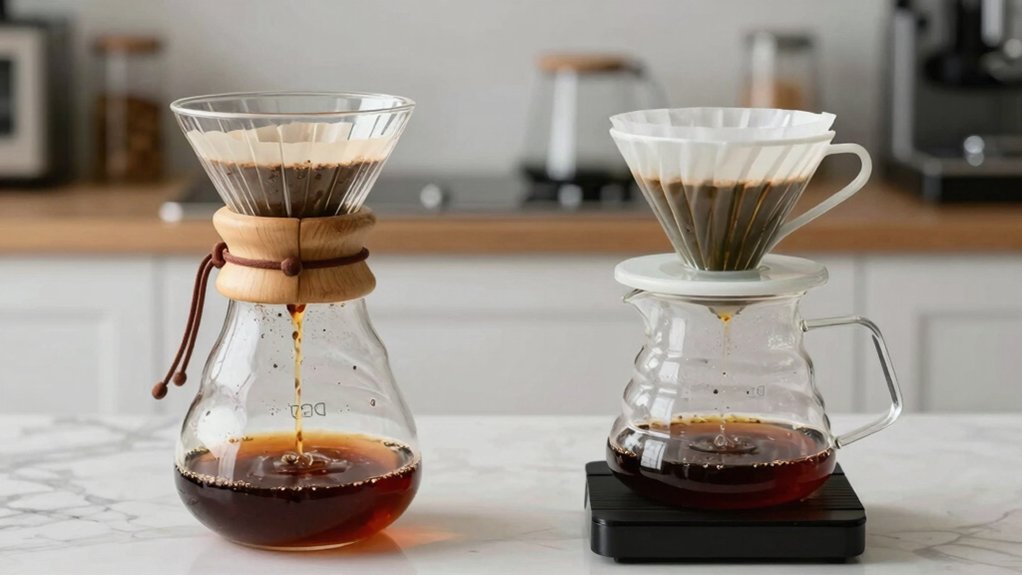
Ever wondered how many cups you can brew at once? With Chemex capacity ranging from 3‑ to 10‑cup models, you can handle batch brewing for larger groups in a single pour. The 6‑cup (≈750 ml) and 8‑cup (≈1 L) Chemexes let you set a brew batch size that covers multi‑serving gatherings without refilling. In contrast, V60 scalability hinges on carafe capacity or mug size, making it ideal for single‑serve or small multi‑cup runs. A 600 ml V60 yields about four cups, while the 1.2 L version stretches to six, but you still measure serving volume per brew. When you need a big batch, Chemex wins; for solo or intimate settings, V60 offers the flexibility you want. For reference, the ability to track and share brew data is highlighted in several refractometer/coffee‑brewing kit options, including app integration for recipe tracking. recipe tracking
Cost & Value: Premium Chemex vs. Affordable V60
How much are you willing to spend for a coffee ritual that feels premium? The Chemex commands a higher price tag—around £60 for a six‑cup model—while the V60 ranges from £30 to £175 depending on finish and capacity. You’ll also notice that Chemex filters are thicker and cost more, adding to the ongoing expense. Yet many coffee lovers justify the premium price for the Chemex’s sleek glass design and the perceived value it brings to the brewing experience. The V60, by contrast, offers lower entry cost, affordable plastic options, and greater affordability for beginners, making it a practical choice without sacrificing quality. A factor to consider is that both brewing methods can deliver consistent flavor profiles when used with proper ratios and fresh beans, reinforcing that drip coffee systems and technique profoundly influence taste and experience.
How Easy Is It to Clean a Chemex vs. a V60?
After weighing the price gap, the next practical concern is how much effort you’ll spend after each brew. Chemex cleaning feels more labor‑intensive because you must disassemble the glass carafe, remove the wooden collar, and scrub away coffee oils that cling to the hourglass walls. The cleaning process also involves discarding thick paper filters and shaking out filter remnants before a thorough rinse. Deep-bowl cupping spoons, used for consistent sampling, underscore the importance of proper post-brew cleanup to avoid flavor transfer and maintain hygiene SCA standards.
Frequently Asked Questions
Can I Use a Metal Filter With a V60?
Yes, you can use a metal filter with a V60, but expect a fuller body and more sediment. Metal filters let oils through, altering flavor and texture compared to paper. Adjust grind size accordingly.
Does Water Hardness Affect Chemex Extraction?
Yes, hard water can over‑extract the Chemex, making it taste bitter and metallic. You’ll notice a heavier body and dull acidity, so consider using filtered or softened water for cleaner, balanced cups.
What Is the Ideal Coffee‑To‑Water Ratio for Each Brewer?
You’ll use about 1:15 for the V60 and 1:16 for the Chemex, meaning 15 g of coffee per 225 ml of water for V60 and 16 g per 256 ml for Chemex. Adjust slightly for taste.
Can I Brew Cold Brew in a V60 or Chemex?
You can’t brew true cold brew in a V60 or Chemex; they’re designed for hot extractions. Use a coarse grind, steep in cold water for 12‑24 hours in a separate container, then filter.
Do Altitude Changes Impact Brew Time for V60 and Chemex?
Yes, altitude shortens brew time because lower pressure reduces water temperature and extraction speed. At higher elevations, you’ll need to grind finer or extend pour time to achieve the same flavor balance.
In Summary
You’ll find the Chemex shines when you want a clean, bright cup and can handle a bit more prep, while the V60 delivers a richer, body‑forward brew with quicker, easier cleanup. Both give you control over flavor, but the Chemex’s thick filter and larger capacity suit batch brewing, whereas the V60’s thin filter and solo size fit daily routines. Choose the one that matches your taste, time, and budget, and you’ll enjoy great coffee every time.


