
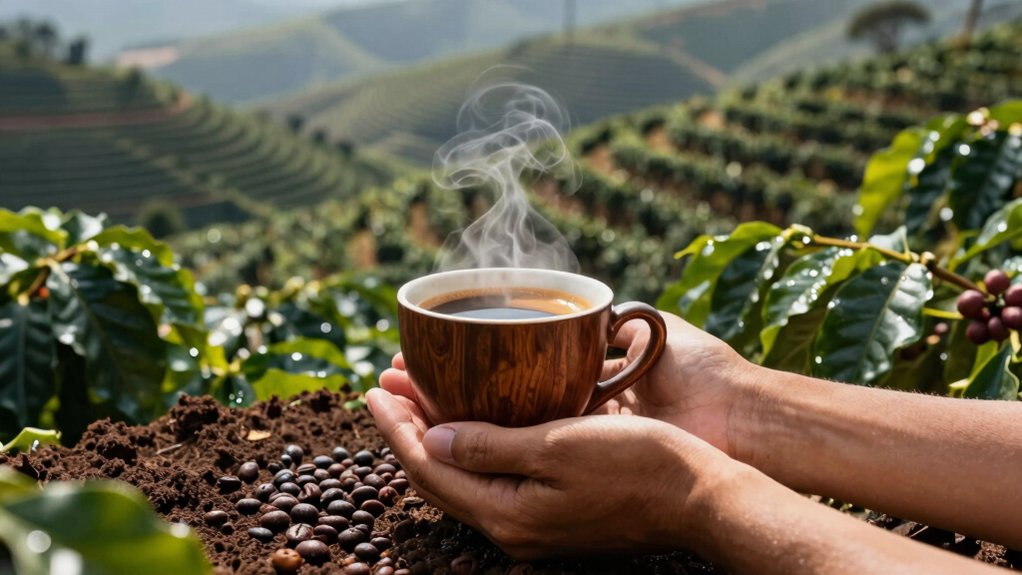
You taste terroir because elevation, climate, soil, and processing each leave a fingerprint on the bean. Higher altitudes slow ripening, boosting acidity and density, while volcanic soils add bright mineral notes. Rainfall and temperature shape fruit development, and micro‑climates tweak subtle flavors. The way the cherry is processed—washed, natural, or honey—either highlights clean acidity or amplifies jammy sweetness. All these forces combine to create the cup you experience, and the next sections reveal exactly how each factor plays its part.
What Is Origin‑Driven Coffee Flavor?
Ever wondered why a coffee from Ethiopia can taste so different from one grown in Colombia? You’re tasting origin‑driven flavor, a direct result of terroir. Altitude pushes beans to develop denser structures and higher acidity, while soil—especially volcanic soils—injects mineral richness that brightens the cup. Microclimates within a region tweak temperature and humidity, shaping subtle fruit or chocolate notes. Climate patterns dictate how each bean ripens, and processing methods—washed, natural, honey—either amplify or soften those regional signatures. Processing methods can further define how those origin flavors come through, influencing the cup’s final character. Together, these elements craft a flavor profile that tells a story of place, from the high‑altitude volcanic slopes to the shaded valleys, letting you experience the true character of a coffee’s origin.
How Elevation, Climate, and Soil Shape Origin‑Driven Coffee Beans
The story of terroir continues with the three pillars that most directly sculpt a bean’s character: elevation, climate, and soil. You’ll notice that higher Elevation, around 900–1,800 meters, slows cherry maturation, sharpening acidity and layering flavor profiles. Altitude boosts bean density, so sugars concentrate and you taste brighter, more nuanced cups. Climate adds another dimension—rainfall, temperature, and humidity steer fruit development, while microclimates within a single region spin distinct, origin‑driven notes. Soil, especially volcanic soils rich in minerals, imprints earthy or mineral tones that complement the acidity you love.
- Elevation: bright acidity, complex flavor profiles
- Climate: microclimates shape floral vs. fruit notes
- Soil: volcanic minerals drive earthy, mineral‑driven taste
Elevation and other terroir factors influence how origin stories translate into cup profiles, including how processing and freshness can accentuate those characteristic notes.
What Processing Methods Influence Origin‑Driven Flavor?
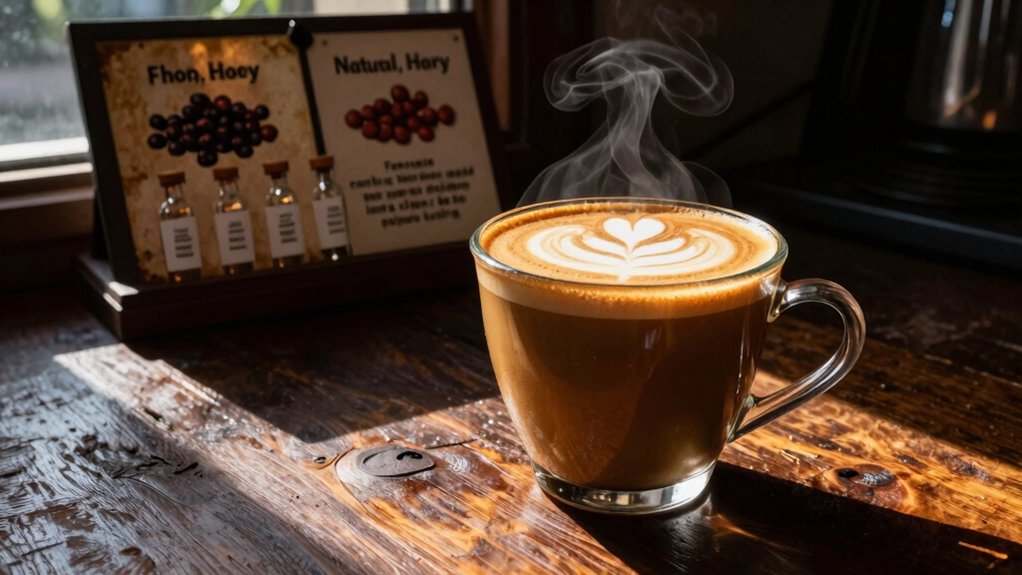
How do processing methods shape the flavors you taste in a cup? You’ll notice that washed processing strips fruit residue with water, letting terroir’s clean acidity and bright notes shine through. Natural processing leaves the whole cherry to dry, so you taste jammy sweetness and vivid flavor nuances that echo the origin’s regional characteristics. Honey processing retains mucilage, adding a honeyed body that balances acidity while still highlighting terroir’s subtlety. Each processing method interacts with the bean’s environment, amplifying or filtering the inherent flavors without altering genetics. Experimental and anaerobic techniques can push aromatics further, yet they still reflect the origin’s unique terroir, delivering distinct acidity, body, and regional character in every sip. Processing methods shape how these flavors present themselves across coffees.
How Regional Coffee Culture Affects Origin‑Driven Flavor
Processing methods set the stage, but the cultural context of each coffee-growing region ultimately decides how those flavors emerge in your cup. You’ll notice that terroir—altitude, soil composition, and climate—interacts with local coffee culture to shape regional flavor signatures that feel distinctly origin‑driven. In Ethiopia, high‑altitude volcanic soils and a tradition of natural processing let heirloom varietals burst with citrus and berry notes, while Colombian growers blend washed methods with consistent rainfall to deliver caramel sweetness and bright acidity. Your palate can trace these differences when you sip single‑origin beans, because each country’s processing method and varietal selection amplify its unique terroir. Altitude and climate dictate bean density and acidity. Internal measurement scale Soil composition fuels mineral and fruit layers. Coffee culture steers processing choices, sharpening regional flavor.
How Combined Factors Shape the Final Cup
At 900‑1,800 meters, altitude, climate, and soil converge to set a bean’s intrinsic flavor blueprint before any post‑harvest work begins.
Altitude, climate, and soil converge at 900‑1,800 m, shaping a bean’s intrinsic flavor blueprint.
You’ll taste how terroir’s altitude slows maturation, boosting acidity and flavor complexity.
Soil composition—especially volcanic soils—infuses bright, mineral notes that can echo fruit or chocolate.
Microclimates add subtle variations, and regional terroir’s identity shines when you compare single‑origin cupping scores.
Your processing methods—washed, natural, honey—either amplify the bright acidity or soften it, letting the underlying terroir speak.
The final cup reflects this dance: altitude‑driven brightness, volcanic mineral depth, and the chosen processing technique all merge, delivering a nuanced, layered profile that tells the story of its place. terroir concepts
Frequently Asked Questions
How Does Terroir Affect Coffee?
You taste terroir when climate, altitude, and soil shape bean density, acidity, and sweetness; volcanic minerals add fruitiness, while high elevations slow ripening, giving brighter, more complex flavors in every sip.
What Is the 15-15-15 Coffee Rule?
You follow the 15‑15‑15 rule by aiming for roughly fifteen percent each of aroma, flavor, and aftertaste, ensuring those three dimensions share equal weight in your cup’s overall impression and balance.
What Is Terroir and How Does It Affect the Taste of Wine?
You’ll find terroir is the unique mix of soil, climate, altitude, and micro‑climate where grapes grow, and it imprints those conditions onto the wine, shaping its acidity, fruit,, and overall character.
How Does the Shape of a Coffee Cup Affect the Perception of Flavor?
You’ll notice that a narrow‑rimmed, tall cup channels aromas straight to your nose, sharpening acidity and brightness, while a wide, shallow cup lets scents disperse, softening acidity and enhancing body and sweetness.
In Summary
By now you’ve seen how terroir—elevation, climate, soil, processing, and local culture—each leaves its mark on every bean. Those factors blend together, shaping the aroma, acidity, body, and finish of the cup you hold. Understanding this journey lets you appreciate each sip as a story of place, and it helps you choose coffees that match the flavors you crave.


