

Start by dry‑sniffing the coffee and jotting a concise aroma term from the SCA Flavor Wheel, then repeat the same process after adding hot water to capture the wet fragrance. Use the wheel’s hierarchy to pick precise descriptors—like “citrus” instead of just “sour”—and assign a light, medium, or strong intensity. Finally, score each attribute on the 6‑9+ scale and write brief, objective notes that track how flavors evolve as the cup cools, leading you to deeper insights soon.
Core Cupping Terms for Better Cupping Notes

Ever wondered how to translate your sensory experience into clear cupping notes? You start by sniffing the dry aroma of the ground coffee, then pour hot water and assess the wet aroma that rises from the broken crust. As you sip, you capture the flavor—how the aroma blends with taste. Notice the acidity, whether it’s soft or sharp, and gauge the body, the mouthfeel that ranges from light to full‑bodied. Finally, evaluate the finish and the balance, how long the aftertaste lingers and how harmoniously acidity, sweetness, body, and flavor interact. Recording these observations in your cup and cupping notes builds a concise, comparable language for every brew. water temperature guides the brewing phase and helps maintain consistency across tastings.
Use the SCA Flavor Wheel for Precise Cupping Notes
How can you translate a fleeting aroma into a concrete, comparable note? Use the SCA Flavor Wheel to anchor each impression. When you sip, glance at the wheel, match the aroma to a flavor category—say, citrus or chocolate—and jot the exact term in your cupping notes. The wheel’s hierarchy lets you differentiate similar aroma notes, like peach versus apricot, and assign intensity levels—light, medium, strong. By employing standardized terminology, you build a robust cupping vocabulary that streamlines sensory evaluation across samples. This consistency improves communication and training for all coffee enthusiasts. Additionally, you can cross-reference aroma notes with the TDS- or Brix-based measurements from compatible refractometer models to sharpen your understanding of how perceived flavors align with objective brew metrics ATC-enabled accuracy.
Score and Write Clear, Consistent Cupping Notes
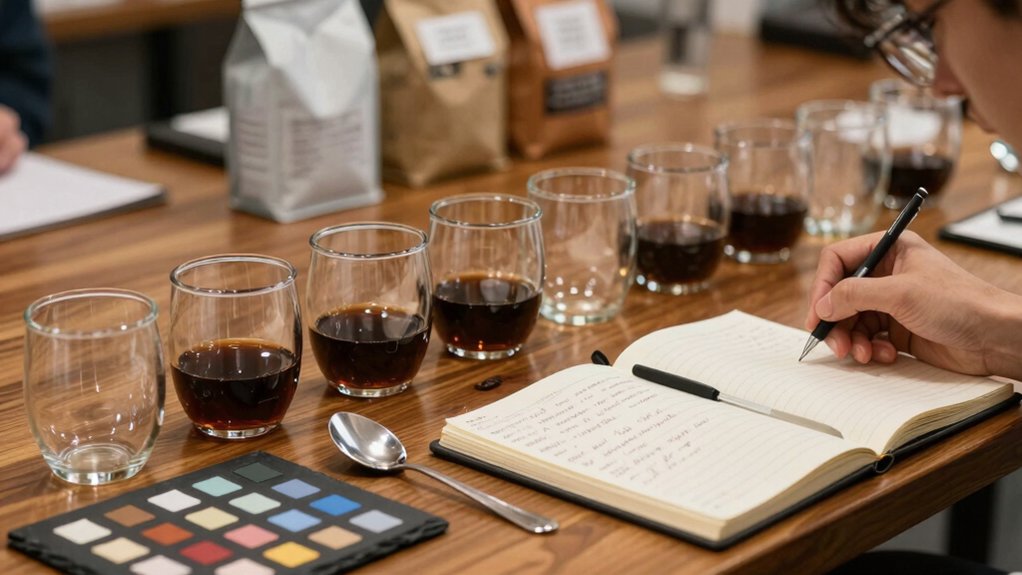
When you score a coffee, start with the standardized cupping form and assign values to Fragrance/Aroma, Acidity, Flavor, Balance, Sweetness, Body, Aftertaste, and Overall on the 6‑9+ scale—6 meaning good, 9+ outstanding. Use the SCA Flavor Wheel to turn wet aroma and dry fragrance impressions into specific descriptors, then write concise, objective notes that capture intensity and evolution as the cup cools.
- A bright citrus acidity that lifts the dry fragrance into a lively wet aroma.
- Chocolate sweetness that rounds the body and supports a smooth aftertaste.
- Full‑bodied texture balancing bright acidity and lingering flavors.
- A lingering aftertaste that mirrors the initial fragrance, confirming harmony.
Link origin, roast, and processing to each Score, ensuring your cupping form stays clear and consistent. Consistent scoring framework
Frequently Asked Questions
How to Describe Coffee Acidity Without Using “Bright” or “sharp”?
You can call it “lively,” “zesty,” “tart,” “citrusy,” “tangy,” “vivid,” “sparkling,” “pungent,” “crisp,” “electric,” “floral,” “wine‑like,” “tantalizing,” “bright‑balanced,” “sharp‑soft,” “sun‑kissed,” “tasting‑like,” “punchy,” “peppy,” “tasting‑rich,” “tasting‑bright,” “tasting‑zesty,” “tasting‑tangy,” “tasting‑vivid,” “tasting‑sparkling,” “tasting‑crisp,” “tasting‑electric,” “tasting‑floral,” “tasting‑wine‑like,” “tasting‑tantalizing,” “tasting‑sun‑kissed,” “tasting‑punchy,” “tasting‑peppy,” “tasting‑rich.”
What Term Best Captures a Lingering After‑Taste That Changes Over Time?
You’ll call it “evolving finish.” It signals a lingering after‑taste that subtly shifts, revealing new flavors as it fades, and it keeps your palate engaged long after the sip.
How to Differentiate “Earthy” From “Woody” in Cupping Notes?
You’ll tell them apart by focusing on scent and flavor: earthy notes feel mineral, damp, or soil‑like, while woody notes evoke dry wood, bark, or cedar aromas, often with a lingering, warm finish.
Which Descriptors Indicate a Coffee’s Fermentation Process?
You’ll spot fermentation through bright acidity, fruity esters, wine‑like tang, buttery mouthfeel, and notes of citrus, tropical fruit, or even a subtle lactic sourness that isn’t present in dry‑processed beans.
How to Note Astringency When It’s Subtle, Not Overwhelming?
You capture subtle astringency by noting “barely perceptible, faintly tingling” on the palate, using descriptors like “delicate,” “soft,” or “whisper‑like,” and assigning a low intensity score, such as one or two.
In Summary
Now you’ve got the key terms, the SCA wheel, and a solid scoring system, you can write cupping notes that are clear, consistent, and truly useful. Keep practicing, stay precise, and let your palate guide you—your coffee evaluations will only get sharper.


