
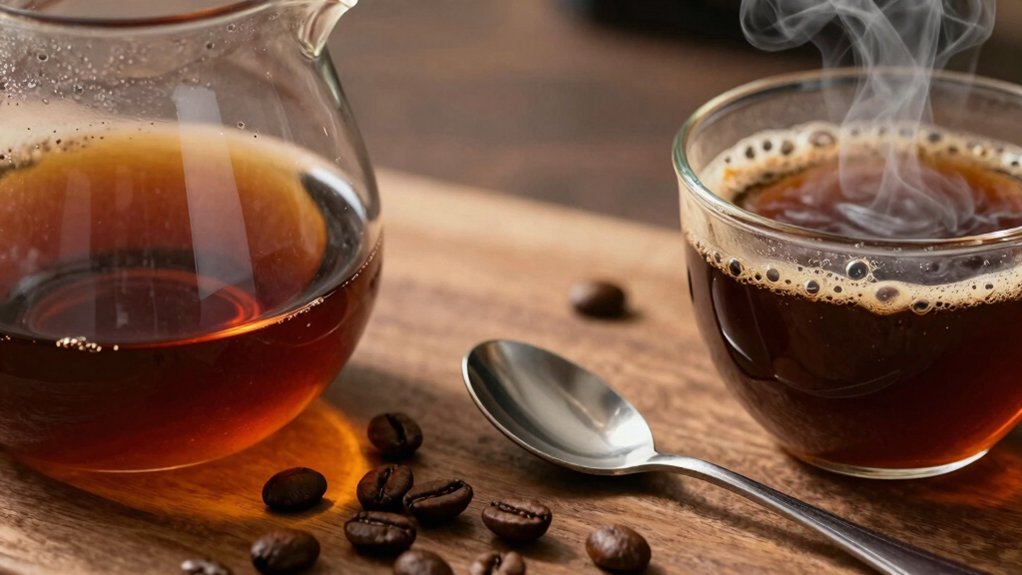
Train your nose by inhaling deeply, then sip and match the aroma to a coffee‑flavor wheel category—nutty, floral, herbal—while hunting specific notes like brown sugar or chocolate. Shift from mid‑palate to the final sip, noting how sweetness, acidity, and bitterness evolve as the brew cools. Balance acidity, body, sweetness, and finish, using a consistent brew ratio, temperature, and timing for repeatable results. Pair each cup with familiar foods or scents to sharpen your vocabulary, and you’ll discover even more techniques ahead.
Coffee‑Tasting Foundations: Train Your Nose & Palate
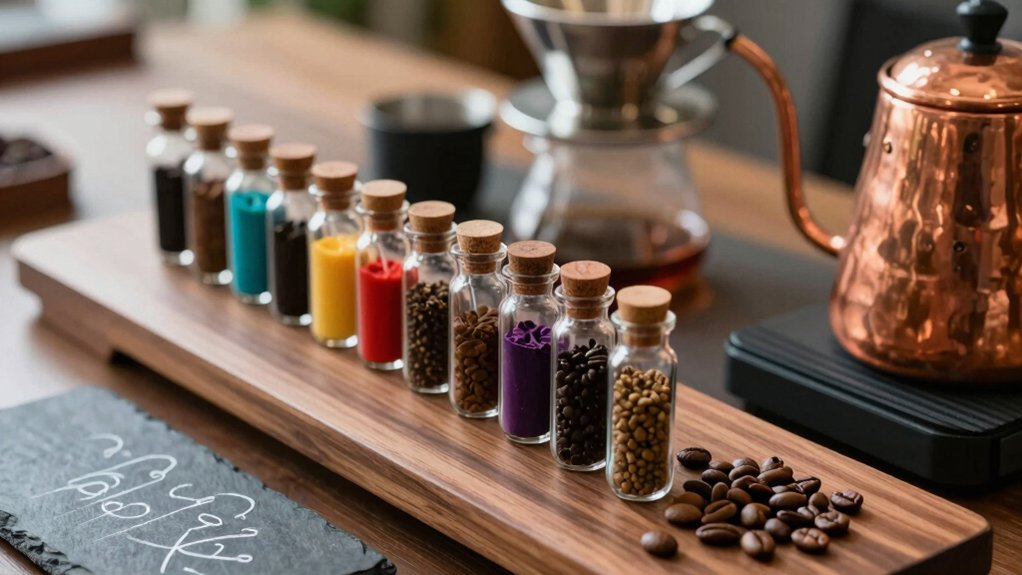
Ever wondered how a coffee’s aroma can unlock its full flavor? You start by inhaling deeply, letting the aroma guide you before the sip. Identify the aroma category—nutty, floral, herbal—then hunt for specific notes like brown sugar or chocolate. Treat aroma and tasting as equal partners; flavor emerges from their blend. As you sip, focus on sweetness, body, acidity, and overall flavor, noting how each note evolves. Use the coffee flavor wheel for inspiration, but let your own perception shape the final description. After each sip, consider the finish to complete the profile. This disciplined approach trains your nose and palate, turning casual sipping into precise flavor note discovery. World Coffee Recipe Cards provide culturally diverse methods that can broaden your aroma and flavor vocabulary while you practice.
Master the Four Core Elements: Acidity, Body, Balance, Finish
You’ll notice the coffee’s acidity brings a bright spark that ties into its overall balance. A stable, well-textured foam can enhance perception of acidity by shaping the mouthfeel and helping the aftertaste linger without harshness microfoam stability. The body gives you the texture and mouthfeel, from silky to light, that shapes each sip. Finally, the finish leaves an aftertaste that lingers, letting you gauge its persistence.
Acidity: Brightness and Balance
What makes a coffee feel alive? You notice its acidity, the bright spark that lifts every note. When that brightness sings, it amplifies sweetness, reveals citrus or berry hints, and keeps bitterness in check. A balanced cup lets acidity dance with body, sweetness, and finish without stealing the show. Taste the lift on the first sip, then watch it shift as the coffee cools—this temperature dance tells you how the acidity contributes to overall balance and how long the crisp aftertaste lingers.
- A sunrise‑yellow citrus burst that awakens the palate.
- A ruby‑red berry zing that adds playful lift.
- A emerald‑green apple snap that sharpens the finish.
In practice, monitoring the TDS range during extraction helps ensure consistent brightness across brews, linking taste perception to measurable parameters.
Body: Texture and Mouthfeel
A coffee’s body is the tactile sensation that coats your palate, ranging from a silk‑like, syrupy heft to a light, watery whisper. You notice the texture from the first sip through mid‑palate, deciding if it feels velvety, gritty, or thin. Roast level, grind size, and brewing method shift the mouthfeel by altering oil and pigment extraction. Heavier, full‑bodied coffees coat the tongue, softening acidity and deepening balance, while light‑bodied brews let brightness shine. Pay attention to how the body interacts with sweetness and acidity, and you’ll fine‑tune the overall experience.
| Roast | Grind | Typical Body |
|---|---|---|
| Dark | Fine | Syrupy, heavy |
| Medium | Medium | Balanced, velvety |
| Light | Coarse | Watery, thin |
| Espresso | Fine | Creamy, dense |
Finish: Aftertaste and Persistence
Ever wonder how the lingering flavors after a sip shape your coffee experience? Your finish tells you how the aftertaste persists, revealing the harmony of acidity, body, and balance. When you notice a smooth, lingering sweetness that fades gently, you’re tasting a high‑quality finish. If the aftertaste turns bitter or flat as the mouth clears, the persistence is weak and the coffee lacks cohesion. Compare each sip’s finish, noting whether the flavors become cleaner, sweeter, or more bitter over time. Use this insight alongside acidity, body, and balance to gauge overall quality and refine your palate. A longer, more nuanced finish often signals well-managed extraction and harmony across brewing variables finish duration and technique.
- A bright citrus aftertaste that lingers like sunrise.
- A chocolatey persistence that coats the palate, slowly fading.
- A smoky finish that clings, leaving a subtle, lingering echo.
Standardized Brewing Techniques for Consistent Flavor
Mastering consistency starts with fixing every variable in your brew. You achieve standardization by choosing one method—pour‑over, French press, or AeroPress—and sticking to it for every comparison. Keep the coffee‑to‑water ratio identical, say 1:16, so strength stays constant across batches. Heat water to the same temperature, ideally 93–96 °C, and use a calibrated kettle to eliminate temperature drift. When you use immersion, time the brew for exactly four minutes; a timer guarantees reproducible extraction. Serve each cup at the same temperature and taste them in the same order to let flavors evolve side by side. By controlling these brewing variables, you create a reliable platform for noticing subtle nuances and building precise flavor notes.
How to Turn Aroma Into Exact Coffee Notes With the Flavor Wheel
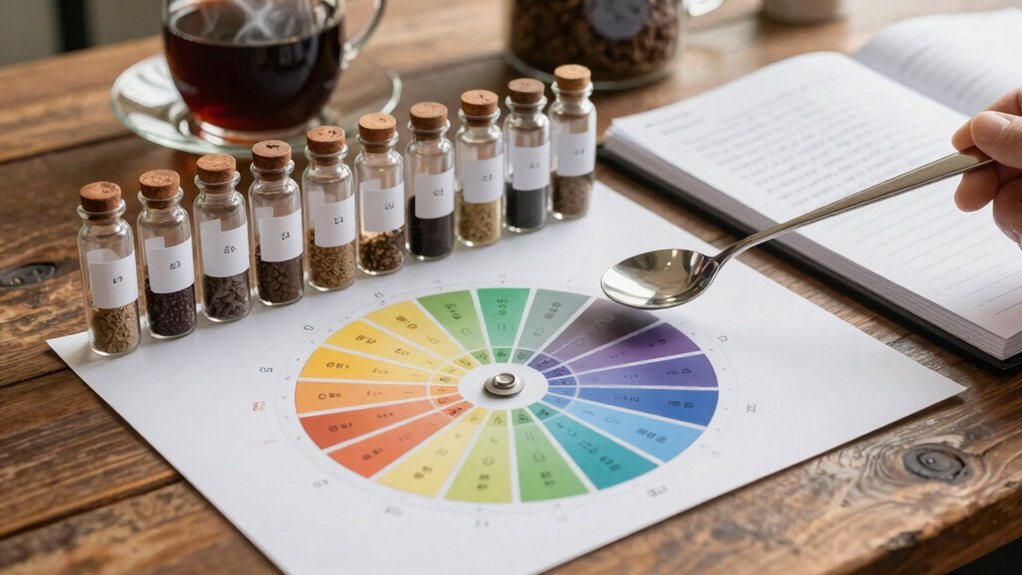
Where do you start when a coffee’s scent whispers “berry” before you even sip? You grab the SCA flavor wheel, spot the broad “fruity” slice, then narrow it to “blueberry” as you inhale. That aroma‑to‑note mapping anchors the tasting notes you’ll record later. Close your eyes, picture a summer bush, and let the memory lock the scent into a concrete term. When you grind, note the pre‑grind aroma, then sip and match the bright acidity to the citrus segment on the wheel. Document aroma, flavor, and finish side‑by‑side, and repeat across sips to confirm consistency.
- A fresh grind releasing a floral perfume that lands on the “lavender” petal of the wheel.
- A lingering nutty scent that you trace to “almond” before the cup delivers a buttery body.
- A citrus burst that you map to “lemon” on the wheel, guiding your bright, tangy tasting notes.
This approach mirrors how specific scales and brewing controls—like the 0.1 g precision and multi‑unit displays found in top digital coffee scales—can help you quantify aroma cues as you experiment with different coffees and methods. aroma-to-note mapping
Home Coffee‑Tasting Cupping: From Aroma Sniff to Finish Evaluation
You’ll start by sniffing the coffee before you grind, noting broad aroma families and any standout scents. Then you’ll sip, track the flavor evolution through the mid‑palate, and finish by assessing how the after‑taste lingers and changes. Use a flavor wheel for inspiration, but let your own sensory narrative guide the evaluation. Pay attention to how brightness and origin influence acidity and nuance, a hallmark of light roasts like those sourced from Central and South America and Brazil. Light roast origin informs the crisp, clean profiles you’ll discover during tasting, especially when brewing carefully with drip or pour‑over methods.
Aroma Before Grind
Ever wonder how a coffee’s character reveals itself before you even touch the beans? You start by sniffing the aroma pre‑grind, letting nutty, herbal, flowery, or smoky cupping aromas fill your senses. Inhale deeply, summon memories, and label the scent—citrus, floral, roasted, earthy. Note any new notes that emerge once you grind, because the fresh grind releases volatiles you missed earlier. Use this pre‑grind aroma as a compass, not a verdict, and keep it in mind when the first sip arrives.
- A bouquet of toasted almond that lingers on the rim of the cup
- A bright, citrus‑sharp burst that snaps awake your palate
- A subtle, earthy undertone that grounds the whole experience
Finish Evaluation Techniques
When you move from the mid‑palate to the final sip, the aftertaste becomes the true test of a coffee’s character. Take consecutive sips, letting the brew cool from hot to warm, and note how sweetness, acidity, and bitterness shift. Compare the lingering finish to the initial aroma and mid‑palate notes; a harmonious aftertaste reinforces those early impressions, while a discordant one signals imbalance. Standardize your cupping—same rinse, water temperature, and serving size—to reliably gauge finish duration across sessions. Fine-tuning finish observations also helps you compare origin and processing influences, which tie back to the origin-specific flavor tendencies highlighted in your tasting notes Origin influence.
Food & Scent Pairings That Sharpen Your Coffee‑Tasting Vocabulary
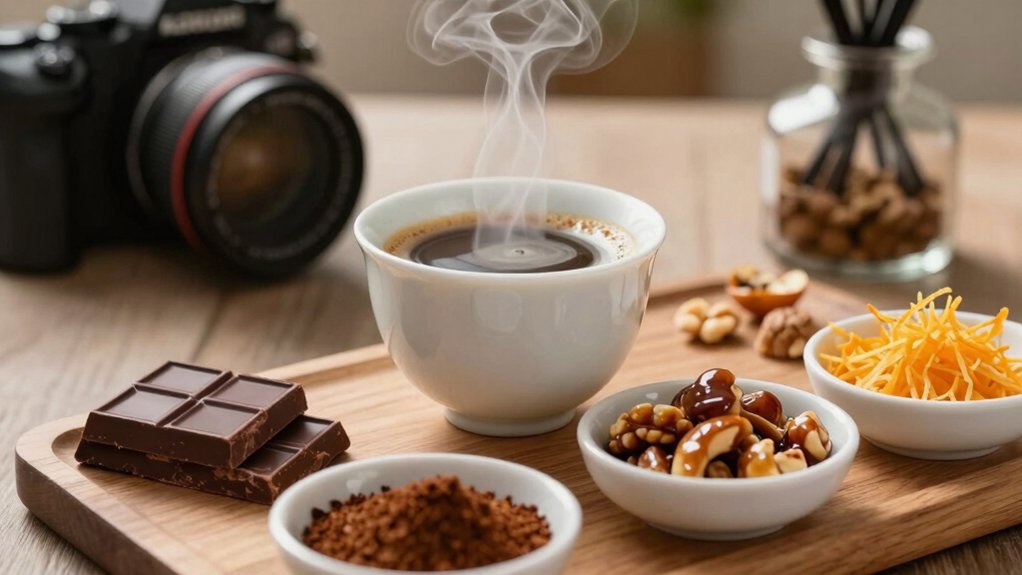
How can you sharpen your coffee‑tasting vocabulary in just a few minutes a day? Start by sniffing a coffee’s aroma and matching it to familiar foods—almond, vanilla, or herbal tea—before you sip. That simple pairing trains your brain to label scents quickly, turning vague impressions into precise tasting notes. Next, bite a stone‑fruit snack while sipping a bright Ethiopian brew; the fruit forward flavor reinforces acidity and brightness. Finally, use everyday scents—lavender, cinnamon, or fresh basil—to imagine possible coffee notes, then verify them by comparing the cup’s actual aroma. Keep a quick log of each pairing, noting intensity, flavor evolution, and finish as the coffee cools.
- Ethiopian coffee + sliced apricot
- Espresso + dark chocolate shavings
- French roast + a sprig of rosemary
Decoding Bag‑Label Notes: Aligning Descriptions With Your Tasting Experience
What if you could turn a coffee bag’s vague promises into a reliable tasting roadmap? First, read the bag notes in their listed order—aroma, flavor, body/sweetness, finish. Treat each term as a clue, not a guarantee, and compare it to your own tasting notes. Use flavor mapping: match “citrus” to bright aroma, “chocolate” to mid‑palate body, “silky” to mouthfeel, and “ lingering” to lingering finish. If the roaster’s site offers a deeper breakdown, consult it for additional context. Expand your vocabulary by sipping diverse beans and pairing them with familiar foods; the more reference points you have, the easier it becomes to translate marketing language into personal perception. This alignment sharpens your palate and builds confidence in future bag notes.
Frequently Asked Questions
How Does Water Mineral Content Affect Coffee Flavor Complexity?
You’ll notice that higher mineral levels, especially calcium and magnesium, amplify acidity and body, while low‑mineral water yields cleaner, brighter notes; balancing these minerals lets you fine‑tune coffee’s complexity.
Can Ambient Temperature Variations Change Perceived Acidity Levels?
Yes, you’ll notice that higher ambient temperatures mute acidity, making coffee taste smoother, while cooler rooms sharpen it, so temperature shifts directly alter the perceived sourness of your brew.
What Role Does Cup Material (Ceramic vs. Glass) Play in Aroma Detection?
You’ll notice ceramic retains heat longer, so aromas linger and intensify, while glass cools faster, letting volatile compounds evaporate quickly and making subtle notes harder to detect, especially in cooler pours.
How Does Coffee Bean Age Influence the Development of Nuanced Taste Notes?
You’ll notice that older beans lose bright acidity and develop deeper, mellower flavors, while fresher beans retain crisp, vibrant notes; aging lets subtle caramel, nutty, and earthy tones emerge, enriching the overall palate.
Do Different Grind Sizes Alter the Perception of Subtle Flavor Layers?
Yes, you’ll notice that finer grinds extract more delicate compounds faster, while coarser grinds leave subtle layers muted. Adjusting size lets you highlight or soften nuanced flavors, shaping the cup’s overall complexity.
In Summary
You’ve now got the tools to train your senses, master the core elements, and use consistent brewing to capture every nuance. By applying the flavor wheel, cupping at home, and pairing scents, you’ll sharpen your vocabulary and decode label notes with confidence. Keep practicing, stay curious, and let each cup reveal a richer, more precise coffee story.


