
Start planning your seasonal menu two to three months ahead so you can lock in sourcing, negotiate prices, and schedule staff training before the season hits. Draft a promo calendar that lines up kitchen trials, performance tracking, and sneak‑peek content. Offer three to five items—mixing drinks and plates—using cross‑utilization to stretch ingredients and price premium items higher while keeping portions affordable. Sync promotions, in‑store signage, and social media countdowns to build urgency. Track sales, waste, and guest feedback in real time, then use those insights to fine‑tune inventory and profitability for the next rollout. Keep going to discover deeper tactics.
Plan Your Seasonal Menu Calendar 2‑3 Months Ahead
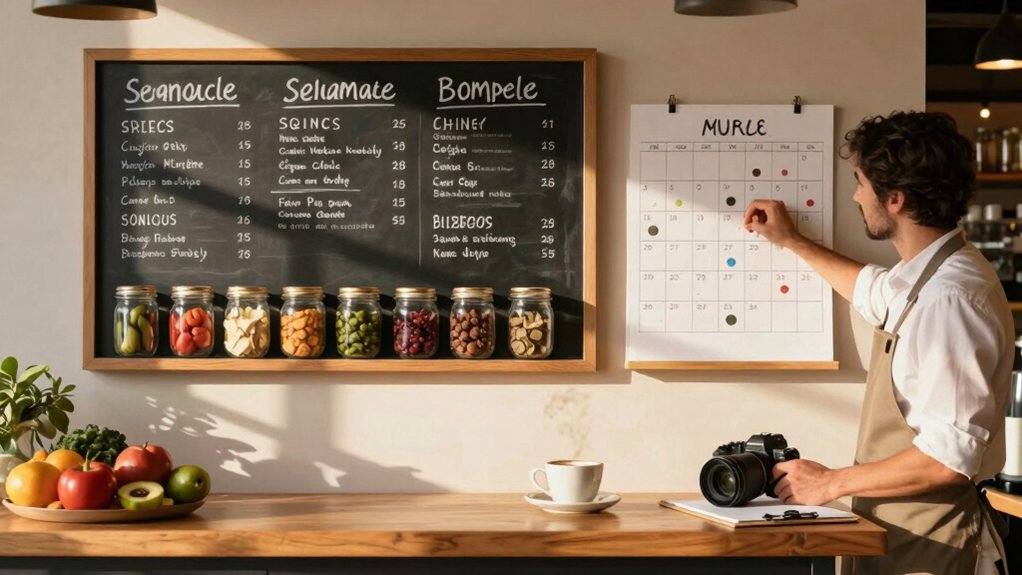
Because timing is everything, start mapping out your seasonal menu at least two to three months before the first day of the season. Use that lead time for seasonal menu planning, securing pre‑season sourcing, and kicking off supplier negotiations while prices are still favorable. Draft a promo calendar that syncs menu conception, testing and iteration, and staff training so everyone knows when to practice new dishes. Allocate weeks for kitchen trials, collect performance data, and adjust recipes before launch. Build anticipation with promotional content—sneak peeks and behind‑the‑scenes stories that showcase the season’s ingredients. Keep the process iterative: review market insights, guest feedback, and prior performance data to refine each rollout and ensure a smooth, profitable seasonal rotation. Incorporate bulk value considerations when selecting ingredients to optimize cost efficiency and consistency across batches.
Design, Price, and Promote Seasonal Menu Items
Three to five carefully curated items—two to three beverages and one to two food pieces—strike the sweet spot for a seasonal rollout. You’ll align ingredient sourcing, staff training, and marketing promotions so everything launches on schedule. Use cross‑utilization to stretch limited‑time offerings across drinks and plates, keeping costs down while meeting customer demand. Pricing strategies blend premium pricing for high‑cost ingredients with affordable smaller portions, ensuring accessibility. Promote each item with early‑access teasers, social‑media countdowns, and in‑store signage that highlight the limited‑time nature and create urgency. For a smooth rollout, map the seasonal menu to a predictable brewing cadence similar to consistent, fast‑brewing systems that deliver reliable quality on time. Seasonal planning helps synchronize sourcing, training, and promotions across the café.
Track Seasonal Menu Sales, Waste, and Guest Feedback
Tracking seasonal menu sales, waste, and guest feedback lets you pinpoint what’s working and what isn’t, so you can adjust quickly and keep profitability high. Use POS analytics to capture seasonal menu sales in real time, then compare those numbers to forecasted projections and break‑even analysis. Log waste by ingredient, prepared item, and trim, then run trend analyses to see where overstock occurs. Gather guest feedback through surveys, comment cards, and online reviews, linking comments to specific items. Combine sales, waste, and feedback data for data‑driven adjustments that refine inventory allocation for upcoming seasonal rollouts. This loop tightens forecasts, reduces loss, and ensures each new menu delivers both flavor and profit. Inventory allocation guides decisions for future seasonal rollouts.
Frequently Asked Questions
What Is the 30 30 30 Rule for Restaurants?
You apply the 30‑30‑30 rule by assigning 30% of menu items to evergreen staples, 30% to strong seasonal rotations, 30% to limited‑time experiments, and keep 10% for testing new dishes.
What Are the 5 Basic Steps of Menu Planning?
You’ll start by researching trends, then set budget limits, create balanced categories, draft item descriptions, and finally test and refine recipes before finalizing the menu.
What Are the 7 Classic Parts of a Menu?
You’ll find starters, soups, entrées, sides, desserts, beverages, and specials. These seven sections give your menu structure, letting guests easily spot each course and helping you organize seasonal rotations smoothly.
How Does Seasonality Affect Menu Choices?
You’ll pick lighter, invigorating drinks in summer, richer, spiced lattes in fall, and warm, comforting beverages in winter, matching weather‑driven cravings and seasonal produce to keep guests satisfied.
In Summary
By staying ahead of the calendar, you’ll keep your café fresh and profitable. Design eye‑catching dishes, price them wisely, and shout about them on all channels. Then, track sales, cut waste, and listen to guests’ feedback. With these steps, you’ll turn seasonal rotations into a reliable revenue boost and a loyal customer base.


