

Start with the wheel’s core families—savory, spice, nuts, chocolate, fruit—to nail the dominant impression. Then move outward, pick the fruit sub‑category that fits, and zero in on a citrus note like lemon, lime, orange, or grapefruit. Anchor each aroma and flavor intensity to a real‑world reference (e.g., pomegranate aroma 5.5, flavor 7.5) and note acidity, body, and roast level. This structured language lets you compare batches and share consistent cupping notes, and the next steps will show you how to apply it to home roasting.
Why the Coffee Flavor Wheel Matters
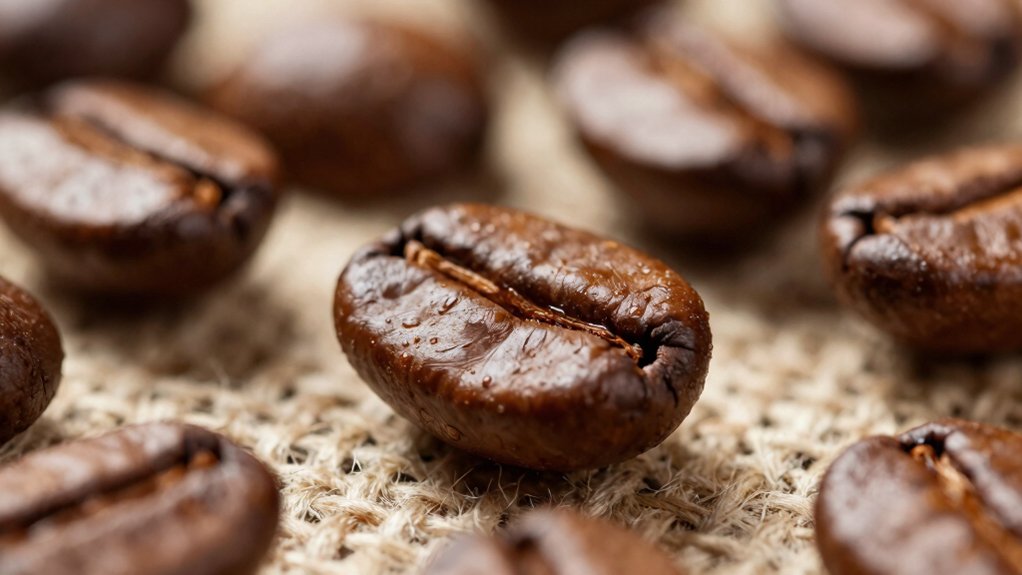
Why does the Coffee Flavor Wheel matter? It gives you a visual map that turns vague impressions into precise, standardized descriptors. By linking aroma vs flavor—like pomegranate’s 5.5 aroma and 7.5 flavor—you learn how each note stems from origin and processing, not from added syrups. The Flavor Wheel streamlines sensory communication, letting you and baristas, roasters, and fellow tasters speak the same language. The wheel also reinforces how context, including roast level and grind size, influences perceived intensity descriptors consistency.
Identify Broad Flavor Families on the Coffee Flavor Wheel
You’ll first spot the core flavor families—savory, spice, nuts, chocolate, and fruit—right in the wheel’s center. Then you navigate outward through the layers, narrowing each broad category into more specific notes. Finally, you link those families to the cup you’re tasting, matching the intensity and aroma to what you experience on the palate. Additionally, you can reference the idea of a cohesive gallery approach to flavor notes New York newspaper style, which mirrors how a well-curated set of descriptors can guide tasting across contexts.
Core Flavor Families
Starting at the wheel’s center, you’ll find the broad core families—savory, spice, nuts, chocolate, and fruit—that serve as the first reference points for any coffee cupping. You’ll use these flavor families to anchor your palate before drilling down. When you detect spice, you might note peppery or cinnamon tones; with nuts, think almond, hazelnut, or a general roasted‑nut nuance. Chocolate can appear as dark, milk, or cocoa‑rich, while fruit ranges from bright citrus to mellow berry. Recognizing these categories lets you quickly label a brew’s dominant character, then you can move outward to finer descriptors. This systematic approach keeps your notes consistent and aligns with the WCR sensory lexicon for intensity and definition. The guidance emphasizes a global, portable framework for learning flavors, aligning with the World Coffee Recipe Cards’ culturally informed approach global flavor framework.
Navigating Wheel Layers
Ever wondered how to pinpoint the dominant character of a brew at a glance? Start at the center of the Flavor Wheel, where broad families like savory, spice, nuts, chocolate, and fruit sit. In cupping, you note the first impression, then follow the wheel outward. The next layer splits the fruit family into a color‑coded fruit category—citrus, tropical, stone fruit, berry, or dried fruit—so you can quickly narrow the scope. Finally, you reach the outer ring of specific attributes, such as lime or pomegranate, guided by proximity mapping that shows how notes cluster. The WCR sensory lexicon backs each term with definitions and intensity scores, letting you describe the cup with precision and confidence. A thorough tasting approach also helps distinguish between mushroom‑based blends and traditional coffee notes, ensuring you can articulate the unique character of each cup Flavor Wheel framework.
Linking Families to Cups
After mapping the wheel’s outer details, turn your focus to the central families that anchor every cup’s profile. These broad categories—savory, spice, nuts, chocolate, fruit—are the backbone of a sensory evaluation. When you link a family to a cup, you’re translating origin, processing, and roast into a concise cup profile that lets others anticipate the flavor notes you’ll experience.
- Identify the dominant family by tasting the first impression; note whether it leans toward nutty, chocolatey, or fruity.
- Cross‑reference origin‑processing‑roast to confirm why that family emerges; Ethiopian washed beans often land in the fruit family, while Colombian natural beans gravitate toward spice.
- Describe the cup profile using the family as a header, then add specific flavor notes for clarity and consistency. Flavor link
Select a Fruit Sub‑Category on the Coffee Flavor Wheel
Where do you find the fruit note on the coffee flavor wheel? You start at the center, move outward until you hit the fruit ring, then follow the next color layer to isolate the fruit sub‑category. If you sense brightness and a lively zing, you’ll likely be in the citrus zone. During cupping, compare that zest to neighboring attributes—lime, lemon, orange, grapefruit—because the wheel’s gaps show how close those descriptors sit. Note the aroma intensity, acidity, and mouthfeel, then confirm the sub‑category by matching it to the wheel’s visual cues. This systematic approach lets you pinpoint the exact fruit family, keeping your tasting notes precise and reproducible. Extraction Yield Calculator
Pinpoint Citrus Notes (Lemon, Lime, Orange, Grapefruit) on the Coffee Flavor Wheel
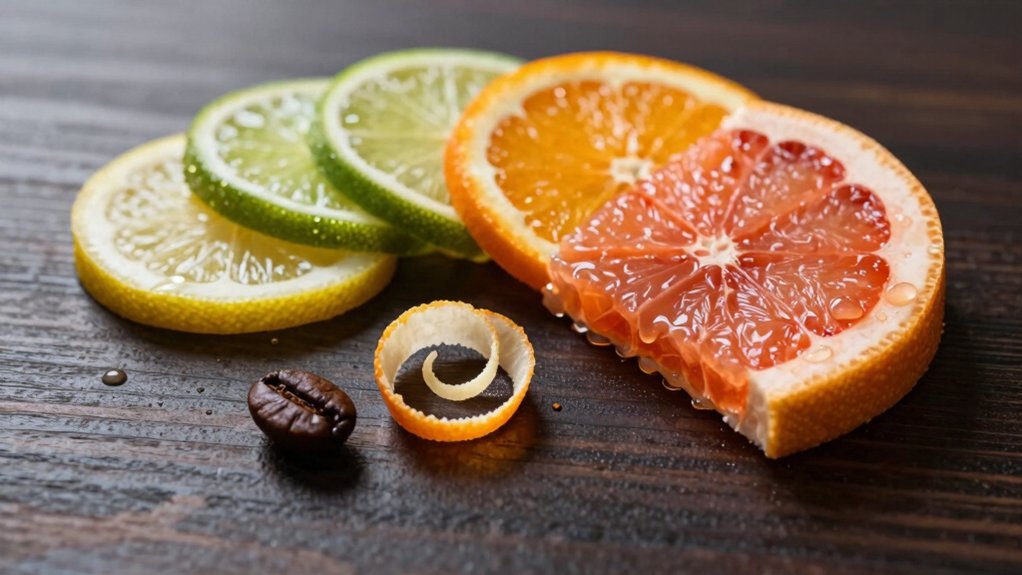
How do you zero in on lemon, lime, orange, or grapefruit within the coffee flavor wheel? First, locate the fruit sector, then follow the color‑coded branches that separate citrus notes. You’ll spot a bright, sharp lemon node, a clean, zesty lime slice, a sweet‑tart orange peel segment, and a dry‑finish grapefruit slice. These cues guide you to the right origin—high‑altitude African beans or Central‑American washes—where the acidity shines.
- Identify the aroma – sniff for lemon’s crisp tang, lime’s sharp edge, orange’s sweet‑bitter peel, or grapefruit’s juicy bitterness.
- Match the palate – taste the front‑of‑tunnel acidity for lemon/lime, the soft sweetness for orange, the dry finish for grapefruit.
- Choose brewing – use a V60, Kalita Wave, Chemex, or Aeropress to highlight those citrus notes.
In practice, keeping a tasting note that records both aroma and palate can help you track how different roast levels and origins emphasize each citrus character, making the citrus notes more repeatable across sessions citrus profiling.
Calibrate Descriptions Using Coffee Flavor Wheel Intensity Scores & Real‑World References
You’ll use the wheel’s intensity scores to anchor each note’s strength, then match those numbers to the real‑world reference examples provided. This lets you translate a “pomegranate” aroma of 5.5 and flavor of 7.5 into a consistent description you can share with other tasters. By applying the standardized lexicon, your cupping notes stay precise and comparable every time.
Intensity Scores Guide
- Identify the core attribute (e.g., citrus) and assign a numeric intensity (1‑5).
- Compare adjacent descriptors (e.g., orange vs. lemon) to refine the score.
- Record the final intensity scores in your tasting log for repeatability.
- When describing a brew, reference the relevant filtering and taste outcomes from AeroPress setups to contextualize intensity levels, such as how unbleached paper filters can reduce bitterness and oils for a smoother profile Filtration and Quality and how micro-filtration techniques influence smoothness and body.
Real‑World Reference Matching
Ever wondered how to anchor a coffee’s flavor notes in something tangible? You can calibrate your description by matching the cup’s Aroma Intensity and Flavor Intensity to entries on the Coffee Flavor Wheel. Pick a Real‑world Reference—say pomegranate (Aroma 5.5, Flavor 7.5)—and note how close your coffee’s profile sits on the wheel’s adjacent attributes. Use Sensory Mapping to compare the perceived fruit, nut, or chocolate cues with the documented intensity scores, then justify the alignment by referencing the wheel’s layers from core to peripheral notes. This quantifiable approach lets you communicate consistently, reducing ambiguity and ensuring every taster hears the same measurable flavor story.
Standardized Lexicon Application
Real‑world reference matching grounds your sensory impressions, and the next step is to translate those anchored observations into the Standardized Lexicon tied to the Coffee Flavor Wheel. You’ll assign each note a numeric value from the intensity scores, then use flavor labeling to communicate consistently across cupping sessions. By anchoring pomegranate’s aroma intensity 5.5 and flavor intensity 7.5, you create a benchmark that other tasters can replicate, reducing subjectivity.
- Identify the broad category on the wheel, then narrow to the specific attribute.
- Match the attribute to a real‑world reference and record its aroma intensity and flavor intensity.
- Apply the standardized lexicon label and intensity score to your cupping notes.
Blend Aroma, Acidity, Body, and Flavor With the Coffee Flavor Wheel
How can you capture a blend’s full personality in just a few words? Start at the center of the flavor wheel, where broad categories like fruity, nutty, or chocolate sit. Identify the dominant aroma, then move outward to pinpoint citrus, berry, or spice notes. The wheel’s color‑coded layers guide you to the right acidity level—bright, mellow, or balanced—by proximity to the fruit sector. Next, assess body: a full‑bodied blend sits deeper in the wheel, while a light, tea‑like cup stays near the surface. Finally, translate those observations into flavor notes, linking each descriptor to a reference standard. This systematic approach lets you communicate a blend’s aroma, acidity, body, and flavor with precision and consistency.
Apply the Coffee Flavor Wheel to Home Roasting
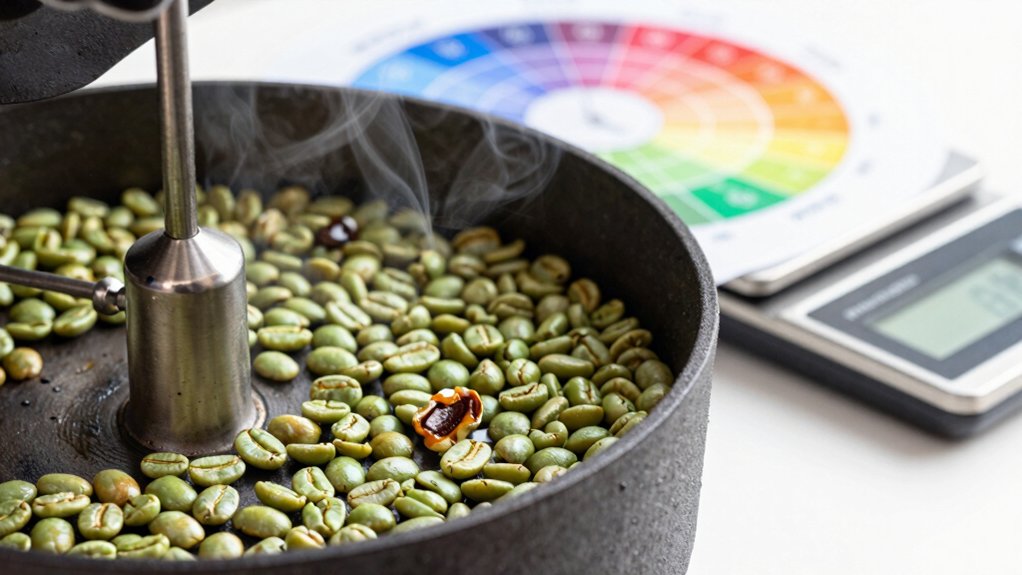
Could you map the Coffee Flavor Wheel onto your home‑roasting routine? Start at the center, then move outward through savory, spice, nuts, chocolate, and fruit zones. As you pull a light roast, notice the citrus notes—lime, lemon, orange—floating from the wheel’s yellow segment. Use aroma mapping to link those scents to the corresponding color group, then record how the cupping profile shifts when you darken the bean and the chocolate zone takes over.
- Identify the dominant wheel segment after each roast.
- Compare the emitted aromas to real fruits or nuts for precise language.
- Log the acidity, body, and flavor together, creating a consistent cupping profile for every batch.
Practice the Coffee Flavor Wheel, Grow Your Vocabulary, and Share Notes With the Coffee Community
Ever wondered how a simple coffee‑flavor wheel can sharpen your palate and connect you with fellow roasters? Start at the center, name broad descriptors, then spiral outward to pinpoint pomegranate, lemon, or other citrus notes. As you move, track aroma intensity and flavor intensity, pairing each term with a real‑world reference like R.W. Knudsen Organic Just Pomegranate Juice. This disciplined practice fuels vocabulary growth, letting you compare nearby attributes and spot gaps that reveal dissimilarity. Jot tasting notes in a journal—origin, processing, roast level, brew method—so you see how each factor reshapes the profile. Finally, engage in community sharing: post your observations, compare scores, and learn from others’ Flavor Wheel, a collective palate.
Frequently Asked Questions
What Are Specialty Beans?
You’ll find specialty beans are high‑quality coffees graded for exceptional aroma, acidity, body, and flavor, sourced from distinct origins, processed meticulously, and roasted to highlight nuanced notes like citrus, chocolate, or floral.
What Are the Most Tasty Beans?
You’ll find the most tasty beans are Ethiopian Yirgacheffe, Colombian Supremo, Guatemalan Antigua, and Brazilian Santos—each offers bright acidity, rich body, and distinct notes like citrus, chocolate, nutty, and berry.
What Coffee Is Good for Gastritis?
You should pick a low‑acid, medium‑dark roast, preferably natural or honey‑processed. Brew it gently, avoid espresso strength, and start with a small, diluted cup to see how your stomach tolerates it.
What Is the 15-15-15 Coffee Rule?
You follow the 15‑15‑15 rule by spending fifteen seconds inhaling the aroma, fifteen seconds sipping, and fifteen seconds reflecting on the flavor, letting each phase guide your sensory evaluation.
In Summary
Now you’ve got the coffee flavor wheel in your toolbox, you can decode any bean’s personality, compare notes, and craft roasts that hit the exact profile you crave. Keep tasting, keep labeling, and share your discoveries—your palate will sharpen, your vocabulary will grow, and the coffee community will thank you.


