

A roast date tells you exactly how old your beans are, so you can time storage and brewing to hit the peak flavor window before oxidation steals the taste. Freshness peaks 3–14 days after roast, with the brightest notes in the first week; a 3–7‑day rest lets excess CO₂ escape, balancing acidity and sweetness. Airtight, light‑blocking containers and nitrogen‑flush or valve‑packaged bags keep oxygen out, extending that window. Follow these tips and you’ll keep your coffee tasting its best longer.
What a Roast Date Means for Your Coffee’s Age
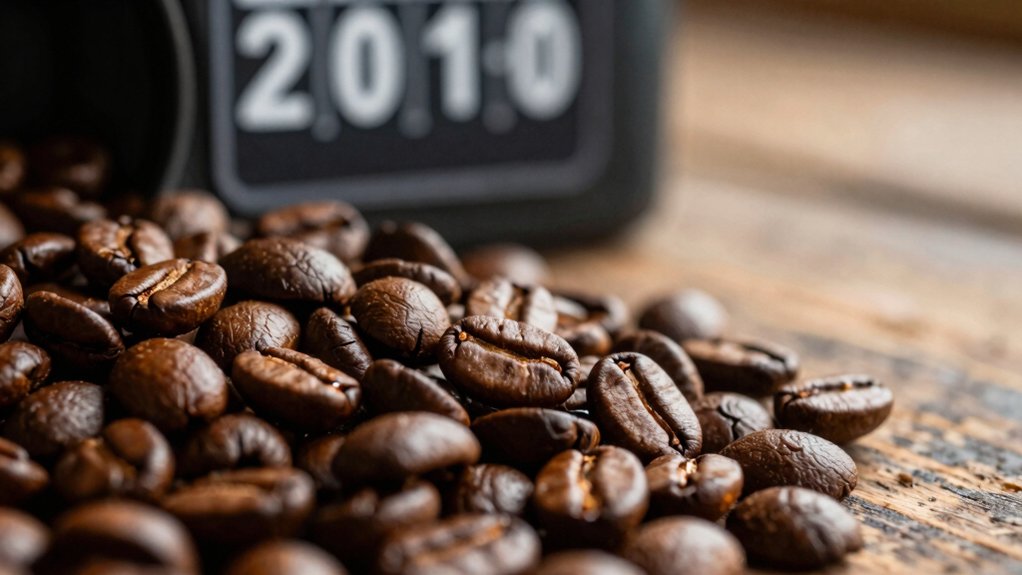
Ever wondered what that roast date on your bag really tells you? It’s your coffee’s age marker, kicking off a freshness window where peak flavor blooms 3‑14 days after roasting. During the first week, beans undergo rapid degassing, releasing CO₂ that shields them from oxidation. As that CO₂ wanes around two weeks, oxidation takes over, and flavor starts to fade. Whole bean retains this protective gas longer, so you’ll notice ground coffee losing freshness faster—grind right before brewing. Track the roast date to gauge age, then time storage and use within the optimal window, typically 1‑2 weeks for brightest notes, extending to 3‑4 weeks for deeper roasts. This simple timestamp beats vague “best by” dates and guides you to the best sip, especially since MCT oil enhancements for coffee can add energy but won’t prevent flavor loss if your beans are past their peak flavor freshness.
Why a 3‑7‑Day Rest Improves Roast‑Date Coffee
Knowing the roast date tells you when the beans hit their peak, but the real magic happens after a short rest. During the 3‑7‑day resting period, excess CO₂ degassing eases, so water flow stays even and extraction becomes consistent. Volatile aromatics settle, sharpening aroma and flavor development while preserving freshness. The lower degassing pressure balances acidity, enhances sweetness, and prevents over‑carbonation that can muddy taste. Light and medium roasts both benefit, achieving expressive notes without harsh sourness. Proper storage conditions keep the beans stable until you brew, letting the roast dates guide optimal timing. The choice of storage container and environment can further influence how well the beans maintain that peak window. Nylon bristles and heat‑resistant tools from specialized espresso cleaning kits are designed to protect delicate machine components during maintenance, ensuring your gear stays in top condition as you dial in roast‑date freshness.
How Packaging Keeps Coffee Fresh Longer
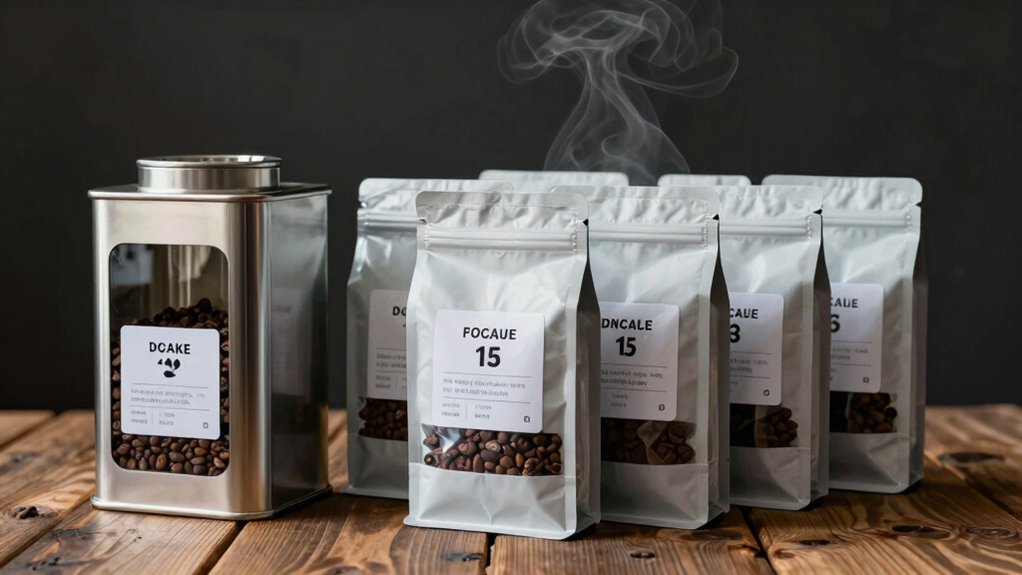
One important detail to note is that choosing the right packaging also helps preserve volatile compounds by reducing oxygen exposure and maintaining consistent storage conditions oxygen exposure.
How to Store Roast‑Date Beans Until You Brew
The one‑way valve and nitrogen flush keep oxygen out, but the beans still need a proper home once you open the bag. To maintain freshness longer, choose an airtight container that blocks light and moisture and store it in a cool, dark place away from the fridge or freezer post-roast window.
Frequently Asked Questions
How Many Months From the Roast Date Is Best to Have Beans?
You should aim to use the beans within one to two months after roasting; that window captures peak flavor before the oils oxidize and the aroma starts fading noticeably.
What Is the 15-15-15 Rule for Coffee?
You follow the 15‑15‑15 rule by grinding, then waiting fifteen minutes before tasting, using fifteen grams of coffee, and allowing a fifteen‑second bloom. It balances aroma, acidity, and extraction for consistent flavor.
What Are the 4 Enemies of Coffee?
You’ll face four enemies: oxygen, which oxidizes oils and acids; light, especially UV, that degrades volatiles; heat, which speeds oxidation and moisture loss; and moisture, which fuels microbes and clumping.
How Long Is Whole Bean Coffee Good After Roast Date?
You’ll find whole‑bean coffee at its best for roughly one to three weeks after the roast date, with peak flavor around four to fourteen days if you store it airtight, cool, and away from light.
In Summary
Remember, the roast date tells you exactly how fresh your beans are, and giving them a 3‑7‑day rest lets flavors settle for a smoother cup. Proper packaging slows oxidation, while airtight storage preserves those nuances until you’re ready to brew. By tracking roast dates and storing beans right, you’ll consistently enjoy coffee that’s at its peak—rich, balanced, and full of character.


