

Pick airtight, opaque containers—glass, ceramic, or inert metal—to block oxygen, UV light, and moisture, then store them in a cool, dark pantry away from heat sources. Label each roast with its date and use a first‑in‑first‑out system so the oldest beans get used first. Finally, set up a two‑jar system: keep bulk coffee in a sealed jar with a one‑way valve and transfer daily portions to a smaller jar for easy access, and you’ll discover even more tricks ahead.
Coffee Storage: Pick an Airtight, Opaque Container
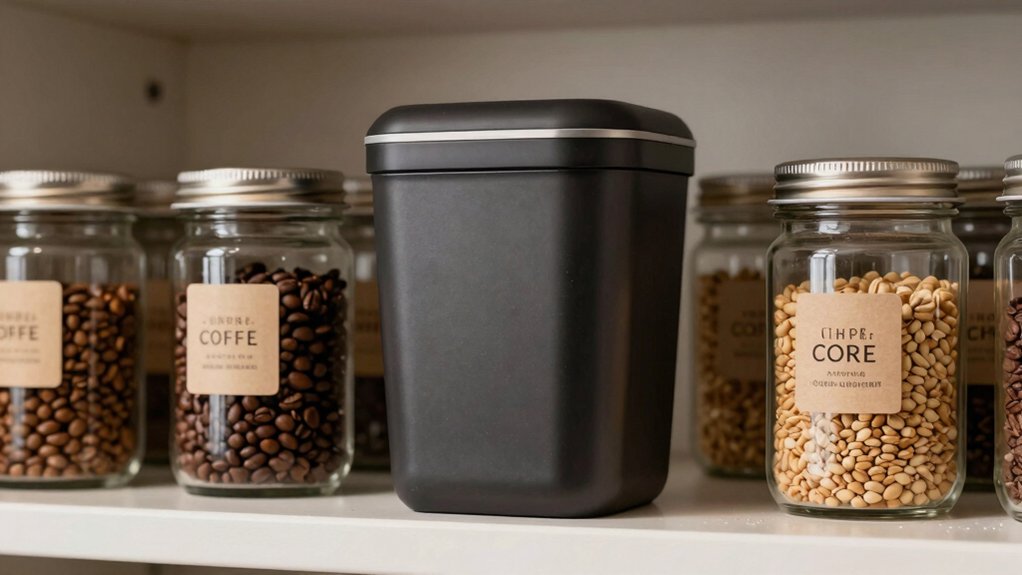
Ever wondered why your coffee loses its sparkle after a week? You can stop that by choosing an airtight container that blocks oxygen exposure and UV protection. Opt for opaque containers made of glass, ceramic, or non‑reactive metal; these materials keep aroma intact and prevent flavor transfer. A vented valve is a smart addition—it lets CO₂ escape while keeping fresh air out, preserving freshness during daily use. Keep one container for the beans you’ll brew soon and another for bulk storage, so you open the smaller jar less often. Avoid plastic, which can absorb aromas. Place the sealed jars in a cool dark place, away from heat and light, and your coffee will stay vibrant longer. Date tracker on lid
Store the Container in a Cool, Dark Pantry and Label Each Roast
How can you keep each coffee variety at its peak? Store your airtight containers in a cool, dark pantry, away from windows and stoves, to slow oxidation and photodegradation. Choose opaque jars that block light and keep temperature steady, then label each roast with its level and date. The label lets you practice FIFO—first‑in, first‑out—so you use the oldest beans before newer ones, preserving freshness across every variety. Maintain a stable environment with automatic low‑voltage shutdown awareness in mind for electronics if you’re using powered storage accessories automatic shutdown below 10.5V to ensure safety and energy efficiency. Keep the pantry door closed, avoid direct sunlight, and never stack containers on top of heat‑emitting appliances. By combining a cool, dark environment with clear labeling and airtight storage, you maintain distinct flavor notes and ensure each roast stays vibrant until you grind it for brewing.
Use a Two‑Jar System With a One‑Way Valve for Daily and Bulk Coffee
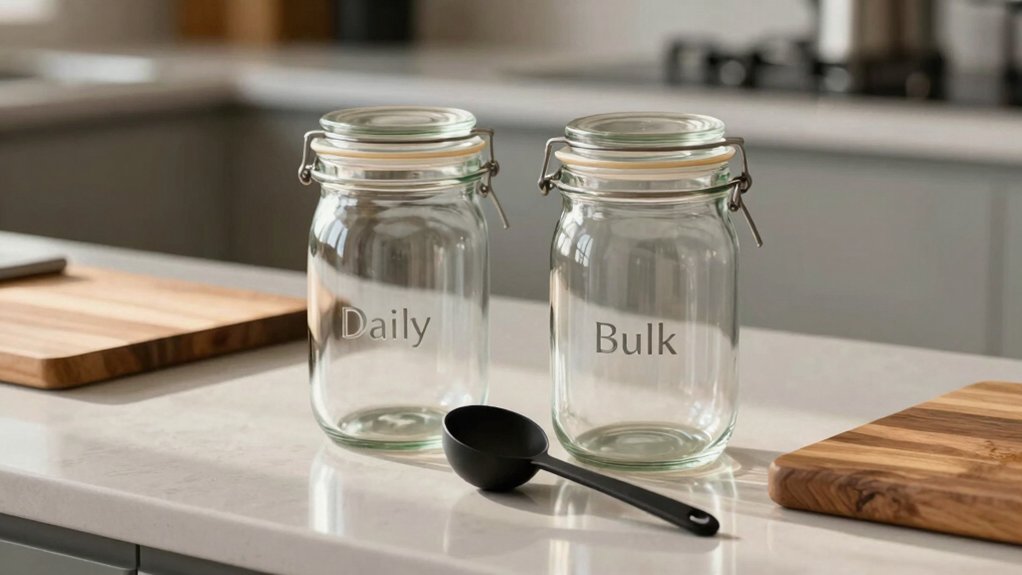
A two‑jar system with a one‑way valve lets you keep fresh coffee on hand while protecting the bulk batch from oxidation. You place bulk coffee in an airtight, opaque container equipped with a one-way valve that lets CO2 escape but blocks air entry. The daily‑use jar, also airtight, sits in a cool, dark pantry for light protection and easy access. When you need beans, scoop a small amount into the daily‑use jar, then grind‑before‑brew to lock in aroma. Rotate stock using FIFO so older beans go first, maintaining storage freshness. Non‑porous glass, ceramic, or inert metal keep moisture out, and the valve’s CO2 venting preserves flavor while minimizing oxidation. Implementing a system with proper TDS‑aware measurements can help ensure water quality consistency for optimal extraction, especially when calibrating home brewing setups with accurate sensor tools TDS accuracy.
Frequently Asked Questions
What Is the 15-15-15 Rule for Coffee?
The 15‑15‑15 rule means you should grind your beans, brew, and drink coffee within fifteen minutes each to lock in peak aroma, flavor, and strength, using airtight, opaque containers to protect freshness.
What Is the 80/20 Rule for Coffee?
You focus on the 20 % of practices—airtight, opaque containers, cool dry storage, whole‑bean use, FIFO rotation, and vented seals—that give you 80 % of coffee freshness and flavor.
How to Store Large Quantities of Coffee?
You should transfer beans into airtight, opaque containers with one‑way valves, keep one jar for daily use and another sealed bulk jar, freeze unopened bags if needed, and rotate stock using FIFO.
What Are the 4 Enemies of Coffee?
You face four enemies: oxygen, which oxidizes flavor; light, which degrades aroma; moisture, which breeds mold and dulls taste; and temperature swings, which accelerate staleness. Keep beans sealed, dark, dry, and stable.
In Summary
By keeping your beans in airtight, opaque jars, storing them in a cool, dark pantry, and labeling each roast, you’ll preserve flavor and freshness. The two‑jar system with a one‑way valve lets you grab daily portions while protecting the bulk supply. Follow these simple steps, and every cup you brew will taste as vibrant as the day the beans were roasted. Enjoy consistently great coffee, no matter how many varieties you keep.


