

You’ll love the tactile ritual of pulling a lever, feeling the resistance and instant feedback that lets you fine‑tune pressure in real time. The simple mechanical design means fewer moving parts, easier maintenance, and shot‑to‑shot consistency that many modern machines can’t match. A pressure stat locks in a narrow range, giving stable boiler temperature and richer crema. La Pavoni and Cremina have abundant aftermarket gaskets and seals, keeping costs low and repairs straightforward. Whether you need a daily driver or a showpiece, the timeless aesthetics and hands‑on control make restoration rewarding—and the next sections will show you exactly how to get it working perfectly.
Why Vintage Lever Espresso Machines Offer a Superior Tactile Ritual
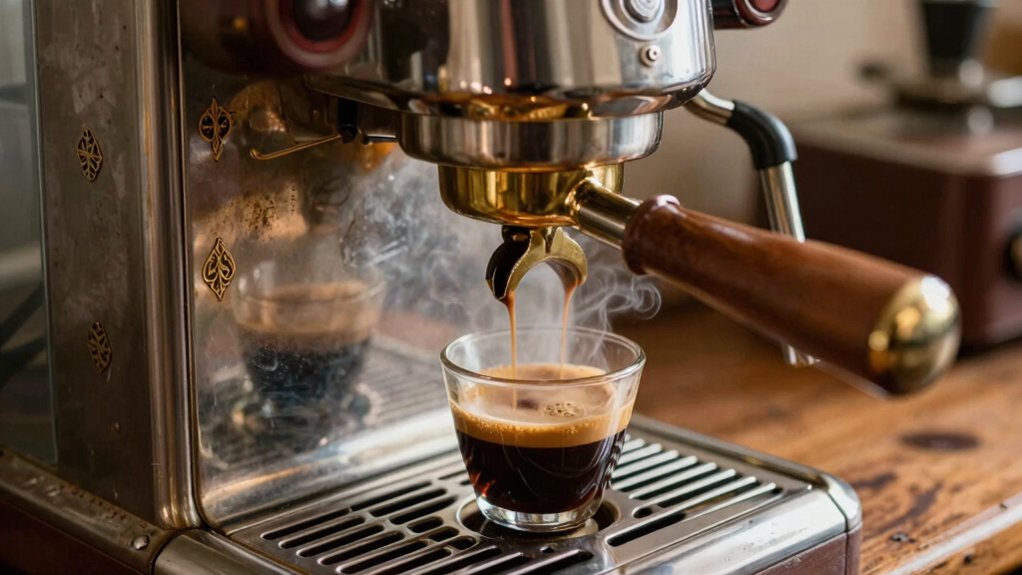
Ever wondered why pulling a lever feels more like a craft than a click? You feel the resistance, the weight, the instant feedback that tells you exactly how much pressure you’re applying. That tactile dialogue is unique to a lever machine, turning each shot into a hands‑on performance.
Vintage models like the La Pavoni Europiccola or Cremina let you fine‑tune extraction by adjusting pressure in real time, something a motorized pump can’t mimic. Their robust construction offers temperature stability, while visible parts—gaskets, boiler valves, lever timing—invite you to maintain and tweak.
The brass, chrome, and wood accents aren’t just décor; they reinforce the ritual, making every brew feel like an artisan’s act rather than a button press. Refinement of extraction becomes an integral part of the brewing process, allowing for a level of control that modern machines often lack.
How Simple Mechanics Translate Into Consistent Espresso Quality
You’ll notice that pulling the lever gives you immediate, tactile control over pressure, so each shot starts from the same baseline. Because the boiler’s temperature stays steady between pulls, the water’s heat doesn’t fluctuate, preserving flavor consistency. Temperature stability ensures that each espresso shot is as reliable as the last, maintaining optimal extraction and flavor profile. Together, these simple mechanics let you reproduce the same espresso profile shot after shot.
Simple Lever Control
When you pull a vintage lever, its long arm turns a modest hand motion into a precise pressure curve, letting you extract espresso with far fewer moving parts than a pump‑driven machine.
The simple lever control of a lever espresso machine translates that mechanical advantage into a repeatable pressure profile.
You feel the resistance, adjust the angle, and the machine maintains a steady force without electronic interference.
Because the system is purely mechanical, maintenance stays straightforward—swap gaskets, reseal,, and replace worn springs without needing a technician.
This simplicity means you can fine‑tune each shot, keep the brew temperature stable across multiple pulls, and enjoy reliable performance day after day. Material simplicity also helps reduce the potential for mechanical failures and makes cleaning easier.
Stable Temperature Management
The lever’s mechanical advantage not only lets you shape pressure but also helps keep the boiler’s heat steady, because the same simple system that governs force also governs how quickly the water temperature changes. When you size the boiler correctly and add proper insulation, the mass absorbs and releases heat predictably, giving you reliable temperature control without electronic sensors. Utilizing compact design principles from vintage levers can further enhance heat retention and stability during brewing. Larger levers hold that heat longer, so multiple shots stay consistent, while small levers tend to swing hotter or cooler. Use temperature strips and a pressure stat to fine‑tune the set point, and keep gaskets and wiring in good shape to prevent leaks that cause thermal drift. Calibrate pressure, watch steam temperature, and follow the documented reassembly steps to lock in repeatable extraction.
How Pressure‑Controlled Extraction Improves Flavor on Vintage Boilers

You’ll notice that a pressure stat lets you lock in a narrow pressure range, which keeps the boiler temperature steady from pull to pull. That stability cuts down on channeling and under‑extraction, so each shot hits the same sweet spot. With precise pressure control you can fine‑tune crema and sweetness, turning a vintage lever into a consistently flavorful machine. Additionally, understanding the safety valve is crucial, as it ensures pressure regulation and enhances both safety and consistent performance during extraction.
Precise Pressure Control
Precise pressure control on vintage boilers—whether achieved with a pressure stat or careful manual leverage—stabilizes extraction, cuts channeling, and delivers consistently flavorful espresso shots. You’ll notice that a well‑tuned pressure control system holds pre‑infusion around 1–1.5 bar and ramps to 9–10 bar for extraction, preventing the “spit‑out” or weak pull that ruins crema. When you replace or upgrade to a matched pressure‑regulating component, you eliminate sudden spikes that cause under‑ or over‑extraction, so every shot tastes bright and balanced. This consistency lets you pull multiple café‑style shots in a row without re‑dialing the machine, preserving flavor clarity across the session.
- Install a reliable pressure stat for steady brew pressure.
- Adjust manual leverage to fine‑tune pre‑infusion.
- Use matched pressure‑regulating parts to avoid fluctuations.
Consistent Temperature Stability
Steady pressure isn’t just about preventing channeling; it also locks the boiler’s temperature in a narrow band, so each pull hits the same sweet spot. When you install a pressure stat and dial in 1.0–1.4 bar, you create a buffer that absorbs heat loss, keeping the water at a consistent brew temperature. Larger vintage levers naturally hold heat better, so you’ll notice fewer temperature swings between shots than with a small lever. Proper sealing and maintaining material quality help ensure long-term pressure stability, which is critical for consistent flavor. Tightening gaskets, sealing leaks, and fitting a reliable pressure gauge prevent pressure drops that would otherwise cause the boiler to cool mid‑extraction. By calibrating start‑up temperatures and monitoring pressure control during testing, you achieve repeatable, café‑style flavor profiles that stay true across multiple pulls.
What Makes La Pavoni and Cremina the Go‑To Choices for Restorers
Why do many restorers gravitate toward La Pavoni and Cremina? You’ll find that both brands balance classic design with practical repair pathways, letting you revive a machine without endless hunting for parts. Additionally, their compatibility with a range of components facilitates easier replacements and adjustments, making restoration more straightforward. Compatibility and design, in particular, play crucial roles in ensuring that repairs can be performed efficiently and cost-effectively.
How Easy‑to‑Source Gaskets and Seals Keep Restoration Costs Low
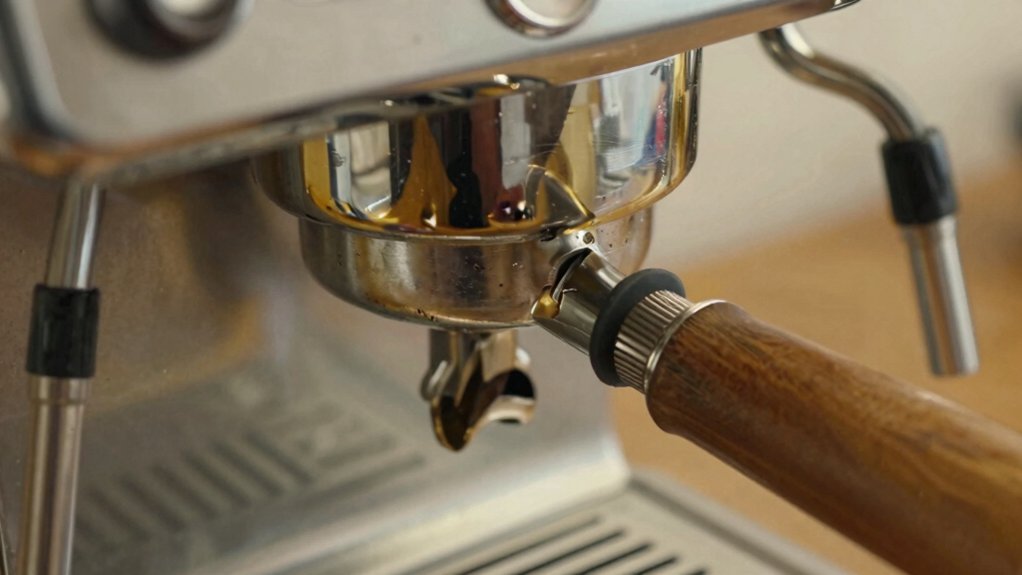
You’ll find gaskets and seals for most vintage levers on hand, and they’re cheap enough to keep your budget in check. Because many models share universal seal dimensions, a single kit can cover the boiler, group head, and valve assemblies without hunting for obscure parts. Swapping them with basic tools takes minutes, so you avoid costly labor and unexpected expenses.
Easy Gasket Sourcing
Ever wondered how a simple gasket can keep your vintage lever restoration budget in check? You’ll find that gaskets and seals are the most commonly worn parts, yet they’re cheap and easy to locate. A full gasket/seal kit covers the boiler, group head, and portafilter connections, so you avoid surprise expenses. Popular models like the Europiccola benefit from abundant stock, and even rarer machines get support from aftermarket suppliers and forum members. Buying a complete set upfront cuts shipping fees and speeds reassembly, keeping your project on schedule and under budget.
- Purchase a complete kit to cover all wear points.
- Source from reputable aftermarket vendors or community forums.
- Order early to consolidate shipments and reduce downtime.
Universal Seal Compatibility
Can you imagine a single gasket fitting multiple vintage lever models, slashing both search time and expense? That’s the reality of universal seal compatibility. Most vintage levers share standard sizes, so a La Pavoni Europiccola gasket often fits a Cremina or early‑70s model with a simple cross‑reference. Worn seals are the usual culprit, and swapping them restores 100 % of the original leak‑free performance for a few dollars. Buying a complete gasket/seal kit covers the boiler, group head, and portafilter interfaces, eliminating guesswork. Even scarce parts become accessible when you consult Orphan Espresso forums, which list compatible part numbers and sourcing tips. By leveraging these shared dimensions, you keep restoration costs predictable and low while preserving the charm of your vintage levers.
Installing a Pressure Stat for Stable Temperature Without a PID
A few simple steps can get a pressure stat installed on a vintage lever machine, giving you stable boiler pressure without the complexity of a full PID. You’ll keep extraction consistent, avoid temperature drift, and preserve the machine’s classic feel. The pressure stat maintains a steady expansion pressure—typically 1–1.2 bar—so each pull repeats reliably, even on high‑volume levers. Wiring is straightforward, and calibration takes minutes, letting you focus on espresso rather than electronics.
- Select the right pressure stat kit – match your model (La Pavoni Europiccola, Cremina, etc.) and ensure the sensor fits the existing boiler outlet.
- Mount and wire – attach the sensor to the boiler, route the leads to the control module, and secure connections with heat‑resistant clips.
- Calibrate and test – set the desired pressure, run a few shots, and fine‑tune until the boiler holds steady across pulls.
Essential Safety Upgrades for Running a 70‑Year‑Old Lever Today
Why risk a vintage lever’s charm for safety? You’ll want to ground the unit properly, install a thermal protection device, and verify electrical insulation before the first power‑up. Inspect the boiler, pressure valve, and sight glass for corrosion; refurbish or replace them as needed, and test the safety valve for leaks. Swap out old gaskets and seals, using food‑safe lubricant to stop drips. Replace brittle wiring and degraded connectors, following updated schematics and confirming continuity with a multimeter. If you’re welding the boiler, re‑plating chrome, or swapping major Espresso machine parts, hire a professional to certify pressure‑vessel integrity and code compliance. These upgrades keep your 70‑year‑old lever functional and safe without sacrificing its classic appeal.
When to Use a Lever as a Daily Driver vs. a Showpiece
Ever wondered whether your lever espresso machine should be the workhorse of your kitchen or a centerpiece on the counter? If you crave consistent temperature, multiple shots, and robust boiler performance, treat a large lever machine as a daily driver. Small levers, like the La Pavoni Europiccola, excel as showpieces—easy on the eyes, perfect for occasional practice, but they lack the heat management needed for high‑volume brewing. Choose based on usage patterns, maintenance willingness, and aesthetic goals.
Choose a lever machine based on daily use, maintenance willingness, and aesthetic goals.
- Capacity – Larger levers handle back‑to‑back drinks; tiny levers suit single‑serve moments.
- Stability – Look for pressure stat or solid heat control; avoid Millennium‑era groups for daily work.
- Aesthetics vs. Function – If you love the visual appeal more than constant use, make it a display piece.
Leveraging Orphan Espresso and Community Resources for Parts & Troubleshooting
Curious how to keep your vintage lever humming without hunting down obscure parts? You’ll find Orphan Espresso the cornerstone of a smart restoration. Their detailed guides break down each component, from gaskets to boiler seals, and cross‑reference compatible parts across models like Europiccola. When you hit a rare early‑70s Cremina, the community forums step in with practical advice—wiring diagrams, DIY gasket swaps, and cost‑effective sourcing tips. Start by inventorying a full seal kit; then use Orphan Espresso’s part‑matching charts to spot interchangeable pieces, slashing both time and expense. Leverage the collective knowledge of seasoned collectors, ask specific questions, and share your own findings. This collaborative approach keeps your lever running smoothly while you avoid costly, dead‑end searches.
Step‑by‑Step: Disassembly to First Calibrated Pull
Ready to take apart your vintage lever and get that first calibrated pull? Start by photographing each stage, label every component, and test wiring continuity with a multimeter before you pry anything loose. Perform a low‑pressure leak test after the initial teardown, then remove the lever group, group heads, and plumbing. Replace worn gaskets, assess corrosion, and clean brass, chrome, copper, and rubber parts with appropriate descalers that won’t damage insulation.
- Document & Label – Snap photos, tag parts, and note torque specs.
- Disassemble Systematically – Work from exterior to interior, checking for leaks and wiring integrity.
- Reassemble & Calibrate – Re‑torque fasteners, verify pressure gauge and temperature control, then pressurize gradually for the first calibrated pull.
Follow these steps, and your vintage espresso machines will be ready for consistent, high‑quality extractions.
Long‑Term Maintenance Habits That Preserve Value and Performance
How often do you schedule a quick check‑up before a full overhaul? You should replace gaskets and seals on a regular maintenance calendar; the parts are cheap and the swap is straightforward. Keep the boiler and grouphead clean, descaling periodically and inspecting for corrosion, because mineral buildup shortens a vintage lever’s life. Document each maintenance step with photos and notes, so you can spot wear trends and simplify future disassembly or part sourcing. Install temperature strips and a pressure stat where possible to stabilize extraction and reduce stress on the machine. Finally, set up a small, well‑ventilated workspace with labeled storage for spare gaskets, seals, and other wear parts. This organized routine preserves both value and performance.
Frequently Asked Questions
Are Lever Espresso Machines Worth It?
Yes, you’ll love the hands‑on control, richer crema, and tactile ritual; plus, restoring a vintage lever gives you a unique, durable machine that outperforms many modern brewers in flavor and character.
What Is the 30 Second Rule for Espresso?
You aim for a 25‑30‑second extraction, adjusting grind, dose, and tamp so the shot pulls within that window, delivering balanced flavor without bitterness or sourness.
What Is the Rolls Royce of Coffee Machines?
You’ll find the Rolls Royce of coffee machines in the La Pavoni Europiccola—its timeless lever design, precise temperature control, and handcrafted build deliver unparalleled espresso quality and lasting durability.
What Is the 2:1 Rule for Espresso?
You follow the 2:1 rule by dosing roughly half the weight of coffee you’ll end up with—about 15 g coffee to yield 30 g espresso—adjusting grind and tamp to hit that balanced extraction.
In Summary
You’ll find that restoring a vintage lever espresso machine isn’t just a hobby—it’s a gateway to richer, more hands‑on coffee rituals. The simple mechanics, precise pressure control, and timeless design of La Pavoni or Cremina deliver consistently superior flavor. With readily available gaskets and a supportive community, maintenance stays affordable. Whether you sip daily or showcase it, a restored lever machine rewards you with both performance and lasting value.


