
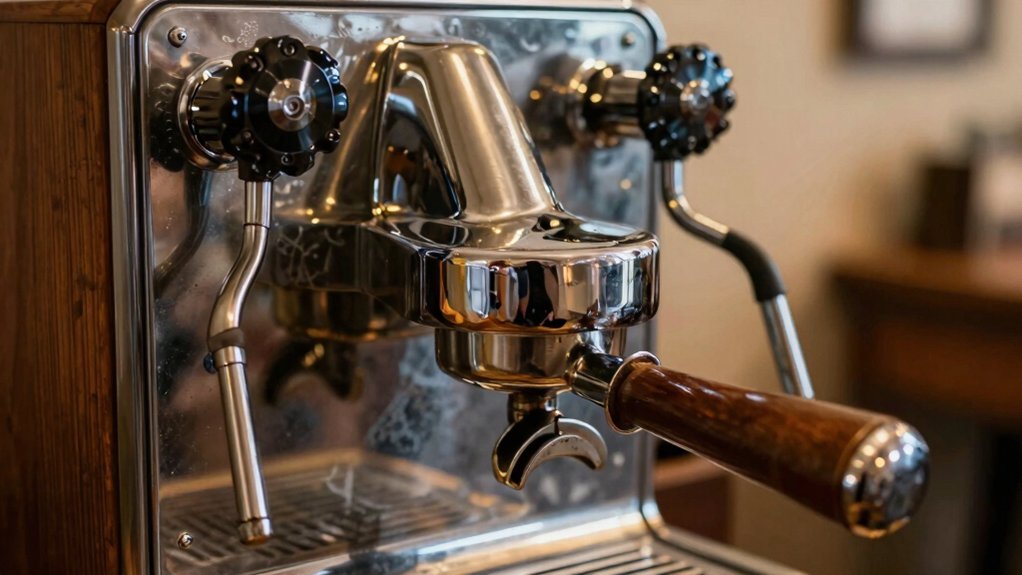
Polishing your vintage espresso machine’s chrome revives its mirror‑like shine, protects the thin plating from wear, and keeps the machine’s authentic character intact. A gentle, non‑abrasive polish lifts oxides, preventing scratches from exposing the yellowish metal beneath. It also guards against moisture and fingerprints, especially when you finish with a thin carnauba wax coat. Follow a simple circular‑motion routine, avoid steel wool, and you’ll preserve both aesthetics and structural integrity—continue to discover the step‑by‑step process and product tips.
Why Polishing Chrome on Vintage Espresso Machines Matters

Why does polishing chrome on a vintage espresso machine matter? You’ll notice the mirror‑like plating with its cool‑blue tint, a hallmark that defines the machine’s character. When you polish, you protect that look, keeping the chrome bright and preventing thin plating from wearing through. If you use a non‑abrasive metal polish and gentle circular motions, you avoid thinning the coating and preserve the underlying brass. Deep scratches that expose yellowish metal warn you that aggressive polishing could strip the chrome, ruining the vintage espresso machines’ authenticity. You’ll also see the cloth turn black as oxide lifts—this is normal and buffs to a clean shine. Over‑polishing or abrasive compounds create swirls, haze, and uneven reflections, diminishing the machine’s classic clarity. By respecting these limits, you maintain both aesthetic appeal and structural integrity.
Step‑by‑Step Chrome Polishing Process for Espresso Machines
Start by confirming the surface is truly chrome‑plated, not stainless, then gather a tiny amount of non‑abrasive metal polish, a soft lint‑free cloth, and a small container of carnauba wax. Apply a dab of polish to the cloth, then work it into the chrome using small circular motions and gentle pressure; you’ll see the cloth turn black as oxide lifts—this is normal. Continue until the shine returns, then wipe away residue with a clean part of the cloth. Buff the area lightly to reveal a uniform luster. Finally, spread a thin layer of protective wax with the same lint‑free cloth, let it set for a minute, then buff to a soft sheen. This chrome polishing routine restores brilliance while safeguarding the finish. Always verify the type of coating to ensure you’re using appropriate cleaning methods and avoid potential damage.
Polish‑Product Recommendations, Common Mistakes & Daily Maintenance
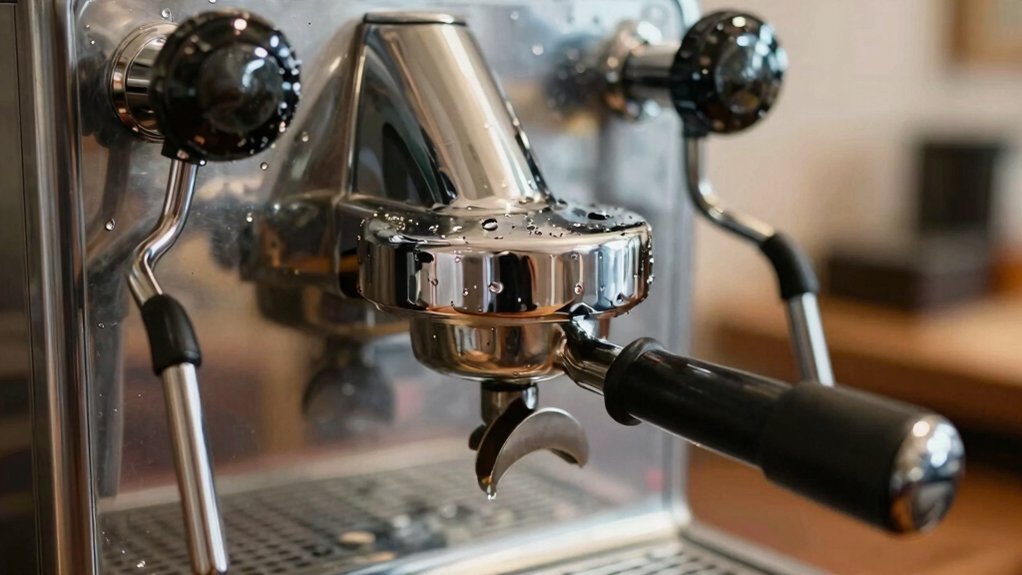
Which polish should you reach for, and how can you keep your vintage espresso machine looking showroom‑ready every day? For chrome, pick a non‑abrasive chrome polish like Mothers Mag or Flitz; apply it in small circular motions with gentle pressure. Expect the cloth to darken at first as oxides lift—buff until the true shine returns. Never use steel wool or aggressive compounds; they create micro‑scratches that ruin the reflective surface. First verify whether the part is chrome‑coated or polished stainless, because anodized aluminum or painted enamel need different non‑abrasive care. After polishing, spread a thin layer of carnauba wax to guard against fingerprints and moisture. Incorporate this routine into your daily maintenance to preserve that showroom finish, especially considering the durability and ingress protection ratings highlighted in the water resistance ratings for different models.
Frequently Asked Questions
Does WD-40 Shine Chrome?
No, WD‑40 won’t give lasting shine; it only adds a temporary gloss that attracts dust and leaves a slick residue. Use a proper non‑abrasive chrome polish instead for a durable, mirror‑like finish.
What Is the 30 Second Rule for Espresso?
You wait thirty seconds after the shot starts, then stop the flow to let the coffee settle; this prevents over‑extraction, preserves crema, and yields a balanced espresso taste.
What Does Vinegar Do to Chrome?
You’ll find vinegar gently dissolves light tarnish and oxidation on chrome, brightening it briefly; however, if you leave it on too long or use it undiluted, it can dull, etch, or damage thin plating.
Can Tarnished Chrome Be Restored?
Yes, you can restore tarnished chrome by applying a tiny amount of non‑abrasive polish, moving in gentle circles, then buffing with a clean microfiber cloth until it gleams.
In Summary
By polishing the chrome on your vintage espresso machine, you protect its finish, keep it looking sleek, and guarantee every brew feels as refined as the machine itself. A little regular care prevents rust, restores shine, and preserves the piece’s heritage. Stick to the step‑by‑step routine, use the right products, and avoid harsh abrasives—your machine will stay gorgeous and functional for years, making every espresso feel timeless.


