
You can earn an SCA‑aligned barista credential locally through community‑college courses, trade‑school programs, or in‑house training at specialty roasters and cafés. Many schools blend online theory with hands‑on espresso, milk‑texturing, and latte‑art labs, offering Foundation, Intermediate, and Professional tracks that lead to diploma eligibility. Short workshops and one‑day intensives also give quick mastery and certification readiness. Keep exploring to discover the best fit for your goals, budget, and schedule.
Best Local Barista Certifications That Meet SCA Standards
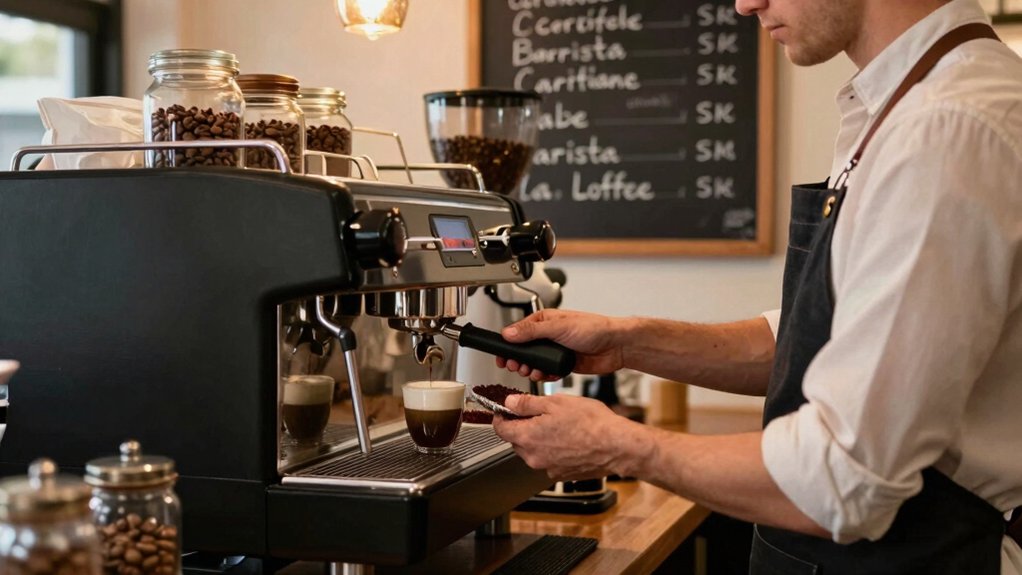
Where can you find a local barista certification that truly meets SCA standards? You’ll discover SCA‑aligned Certification programs at regional schools like Texas Coffee School and IBCA, where Authorized SCA Trainers guide you through Barista Skills modules. Each program blends online modules with practical hands‑on assessments, ensuring you meet diploma eligibility requirements. You can start with an Introduction to Coffee and advance through Foundation, Intermediate, and Professional levels, earning transferable certificates along the way. Barista Hustle adds a public certification path, offering challenging assessments and optional membership perks. In‑location training at academies such as IBCA in Tempe or Dubai supplements the online content, giving you a comprehensive, standards‑compliant credential without leaving your area. Micro-filtration
Where to Find Barista Certification Courses at Community Colleges & Trade Schools
If you’ve already seen how regional schools like Texas Coffee School and IBCA deliver SCA‑aligned curricula, you’ll find similar quality at many community colleges and trade schools. These institutions embed barista certification into continuing‑education or culinary tracks, offering short‑term, evening, or weekend formats that fit a work schedule.
You’ll get hands‑on training on commercial‑grade machines, mastering espresso extraction, milk texturing, pour technique, and equipment sanitation. Many programs align with SCA‑certified curricula, so the certificate course meets industry standards.
Flexible online theory modules pair with in‑person labs, keeping costs reasonable while delivering a comprehensive skill set. Search local community colleges and trade schools for their culinary or hospitality departments to enroll. For context, several of these programs incorporate SCA‑aligned curricula and emphasize practical, hands‑on practice in real café settings hands‑on training to build job‑ready baristas.
In‑House Barista Certification Training From Specialty Roasters & Shops
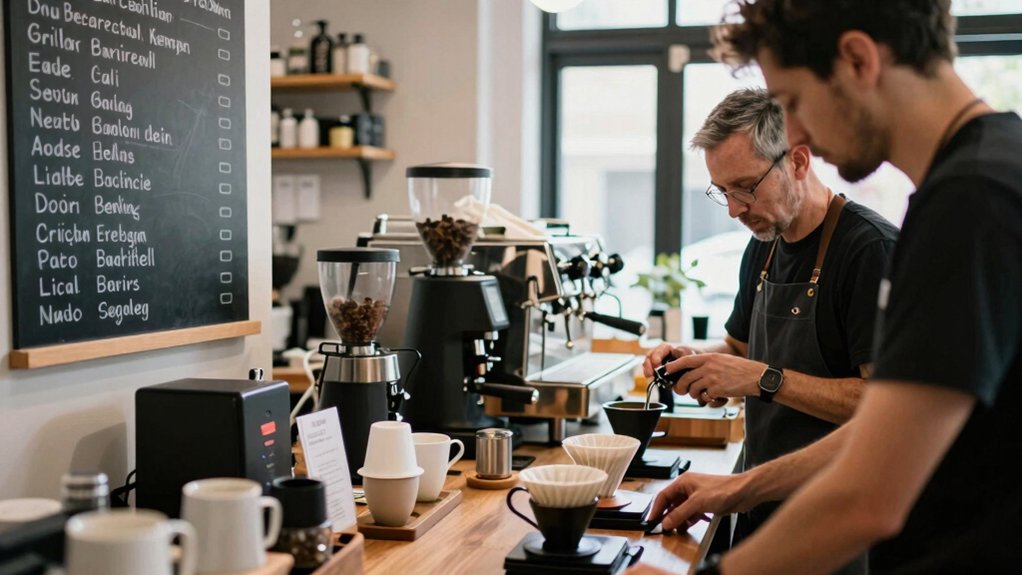
Specialty roasters and independent coffee shops often run their own in‑house barista certification programs, tailoring training to the shop’s equipment, recipes, and service standards. You’ll immerse yourself in espresso extraction, milk texturing, latte art, workflow efficiency, and customer‑service expectations that match the brand’s identity. Programs usually stack into tiers—Foundation, Intermediate, Professional—each with hands‑on practice, written assessments, and competency checks. Completing the in‑house certification validates your skill development for that location and can translate into transferable credentials across the local market, especially when partnered with broader coffee education initiatives like the Texas Coffee School.
| Tier | Focus | Outcome |
|---|---|---|
| Foundation | Espresso basics, equipment handling | Core competence |
| Intermediate | Milk texturing, latte art | Consistent drinks |
| Professional | Workflow, service standards | Brand ambassadorship |
| Advanced | Sensory cupping, roasting basics | Deep coffee knowledge |
| Master | Leadership, training new staff | Mentor role |
One‑Day Espresso & Latte‑Art Workshops for New Baristas
Looking to master espresso extraction and latte art in a single day? This one‑day workshop hones your espresso skills and latte art with professional equipment and hands‑on practice. You’ll pull balanced shots, steam silky milk, and learn signature pours—Tulip, Rosetta, Ringed Heart, Swan—under industry experts. The program includes guidance aligned with SCA certification standards to ensure a credential-ready foundation for future barista training, and several nearby dates to fit your schedule Upcoming dates.
Choosing a Barista Certification: Goals, Cost, and Fit

What do you want from a certification—quick job readiness, deep technical mastery, or a credential that stacks toward a diploma? If you need fast placement, the SCA Barista Foundations or IBCA’s on‑location courses give you espresso extraction and brewing foundations basics in weeks.
For deeper coffee skills, consider SCA’s Barista Intermediate or Barista Hustle’s milk science modules, which blend theory with hands‑on assessments.
Cost varies: community colleges and IBCA often charge per module, while Barista Hustle offers subscription access to a whole library.
When you plan a diploma, stack multiple certificates—Coffee Skills, Coffee Sustainability, and Coffee Technicians—to meet the Skills Diploma requirement.
Choose the program that matches your career timeline, budget, and the specific techniques you want to master. A concise overview of program structure can help you compare options more effectively program structure.
Frequently Asked Questions
Are There Certifications for Baristas?
Yes, you can earn barista certifications—Barista Hustle’s courses, the SCA’s tiered program, and the CACA’s worldwide training all offer assessments and credentials you can showcase on your résumé.
How Much Does It Cost to Get Barista One Certified?
You’ll spend roughly $150‑$300 for the SCA Barista Foundations course, plus any travel or material fees; advanced modules cost $200‑$500 each, while regional providers may charge similar or slightly lower rates.
How Long Does It Take to Get Certified as a Barista?
You’ll need anywhere from a single day for a basic SCA Foundations course to several weeks of intensive training for intermediate or professional tracks, depending on the program’s schedule and depth.
What Is the Highest Paid Barista?
You’ll earn the most as a senior‑level barista specialist—think professional‑grade brewing, roasting, or sensory roles—because those positions command higher wages and often require advanced SCA or IBCA diplomas.
In Summary
Pick the program that matches your goals, budget, and schedule, then dive in. Whether you opt for a community‑college course, a specialty‑roaster’s in‑house training, or a one‑day workshop, you’ll gain the skills and SCA‑aligned credentials you need to stand out. Start now, practice relentlessly, and watch your barista career brew up success.


