

You’ll stop channeling by grinding consistently, breaking clumps with a distribution tool, and leveling the bed before you tamp. Tap the portafilter on a flat surface, then press down about 15 kg with a flat, even tamp, leaving roughly 0.3 cm headroom. Brew at 88‑95 °C, keeping a steady pour rate for a 20‑30‑second extraction. If you follow these steps, the next sections will show you how to fine‑tune grind size and temperature for perfect shots.
What Is Coffee Channeling & Why It Ruins Your Shot?

Ever wondered why your espresso sometimes tastes watery and finishes too quickly? That’s channeling at work. Water finds low‑resistance paths through the puck, carving channels that let some grounds be under‑extracted while others become over‑extracted. The result is a sour, bitter, or flat taste, thin crema, and an inconsistent shot time. Channeling often stems from grinding too fine, tamping unevenly, or failing to achieve an even distribution of coffee in the basket. Those weak spots or cracks let water rush through, bypassing large portions of the puck. When the flow spikes or the flavor profile feels off, you’re seeing the symptoms of poor extraction caused by channeling. Fixing grind size, tamp pressure, and distribution eliminates those channels and restores a balanced espresso. Additionally, using an even distribution technique helps prevent foam stability issues that can mask true coffee flavor and contribute to uneven extraction.
Spot the Signs of Coffee Channeling (Flow & Taste)
| Observation | Flow Cue | Taste Cue |
|---|---|---|
| Early slow drip | Low flow | Mild acidity |
| Mid‑shot surge | Rapid flow | Sour + bitter |
| Final gush | High flow | Over‑extracted bitterness |
| Consistent stream | Even flow | Balanced, even extraction |
Fix Channeling Immediately: Quick Adjustments Before Brewing
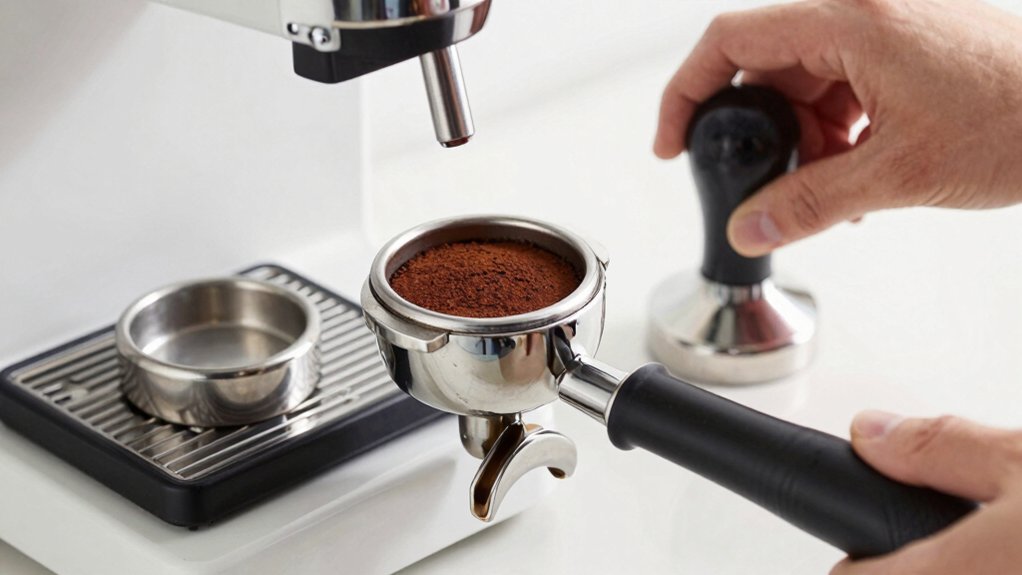
Got a sudden surge or a sluggish start to your shot? You can stop channeling before it ruins the brew by fixing the puck right away. First, dump the dose of ground coffee into the portafilter, then run a distribution tool (WDT) to break clumps and level the bed. Next, tap the portafilter gently onto a flat surface and tamp with about 15 kg of pressure, keeping the tamp level. Purge the grinder between doses so the grind stays uniform and you don’t introduce mixed sizes that encourage uneven water flow. Make sure the portafilter isn’t overfilled—leave roughly 0.3 cm of headroom—and insert it straight, avoiding any jostle that could crack the puck’s edge. These quick adjustments restore even distribution, prevent channeling, and give you a smooth, consistent extraction. Regular cleaning of your equipment helps maintain consistent flow and temperature stability channeling prevention over time.
Choose Grind Size to Prevent Coffee Channeling
After fixing the puck, the next step is dialing in the right grind size. Choose a grind size that balances resistance and permeability; too fine creates a dense espresso puck that forces water through narrow paths, sparking channeling. If your shots are sour and linger beyond 30 seconds, coarsen the grind a notch to speed up flow. To maintain consistency, purge the grinder between doses and prevent mixed particle sizes that can create uneven channels. grind consistency is key to steadier, even water flow through the puck, delivering a balanced extraction without unwanted channels.
Distribute Grounds Evenly to Stop Channel Formation
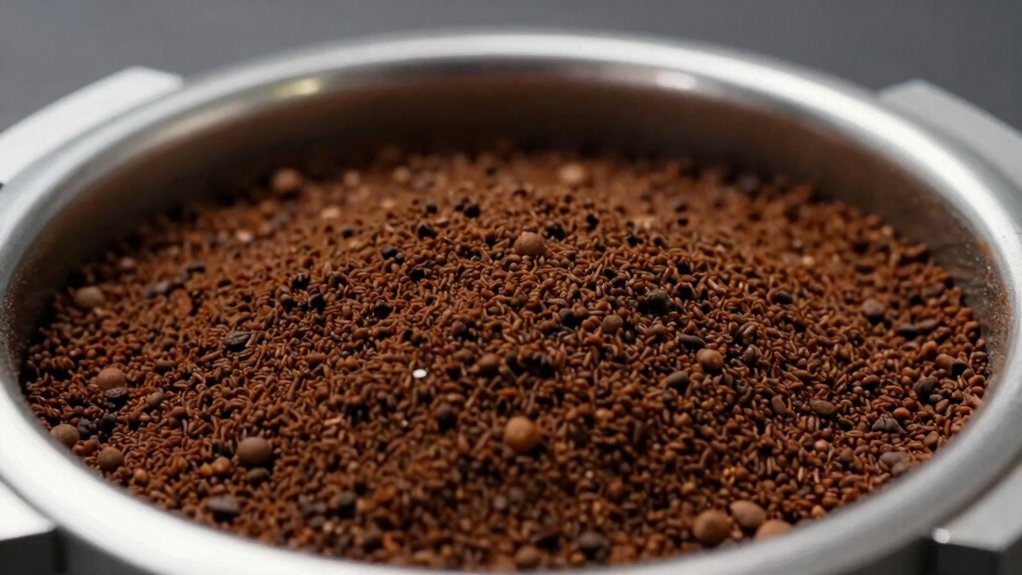
How can you keep water from carving a path through your puck? First, use a distribution tool like a LUCCA WDT or Breville Distributor Duo to break up clumps and level the coffee bed before tamping. If you don’t have a tool, gently tap the portafilter sides to help distribute grounds evenly across the basket. Make sure the surface is flat and uniform, eliminating thin edges that invite channeling. A consistent spread forces water to apply even pressure during extraction, preventing it from favoring one side.
After you’ve distributed the grounds, visually confirm the coffee bed is level before moving on to tamp. This simple step dramatically reduces the risk of channel formation and yields a smoother, more balanced brew. Active cleaning and routine maintenance of your equipment can further support consistent extractions by ensuring internal passages remain clear and free of oil buildup that might contribute to uneven flow.
Tamp Correctly for a Flat, Consistent Coffee Bed
Even with a perfectly distributed puck, the extraction will still suffer if the coffee isn’t tamped flat and uniform. You should place the portafilter on a stable, level surface and use a tamper with a flat base that matches the basket diameter. Apply about 15 kg of steady, vertical pressure, pressing straight down without twisting. After the force is applied, tap the portafilter lightly; the surface should feel level and show no ridges, confirming even density across the puck. If you notice low spots or unevenness, discard the grounds, clean the basket, and re‑tamp on a clean, flat base. Consistently achieving a flat bed and proper levelness prevents channel formation and yields a balanced brew.
Set Brew Temperature & Pour Rate to Block Channels
Why does temperature matter when you’re trying to stop channeling? Brewing water at 88–95 °C, aiming around 92 °C, keeps extraction balanced—too low yields sour, under‑extracted coffee; too high creates bitter, over‑extracted brew. Both extremes can aggravate channeling by altering puck resistance.
Pair the right temperature with a steady pour rate: avoid sudden gushes, and use stage pouring or a gentle, even flow. A consistent 20–30 second extraction window for a double shot (35–60 ml) maintains uniform pressure and prevents the formation of preferential pathways.
If the shot runs slow and sour, coarsen the grind size rather than tightening it, because an overly fine grind raises resistance and encourages channeling. Watch the flow and taste to fine‑tune temperature, pour rate, and grind size together for smooth extraction.
Quick‑Fix Checklist: Fine‑Tune Headroom & Filter Placement
Balancing temperature and pour rate gets you close, but the final safeguard against channeling lies in the portafilter’s headroom and filter placement. You’ll want about 0.3 cm of headroom so the coffee isn’t mashed, then level the bed before tamping to keep flow even. Check the grind size—if the shot is sour and slow, go a touch coarser, but verify headroom first. Finally, make sure the filter basket fits snugly; any gap creates a path for channeling. Measure 0.3 cm headroom in the portafilter. Distribute and level the grounds, then tamp uniformly. Adjust grind coarseness only after confirming headroom. Verify filter placement and basket fit before each dose. Portafilter headroom helps ensure an even extraction throughout.
Frequently Asked Questions
How to Stop Coffee Channeling?
You stop channeling by leveling the grounds with a distribution tool, tamping evenly at about 15 kg, keeping the grind consistent, purging the grinder, and ensuring proper headroom and dose.
What Is the 15-15-15 Coffee Rule?
You follow the 15‑15‑15 rule by spending fifteen seconds distributing grounds, fifteen seconds leveling and tamping, then fifteen seconds wiping and prepping the portafilter, ensuring a uniform puck and reducing channeling.
How to Get Rid of Channeling?
You fix channeling by leveling the grind, tamping evenly with about 15 kg pressure, keeping the portafilter straight, using consistent grind size, and ensuring a slight headroom so water flows uniformly.
What Is the 80 20 Rule for Coffee?
You’re looking at the 80/20 rule: roughly 80 % of flavor comes from 20 % of variables—grind consistency, dose weight, and tamp pressure—so focus on those three for biggest impact.
In Summary
By mastering grind, distribution, tamp, temperature, and pour, you’ll keep the coffee bed even and stop channels before they start. Those quick fixes—adjusting headroom, checking filter placement, and watching flow—let you fine‑tune each brew. When everything’s balanced, every shot extracts smoothly, delivering the full flavor and crema you expect. Keep these steps in mind, and coffee channeling will be a thing of the past.


