
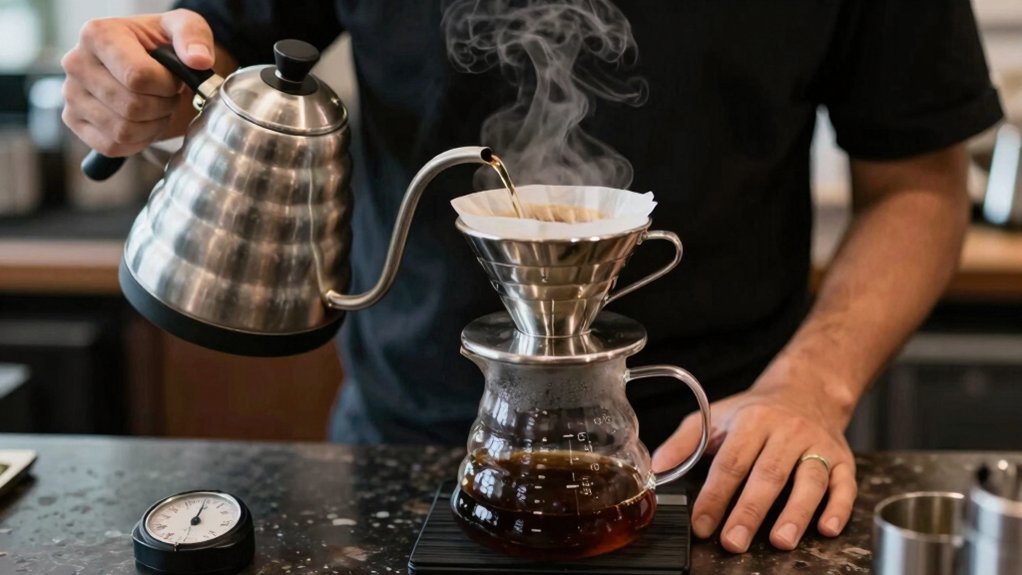
You’ll hit the perfect espresso by treating grind size as your main lever, keeping dose steady, and starting the timer the moment the pump fires so pre‑infusion is counted. Aim for a 25‑30‑second extraction with a 1:2 coffee‑to‑water ratio; if the shot runs fast, go a notch finer or add a gram, and if it drags, coarsen or trim a gram. Fine‑tune pre‑infusion in 1‑second steps to smooth flow, and you’ll see consistent flavor—more details await if you keep going.
What Is Espresso Extraction Time and Why It Matters?
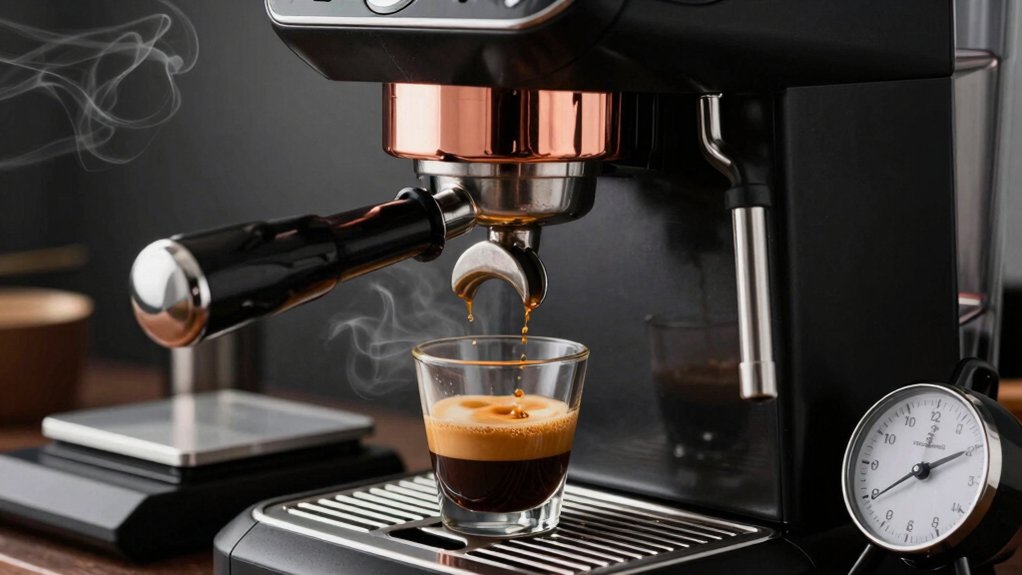
Why does espresso extraction time matter? You control the espresso extraction time, water forces through coffee grounds under pressure, from the moment the machine starts until the final drop lands in your cup. A 25–30‑second brew time usually hits the sweet spot, delivering a balanced 1:2 ratio—say, 18 g dose yielding 36 g liquid. If your grind size is too coarse, the water rushes through, shortening extraction and leaving the shot weak and sour. Too fine, and the flow drags, extending brew time and pulling bitter, astringent compounds. Water temperature also plays a role; too cool slows dissolution, too hot extracts harshness. Adjusting dose, grind size, and temperature lets you keep extraction within the ideal window for perfect flavor. High-quality foaming and temperature control features in modern milk frothers can help stabilize milk texture during preparations that accompany espresso-based drinks temperature control and support achieving consistent microfoam.
When Does Espresso Extraction Time Start? Pump vs. First Drop
If you start the timer when the pump kicks on, you capture the whole pre‑infusion phase that shapes flavor, whereas timing from the first drop ignores those early seconds. Pump activation gives you a true espresso extraction time, while first drip timing can mask pre‑infusion impact. Consistency matters: choose one method and stick to it.
To support consistent results, consider using a refractometer with app connectivity and data recording to track brew parameters across sessions. ATC readings help stabilize measurements when comparing brews across varying temperatures.
How to Set Pre‑Infusion for Consistent Extraction Times
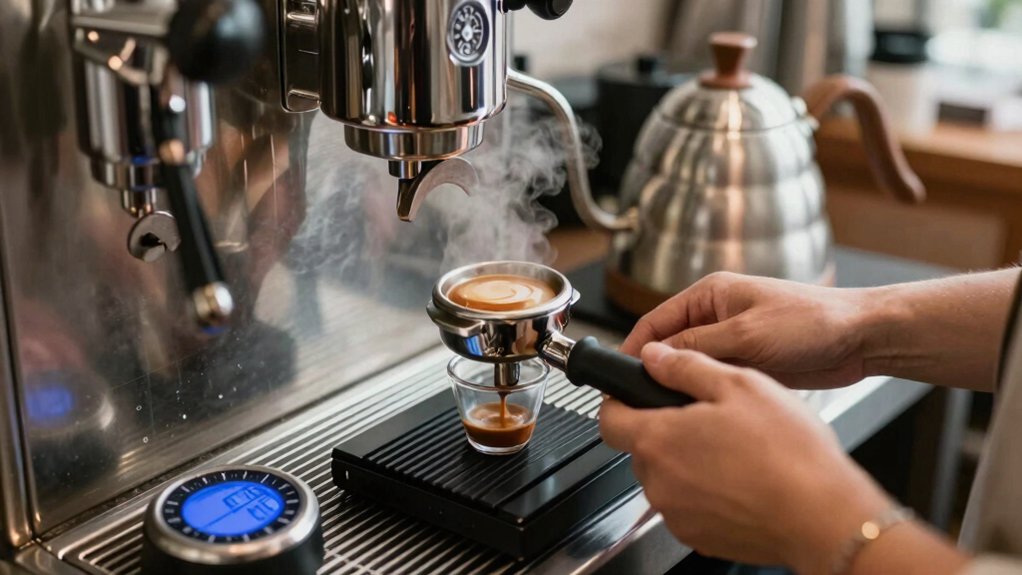
Starting the timer at pump activation already gives you a reliable baseline for total shot time, so the next step is to fine‑tune the pre‑infusion phase. Begin with a 0‑second pre‑infusion and note the extraction time; then raise it to 5 seconds, which usually lands the shot in the 25‑30 s window while preserving the 1:2 dose‑to‑yield ratio. If the brew runs long, extend pre‑infusion in 1‑second increments, watching for bed expansion and channeling. Fresh roasts often bloom more, so you may need a shorter pre‑infusion or a finer grind. Record each setting and tasting note, then adjust the grind when longer pre‑infusion pushes the total shot beyond 30 seconds. This methodical approach guarantees consistency across every pull. Bed expansion and the way pre‑infusion affects extraction timing are well‑documented concepts in vintage coffee art and equipment discussions.
Fine‑Tune Grind Size & Dose to Reach 25‑30 s
You’ll start by tweaking the grind until the shot lands in the 25‑30 second window, then fine‑tune the dose to lock in that timing. If the flow is too fast, grind a touch finer or add a gram; if it’s sluggish, go coarser or shave off a gram. Keep a timer, note each adjustment, and track the flavor changes so you can reproduce the perfect extraction every time. Monitor 0.1 g precision measurements during each tweak for consistent results 0.1 g precision.
Grind Adjustments
Wondering how to nail that 25‑30 second window? Start by checking your grind size.
If extraction time falls under 25 seconds, grind finer or bump the dose toward a 1:2 ratio—say 18 g in for 36 g out—to extend the shot.
When it drags past 30 seconds, coarsen the grind or trim the dose, keeping the 1:2 target. Record each change, noting the exact grind setting, dose, and resulting yield, so you can dial‑in reliably.
Remember that pre‑infusion adds time; a longer pre‑infusion may push you past the window, so balance it with grind and dose adjustments. Consistency and one‑variable‑at‑a‑time tweaks let you hit the sweet spot every pull. Concentrate on using a consistent vessel and setup to maintain repeatable results and reduce variability espresso cups and saucers set in your process.
Dose Calibration
How do you lock in that perfect 25‑30 second shot? Start with a 1:2 ratio—18 g in, 36 g out—and note the grind size and dose in your dial‑in log. If extraction time drifts faster than your targeted shot time, tighten the grind or bump the dose by a gram or two; if it drags, coarsen the grind or trim the dose. Record each adjustment, the exact yield per shot, and the resulting extraction time. Light roasts often need a slightly finer grind or a higher dose to stay within the 25‑30 second window while preserving sweetness. Consistently logging these variables lets you fine‑tune grind size and dose until every shot hits the sweet spot. Tracking burn time and scent notes can help correlate extraction quality with aroma and flavor perception in your tasting notes grind size consistency.
Timing Consistency
Ever wonder why a shot that should sit at 25–30 seconds sometimes races past or drags behind? You can tame that variability by fine‑tuning grind size and dose while tracking extraction time with a reliable timer. Keep the dose constant, then adjust the grind a notch finer if the shot finishes too fast, or coarser if it lags. Record each setting, dose, and yield so you can reproduce the 25–30‑second window day after day. In practice, using an easy-to-use descaler approach helps keep your equipment in peak condition so your extractions stay consistent over time.
How to Apply the 25‑30‑Second Rule to Single and Double Shots
What if you could nail the perfect espresso by simply watching the clock? Start with a 1:2 ratio—say 18 g dose, 36 g yield for a double, or 7‑9 g dose for a single—and set a timer. Pull the shot and watch the extraction time. If it finishes before 25 seconds, tighten the grind size or add a touch more dose; if it drags past 30 seconds, loosen the grind or cut the dose. Keep the equipment constant and record each variable—dose, yield, grind setting, and time—so you can compare results. By tweaking grind size while holding the 1:2 ratio, you’ll keep both single and double shots within the 25‑30‑second window and achieve balanced flavor.
Troubleshoot Espresso Extraction Time Issues for Consistency
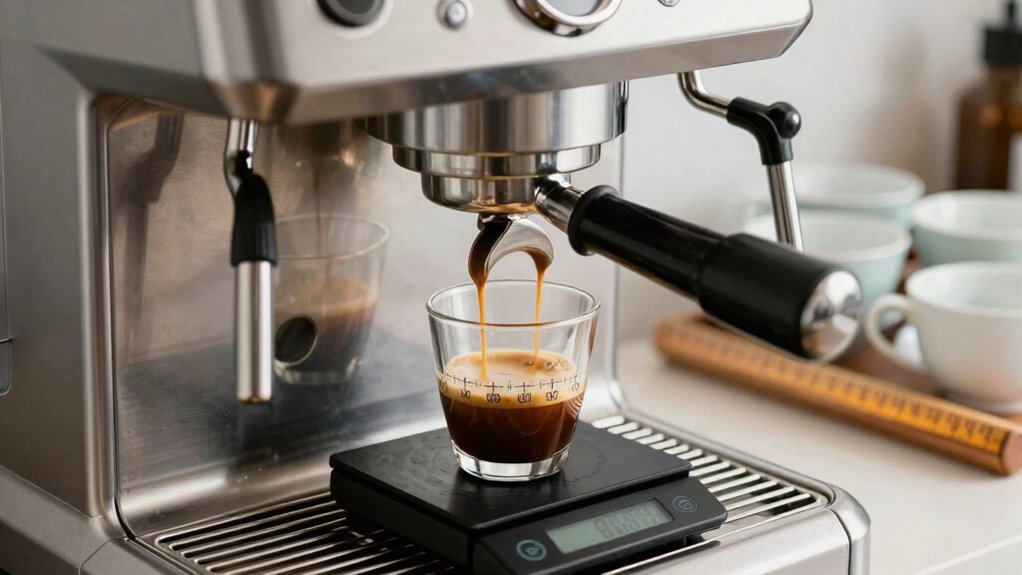
Start your timer the moment the pump fires, so every shot begins from the same reference point. If you’re using pre‑infusion, add its 5‑10 secondssecond to your target window and adjust the grind accordingly. Fine‑tune the grind finer to speed up a slow shot or coarser to slow a fast one, keeping dose and yield constant.
Timing Start Point
How can you guarantee your espresso timing is truly consistent? Begin measuring the moment the pump activation clicks, not when the first drop falls. That timing start point anchors your extraction time, letting you hit the 25‑30 second sweet spot even if pre‑infusion adds a few seconds. Use a reliable shot timer that records start and finish, then compare each pull. If your machine auto‑starts on the first drip, offset the timer so the total still falls within the target window. Consistency comes from disciplined measurement, not guesswork.
- Feel the confidence of a perfectly timed pull every morning.
- Trust that each shot lands in the same flavor window.
- Celebrate the repeatable aroma that only precise timing can deliver.
Pre‑Infusion Adjustments
Once you’ve locked the start point, fine‑tune the pre‑infusion to keep the total shot within the 25‑30 second window. Start with a 0‑5‑second pre‑infusion; if you see channeling, extend by 1‑2 seconds and watch how saturation improves. A longer bloom can smooth the flow, but beware of pushing extraction time past 30 seconds—especially with finer grind size, which may over‑extract quickly.
If the shot runs short, add a second of pre‑infusion; if it drags, trim it back. Record each tweak, noting dose consistency, yield, and flavor changes. Incremental adjustments let you balance grind size and pressure, achieving steady extraction time without sacrificing bloom or introducing channeling.
Grind Size Tweaks
Wondering why your espresso shot is sprinting past the 25‑second mark or dragging beyond 30 seconds? Your grind size is the most powerful lever you have. If the flow feels too fast, turn the dial one notch finer; if it drags, go one notch coarser. Keep the dose and yield steady, and you’ll see extraction time settle into the 25–30‑second window. When you add pre‑infusion, remember that a longer soak can demand a slightly coarser grind to stay on target. Small, sequential tweaks let you map how each change affects consistency, flavor, and overall performance.
- Fine‑tune grind size one notch at a time.
- Record dose, yield, and extraction time after each adjustment.
- Use pre‑infusion as a fine‑tuning tool, not a shortcut.
Frequently Asked Questions
What Is the 15-15-15 Rule for Coffee?
You follow the 15‑15‑15 rule by setting grind size, dose, and brew time each around fifteen units—typically a 15‑second bloom, 15‑second pre‑infusion, and a 15‑second extraction—to start balancing flavor.
How Long Is the Perfect Coffee Extraction Time?
You should aim for a 25‑30‑second extraction for most espresso, adjusting grind and dose if it runs faster or slower, and keep a timer and notes to stay consistent.
What Is the 80 20 Rule for Coffee?
You apply the 80/20 rule by focusing on the few variables—grind size, dose, and brew time—that drive most flavor, tweaking them one at a time to capture the bulk of improvement.
What Is the 30 Second Rule for Espresso?
You aim for a 25‑30‑second extraction, starting the timer when the pump fires, pulling roughly a 1:2 ratio (e.g., 18 g in, 36 g out); adjust grind if you fall outside.
In Summary
Mastering espresso extraction time lets you consistently hit the sweet spot of flavor. By timing the pump start, dialing in pre‑infusion, and tweaking grind size and dose, you’ll land in that 25‑30‑second window for both single and double shots. Keep an eye on flow and adjust as needed, and you’ll avoid under‑ or over‑extraction. The result? a balanced, aromatic shot every time, with the perfect balance of acidity, body, and sweetness.


