
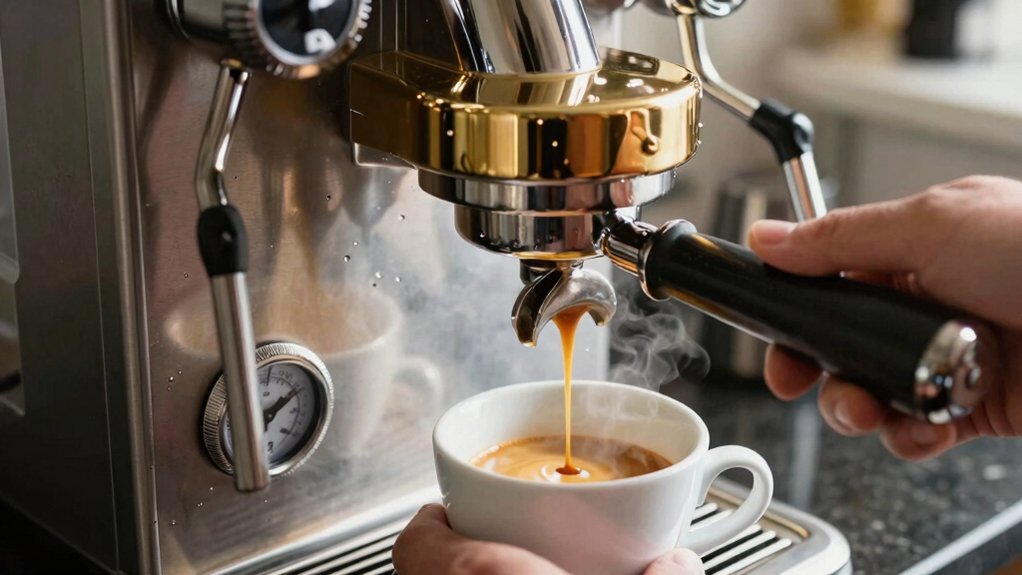
Start by stabilizing your boiler at 92 °C and keep it steady before pulling a shot; pre‑heat the portafilter for at least 30 seconds to avoid cooling the brew chamber. Set a gentle pre‑infusion at 2–3 bars for 5–7 seconds, then ramp to full 9 bars. Weigh 16–19 g of coffee, grind for a 25–30 second extraction, and tamp evenly using a 360° rotation. Distribute grounds with a WDT pass and level the puck to prevent channeling. Finally, monitor yield on a scale and watch the crema for timing cues—continue and you’ll discover how each step fine‑tunes flavor balance.
Set Consistent Espresso Temperature & Pressure
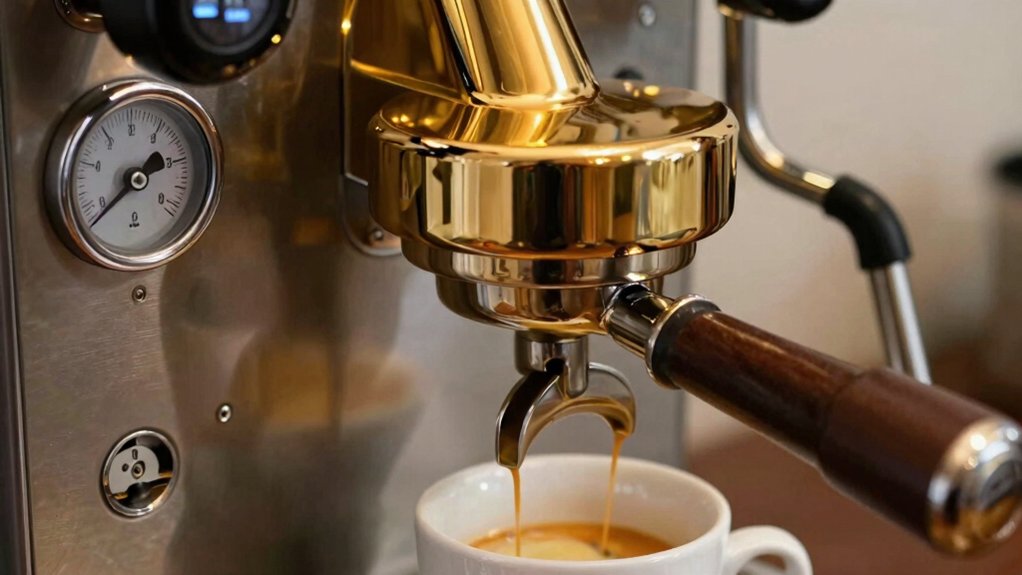
How do you keep your espresso temperature and pressure steady on a manual machine? Start with boiler stability; let the boiler reach 92 °C and stay there before you pull a shot. Pre‑heat the portafilter for at least 30 seconds to avoid cooling the brew chamber. Choose a grind size that yields a 25‑30 second extraction at 9 bars; adjust until dosing consistency is repeatable. Use the lever mechanism to apply a gentle pre‑infusion at 2–3 bars for 5‑7 seconds, then ramp up to full extraction pressure. If your machine supports pressure profiling, shape the pressure curve to maintain steady brewing temperature throughout. Keep these steps consistent, and you’ll lock in temperature stability and extraction pressure for reliable flavor. Consistency in data tracking, such as recording brew parameters with an integrated scale or refractometer, can help you reproduce results more reliably data tracking.
Master Pre‑Infusion for Gentle Saturation
After stabilizing temperature and pressure, the next step is to master pre‑infusion for gentle saturation. You begin with a low‑pressure pre‑infusion, setting the pump to about 2–3 bar and holding for 2–4 seconds. This soft pre‑infusion hydrates the puck, allowing grounds to swell and achieve uniform bed density. By keeping pressure low, you avoid channeling and promote even extraction when you ramp to full pressure. Watch the coffee bloom; a steady, gentle rise signals proper puck hydration. Once the bed is fully saturated, increase to the normal 9 bar for the main extraction. The result is a smoother shot with consistent crema and balanced flavor, thanks to uniform extraction from a well‑pre‑infused coffee. rational design
Set Espresso Grind‑to‑Dose Ratio (16‑19 g)
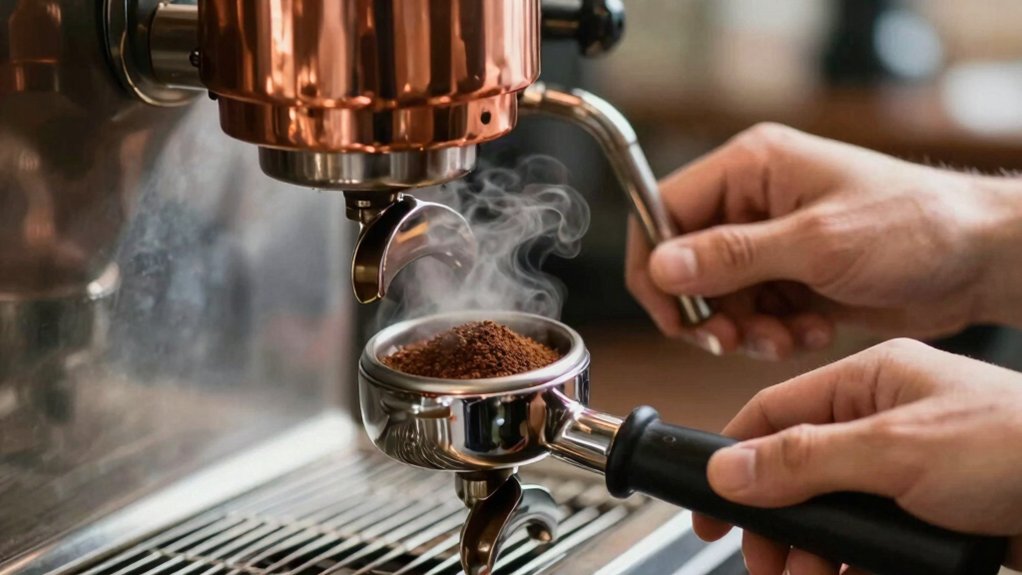
Where do you start when dialing in the perfect espresso dose? First, weigh 16–19 g of coffee on a scale, aiming for 18 g as a baseline for a double shot. Adjust the grind size until the bed density feels uniform, then tamp firmly. Watch the extraction time; a 25–30 second pour should yield 28–36 g of espresso with a caramel‑brown crema. If the shot runs too fast, fine‑tune the grind or increase the dose by 0.5 g; if it drags, coarsen the grind or drop a gram. Consistent dosing and precise grind size keep channeling at bay and let every double shot shine.
- Fine‑tuned grind size creates a tight, even bed in the portafilter.
- A calibrated scale guarantees a repeatable dose for each shot.
- Uniform tamping compresses the coffee, stabilizing extraction time.
- Proper bed density prevents channeling and produces rich crema.
Level and Distribute Espresso Puck to Prevent Channeling
Ever notice how a crooked coffee bed creates uneven resistance and channels water straight through weak spots? You can stop that by mastering distribution and leveling before tamping. Start with a consistent dose—16–19 g for a double—matched to your basket size and grind size. Apply the Weiss Distribution Technique: stir the grounds with a needle‑like tool to break clumps, then spread them evenly across the portafilter. Use a level tamp, rotating the tamper 360° to create a flat surface and uniform tamping pressure. This smooth, even espresso puck eliminates high spots that cause channeling, giving you steady resistance and even extraction. Keep the process quick but deliberate, and you’ll see a cleaner, richer shot every time.
Fine‑Tune Espresso Shot Timing & Yield
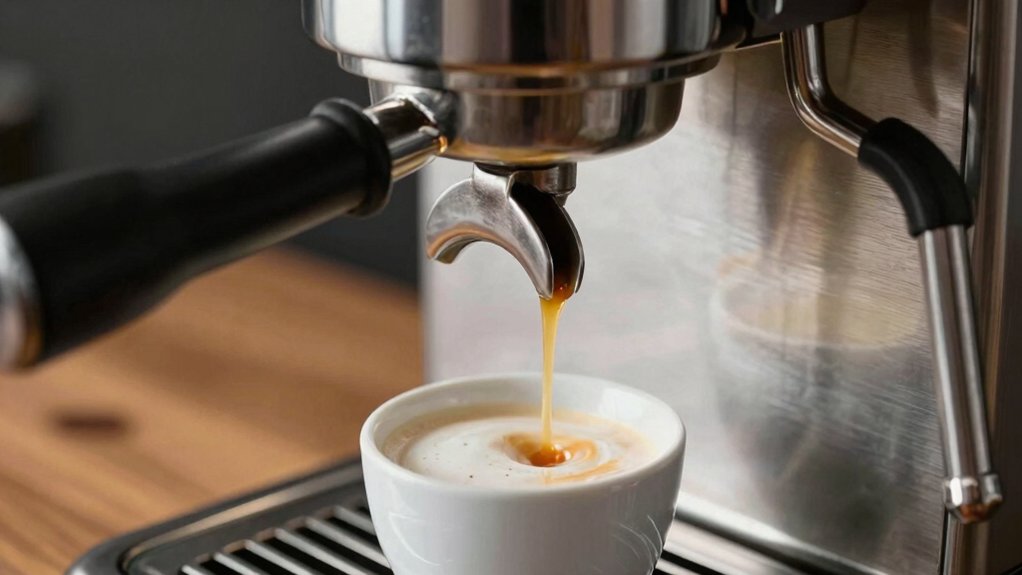
A well‑leveled puck sets the stage for precise timing, so once you’ve eliminated channeling you can focus on extracting the right amount of espresso in the right window. Use a scale to watch shot yield, but trust the change of the crema and the blonding of the stream to cue you. Preinfusion on lever machines smooths the onset, while pressure profiling lets you stretch or compress extraction time for balance. A quick WDT pass before tamping improves grind distribution, reducing channeling and sharpening the espresso timing.
A leveled puck eliminates channeling, letting precise timing and crema cues perfect espresso extraction.
- The first droplets bloom, bright and thin, signaling the start of preinfusion.
- The pressure ramps up, the flow steadies, and the crema thickens.
- Mid‑shot, the stream narrows, indicating optimal grind distribution.
- Final blonding appears, prompting you to stop for perfect shot yield.
Frequently Asked Questions
How Does Water Hardness Affect Espresso Flavor?
You’ll notice that hard water, rich in calcium and magnesium, intensifies bitterness and dulls sweetness, while soft water highlights acidity and floral notes, so adjusting hardness lets you balance espresso’s flavor profile.
Can I Use a Single‑Dose Portafilter for Consistent Dosing?
You can use a single‑dose portafilter for consistent dosing, but you must tamp evenly, calibrate your grinder, and clean the basket after each shot to avoid residue buildup and maintain flavor.
What Impact Does Bean Age Have on Extraction Quality?
You’ll notice older beans extract thinner, yielding weaker flavor and less crema; fresher beans give richer body, brighter acidity, and more consistent pressure resistance, so age directly shapes taste and texture.
Should I Adjust Tamp Pressure for Different Roast Levels?
Yes, you should tweak tamp pressure: lighter roasts need firmer tamp to compensate for denser grounds, while darker roasts benefit from a gentler press to avoid over‑extraction and bitterness.
How Does Ambient Humidity Influence Grind Consistency?
Higher humidity makes beans retain moisture, so your grind will clump and become finer than expected. You’ll need to adjust your grinder settings or dry the beans longer to keep consistency.
In Summary
By mastering temperature, pressure, pre‑infusion, grind‑to‑dose, puck preparation, and shot timing, you’ll extract the full flavor potential of your manual espresso machine. Consistency across these steps yields balanced, rich shots every time, turning each brew into a reliable, café‑quality experience you can proudly serve or enjoy at home.


