

You’ll get consistently fresh shots when your grinder has a straight‑through grind path that eliminates dead zones, anti‑static burrs or coatings that keep grounds from clinging, and a quick purge routine that flushes any residue in just a second or two. These three features—unidirectional flow, static‑free burrs, and fast purging—work together to cut retention to near‑zero, so you’ll notice more consistent dosing and cleaner brews. Keep going and you’ll discover how each element fine‑tunes performance.
Straight-Through Grind Path for Low-Retention Burr Grinders
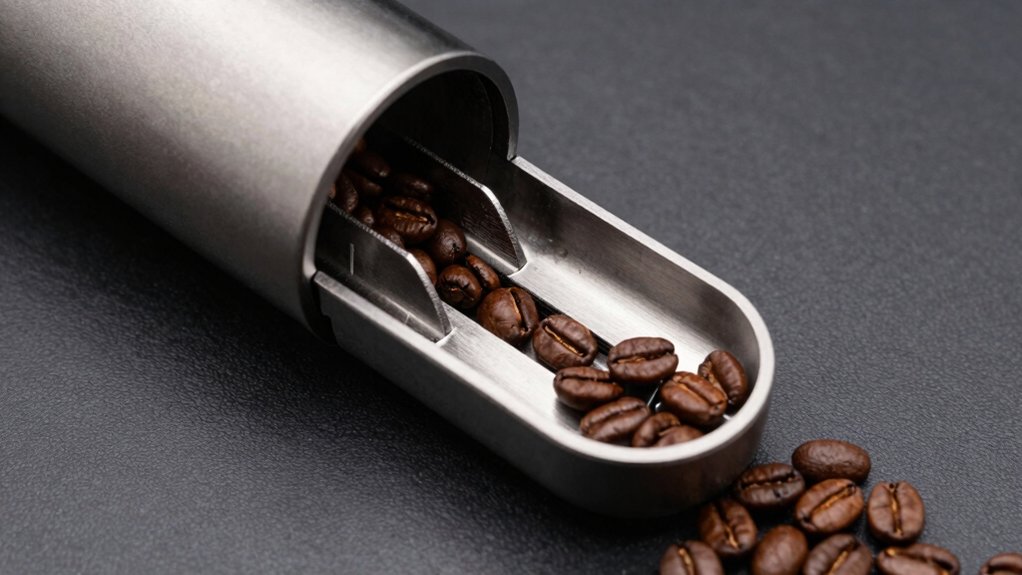
Why settle for a grinder that traps coffee grounds? You want a straight-through grind path that shuttles beans from burrs to cup without back‑tracking. Low‑retention grinders achieve this by eliminating dead zones in the grind chamber and using a chute design that promotes unidirectional flow. Precise alignment and burr-to-chute geometry keep the path straight, reducing bends that let particles linger. When the burrs feed directly into a vertical or direct‑output chute, ground retention drops to near‑zero, as seen in models like the Sette 270 and Mignon Specialita. By minimizing empty space and ensuring a true straight-through path, you prevent coffee debris from recirculating, delivering fresher, cleaner brews every time. anti-static technology further reduces ground cling and helps maintain a clean grind chamber during operation.
Anti-Static Burrs and Coatings That Keep the Whole Grinder Clean
Ever wondered why your grinder stays cleaner between doses? Anti‑static burrs and coatings give you that edge. By using anti‑static materials or surface treatments, a burr grinder cuts static reduction, so ground coffee clinging to the grind chamber drops dramatically.
Less cling means lower grind retention, which is essential for single‑dosing consistency. Manufacturers like Niche Coffee and DF64 apply static‑reducing metals, polymers, or specialized coatings to the burr geometry, keeping grounds on the grind path instead of the chute.
The result? Faster cleaning efficiency and fewer purge cycles. When you choose a grinder with these anti‑static designs, you’ll notice smoother dosing, fewer messes, and a cleaner machine overall.
How to Purge a Low-Retention Burr Grinder Quickly?
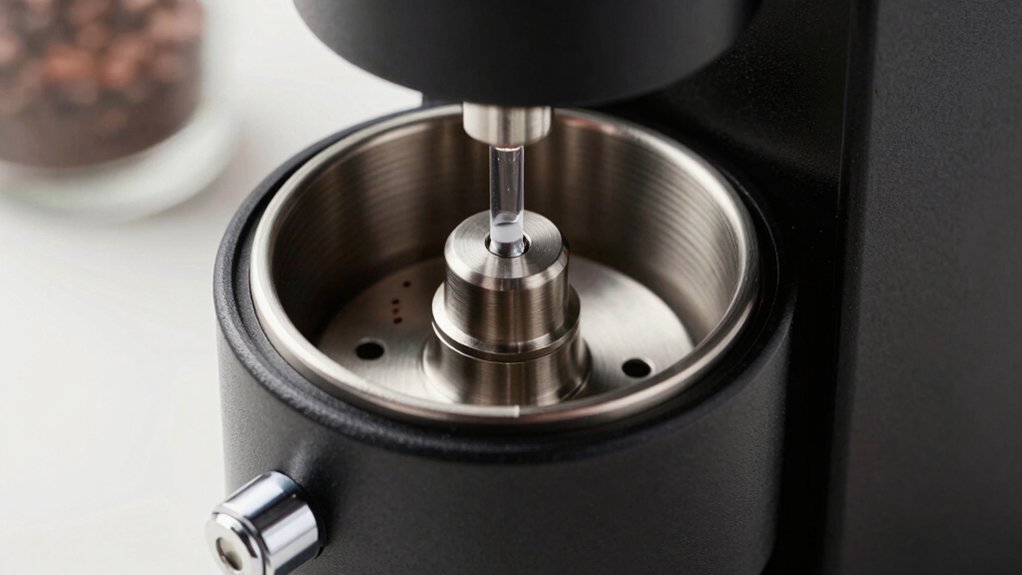
Anti‑static burrs keep your grinder cleaner, but the real test of a low‑retention machine is how fast you can clear out any stray grounds before brewing. To purge a low‑retention grinder quickly, fill the hopper, lock the dose, and grind for 1–2 seconds. That short burst flushes stale grounds, resets grind consistency, and prevents watery espresso. The purge amount scales with grind retention: higher‑retention models need a longer purge duration, while a very low‑retention grinder (around 1 g) can get away with the minimal 1‑second burst. Home brewers should repeat the purge each time the interval between shots drops below 12 hours. This routine keeps the burr grinder delivering fresh, consistent shots without excess waste. Fall coffee motif
Frequently Asked Questions
What Is a Low Retention Grinder?
You’re looking at a grinder that leaves barely any grounds behind—usually under 2 grams—thanks to straight‑through chutes and efficient burr geometry, so each dose stays fresh and purging stays minimal.
What Is the 15-15-15 Rule for Coffee?
You follow the 15‑15‑15 rule by dosing 15 g coffee, extracting roughly 15 g liquid, and targeting about a 15 % extraction, balancing strength, yield, and consistency in each brew.
How to Reduce Retention in Coffee Grinder?
You cut retention by using straight‑through grind paths, cleaning the chamber after each session, choosing anti‑static or coated burrs, purging with no beans, and selecting direct‑dispense or single‑dose models.
What Is the Enemy of Coffee Beans?
The enemy of coffee beans is retained grounds that oxidize, turning bitter and stale; they mix with fresh beans, skewing dose weight and ruining flavor consistency in every brew.
In Summary
By choosing a grinder with a straight‑through grind path, anti‑static burrs, and a quick‑purge system, you’ll keep coffee grounds from sticking, stay clean, and enjoy consistent extractions every brew. These three features work together to cut waste, speed up cleanup, and preserve flavor, so you can focus on perfecting your cup instead of battling stubborn residue.


