
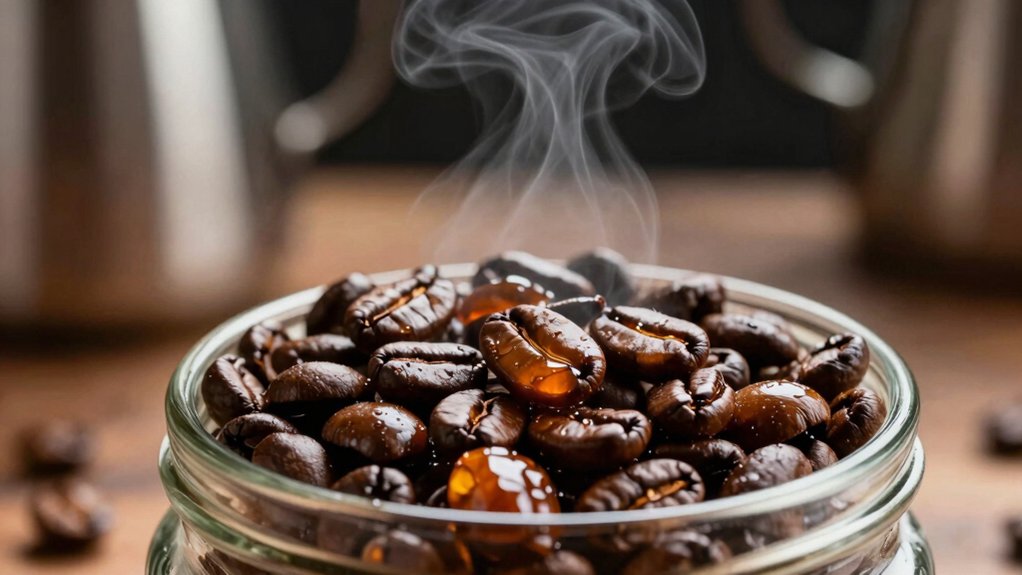
You’ll notice richer fruit forward—tropical esters, jasmine‑like florals, and a syrupy sweetness—when you let fermentation run longer, because microbes keep working and partial drying locks in sugars. Keep the brew around 20 °C, limit oxygen with anaerobic conditions, and vent briefly after 30 hours to tame acidity without harshness. Adjust grind size and brew temperature to match the bean’s density, and you’ll reveal those layered notes while maintaining a balanced body. Keep going and you’ll discover more details.
What Flavor Does Extended Fermentation Give Coffee?

What flavors can you expect when you extend coffee fermentation? You’ll notice richer flavor development as extended fermentation lets microbial activity linger, creating balanced acidity and a smoother mouthfeel. Ester formation intensifies, delivering tropical fruit aromas and bright floral notes that echo jasmine or hibiscus. The slower pace tempers sharp edges, so acidity feels rounded rather than biting. Processing methods that incorporate partial drying lock in sugary compounds, adding syrupy sweetness and fuller body. Yet, if you lose control, over‑fermentation can introduce vinegar‑like or alcoholic off‑notes. Overall, the extended approach deepens complexity, layering sweet, fruity, and floral dimensions while maintaining a harmonious acidity balance. Extended Fermentation can also influence body and mouthfeel, helping to create a more cohesive tasting profile that pairs well with careful roasting.
How to Control Temperature, Oxygen, and Drying for Balanced Acidity and Body
How can you keep acidity smooth while preserving body during extended coffee fermentation? You’ll start with anaerobic fermentation, sealing cherries in airtight tanks to limit oxygen and slow microbes. Apply temperature control at ~20 °C and monitor fermentation timing to avoid sharp notes. Use oxygen management by venting briefly after 30h, then reseal for the remaining extended fermentation. Implement partial drying midway; this retains mucilage and reactivates enzymes, boosting body development. In addition, selecting a refractometer with ATC or ATC-like compensation can help you monitor sugar content and extraction dynamics during processing to maintain consistent quality across batches Automatic Temperature Compensation and track how changes in dissolved solids relate to flavor balance as fermentation proceeds.
| Stage | Goal |
|---|---|
| Anaerobic fermentation | Balance acidity |
| Temperature control & oxygen management | Preserve sweetness |
| Partial drying & mucilage retention | Enhance body and texture |
Brewing Extended Fermentation Coffee to Highlight Layered Notes
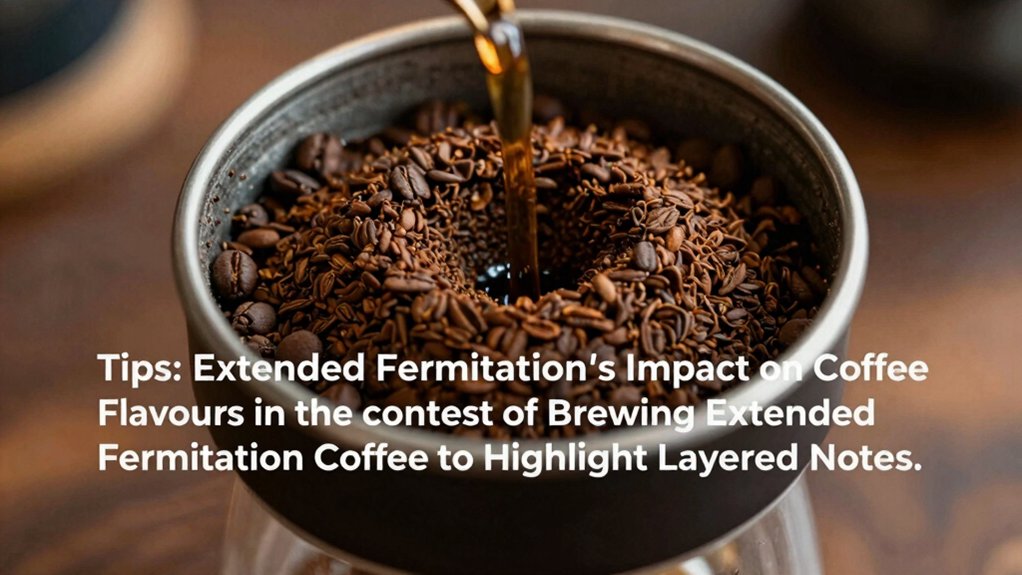
Ever wondered how to coax the intricate, layered notes that extended fermentation gifts coffee? Start by selecting a batch that underwent controlled fermentation with meticulous pH monitoring and temperature management. Use a brewing method that preserves the delicate acidity and fruit‑forward profile—think a low‑temperature pour‑over or a short‑extraction AeroPress. If the beans were processed with anaerobic fermentation or carbonic maceration, expect wine‑like or tropical fruit layers; let the brew time be brief enough to avoid extracting harsh compounds. For coffees that experienced partial drying, aim for a slightly higher brew temperature to unlock the syrupy body locked in the sugars. Adjust grind size to match the bean’s density, and you’ll highlight the full spectrum of flavor development without over‑extracting. Extended fermentation can also influence how cleanly the cup presents the fruit notes, guiding you to tailor extraction accordingly.
Frequently Asked Questions
What Is the 15-15-15 Rule for Coffee?
You evaluate a cup’s aroma at 15 seconds, its acidity at 15 minutes, and its sweetness at 15 hours after brewing, using those moments to track how flavors evolve, especially after extended fermentation.
What Is the 80 20 Rule for Coffee?
You focus on the 20 % of processing factors—like fermentation time, temperature, and oxygen level—that drive roughly 80 % of flavor changes, so mastering those few variables yields the biggest impact.
What Is the #1 Coffee in the World?
You’ll find Jamaica Blue Mountain tops most rankings; its limited, high‑quality beans deliver mild flavor, bright acidity, balanced sweetness, and a smooth cocoa finish, making it the world’s premier coffee.
What Are the 4 Enemies of Coffee?
You face four enemies: over‑fermentation, which adds sour, alcoholic, or acetic notes; under‑fermentation, leaving harsh acidity and grassy flavors; fermentation defects, causing rotten or compost aromas; and environmental variability that creates batch‑to‑batch inconsistency.
In Summary
By mastering temperature, oxygen, and drying, you’ll coax richer, more complex flavors from extended fermentation. The result is a coffee with balanced acidity, fuller body, and layered notes that shine in every cup. Embrace the process, fine‑tune each variable, and you’ll consistently brew a brew that’s both nuanced and satisfying.


