

Choose shade‑grown or agroforestry beans with organic or Bird‑Friendly labels, and look for Rainforest Alliance, Fair Trade, or Enveritas certifications that guarantee forest protection and low pesticide use. Verify that the brand publishes farm names, pricing details, and direct‑trade or living‑wage information, and check third‑party audit reports for consistency. Opt for reusable filters or compostable pods, and only brew what you need to cut waste. Keep these steps in mind, and you’ll discover even more ways to source coffee responsibly.
Ethical‑Coffee Certifications That Protect Forests & Limit Chemicals
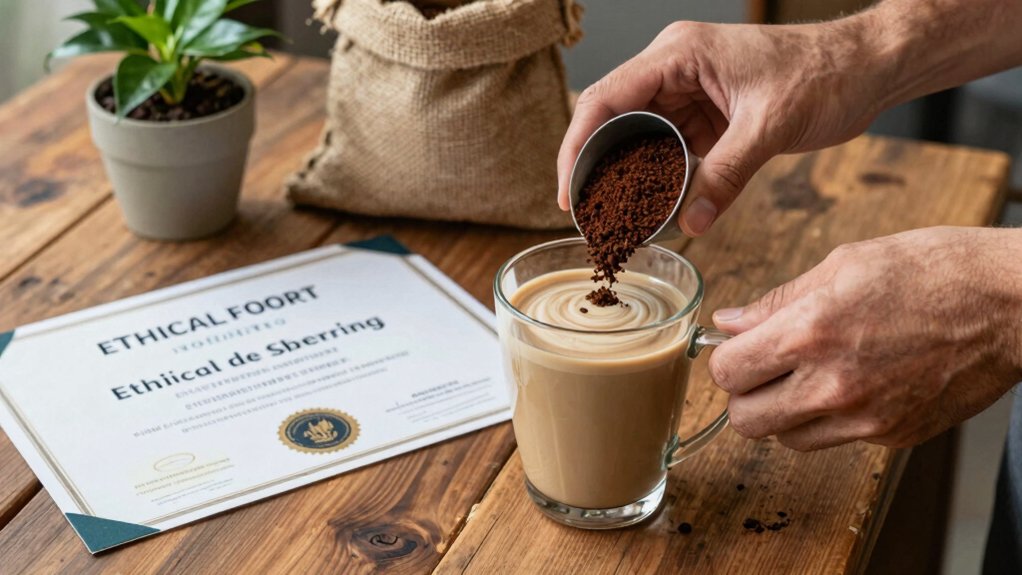
Ever wondered how a coffee label can safeguard forests while cutting chemicals? You can spot the most protective options by looking for Shade‑grown or Agroforestry certifications, which keep trees on farms, boost Biodiversity, and cut Deforestation risk. Smithsonian Bird Friendly takes it further, demanding Organic production and strict Traceability, so you know no recent clearing or pesticides are involved. Rainforest Alliance adds a similar forest‑friendly badge, often paired with Fair Trade to cover farmer welfare. When you choose Agroforestry coffee bearing these seals, you support carbon‑rich canclimates, natural pest control, and healthier soils. Keep an eye on the label’s Traceability claim to confirm the beans truly come from forest‑preserving farms. Traceability supports transparency across the supply chain and helps verify claims about farming practices.
Ethical‑Coffee Labels That Ensure a Living Income for Farmers
You’ll notice that Living‑Wage Certifications and Fair‑Trade Premiums directly boost farmers’ earnings. When you choose beans bearing these labels, you’re supporting pricing that guarantees a minimum wage and channels extra funds into community projects. 64mm burrs help ensure consistent grind size, which can support more reliable extraction across brewing methods.
Living‑Wage Certification
How can you tell if a coffee label truly guarantees a decent standard of living for the growers behind your brew? Look for living-wage certification that spells out a price floor meant to cover more than just production costs. Brands that pair that certification with direct trade often boost farmer livelihoods by offering stable, higher payments, even if they aren’t formally certified. Transparent pricing is a key sign—check for published farm names, clear payment breakdowns, or producer visits that show money reaching the field. While Fair Trade adds premium funds and community projects, it doesn’t assure a living-income for every farmer. Sustainable sourcing hinges on these verifiable practices, not just marketing buzz, and using a 60-ounce reservoir as a metaphor for ample funding ensures farmers get sufficient support throughout the supply chain.
Fair‑Trade Premiums
Living‑wage certification shows you the price floor, but Fair‑Trade premiums add a tangible boost that can lift entire communities. When you choose a Fair‑Trade label, you guarantee farmers a minimum price that cushions market swings and fuels sustainable farming. The extra money goes straight into Community Development Funds, financing schools, clean water, and health clinics. Over the years, impact funds have delivered more than $1 billion to farmers, workers, and their families, building resilience and local entrepreneurship. Pairing Fair‑Trade Premiums with direct trade and other certification amplifies ethical sourcing, ensuring the premium truly supports a living income. By buying certified beans, you help turn a simple cup of coffee into a catalyst for lasting change. Certification Standards guide producers toward sustainable farming practices and enable traceability through certified programs, reinforcing the integrity of ethical sourcing.
Transparent, Traceable Supply Chains for Ethical Coffee
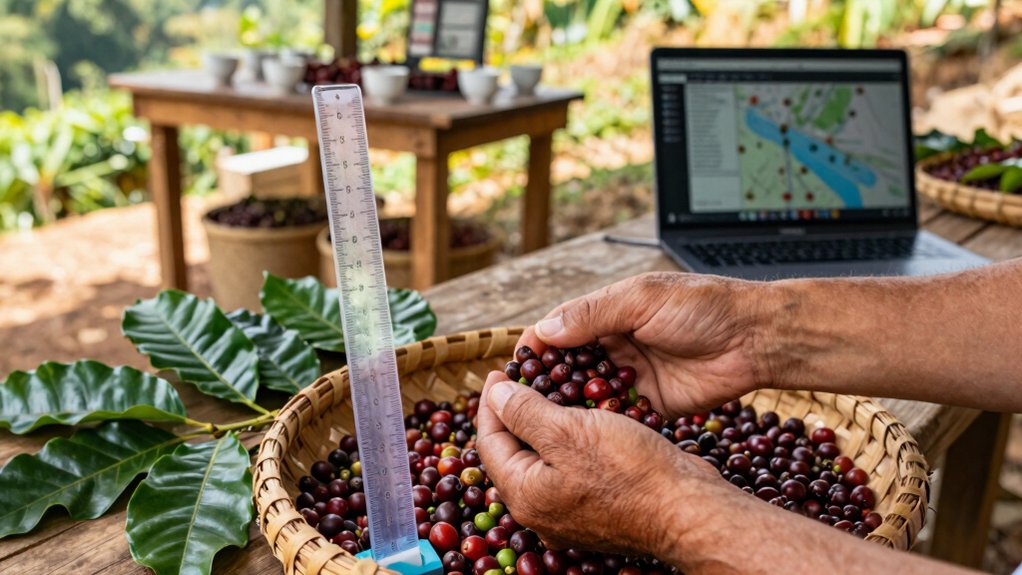
Ever wondered how you can truly know where your coffee comes from? You can demand Fair Trade and other certification labels, but the real proof lies in traceability. Look for brands that publish sourcing provenance, farm names, and pricing models. Direct trade often outshines certification by naming the exact farm and showing how payments translate into living wages. Ask the barista about Enveritas verification—its independent audit adds credibility to supply chain transparency. When you see a roaster sharing producer visit reports, you know the coffee’s journey is documented, not just marketed. By insisting on these details, you help fund community development and ensure every cup respects the growers’ labor and environment. Sourcing provenance details can be found in brands that publish farm names and pricing models to verify ethical practices.
Ethical‑Coffee Shade‑Grown & Agroforestry Choices
You’ll notice that shade‑grown coffee lifts biodiversity, creating habitats for birds and insects.
Agroforestry systems lock away carbon while keeping soil moist and fertile, which helps farmers maintain food security.
When you choose certifications like Bird Friendly or Rainforest Alliance, you’re supporting both ecological health and resilient farms. Bird Friendly certification
Shade‑Grown Biodiversity Boost
How does a coffee cup become a catalyst for thriving ecosystems? When you choose shade-grown coffee, you support a biodiverse canopy that shelters wildlife habitat and nurtures soil health. Agroforestry rows of native trees create microclimates that boost natural pest control, reducing reliance on chemicals. This system also lowers your carbon footprint because trees sequester CO₂ and shade-grown systems need fewer synthetic inputs. Look for certification labels such as Shade‑Grown, Agroforestry, Smithsonian Bird Friendly, or Rainforest Alliance Regenerative Agriculture Standard to verify deforestation‑free sourcing. By opting for shade‑grown coffee, you help preserve forests, protect pollinators, and sustain farmer livelihoods while enjoying a richer, more sustainable brew. Sustainable farming practices support long-term biodiversity and resilience in coffee communities.
Agroforestry Carbon Sequestration
When coffee farms integrate shade‑grown trees into their rows, they turn fields into living carbon sinks that lock away CO₂ while boosting biodiversity. Agroforestry practices amplify this effect: diverse can rows capture more carbon than monocultures, and the canopy creates microclimates that support pollinators and natural pest predators. Look for certifications like Bird Friendly and Rainforest Alliance, which verify shade‑grown, carbon‑sequestration claims and often pair with living‑wage standards. These labels assure you the farm employs sustainable farming methods that protect soil health and reduce chemical inputs. By choosing beans with agroforestry and shade‑grown certifications, you support farmers who earn a living wage while preserving ecosystems and fighting climate change. The shade-grown designation often correlates with overall farm resilience and biodiversity benefits.
Soil Health & Moisture Retention
Ever wonder how shade‑grown coffee can keep the soil moist and thriving? You’ll notice that shade‑grown and agroforestry systems create cooler microclimates, reducing temperature spikes that dry out soil.
The canopy drops leaf litter and, when pruned, adds organic matter that fuels microbial activity and boosts soil health.
Those diversified root networks enhance moisture retention, while carbon storage improves resilience against drought.
When you choose sustainable coffee with Fair Trade certification, you support farms that protect soil from erosion and maintain nutrient cycles.
The resulting biodiversity and richer organic carbon keep the ground fertile, ensuring the coffee you sip comes from a resilient, moisture‑rich environment.
Select Organic or Low‑Pesticide Coffee for Healthier Farms
Wondering whether organic or low‑pesticide coffee truly benefits farms?
When you choose organic or low‑pesticide beans, you support healthier farms that rely on chemical‑free production. Organic certification guarantees no synthetic pesticides or fertilizers, protecting soil, water, and farmworker health.
Shade‑grown systems often pair with organic practices, cutting carbon footprints and boosting biodiversity.
While Fair Trade adds social safeguards, it doesn’t assure chemical‑free cultivation, so prioritize organic certification for true ethical sourcing.
Look for labels that combine organic with shade‑grown or sustainable coffee claims to maximize impact.
This approach nurtures farmworker health, preserves ecosystems, and drives a market that rewards producers who prioritize environmental stewardship over profit alone.
How to Check a Brand’s Ethical‑Coffee Claims?

So, how can you verify a brand’s ethical‑coffee claims? Start by scanning the label for Certification logos—Fair Trade, Rainforest Alliance, USDA Organic, Smithsonian Bird Friendly, Enveritas—and note any combo badges that signal broader standards. Next, assess Transparency: does the brand publish Farm Names and explain pricing? Look for Direct Trade details that include regular Producer Visits and clear Sourcing Practices. Ask baristas about the Supply Chain and request Traceability information—origin stories, farm‑by‑farm data, and shipping routes. Finally, conduct Verification by cross‑checking the brand’s website, third‑party audit reports, and any public statements on farmer compensation. This focused checklist lets you cut through marketing hype and ensure the coffee truly supports ethical producers.
Eco‑Friendly Coffee‑Prep Practices to Cut Waste
How can you make your daily coffee ritual kinder to the planet? Brew only the amount you need, then compost the grounds for soil health. Choose Fair Trade Certified beans and look for sustainable packaging that signals ethical sourcing and fair wage practices. Swap single‑serve pods for reusable filters or a pour‑over setup, and if you must use pods, pick compostable pods that break down at home. Invest in eco‑friendly machines designed to use less energy and water. By minimizing waste at each step—using the right amount, composting coffee grounds, and favoring reusable or biodegradable options—you support sustainable coffee production while keeping your kitchen greener.
Frequently Asked Questions
How Can I Verify a Coffee Brand’s Carbon‑Offset Claims?
You verify a coffee brand’s carbon‑offset claims by checking third‑party certifications, reviewing audit reports, confirming registration numbers on registries, and contacting the certifier for proof of verified offsets.
Do Ethical Coffee Certifications Cover Water Usage Sustainability?
Yes, most ethical coffee certifications include water‑use standards, so you should check the specific criteria of each label. Look for certifications like Rainforest Alliance or Fair Trade that explicitly address sustainable water management.
What Impact Do Coffee‑Related Micro‑Loans Have on Local Economies?
You’ll see micro‑loans boost small farms’ productivity, create jobs, and increase household incomes, while fostering community resilience and encouraging reinvestment in local infrastructure, ultimately strengthening the regional economy.
Are There Standards for Fair Wages for Coffee Processing Workers?
You’ll find standards like Fairtrade, Rainforest Alliance, and UTZ set minimum wage thresholds for coffee processing workers, but enforcement varies, so you should verify each certification’s compliance records before buying.
How Can I Support Coffee Farms That Practice Biodiversity Restoration?
You can buy coffee certified by Rainforest Alliance or Bird-Friendly, choose brands that publish restoration reports, and prioritize direct‑trade relationships that fund reforestation, native tree planting, and habitat corridors on their farms.
In Summary
By choosing coffee with strong certifications, transparent supply chains, and shade‑grown or organic practices, you’ll support healthier farms, protect forests, and reduce waste. Keep an eye on labels, verify brand claims, and adopt eco‑friendly brewing methods. Every cup you sip can make a real difference for farmers, the environment, and your own well‑being—so make your coffee choices count.


