
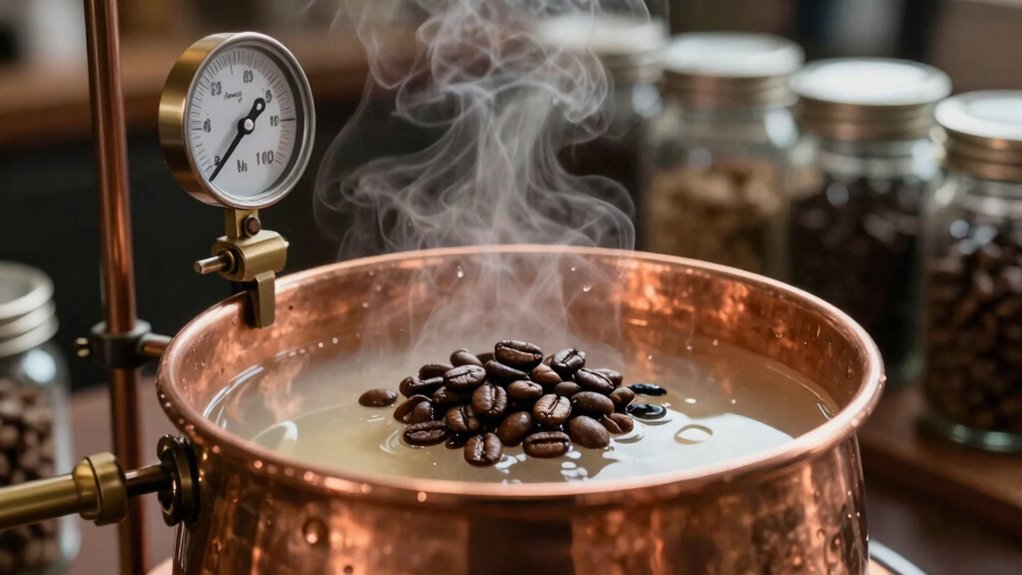
When you keep fermentation at a steady 15 °C, microbes stay active without overheating, so they transform sugars and acids into richer aroma compounds instead of losing delicate precursors. The cooler environment preserves nuanced flavors, boosts bright acidity, and yields vivid fruit notes while maintaining a smooth body. This temperature control also stabilizes pH and prevents off‑flavors, giving you consistently higher cupping scores across elevations. Keep going to discover the exact setup steps and monitoring tips.
How Temperature Control Affects Coffee Flavor

How does temperature control shape the coffee you taste? When you set fermentation at a cool 15 °C, you create a controlled temperature environment that boosts microbial activity on substrates. This heightened activity transforms sugars and acids into richer aroma compounds, sharpening flavor development. The choice of temperature also influences the stability of delicate precursors across different elevations, which helps explain why cooler regimes can preserve nuanced flavors that warmer processes may diminish, supporting more consistent cupping scores. Heat resistance and appropriate handling of the fermentation environment further ensure that the microbial action remains productive without introducing off-flavors. The data show that coffee quality scores rise across elevations, especially higher ones, because the cooler regime preserves delicate precursors that spontaneous or 30 °C fermentations lose. In contrast, 30 °C yields weaker microbial action, leading to flatter sensory profiles and lower cup scores. By fine‑tuning temperature, you steer fermentation dynamics, ensuring substrates convert efficiently into nuanced flavors and a more vibrant sensory profile that elevates overall coffee quality.
Sensory Benefits of 15 °C Temperature‑Controlled Fermentation
What makes a cup taste brighter and more complex? When you ferment green coffee beans at 15 °C, temperature control sharpens sensory quality and lifts coffee aroma. The cooler environment boosts microbial activity and substrate transformation, translating chemistry into a cleaner, more nuanced cup. You’ll notice brighter acidity, vivid fruit notes, and a smoother body, especially in high‑elevation lots where terroir shines. Statistical tests confirm that 15 °C controlled fermentation consistently outperforms 30 °C or spontaneous processes, delivering superior cup quality. In practice, choosing a precise, repeatable fermentation setup helps ensure those consistent results across batches with a stable process control framework.
Step‑by‑Step Guide to Setting Up Temperature‑Controlled Fermentation on Coffee Farms
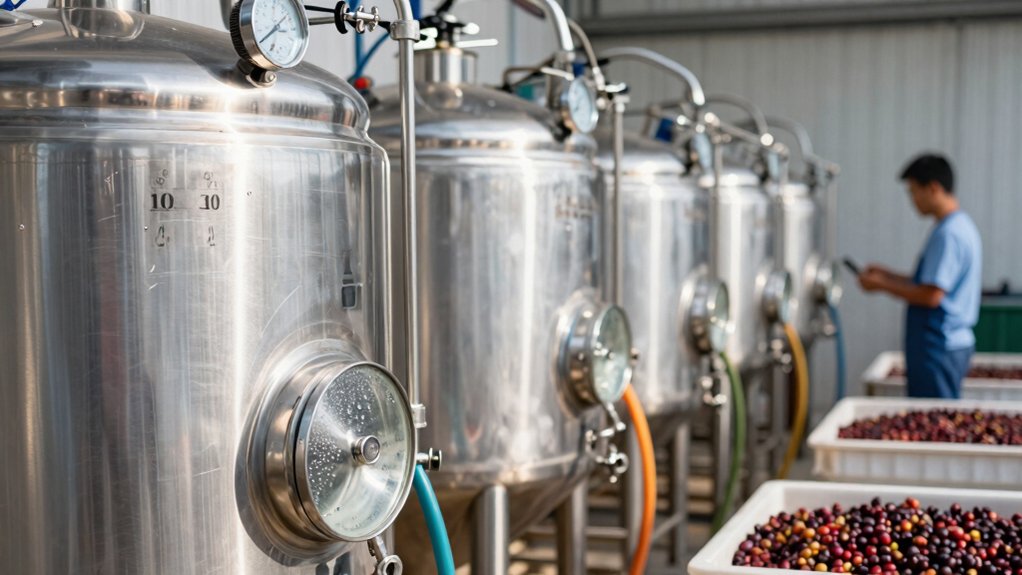
Ever wondered how to turn a simple bioreactor into a reliable 15 °C fermentation hub? First, choose a temperature‑controlled bioreactor that can maintain a steady 15 °C across your elevation range. Install calibrated sensors and set up a programmable controller for real‑time temperature adjustments. Load the coffee pulp, then begin pH monitoring every 2 hours; aim for a stable pH that supports lactic acid bacteria and Saccharomyces cerevisiae. Track microbial activity and adjust agitation to keep the consortium active without overheating. Record fermentation time, stopping when desired acidity and flavor develop—typically 48–72 hours at 15 °C. Finally, apply elevation‑specific calibration to fine‑tune the target temperature, ensuring each site achieves higher cup quality through consistent coffee fermentation.
Frequently Asked Questions
What Is the 15-15-15 Rule for Coffee?
You follow the 15‑15‑15 rule by sampling coffee beans at 0, 15, and 30 hours, checking pH, temperature, and substrate use, so you can compare microbial activity and flavor development across fermentations.
Why Is It Important to Control Temperature During Fermentation?
You control temperature during fermentation to steer microbial activity, ensure consistent flavor development, prevent off‑notes, and produce a balanced cup, because temperature directly shapes aroma extraction and substrate conversion.
What Is the #1 Coffee in the World?
You’ll find that the world’s top coffee is often considered the Ethiopian Yirgacheffe, prized for its bright acidity, floral notes, and complex fruit flavors that consistently outshine other varieties.
What Is Controlled Fermentation of Coffee?
You control coffee fermentation by actively managing temperature, oxygen, and time, guiding microbes to produce desired flavors, standardizing outcomes, and letting you tailor cup profiles across elevations and processing methods.
In Summary
By keeping fermentation at a steady 15 °C, you lock in bright acidity, clean fruit notes, and a smoother body while suppressing off‑flavors. The consistent temperature lets microbes work predictably, preserving delicate aromatics and delivering a more uniform cup. In short, temperature‑controlled fermentation gives you a consistently higher‑quality coffee that’s both flavorful and reliable.


