

First, warm up the machine 20‑30 minutes and flush the group head with seasoning shots and a detergent backflush to clear debris. Next, grind 14‑21 g of coffee, tamp evenly, and pull a double shot aiming for a 25‑30‑second extraction, stopping at the blonding cue. Then, steam cold milk, purging the wand first, create a steady whirlpool, and reach about 150 °F for silky microfoam. Use a pitcher half the final volume and keep the wand tip angled for consistent foam. Finally, soak baskets, backflush, scrub the group head, and clean the grinder weekly; the rest of the guide will show you how to perfect each step.
Ready the Machine for the Shift

How do you get the espresso machine humming before the first order? You start by warming it up for 20–30 minutes, letting every component reach stable temperature. While it heats, run seasoning shots through each portafilter to flush debris, detergent, and overnight residue—this checks grind settings and guarantees cleanliness. Inspect the grinder’s grind size, then adjust the calibration until particle distribution is uniform. Backflush the group head with a blind filter and detergent, rinse thoroughly, and verify that no lingering film remains. Finally, arrange your workflow: set up the portafilter stations, confirm shot timing targets of 25–30 seconds for a double, and ensure all tools are within arm’s reach. This preparation secures a clean, calibrated machine ready for the shift. Removable reservoir keeps refilling quick and spill-free during busy periods.
Pull a Consistent Espresso Shot on a Commercial Espresso Machine
After the machine’s warmed up, grind 14–21 g of coffee into the portafilter, matching the basket size for a uniform puck. Tamp firmly, wipe the edges, then lock the portafilter. Purge the group head with a short hot‑water burst to stabilize temperature. Start the pull and watch the clock; aim for a 25–30 second extraction time for a double shot. If the crema is thin or the flow is too fast, adjust the grind size finer; if it’s overly thick or drips slowly, go coarser. Stop the shot as the blonding cue appears to avoid over‑extraction and preserve balanced sweetness. The Classic Series and Ottomatic models use a borosilicate glass carafe designed to maintain flavor integrity, with filters designed to optimize extraction for consistent results purity of flavor.
Steam Milk on a Commercial Espresso Machine for Perfect Microfoam
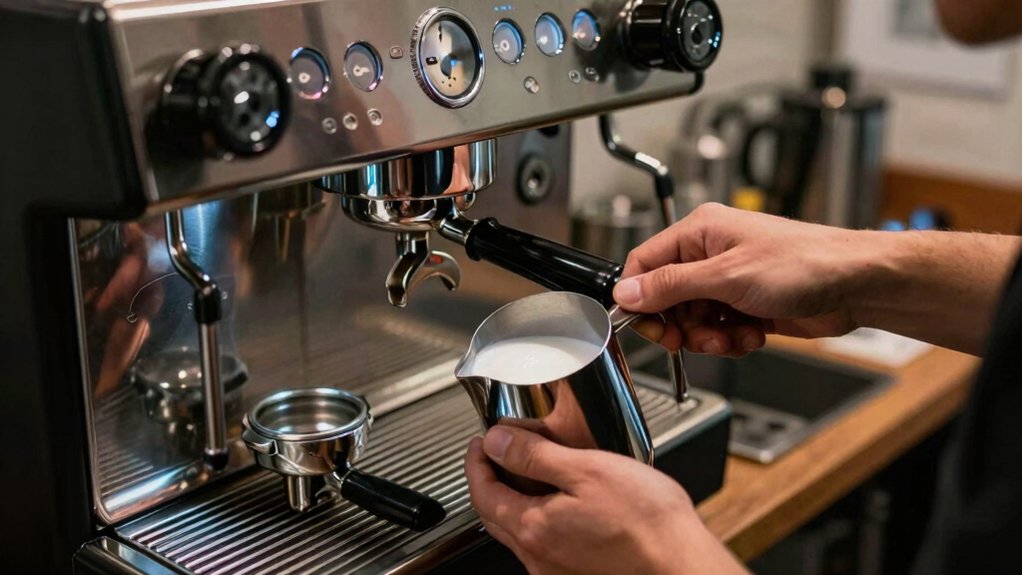
Start by pouring cold milk into a pitcher no more than two‑thirds full, then purge the steam wand to clear any water. Position the wand just below the surface, tilt the pitcher, and create a steady whirlpool while you’re steaming milk. Keep the wand tip slightly angled to draw in air gently, forming fine bubbles that later become velvety microfoam. Watch the thermometer and practice temperature control, aiming for about 150°F (65–68°C). As the milk heats, you’ll see it thicken and the surface turn glossy. Stop steaming once the pitcher feels warm and the milk integrates smoothly with the espresso, avoiding scorching or large bubbles that would ruin the balance. This technique yields a silky, glossy microfoam perfect for latte art. Integrated thermometer for temperature control can further refine the texture and consistency Temperature Monitoring.
Pro‑Tips: Pitcher Choice, Temperature, and Wand Purge
Ever wonder which pitcher will keep your milk from spilling over while you steam? Pick a pitcher that’s about half the volume you’ll end up with—milk doubles during steaming, so a 12‑oz pitcher works for a 6‑oz pour. Start with cold milk, then perform a steam wand purge: blast a brief burst of steam into the air to clear moisture, and keep purging briefly as you insert the wand just below the surface. This creates a steady whirlpool that heats evenly. Aim for a milk temperature around 150°F (65‑68°C); any hotter and you’ll scorch the milk, ruining texture. Consistent wand technique and proper pitcher choice give you velvety microfoam and reliable flavor balance every time.
Clean Your Commercial Espresso Machine and Grinder

Keeping your milk perfectly frothed is only half the battle; a clean machine and grinder are what preserve that consistency day after day. Start by soaking the portafilter and baskets in hot water with EP Clean or a similar detergent, then rinse thoroughly to strip oils and debris. Next, perform backflushing: insert a blind filter, run a short cycle with detergent, and rinse until the water runs clear, cleaning the group head and shower screen. Scrub the group head, drain trays, and all removable parts with a soft brush—avoid scouring pads that could damage surfaces. If the machine offers a cleaning program, follow it precisely to protect components. Schedule a service technician every six months, and clean the grinder weekly with Grindz, adding periodic vacuuming for dust removal. Regular maintenance helps ensure consistent extraction and flavor stability across shots SCA Standards.
Frequently Asked Questions
How Often Should the Water Filter Be Replaced?
You should replace the water filter every three months or after 1,000 liters of use, whichever comes first, and check the manufacturer’s guidelines for your specific model to ensure optimal espresso quality.
What Is the Ideal Pressure for a Commercial Espresso Machine?
You should aim for about nine to ten bars of pressure; that’s the sweet spot for extracting rich, balanced espresso, and it ensures consistent crema and flavor across all your shots.
Can I Use Pre‑Ground Coffee for Consistent Shots?
You can use pre‑ground coffee, but you’ll sacrifice consistency; grind size and freshness vary, so shots become unpredictable. If you need reliable flavor and pressure, stick to freshly ground beans for each pull.
How Do I Calibrate the Grinder for Different Bean Origins?
You start by setting the grind size coarse for light‑roasted beans, then fine‑tune until the shot pulls 25–30 seconds for 30 ml. Adjust in small increments, tasting each time, and record the settings for each origin.
What Safety Precautions Are Needed When Servicing the Boiler?
You should turn off power, let the boiler cool, wear insulated gloves, use a pressure‑relief valve, check for leaks, avoid steam burns, keep tools insulated, and follow the manufacturer’s lockout‑tagout procedure.
In Summary
Mastering a commercial espresso machine takes practice, but follow these five steps and you’ll be pulling consistent shots, steaming silky micro‑foam, and keeping everything clean. Keep your machine prepped for each shift, dial in the grind and dose, perfect your pitcher technique, and purge the wand before every milk session. Regular maintenance extends the machine’s life and ensures every cup tastes great. Stick to the routine, and your barista game will stay top‑notch.


