

Start by powering on the espresso machine and grinders, letting them warm up while you verify water levels, pump pressure, and filtration. Sanitize all group heads, milk wand, and POS stations, then run a quick POS and mobile‑order test. Check grinder calibration, set the dose to 18–20 g, and time each shot for 25–30 seconds. Prepare steam‑ready milk and any alternatives, labeling and storing them properly. Stock cups, lids, and condiments, and brief staff on today’s specials and workflow. Keep everything logged, and you’ll discover more details as you go.
Coffee Shop Daily Equipment Safety Check

Ever wondered how to keep your espresso machine humming smoothly all day? You start by turning on the espresso machine and grinders, letting them warm to optimal temperature while you dial the burrs for today’s bean profile. Next, check water reservoir levels, pump pressure, and confirm the water filtration system is working to stabilize taste and protect equipment. Test the steam wand and milk frothing circuits, clearing any residual milk and verifying foam texture and temperature targets. Verify refrigeration holds 35‑38°F and that batch brewers reach safe operating temps. Finally, inspect sanitation supplies and cleaning tools—group brush, detergent tabs, milk system cleaner—and ensure they’re ready for immediate use during service.
Coffee Shop Grind Settings & Dose Accuracy
After confirming the machine’s temperature and steam wand are ready, shift focus to the grinders. You’ll start each shift by checking that your calibrated grinders are set to the baseline dose—typically 18‑20 g for a double shot. Adjust grind settings by 0.1‑0.2 g as needed, then record the dial‑in settings and bean batch number in the log. Use a scale and timer for every espresso extraction, aiming for shot timing of 25‑30 seconds and a yield of 36‑40 ml (ristretto) or 60 ml (lungo). Verify espresso machine calibration stays within 90‑96 °C, ensuring dose accuracy and consistent flavor. Consistent bean batch tracking lets you spot drift and keep each cup uniform. Regularly verify that you can connect and calibrate scales via USB‑C or Bluetooth as needed to maintain traceability portable scales.
Coffee Shop Steam‑Ready Milk & Alternatives

You’ll start by reviewing the milk options you’ll offer, from whole to plant‑based, and note which ones need refrigeration.
Then, set up a dedicated storage area for alternatives, keeping them sealed and labeled to avoid cross‑contamination.
Finally, confirm each milk’s temperature and texture targets so you can hit the right foam consistency for every drink.
Additionally, establish a standard operating procedure (SOP) for tracking shelf life and batch codes to maintain freshness and safety, with refrigeration requirements clearly documented for all milk varieties.
Milk Options Overview
Steam‑ready milk belongs in near‑bar refrigeration until you heat it to 140‑150 °F (60‑66 °C) for a silky microfoam that supports latte art. You’ll stock dairy milk, lactose‑free, and alt‑milk such as oat and almond, labeling each pitcher clearly. Rotate stock daily, keep separate cleaning tools, and use the same frothing target—smooth microfoam with no large bubbles—to guarantee consistent texture across baristas. Removable knock bars and dedicated cleaning routines help maintain equipment longevity and hygiene across the bar setup.
Alternative Milk Storage
Where do you keep your alternative milks? Store them upright in the near‑bar milk refrigeration, within arm’s reach for peak service. Use identical containers and clear labeling—e.g., “oat steam”—to prevent cross‑contamination and confusion. After each use, seal and cap the carton, then return it to temperature‑controlled storage. Apply FIFO rotation and write opening dates on every open carton for shelf‑life monitoring. Keep the milk storage area tidy; discard any expired or damaged cartons immediately. To further simplify operations, implement a universal compatibility approach to descaling schedule to maintain equipment reliability across all drink lines compatibility coverage. Flush the steam wand between milk types and follow steam wand hygiene protocols to avoid flavor transfer. By maintaining strict labeling, temperature‑controlled storage, and disciplined FIFO rotation, you’ll ensure consistent quality and safety for all alternative milks.
Coffee Shop Stocking Cups, Lids & Condiments
You’ll want a full range of disposable and reusable cups, plus matching lids and sleeves, right at the service line so you never scramble for the right size.
Keep your condiment stations stocked and organized—sugar, sweeteners, napkins, stirrers, creamer, and syrups should be easy to grab and replenish before they run out.
Label pastries clearly, rotate stock, and have a spill‑kit area ready to handle any leaks during the shift. careful storage
Essential Cup & Lid Stock
Efficiency hinges on a well‑organized cup and lid station. You label each size, seal lids in boxes, and keep the area tidy so you can grab what you need without fumbling. During the opening routine you audit cup stock and lid counts, confirming a two‑hour buffer for peak period readiness. You separate takeaway lids, hot beverage sleeves, and equivalents, then run a quick FIFO stock rotation, noting any discrepancies in your inventory control log. This disciplined supply management frees you to focus on the condiments station and keep service flowing.
- Small cups and matching lids in a front‑right bin
- Medium cups and lids in a middle shelf
- Large cups and lids on a lower rack
- Takeaway lids and sleeves in a sealed drawer
Optimal Condiment Organization
After securing cup and lid inventory, turn your focus to the condiment station. Good condiment organization starts with a clear labeling system: color‑coded tags differentiate sugar, sweeteners, creamers, milk, and syrups. Place gravity‑fed dispensers for bulk powders and pump dispensers for liquids at the counter’s edge, keeping them within one or two steps of the espresso machine to boost speed of service. Keep condiment wells sealed and easy to clean, and run daily pre‑shift checks to verify levels and hygiene standards. Set back‑of‑house restock alerts so you never run out mid‑shift. Stock stirrers, napkins, saucers, lids, and to‑go utensils on a dedicated rail or bin for rapid access. This layout minimizes movement, maintains cleanliness, and keeps service flowing smoothly. Regular maintenance and cleaning reminders help sustain the coffee program’s quality and efficiency condiment organization and the related smart-management practices.
Sanitize Equipment & Work Surfaces
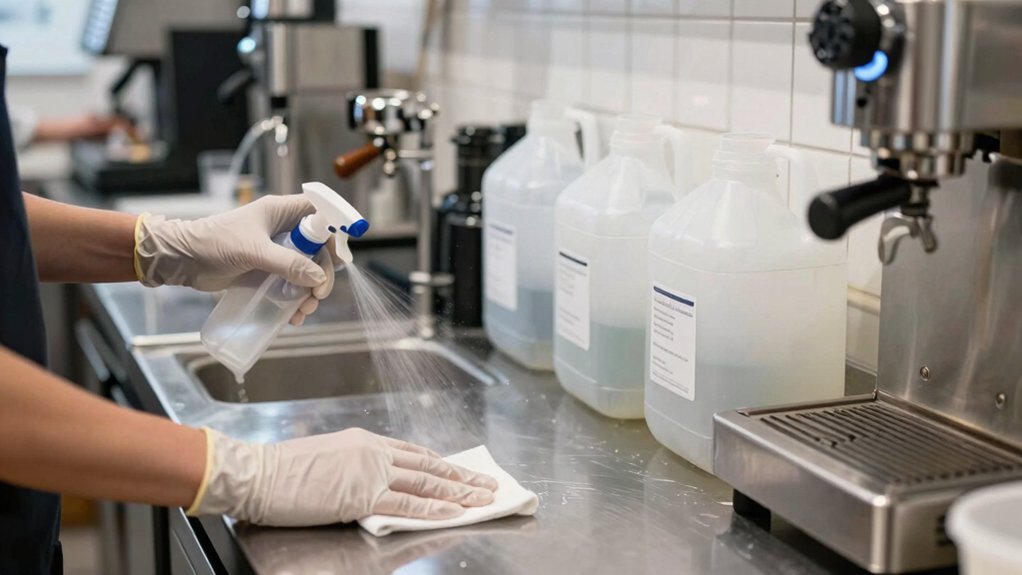
Where can you find the key to a spotless opening? You start with a disciplined sanitization routine that protects food safety and builds trust. Before the first order, you run a quick equipment cleaning check: espresso machine group heads, grinder barrels, milk pitchers, tamper stations, and countertops. Use approved cleaning agents, respect contact‑time guidelines, and verify SDS labeling is visible and stored away from prep zones. Keep a cleaning cadence that includes periodic portafilter rinses and milk system residue removal, then log everything in your deep‑clean logs for traceability. This prevents cross‑contamination and keeps work surfaces ready for service.
- Wipe down espresso group heads and portafilters.
- Sanitize grinder burrs and milk pitchers.
- Disinfect handoff tools—knives, scales, knock boxes.
- Clean customer touchpoints—tables, chairs, menus.
Validate In‑Store POS & Mobile Order Stations
How do you guarantee a smooth opening when your POS and mobile order stations could halt service? First, run an end‑to‑end test of the POS and payment processing, confirming each in‑store transaction and mobile orders works before customers arrive. Next, open the mobile ordering platform, verify it links to the kitchen workflow, and watch real‑time order flow updates. Check that the digital menu reflects current prices, specials, and promotions, so customers see accurate information. Conduct a connectivity sweep across tablets, cash drawers, and printers to catch any lag or dropouts. Finally, perform a full reconciliation: combine in‑store and mobile orders, compare receipts, and confirm the inventory impact matches the recorded sales. This ensures every system is ready for opening day. Also ensure that the test covers the integration points with the extraction/DS content data shown by refractometer workflows to validate that recipe data remains consistent across devices.
Brief Staff on Specials, Workflow & Quality Standards
With the POS and mobile order stations verified, turn your focus to the front‑of‑house team. Brief them on today’s coffee specials, any menu tweaks, and the exact language to use so every guest hears a consistent story from the first sip to peak hour. Review the workflow, emphasizing station assignments, handoff points, and time targets for each drink. Reinforce quality standards: nail the espresso extraction—grind, dose, shot time—while perfecting milk texture for latte art. Highlight operational updates like new prep steps, waste‑reduction tricks, and replenishment priorities. Close with communication protocols: speak up about issues, request help promptly, and note equipment concerns to keep the line moving.
- Assign stations and define handoff points.
- Demonstrate espresso extraction benchmarks.
- Practice milk‑texture consistency drills.
- Run a quick communication‑protocol role‑play.
Frequently Asked Questions
How Do I Handle a Sudden Power Outage During Opening?
You should quickly switch to backup generators, keep the espresso machine warm, inform staff, secure cash, and reassure customers while you assess the outage and resume normal service as soon as power returns.
What’s the Protocol for a Broken Espresso Machine Before Service?
You shut down the machine, unplug it, and tag it “out of service.” Then you notify the manager, log the issue in the tracker, and call the service technician while keeping the espresso alternative ready.
How Should I Store Extra Milk When the Fridge Is Full?
You’ll keep extra milk in a sealed container on the top shelf, away from strong odors, and label it with the date. Rotate stock, using the oldest first, and check temperature regularly.
What Steps to Follow if a POS System Fails to Sync?
If the POS won’t sync, restart the terminal, check the network cable or Wi‑Fi, verify the server address, clear any cached transactions, then manually log sales and contact tech support for a fix.
How to Manage a Staff Shortage on Opening Day?
You prioritize essential tasks, cross‑train employees for multiple stations, and streamline the menu. Communicate clearly, assign quick‑fix roles, and use temporary help or pre‑prepared items to keep service flowing smoothly.
In Summary
By following these seven steps every shift, you’ll keep your shop safe, your drinks consistent, and your customers happy. A quick safety check, precise grind settings, ready‑to‑steam milk, stocked supplies, clean surfaces, functional POS stations, and a brief staff huddle ensure smooth operations and top‑quality service. Stick to the routine, and your barista team will deliver a flawless coffee experience day after day.


