
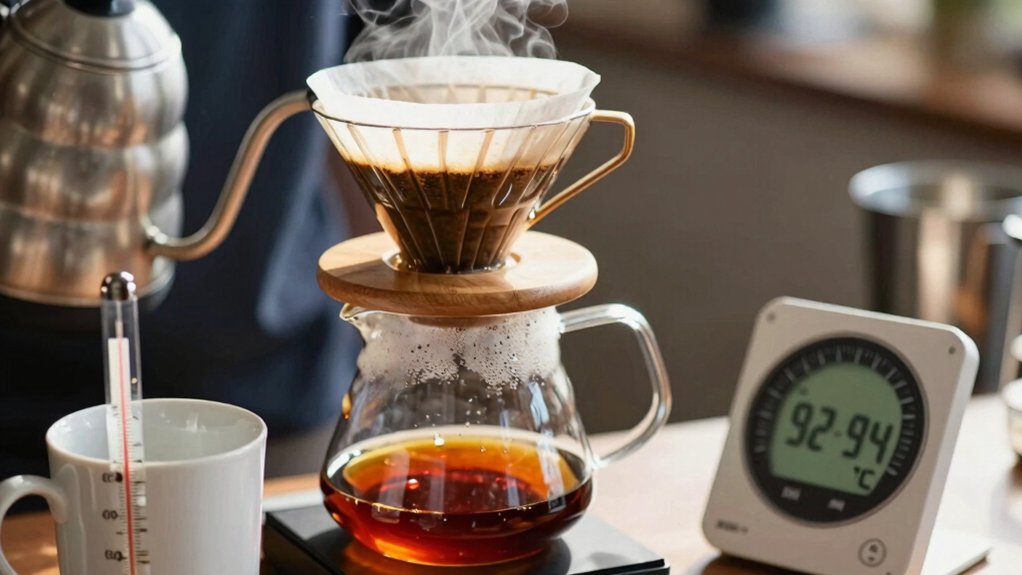
Aim for 195‑205 °F (90‑96 °C) when you brew manually. Light roasts taste brightest at 200‑205 °F, medium roasts sit nicely around 195‑200 °F, and dark roasts stay smooth at 190‑195 °F. Keep your V60, Chemex, or Kalita in that window, pre‑heat the dripper, and adjust grind size if the cup feels sour or bitter. A French press works best near 200 °F, while AeroPress can drop to 175‑195 °F for a quicker brew. Fine‑tuning temperature will keep your coffee balanced, and the next sections show how to perfect each method.
What’s the Best Water Temperature for Manual Brewing?
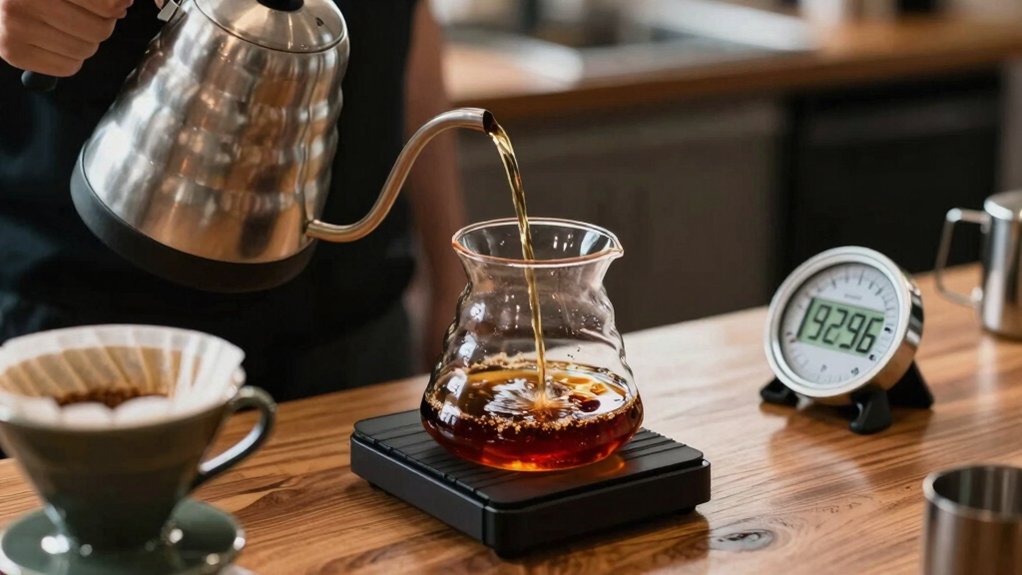
What’s the ideal water temperature for manual brewing? You should aim for 195 °F to 205 °F (90 °C to 96 °C) to hit the sweet spot of extraction. This temperature window pulls caffeine, oils, and flavor compounds without under‑ or over‑extracting. Light‑roast beans thrive near the higher end, around 200–205 °F, because they need more heat to release their nuanced notes. Dark‑roast beans, however, benefit from a slightly cooler range, closer to 190–195 °F, which tempers bitterness. When you brew a pour‑over, keep the water near 200–205 °F to offset heat loss during the slow pour. If your cup tastes sour, raise the temperature a few degrees; if it’s bitter, lower it. Adjusting temperature lets you control extraction and match the roast level for the best manual brewing results. Consistent water temperature also helps maintain a balanced extraction across batches consistent extraction and supports achieving a cohesive flavor profile.
How the 195‑205 °F Range Balances Extraction
You’ve just learned the sweet‑spot temperature range; now let’s see why 195‑205 °F keeps extraction in balance. Within this band, the temperature nudges solubles out just fast enough to hit the sweet spot without tipping into bitterness or sourness. Hotter water accelerates caffeine and oil release, while cooler water eases the process, letting brew time stretch or shrink to match the roast level. You’ll notice that a medium‑dark roast at 198 °F yields a rounded cup, whereas a light roast at 202 °F shines with bright acidity. The range acts as a flexible baseline, letting you adjust grind size and pour rate while keeping overall extraction steady. Guided temperature control supports achieving consistent results across different brews and devices.
Why Light, Medium, and Dark Roasts Need Different Temperatures
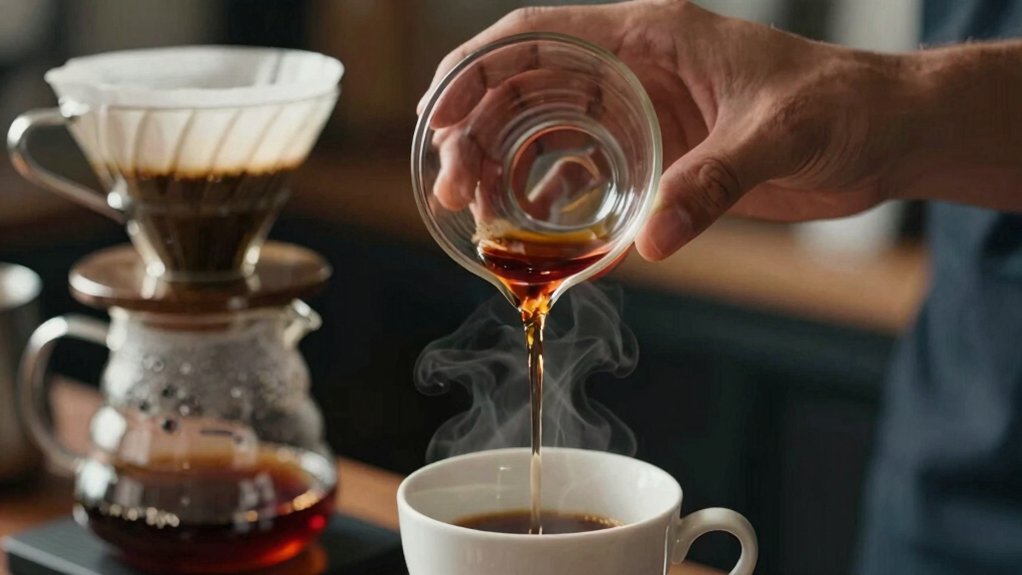
Why do light, medium, and dark roasts each demand a distinct brewing temperature? Light roast depth is porous and retains delicate acids, so you raise the temperature to 200–205 °F to boost extraction of bright notes. Medium roast depth balances sweetness and body; a mid‑range temperature of 195–200 °F lets you hit the sweet spot without pulling bitterness. Dark roast depth is dense and bitter-prone, so you drop the temperature to 190–195 °F to keep extraction gentle and highlight chocolate tones. Adjusting temperature for each roast depth lets your brewing methods extract the right compounds, preserving aroma and flavor. Stay within the 195–205 °F window, and you’ll achieve balanced extraction for any roast you choose, while selecting the right cloths for cleaning up after each brew can help maintain your setup color-coded organization.
Pour‑Over Hacks for V60, Chemex, and Kalita
You’ll want to start with water at 200‑205°F to offset heat loss, then match your grind size to that temperature for a balanced extraction. If the brew feels sour, a slight temperature bump or a finer grind can help, while a bitter cup may need a lower temperature or a coarser grind. Preheat the V60, Chemex, or Kalita and keep the water steady to maintain consistency throughout the pour. Additionally, using a grinder with a wide grind-setting range helps ensure you can dial in precise extractions across methods grind setting versatility.
Heat‑Loss Compensation
Ever notice how quickly a V60, Chemex, or Kalita cools down once the hot water hits the grounds? That sudden heat loss can ruin brewing temperature and mess up pour‑over consistency. To fight it, start with water at 200–205 °F (93–96 °C) and preheat every component—pot, carafe, filter—so the system stays hot. If your setup loses a lot of heat, aim for the higher end of the 195–205 °F range, especially in cold rooms or high altitude. Keep your pour steady and avoid big temperature gaps between bloom and full pour; the steadier the flow, the less cooling you’ll see. Preheat your carafe and mug to minimize thermal shock and ensure a more stable extraction. Heat management is a core principle that ties together technique and equipment choices for consistent brews.
- Warm the mug or server before brewing.
- Pre‑wet the filter until it drips clear.
- Use a kettle that maintains temperature.
- Pour in a controlled, consistent stream.
Grind‑Size Matching
How does grind size affect your pour‑over’s flavor and consistency? You’ll notice that a finer grind slows water flow, boosting extraction when you brew with a Kalita wave’s flat bottom and steady waist‑height pours. In addition, selecting the right filter type can influence extraction dynamics and perceived clarity, reinforcing the connection between grind size and filter choice unbleached paper filters. For V60, aim for a medium‑fine grind and keep the water at the 195–205°F sweet spot; the controlled pour then extracts evenly without turning bitter. Chemex, with its deep paper filter, prefers a coarser‑to‑medium grind to avoid over‑extraction during its longer brew time. Adjust grind size in 0.1–0.2 mm steps while maintaining the same temperature, watching the brew time and flavor balance shift. Small tweaks let you dial in clarity, body, and consistency across each pour‑over method.
French Press: Keeping Water Temperature at 200 °F

Why settle for a lukewarm brew when a French Press thrives at roughly 200 °F (93 °C)? You’ll notice richer body and smoother flavor when you keep the water temperature steady throughout the four‑minute steep. Preheating the carafe prevents heat loss, so the brew stays at the ideal range and the extraction stays balanced, avoiding bitterness or under‑extraction. The right temperature unlocks oils and soluble solids, giving you a full‑bodied cup that’s neither scalded nor weak.
A French Press thrives at 200 °F, delivering richer body, smoother flavor, and balanced extraction.
- Steam rising from a freshly boiled kettle, then cooling to a precise 200 °F.
- A preheated French press glass glowing warm, ready to receive grounds.
- Golden‑brown coffee grounds swirling in a steady, amber‑colored bath.
- A timer counting down, sealing the perfect extraction moment. temperature control
AeroPress: 175‑195 °F and the Right Grind Size
Wondering how to nail the AeroPress’s sweet spot? You’ll keep the AeroPress temperature between 175 °F and 195 °F, then dial in a grind size that matches the short brew time. A finer grind compensates for the brief contact period, boosting extraction without over‑extracting bitterness. Start at 195 °F if you want brighter acidity, then drop toward 175 °F for smoother sweetness. Preheat your cup and kettle, and use a thermally stable water source to hold the brewing temperature steady. Adjust the grind a notch finer if the cup feels thin, or coarser if it’s too heavy. This balance of temperature and grind size gives you consistent, clean flavors with every press.
Espresso: 190‑196 °F Under Pressure for Consistent Shots
Ever wondered why espresso thrives at 190‑196 °F? You’ll find that this narrow temperature band balances extraction under 9 bars of pressure, delivering a rich crema and a stable shot. When the water hits the coffee puck at 195 °F, compounds dissolve evenly, avoiding the bitterness of higher heat or the sourness of lower heat. Maintaining temperature stability throughout the 25‑second brew prevents channeling, so each sip mirrors the last. Adjust a few degrees to match bean origin, roast level, and grinder consistency, but keep the range tight for repeatable quality.
Espresso’s 190‑196 °F sweet spot ensures balanced extraction, rich crema, and consistent, repeatable shots.
- Steam rising from the boiler, a steady 190 °F glow
- A golden crema forming as pressure forces water through the puck
- Tiny bubbles dancing in the cup, signaling even extraction
- A thermometer clamped to the group head, ensuring stability
Cold Brew vs. Hot Brew: Temperature’s Role in Extraction
How does temperature shape the coffee you sip? When you choose cold brew, you work with water at room temperature up to 70 °F (21 °C).
That low temperature slows extraction, letting sugars and body develop over 12‑24 hours while minimizing acidity.
In contrast, hot brew for manual methods hits 195‑205 °F (90‑96 °C), accelerating extraction of caffeine, oils, and aromatic compounds.
Hot water pulls acids and bright notes early, giving a crisp, sometimes acidic cup, whereas cold brew’s prolonged contact extracts sweetness and smoothness instead.
Consistency matters: keep temperature stable during pour‑over or immersion, because cold brew’s extended contact time compensates for its lower temperature, while hot brew relies on rapid, precise extraction.
How to Adjust Water Temperature to Fix Sour, Bitter, or Flat Coffee
If your brew tastes sour or weak, bump the temperature a few degrees within the 195‑205 °F range to pull more flavor. If it’s bitter or harsh, drop the heat slightly toward the lower end to curb over‑extraction. Remember, tweaking temperature works hand‑in‑hand with grind size and brew time for a balanced cup.
Raise Temperature Slightly
Wondering why your brew tastes sour or flat? Raising the temperature a few degrees can boost extraction, add sweetness, and give your coffee body. Aim for the 195–205 °F window, especially with light roasts that crave balance. Adjust your kettle or heater, then taste after a single brew to gauge the change. Keep adjustments small—2–3 °F at a time—to avoid over‑extraction. Pair the tweak with method‑specific cues, like a slower pour‑over or a longer AeroPress steep, and watch the flavor shift.
- Steam rising from a freshly boiled kettle, heat humming in the air.
- Dark droplets cascading over a coffee bed, deepening the brew.
- A timer ticking as you pause, noting the new temperature.
- Your palate detecting richer, smoother notes after the tweak.
Lower Temperature Slightly
Ever wonder why your coffee feels bitter or harsh? If you’re battling that sharp edge, lower the temperature modestly to 195–198°F. A cooler brew slows aggressive extraction, softening bitter compounds while preserving sweetness. Adjust in 2–3 °F increments, then taste; small changes let you fine‑tune without masking subtle flavors. Keep an eye on grind size—finer grounds can over‑extract even at lower heat, so you may need a coarser setting.
Shorten brew time slightly if the cup still feels heavy; the reduced temperature already eases the pull. When sourness dominates, a modest temperature dip can balance acidity, but avoid dropping below 195 °F, or you’ll risk under‑extraction and a flat profile. Test, adjust, and repeat until the cup feels smooth and rounded.
Frequently Asked Questions
What Is the 15-15-15 Rule for Coffee?
You follow the 15‑15‑15 rule by waiting fifteen seconds after the bloom, pouring steadily for fifteen seconds, then pausing another fifteen seconds before finishing the pour, helping even extraction.
What Is the 80 20 Rule for Coffee?
You follow the 80/20 rule by using 80% of your coffee dose for 20% of the brew time, then adding the remaining 20% of coffee for the final 80% of the extraction.
What Is the Ideal Water Temperature for Brewing Coffee?
You should brew coffee at 195‑205 °F (90‑96 °C). Stay near 200 °F for most methods, nudging higher for light roasts and lower for dark roasts to avoid sourness or bitterness.
What Is the Enemy of Coffee Beans?
You’re battling oxygen, moisture, heat, and light—each one oxidizes, clumps, accelerates staling, or degrades oils, respectively, stealing flavor, aroma, and freshness from your coffee beans.
In Summary
By dialing in the right temperature, you’ll hit the sweet spot for any manual brew. Keep 195‑205 °F for balanced extraction, tweak a few degrees for roast strength, and use the specific hacks for V60, Chemex, Kalita, French Press, AeroPress, and espresso. Adjust when coffee tastes sour, bitter, or flat, and you’ll consistently pull a perfect cup—no guesswork needed.


