

Artisan presentation turns each cup into a sensory story, so you instantly see the origin, craftsmanship, and visual elegance that deepen flavor perception. Thoughtful serving ware, transparent origin details, and narrative cues connect the bean’s journey to your palate, making the brew feel richer and more personal. When you notice the aroma, color, and texture aligned with the story, you enjoy a fuller, more immersive coffee experience—plus, the next sections reveal how precise brewing and equipment amplify that effect.
What Is Artisan Coffee Presentation and Why It Matters?
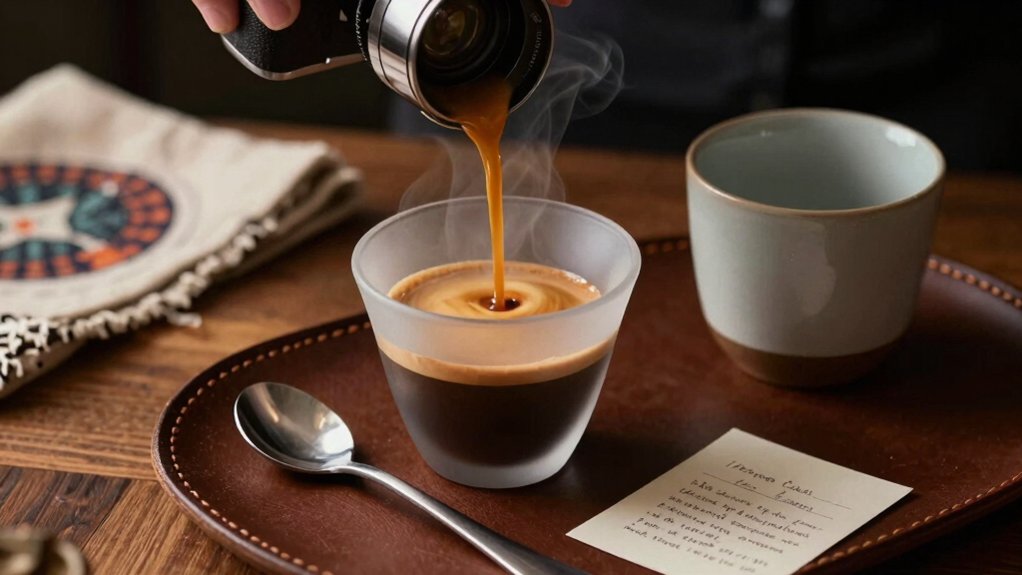
What makes artisan coffee presentation essential? You see craftsmanship in every detail, from small‑batch roasting that locks in aroma and flavor to origin transparency that tells you where the beans traveled. When you serve the brew in thoughtfully chosen serving ware—porcelain mugs, glass cups, demitasse—you invite a richer sensory experience. The ground‑to‑order process preserves volatile oils, so each sip bursts with freshness. You’ll notice how brewing methods align with the bean’s character, and the educational storytelling behind each cup deepens your connection to the coffee community. This immersive approach transforms a simple drink into an event where visual appeal, texture, and scent all work together, elevating the overall experience. Origin transparency further enriches the narrative by highlighting exactly where each batch originates and how it travels to your cup.
Precision Brewing Techniques That Elevate Artisan Flavor
You’ll notice how a consistent grind size sets the stage for every cup, letting the water extract flavors evenly. In addition, using a dedicated storage bin with a lid can help keep your coffee ice cubes fresh and odor-free between uses storage bin with lid. By holding the water temperature between 195°F and 205°F, you control the chemistry that releases the bean’s nuanced notes. Timing the extraction precisely—whether it’s a quick pour‑over or a longer French press—ensures the balance of body and clarity you’re after.
Controlled Grind Consistency
Ever noticed how a single, uneven grind can ruin an otherwise perfect brew? You’ll quickly learn that grind consistency is the backbone of artisan coffee. A burr grinder—like the Virtuoso Conical Burr—holds grind size steady, delivering uniform extraction across each dose. That steadiness preserves flavor clarity, ensuring the delicate notes you cherish stay intact. When you match the grind size to your brewing method—whether it’s a pour‑over, French press, or espresso—you control water contact, which boosts aroma preservation and balances body. Consistent grinding also means each cup tastes the same, letting you perfect your technique without surprise variations. In short, mastering grind consistency lets the bean’s voice shine, elevating every sip. Grind consistency is further supported by choosing equipment designed to maintain stable particle size, ensuring reliable results across sessions.
Water Temperature Precision
How much does a few degrees shift affect your coffee’s character? When you dial in water temperature with precision, you set the stage for consistent brewing, whether you’re pulling a pour‑over or a French press. A tight temperature control window—195°F – 205°F—keeps extraction balanced, preventing sour, or bitter notes. You’ll notice a clearer flavor balance and more vivid tasting notes cup cup after cup, turning each sip into a repeatable experience.
- Aim for 195‑205°F for pour‑over and French press
- Keep temperature steady throughout the brew
- Avoid under‑extraction (sour) and over‑extraction (bitter)
- Use a reliable thermometer or PID controller
- Taste the difference in flavor balance and aroma
ATC-enabled temperature control can further stabilize readings across different brews, helping artisans reproduce precise extractions with consistency.
Extraction Time Control
Extraction time control. You master artisan presentation by timing each brew method with precision. A fine grind size shortens contact, while a coarser grind extends it; adjust water temperature and brew ratio to match. In pour‑over, steady flow delivers even flavor extraction, whereas French press invites longer immersion for body. Espresso demands seconds of pressure‑driven contact, highlighting intense flavor notes. Small‑batch roasting amplifies these nuances, but over‑ or under‑extraction dulls sweetness or spikes bitterness. By syncing grind size, water temperature, and brew ratio, you dial in the bean’s voice, revealing balanced acidity, aroma, and texture. Mastering extraction time control transforms every cup into a crafted, flavorful experience. SCA Standards
Home Brewing Tips for Consistent Artisan Coffee
Why settle for inconsistent flavor when you can brew artisan coffee at home with café‑level precision? Start with freshly roasted artisanal beans and grind them just before brewing. A burr grinder guarantees uniform grind size, which is essential for a balanced extraction. Measure beans and water with a scale, aiming for a coffee-to-water ratio of about 1 g to 15–18 g. Use a timer to control pour‑over flow and keep each brew consistent. Investing in a kettle with a steady pour helps you repeat the same method day after day, turning home brewing into a reliable ritual. Use a burr grinder for uniform grind size temperature control and maintain precise heat during extraction. – Use a burr grinder for uniform grind size
- Weigh beans and water with a scale
- Set a coffee-to-water ratio of 1:15‑18
- Time your pour‑over for repeatable extraction
- Keep tools clean to preserve flavor of freshly roasted beans
Visual Plating & Serving Practices That Enhance Aroma

You’ll notice that an elegant plate layout frames the coffee, letting its color and crema catch the eye before the first sip.
Choosing aroma‑boosting servingware—like a porcelain mug that holds heat or a glass cup that highlights hue—amplifies the scent as you bring the cup closer.
These visual cues set the stage for a richer, more engaging flavor experience.
Additionally, selecting airtight ceramic canisters with wooden lids helps preserve aroma by shielding beans or grounds from moisture and external odors airtight seals.
Elegant Plate Presentation
Ever notice how a thoughtfully arranged plate can make a coffee’s aroma surge as you draw near? Elegant plate presentation boosts aroma concentration by using complementary serveware, color coordination, and texture variation.
Height and negative space guide the nose, while carefully chosen garnishes create a cohesive sensory experience. You’ll find that visual cues trigger aroma‑guided tasting, sharpening aroma perception before the first sip.
- Choose porcelain or ceramic serveware that mirrors the coffee’s hue.
- Pair earthy tones with chocolatey or nutty profiles for instant flavor cues.
- Layer textures—crisp biscuits, silky cream—to add depth.
- Use height to lift the cup, leaving negative space that draws air toward the nose.
- Finish with a single garnish, like a cinnamon stick, to anchor the scent.
Aroma‑Boosting Servingware
When the plate’s elegance sets the stage, the cup itself becomes the next focal point for aroma. You’ll notice that porcelain and ceramic mugs hold heat, allowing aroma development to unfold slowly, while demitasse cups concentrate espresso fumes and glass vessels showcase brewed coffee’s clarity. By arranging a bright garnish or a citrus zest beside the cup, you create visual aroma cues that guide your nose toward the brew’s nuanced notes. aroma preservation practices further support temperature stability and scent retention, reinforcing the Coffee Gear Collection’s consistent cup presentation to support aroma science and guide serving choices.
Hand‑Operated Equipment: The Backbone of Artisan Consistency
Why does the rhythm of a hand‑operated grinder feel like a promise to each cup? You feel the torque, hear the burrs, and know you’re setting grind size control that will shape extraction. Manual grinders let you dial in the exact particle distribution, while pour‑over devices give you water flow mastery. This tactile dialogue creates artisanal consistency, revealing batch characteristics and showcasing barista craftsmanship. Transparency rises because every step—grind, bloom, pour—is visible, linking origin stories to flavor. You become the conduit between bean and cup, honoring the craft and delivering a cup that tells its own story.
- Hand‑operated equipment amplifies barista craftsmanship
- Manual grinders provide precise grind size control
- Pour‑over tools regulate water flow for optimal extraction
- Transparency connects bean origin to cup flavor
- Batch characteristics shine through repeatable, tactile routines
How Artisan Coffee Presentation Strengthens Community & Future Trends

What makes a coffee cup feel like a shared story? You notice artisan presentation that frames each pour as a narrative, linking direct‑trade sourcing to the table. Transparent storytelling about farmers and small‑batch roasting fuels community building, while flavor notes and educating cues turn sipping into immersive tasting. Barista‑led conversations spark curiosity, turning a simple brew into a lesson on origin, processing, and roast level. These moments create a network of coffee lovers who exchange ideas and support ethical practices.
As you join the dialogue, you help shape future trends—more interactive workshops, digital flavor wheels, and hyper‑local collaborations. Your engagement turns a cup into a catalyst for lasting community and evolving coffee culture.
Frequently Asked Questions
What Is the Difference Between Artisan Coffee and Regular Coffee?
You get hand‑selected, small‑batch beans roasted fresh, brewed with precision methods, while regular coffee relies on mass‑produced blends, standardized roasting, and generic brewing that sacrifices unique flavors and traceability.
What Makes a Coffee Artisan?
You recognize artisan coffee when you see small‑batch roasting, traceable origins, ethical sourcing, precise brewing methods, and storytelling that links each sip to its farmer, region, and craft.
In Summary
By mastering artisan presentation, you turn each cup into a sensory experience that goes beyond flavor. Your precise brewing, thoughtful plating, and hand‑operated tools create consistency, spark conversation, and build community. As you keep refining these details, you’ll not only elevate your brew today but also set the stage for future coffee innovations that celebrate craftsmanship and connection.


