
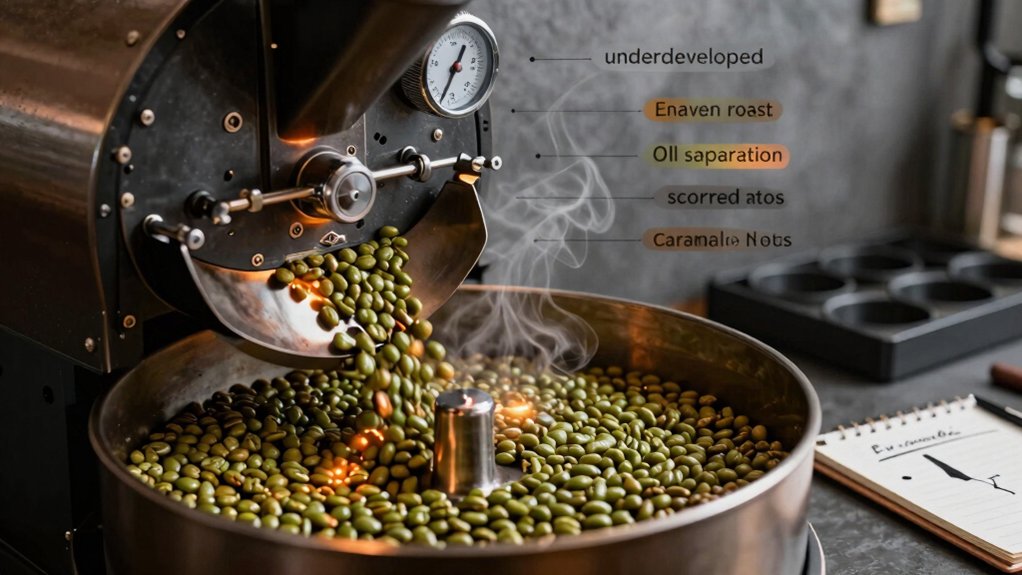
Keep your roast curve steady after first crack by maintaining a consistent rate of rise (RoR); if it stalls, raise the charge temperature or boost drum speed to avoid flat, papery notes. Extend development time past first crack to deepen caramelization and eliminate under‑development. Watch for quakers and green‑ish aromas—low RoR before first crack signals insufficient heat, so increase charge temperature or improve drum heat distribution. Reduce batch size and keep airflow steady to prevent scorching and tipping. Track RoR in real time and adjust heat or speed on the fly, and you’ll discover even more ways to perfect every batch.
Identifying Coffee Roast Defects: Flat, Papery, and Burnt Flavors
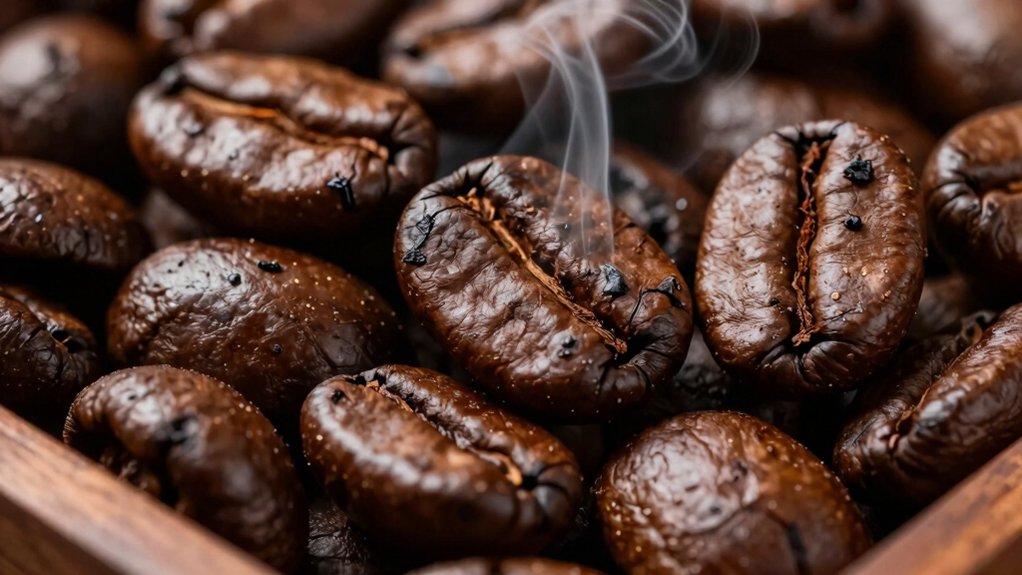
Ever wonder why some brews taste like cardboard or burnt toast? You’re probably dealing with roast defects that leave a flat flavor and papery notes.
When the bean hits first crack but the rate of rise stalls, the roast curve flattens and energy delivery drops, producing baked coffee that feels like stale bread. This underdevelopment means caramelized sugars never form, so the cup lacks sweetness and depth.
To spot it, sip slowly and listen for a dull, almost chalky finish; the aroma will lack the bright, caramel tones of a proper roast. Adjusting the profile to keep the rate of rise steady after first crack restores balance, preventing the papery, flat palate that signals a baked defect. Bean Adapt Technology helps optimize extraction and consistency across roasts.
Spotting Under‑Development and Quakers in Coffee Roasts
Flat, papery notes are just the start; the next red flag is a bean that never reaches full development, often showing up as grassy, green‑ish flavors and hard, uncracked kernels called quakers. You’ll catch underdevelopment by cupping for a flat flavor profile that lacks caramelized sugars and smells of fresh cut grass. Visually, quakers stay hard after first crack, so the Rate of Rise (ROR) often dips during the charge temperature phase, indicating insufficient heat application. To diagnose, compare the ROR curve to a normal roast; a low ROR before first crack signals you need more heat. Induction compatibility can influence how evenly heat is distributed during roasting, which matters when adjusting charge temperature or development time. Adjust the charge temperature or extend the development time after first crack, then retest with cupping to confirm the green‑ish notes have vanished.
Preventing Scorching and Other Roast Defects
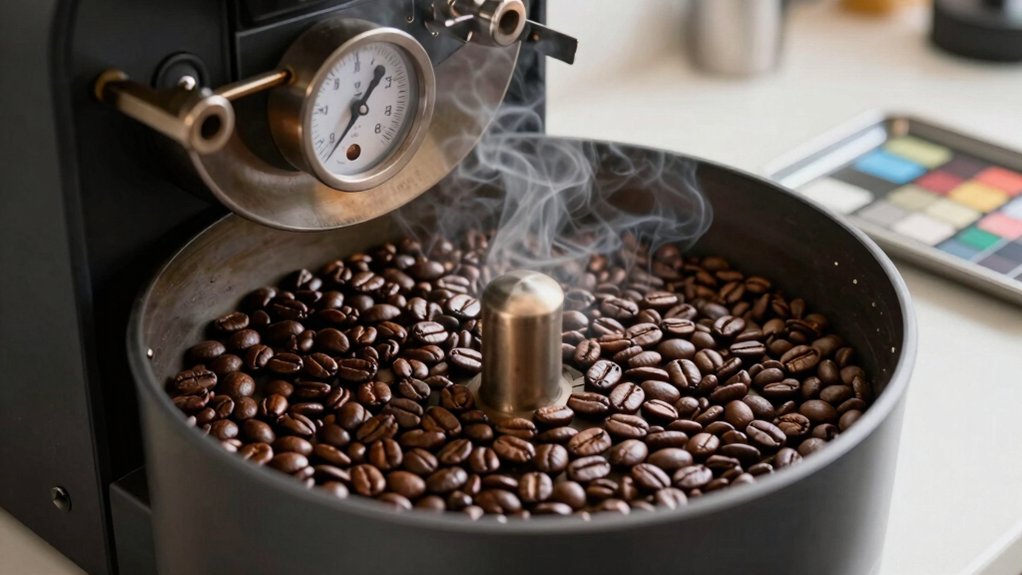
How can you keep your beans from turning into charred, smoky lumps? Lower the charge temperature and boost drum speed to lift beans, preventing scorching. Reduce batch size and lengthen the roast profile so heat spreads evenly, while maintaining steady airflow. Watch green coffee quality; low‑density or pointed beans heat faster, raising the risk of both scorching and tipping. Adjusting drum speed also curbs tipping, which shows as end‑burn marks when the roaster runs too hot or spins too quickly. This approach aligns with best practices for preserving flavor integrity by minimizing heat spikes and ensuring consistent agitation across the roast batch heat transfer principles and helps maintain flavor while reducing the risk of scorching.
Logging ROR Data and Making Real‑Time Adjustments
Wondering how to keep your roast on track? You should log Rate of Rise (RoR) data from charge through first crack, noting any sudden drop that signals a collapse.
Log RoR from charge to first crack; watch for sudden drops that signal a roast collapse.
When RoR falls after the initial crack, you risk baked coffee—flat, bread‑like flavors.
Use those numbers to make real‑time adjustments: boost airflow, tweak heat control, or change drum speed before the defect deepens.
A high charge temperature paired with low drum speed can cause scorch, so watch the curve and intervene early.
RoR tracking helps you detect instability early and aligns with best practices for maintaining consistency across batches.
Building a Defect‑Prevention Mindset for Consistent Cups
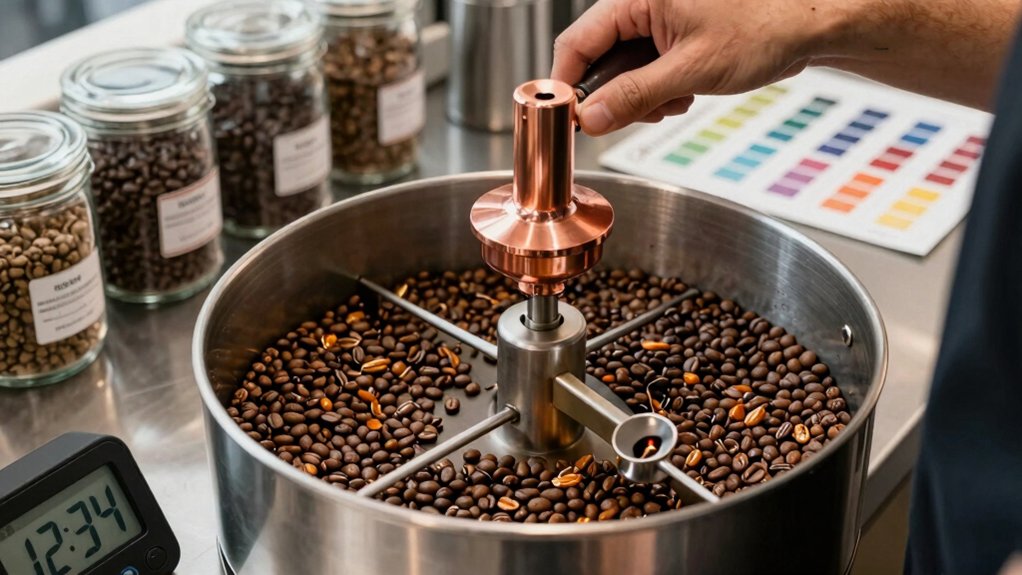
Ever wonder how a simple mindset shift can keep every batch tasting the same? Treat each roast as a preventive project, not a reaction to flaws. When you monitor the Rate of Rise (RoR) and the timing of first crack, you spot underdevelopment or overdevelopment before they become Roast defects. Record every RoR curve in your quality control log, and let roast analysers flag deviations. This habit builds a defects‑prevention mindset that yields consistent cups. Track RoR trends 0.1 g precision and timing data to stay on target, all while leveraging the 2000 g max capacity to document multiple batches without interruption.
Frequently Asked Questions
How Does Ambient Humidity Affect Roast Development?
You’ll notice that high ambient humidity slows bean moisture loss, extending drying time and flattening development, while low humidity speeds moisture evaporation, sharpening acidity and potentially over‑developing the roast.
Can Bean Size Variation Cause Inconsistent Flavor Profiles?
Yes, bean size variation will give you inconsistent flavor profiles; larger beans roast slower, staying under‑developed, while smaller ones over‑develop, leading to uneven acidity, body, and aroma across each batch.
What Role Does Drum Speed Play in Preventing Quakers?
You control drum speed to keep beans moving evenly, preventing quakers by ensuring each bean reaches the correct temperature and time. Faster speeds reduce under‑exposure, while slower speeds risk uneven heat distribution.
How Often Should I Calibrate My Thermocouple for Accurate ROR?
You should calibrate your thermocouple at least once a month, or whenever you notice drift, change beans, or adjust the roaster’s temperature settings; regular checks keep your ror accurate and consistent.
Do Different Coffee Origins Require Unique Roast Curves?
Yes, you’ll need distinct roast curves for each origin because bean density, moisture, and flavor precursors differ. Adjust ramp rates, turn‑around points, and cooling times to highlight each region’s unique profile.
In Summary
By mastering defect identification, spotting under‑development and quakers, preventing scorch, logging ROR data, and adopting a prevention‑first mindset, you’ll consistently brew coffee that hits the mark. Keep these five tips front‑and‑center, adjust in real time, and your cups will stay smooth, balanced, and free of off‑flavors. Your roast game will stay sharp, and every sip will reflect that precision.


