
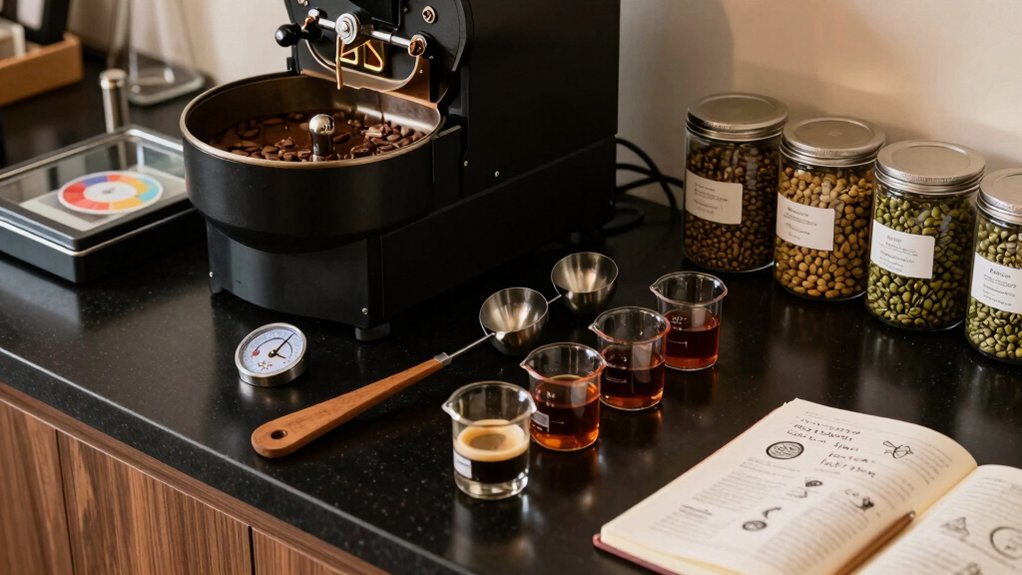
Set your charge temperature low for fresh beans and higher for older ones, then follow a roast‑temperature curve that spikes just enough to kick Maillard and tap to let caramelization bloom. Adjust airflow early to keep sugars, raise it at first crack to slow the roast, and moderate it during development for body. Time the roast so early crack preserves fruit, mid‑crack balances notes, and late crack adds chocolate depth. Choose varietal and processing that match your target flavor, and extend post‑second‑crack development for a smoky or caramel finish—keep reading to discover the full details.
Set Charge Temperature for Home Coffee Roasting
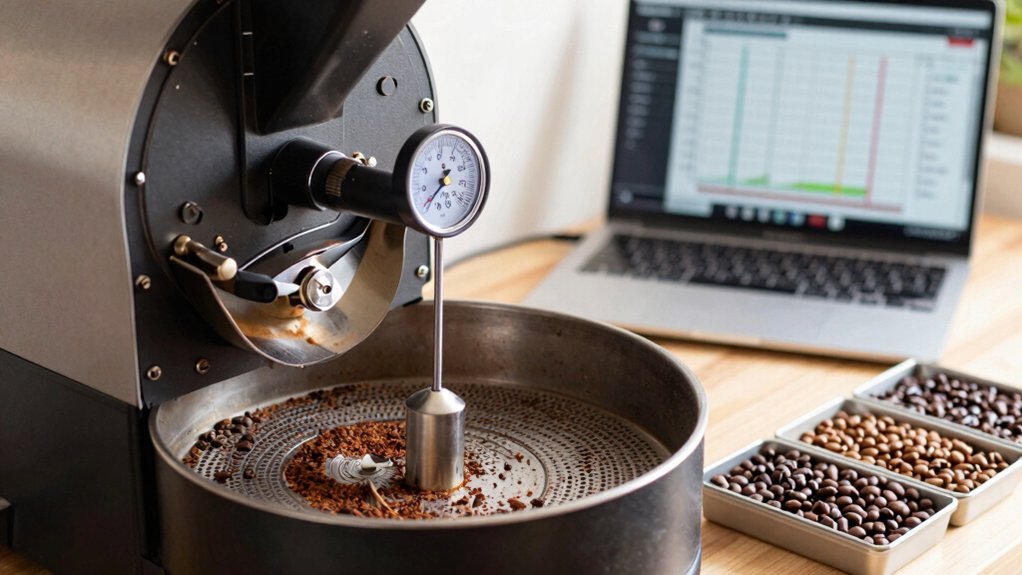
How do you set the right charge temperature for your home roaster? You start by matching the charge temperature to your batch size and bean processing method. Fresh beans need a lower charge temperature, while older beans require a higher setting to offset moisture loss. Denser beans tolerate higher temperatures, but soft, naturally processed beans should start cooler than washed beans to avoid scorching. Adjust the drum’s initial heat until energy spreads evenly across the batch, which promotes consistent roast development and prevents premature tipping. Monitor the first few minutes closely; if the beans darken too fast, lower the charge temperature. Conversely, if they stay pale, raise it slightly. Fine‑tuning these variables gives you control over flavor and aroma. Filtration and quality considerations from AeroPress guidance can influence how you perceive roast outcomes, especially when you experiment with lighter versus darker profiles.
Pick a Roast‑Temperature Curve That Maximizes Sweetness
You’ll want to start with a slightly higher roast temperature to kick off the Maillard reaction, then taper the heat to let caramelization develop fully. By extending the Maillard stage and timing your airflow to keep the beans moving, you preserve the sweet, confectionery notes without burning. Keep an eye on the rate of rise and development time so the surface stays golden while the interior sweetness peaks. Regular cupping with properly sized spoons helps verify flavor development and consistency across batches SCA standards.
Imize Roast Temperature
Ever wondered why a slower, steadier roast after first crack yields a sweeter cup? You can shape that sweetness by fine‑tuning roast temperature and development time. Start with a moderate charge temperature—enough energy to kick‑off the Maillard zone without scorching the surface. Keep heat management steady as you move through the Maillard reactions, letting sugars caramelize while acids mellow. When you reach first crack, slow the ramp and extend development time; this delays second crack and lets deeper compounds mature. Avoid rapid spikes; they cause uneven browning and mask sweetness. Log each curve so you can repeat the exact temperature profile, ramp rate, and end‑temperature that consistently delivers a sweet, balanced brew. Non-slip base helps maintain consistent placement and measurement of heat inputs during roasting sessions.
Extend Maillard Development
Since the first crack, keep the temperature just above the Maillard threshold—around 190–200 °C—and slow the ramp to 2–3 °C per minute; this steady, low‑heat curve lets sugars caramelize and brown evenly, deepening sweetness while preventing the rapid onset of second crack. You’ll then monitor development time closely, extending it until the bean’s surface reaches a rich caramel hue but before the second crack spikes. Precise heat control lets you linger in the Maillard zone, allowing complex sugars to form without burning. Log each batch’s temperature, DT, and color so you can reproduce the same sweet profile. By delaying the second crack, you maximize Maillard development and preserve the bean’s original character while boosting body and sweetness. The choice of origin and grind size from the knowledge can further influence how these Maillard reactions express in your final cup.
Adjust Airflow Timing
How can you fine‑tune airflow to keep sweetness front‑and‑center?
Start with a moderate charge temperature and a gentle heat ramp. Keep airflow low during the early development phase to promote moisture retention; this preserves the sugars that later caramelize. When you hear first crack, raise airflow modestly. The extra air draws heat away just enough to slow the roast rate of rise, letting Maillard reactions linger without scorching. This timing elongates the post‑crack development, enhancing fruit‑derived acidity that mimics sweetness while keeping the cup clean.
| Stage | Airflow Action |
|---|---|
| Charge | Low, steady |
| Maillard zone | Minimal |
| First crack | Slight increase |
| Development phase | Moderate |
| End of roast | Gradual taper |
Adjust Airflow to Balance Body, Acidity, and Clean Finish
You’ll notice that increasing airflow dries the beans faster, giving you a cleaner, brighter cup, while reducing the flow keeps more moisture, which enhances body. By tweaking the fan speed, you can strike a balance that temp too much sharp acidity without sacrificing the richness you want. Use an air‑temperature probe to time these adjustments and fine‑tune the flavor profile. The system also benefits from considering nitrogen diffusion and crema formation principles to preserve mouthfeel during the roast-to-brew transition, which aligns with the nitrogen-focused guidance in nitro coffee discussions Nitrogen diffusion.
Airflow Controls Bean Dryness
What happens when you tweak the airflow during a roast? You change how quickly moisture leaves the bean, which reshapes body, acidity, and cup texture. Raising airflow accelerates in‑drum heat transfer and moisture removal, drying the surface faster. If you push it too far, the bean becomes overly dry, muting sweetness and adding astringency. If you keep airflow low, moisture lingers, leaving a dull body and muted flavor. The sweet spot lets smoke and chaff escape while preserving enough moisture for a balanced, clean finish. Adjust in small increments and taste the difference in each cup. Airflow management helps guide consistent results across batches and roasters.
Higher Flow Increases Cleanliness
Increasing airflow not only speeds moisture loss but also sweeps volatile compounds out of the drum, giving the cup a cleaner, brighter finish. When you dial in a higher flow, you reduce surface oil on the bean, which sharpens the aroma progression and keeps the cup profile crisp. Watch the bean color shift more quickly; a lighter roast often signals that the excess oil has been carried away, enhancing cleanliness. Balance the airflow so the acidity and origin notes stay vivid without sacrificing body. Too much air can over‑dry, thinning sweetness and adding astringency, so monitor the roast and adjust in real time. With careful tuning, higher flow delivers a bright, clean finish that highlights nuanced flavors while preserving overall balance. Connectivity considerations ensure the warmer setup remains safe and efficient USB power quality for consistent performance.
Lower Flow Enhances Body
Ever wondered how dialing back the airflow can give your brew a richer, more velvety mouthfeel? When you lower the flow during roasting, you keep surface moisture and volatile compounds inside the bean, which translates into a heavier body in the cup. This is especially true for natural or honey‑processed beans that thrive on retained sweetness.
Pair the reduced airflow with a moderate roast rate to avoid under‑developing the interior; you’ll preserve mid‑range body notes without turning the coffee bitter. Keep an eye on aroma and chaff reduction as you fine‑tune the airflow, aiming for a clean finish that still feels full‑bodied.
In short, balancing flow, body, and airflow lets you shape a coffee that’s both smooth and satisfying.
Control Roast Time to Reach Desired Brightness and Depth
How long you let the beans develop after first crack determines whether the cup leans toward bright, origin‑specific notes or a richer, sweeter depth. By adjusting roast time you control the balance between brightness and body. If you stop the development early, the Maillard development stays light, preserving acidity and crisp, floral tones. Extending the development period deepens caramelization, softening brightness and amplifying sweetness, spice, and nutty richness.
A slower roast tempo lets the surface brown gradually, giving the Maillard reaction more time to build complex sugars without burning.
Conversely, a faster rise pushes the beans toward second crack, where chocolatey depth overtakes the original brightness. Fine‑tune each stage to hit your target flavor profile.
Choose Bean Varietal and Processing Method for Your Flavor Goal
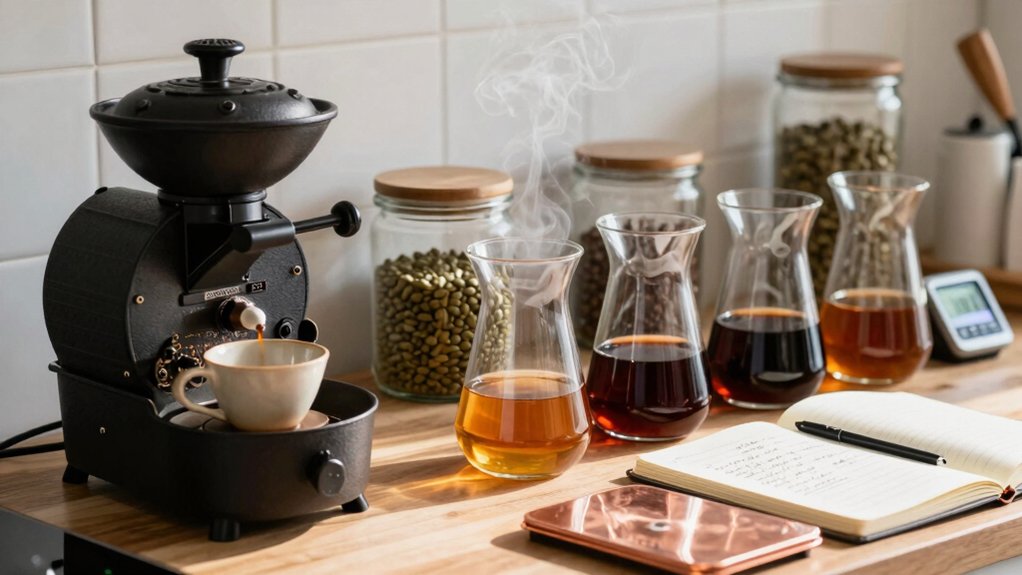
Which bean you pick and how it’s processed set the flavor foundation before any roast can shape it. Choose green coffee beans that match your flavor goals: Arabica for bright fruit, Robusta for chocolate‑nutty depth, Excelsa or Liberica for dark fruit or floral‑woody notes. The processing method—washed, natural, or honey—amplifies those origin notes. Washed beans stay crisp and clean, natural beans add intense fruit sweetness, and honey‑processed beans deliver lingering fruit with milder intensity. Align the varietal and processing with the profile you want to preserve during roast development; you can’t create absent notes later. If you blend, keep each component’s intrinsic flavors distinct so the final cup reflects the intended character.
Use First‑Crack Timing to Lock in Fruit‑Forward or Chocolate‑Rich Tones
When you time the first crack precisely, you control whether the cup leans toward bright fruit or deep chocolate. An earlier crack with minimal development time preserves a fruit‑forward roast profile, keeping citrus and floral notes vivid. Extending development time after the crack lets caramelization build, steering the roast toward a chocolate‑rich, nutty character. Manage heat so the beans stay energetic but don’t scorch; this balance locks in the desired emphasis.
| Timing | Result |
|---|---|
| Early crack, short development | Fruit‑forward, high acidity |
| Mid‑crack, moderate development | Balanced, mixed notes |
| Late crack, long development | Chocolate‑rich, full body |
Extend Development After Second Crack for a Smoky or Caramel Finish
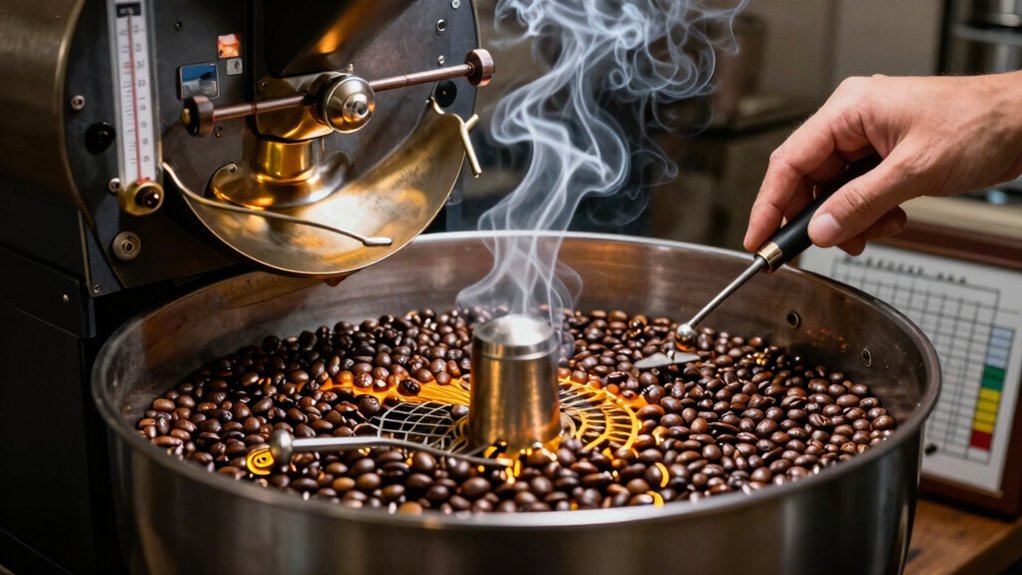
After locking in fruit or chocolate tones with first‑crack timing, you can push the roast further by extending development after second crack to craft a smoky or caramel finish. Keep the heat steady and slow the roast progression once the second crack starts. Lower airflow briefly to preserve volatile sugars, then let the beans linger for a controlled development time. This encourages deeper caramelization, yielding rich caramel flavors while the smoke‑kissed notes emerge. Watch the clock: too short a period leaves roasty edges, too long burns the beans into ash. Log temperature and time for each batch, cup frequently, and adjust until you consistently hit the desired smoky finish or caramel depth.
Frequently Asked Questions
What Is the 15-15-15 Coffee Rule?
You follow the 15‑15‑15 rule by aiming for roughly fifteen seconds each in drying, Maillard development, and first‑crack phases, balancing heat and time so flavors develop evenly without over‑ or under‑roasting.
What Is the 80 20 Rule for Coffee?
You apply the 80/20 rule by recognizing that roughly 80% of flavor results stem from 20% of decisions—mainly charge temperature, development time, and roast curve—so you prioritize tweaking those high‑impact variables first.
What Is the #1 Coffee in the World?
You’ll find no single, universally‑accepted #1 coffee; experts constantly debate top picks like Jamaica Blue Mountain, Ethiopian Yirgacheffe, or Kopi Luwak, each praised for distinct, exceptional flavor profiles.
Which Coffee Is Best for GERD?
You’ll feel best with low‑acidity, dark‑roasted beans—think Colombian or Central American varieties, preferably low‑caffeine or naturally processed. Brew with moderate water temperature and short contact time to keep GERD symptoms at bay.
In Summary
By mastering temperature, airflow, timing, and bean selection, you’ll shape each roast to hit exactly the flavor you crave. Tweak the charge heat for a solid start, follow a curve that brings out sweetness, and adjust airflow to balance body and acidity. Control roast time for brightness, pick the right varietal and process, and use first‑crack timing to lock in fruit or chocolate notes. Finally, extend development after second crack for that smoky or caramel finish you love.


