
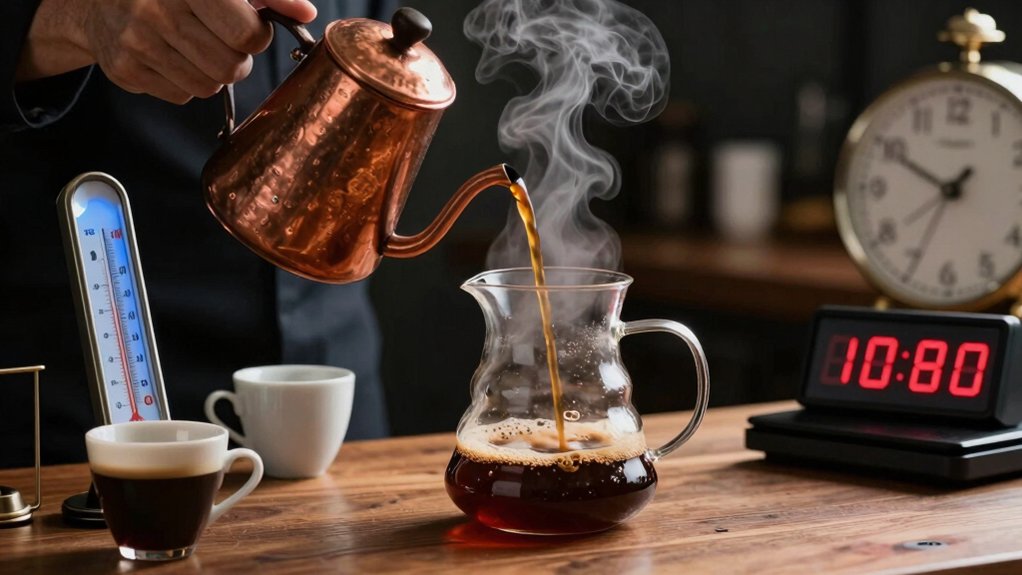
You shape coffee flavor by setting the roast curve: watch bean and exhaust temps, keep the rate of rise gentle and slightly descending, and hit a target bean temperature around 418‑425 °F. The Maillard reaction starts at 350 °F and intensifies as you rise, shifting notes from sweet and balanced to smoky and caramelized. Control development time after first crack in 10‑15‑second steps; shorter times preserve bright acidity, while longer times add sweetness, body, and chocolate‑caramel depth. Adjust end temperature and development together, then taste and tweak—more details await if you keep going.
Start Here: Set the Right Roast Curve for Your Bean
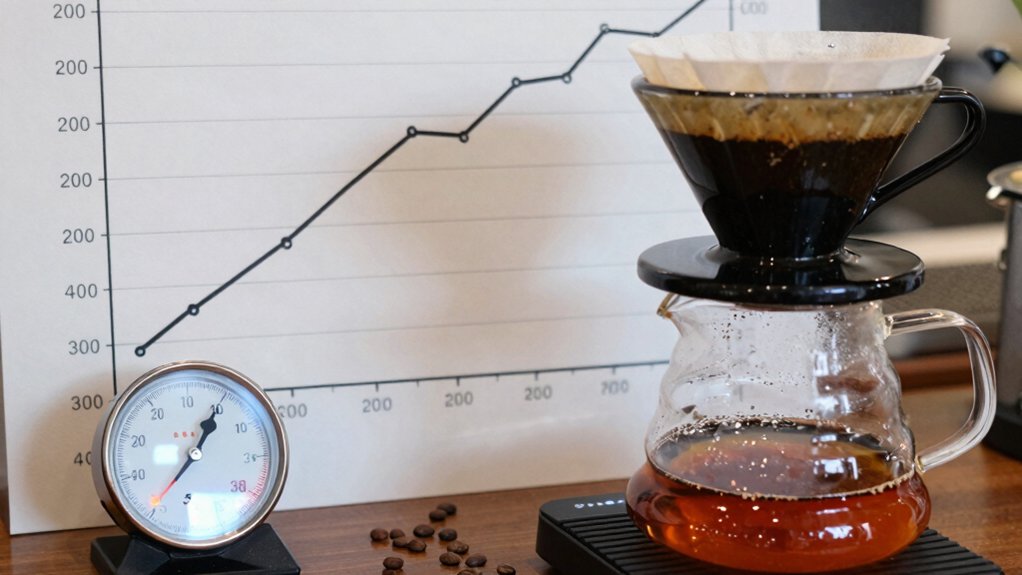
How do you set a roast curve that consistently delivers the flavor you want? You begin by plotting bean temperature, exhaust temperature, and rate of rise on a single graph. Choose a target bean temperature—say 418‑425 °F—and watch the rate of rise. Keep the rate gentle and slightly descending; this steadies flavor development and yields balanced sweetness. As you approach first crack, note the time elapsed and then calculate the Development Time Ratio. Aim for a DTR of 16‑21 % for filter or 20‑26 % for espresso, ensuring enough post‑crack time for nuanced flavors. Adjust the curve so the bean temperature aligns with the desired DTR, avoiding spikes that cause harshness or flatness. This disciplined approach locks in consistent, satisfying cups. Extraction/DS Content
Coffee Roasting: How Temperature Drives the Maillard Reaction
After setting a reliable roast curve, the next step is to understand how temperature steers the Maillard reaction. You’ll see the reaction kick in between 350 °F and 500 °F, where each degree shifts the balance of flavor compounds and aromas. Higher temperature pushes the Maillard reaction toward smoky, caramelized notes and speeds up browning, while medium temperature yields a sweeter, more balanced profile.
Lower temperature preserves acidity and fruit‑forward aromas, but can expose defects if moisture content stays too high. Development time interacts with the end temperature: a longer hold smooths brightness and adds body, letting Maillard‑generated flavors mature.
Adjusting temperature and development time lets you hit the desired roast level and craft the exact aroma and flavor you want.
Use Roast Time on the Sonofresco to Master First Crack to Development
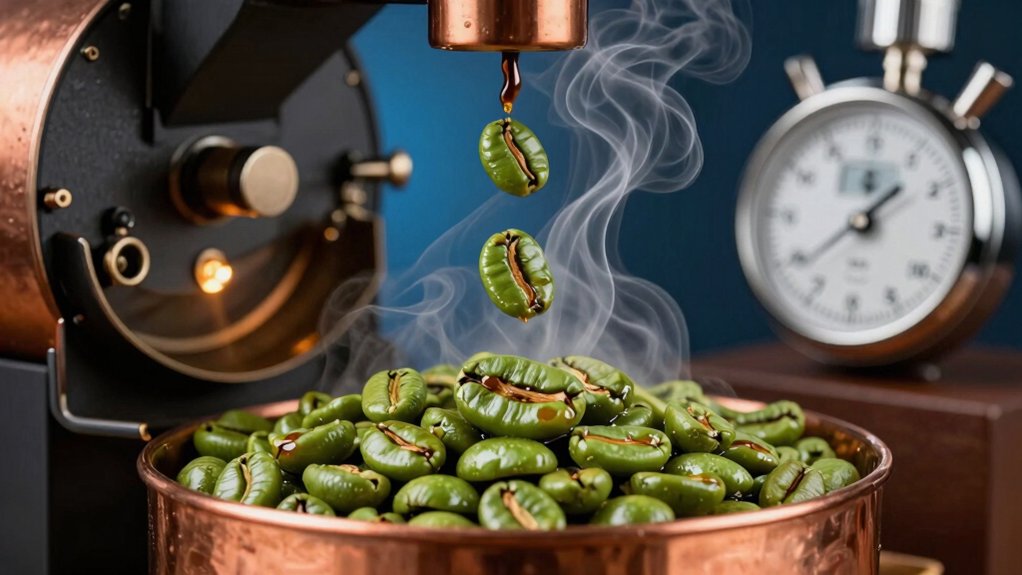
Ever wondered how a few seconds after first crack can reshape your coffee’s character? With the Sonofresco, you control roast time from first crack to end temperature in tight 10‑15‑second steps, letting you fine‑tune flavor development. Shorten development time to lock in brightness and origin‑specific acidity; lengthen it to boost sweetness, body, and chocolate‑caramel notes. Keep end temperature steady while you experiment, then log each roast’s development time alongside that temperature. Comparing those logs reveals how tiny time shifts swing the balance between brightness and sweetness, helping you dial in the perfect cup every batch. Track variations using an energy‑efficient approach noted in the programmable profiles to optimize your roasting workflow 24‑hour programmability.
Find the Sweet Spot: Bright vs. Bold Cups by Balancing End Temp & Development Time
The control you gained over first‑crack timing on the Sonofresco now lets you fine‑tune the balance between brightness and boldness by adjusting end temperature and development time together. In roasting, a lower end temperature preserves origin character and bright acidity, while a higher setting drives darker, fuller‑bodied notes. If you notice brightness but lack sweetness, extend development time by about 15 seconds before nudging the end temperature up. This extra seconds lets Maillard reactions deepen, creating caramel sweetness without sacrificing acidity. Monitoring the grinder settings and Bean Adapt Technology recommendations can help you align grind size and dose with your target flavor profile to further enhance consistency conical burr grinders.
Evaluate Your Roast: Smell, Sip, and Adjust for Consistent Flavor
Smell the roast, sip the cup, and note every nuance to fine‑tune consistency.
You’ll catch how end temperature and roast development time steer flavor development.
A higher end temp amplifies Maillard reactions, adding body and bitterness, while a longer development time smooths acidity and deepens sweetness and body.
Compare batches by logging roasts—record both temperature and seconds of development.
Then adjust in 10‑15‑second increments, keeping end temperature constant, to see how brightness shifts and acidity preservation holds.
This systematic tasting loop lets you replicate the ideal balance of acidity, sweetness, and body batch time.
- Track end temperature and roast development time for each batch.
- Note Maillard reaction intensity and its impact on flavor development.
- Use logging roasts to fine‑tune sweetness and body while preserving acidity.
Frequently Asked Questions
How Does Temperature Affect Coffee Flavour?
You’ll notice hotter water extracts bitter, smoky compounds faster, while cooler water highlights bright acidity and fruitiness. Adjusting temperature lets you control sweetness, body, and the balance of aromatic notes in each cup.
What Is the 15-15-15 Rule for Coffee?
You follow the 15‑15‑15 rule by allocating roughly 15 % of total roast time to development, 15 % during the first‑crack window, and the remaining 70 % before reaching end temperature, shaping sweetness, acidity, and body.
What Coffee Is Good for Gastritis?
You should choose a low‑acid, medium‑dark roast from Brazil or Peru, preferably decaf or low‑caffeine, and brew it with a gentle pour‑over at moderate temperature to keep your stomach calm.
What Is the 80 20 Rule for Coffee?
You follow the 80/20 rule by mastering the essential 20% of roasting variables—end temperature, development time, and rate of rise—because they generate roughly 80% of the flavor you’ll taste.
In Summary
Now’ve learned that mastering coffee flavor hinges on two levers: temperature and time. By setting the right roast curve, you control the Maillard reaction and guide the bean through first crack to development. Balancing end temperature with development time lets you dial in bright or bold profiles. Keep tasting, adjusting, and noting the changes—your consistent, delicious cup is just a few degrees and seconds away.


