
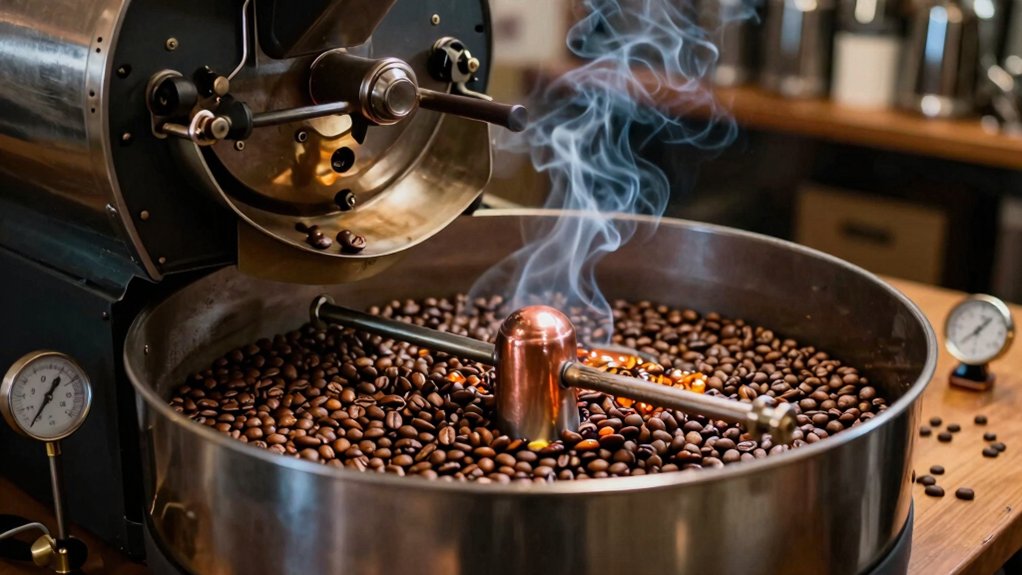
You’ll start with unroasted green beans, which are 8‑12% moisture and a uniform green hue that sets the baseline. At about 320 °F (160 °C) the drying phase evaporates moisture, turning beans pale yellow and releasing a hay‑like aroma. Around 385 °F (196 °C) the first crack begins, marking the cinnamon stage with grassy notes. At 400 °F (205 °C) you hit city roast—bright, acidic, and oil‑free. Pushing to 405‑410 °F (207‑210 °C) gives full city, adding caramel and light oil. Early second crack at 425‑435 °F (218‑224 °C) creates full city+ with richer chocolate and balanced body. Finally, 430‑455 °F (221‑235 °C) yields Vienna to French roasts, deep black color, abundant oil, and dominant roast flavors—continue for deeper insight.
Unroasted Green Coffee – Baseline for All Roast Levels
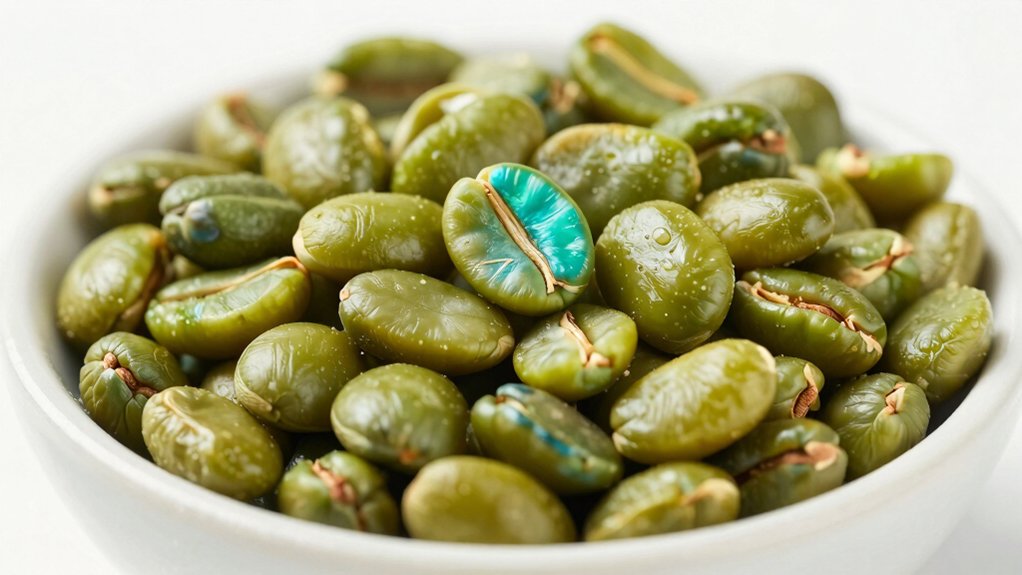
Ever wondered why every roast level looks so different? You start with green beans, the unroasted baseline that sets your color references. At room temperature, these beans hold about 8–12% moisture, a critical metric before any heat hits them. Their visual cues tell you everything: a uniform green hue, no oil sheen, and virtually no aromas. Origin characteristics color you the palette—Brazilian and South American beans stay light green, Indonesian ones turn darker, Ethiopian varieties show brownish tones, and water‑processed decaf appears brown with a green hint. By noting these differences, you establish a reliable starting point for tracking color shifts and flavor development throughout the roast. Moisture content is a key factor that influences how beans react to heat and how flavors develop during roasting.
Drying Phase – First Color Shift & Early Aroma (≈320 °F/160 °C)
What happens when the beans hit roughly 320 °F (160 °C)? You enter the Drying Phase, where pre‑roast moisture evaporates and the bean surface moisture drops dramatically. The green beans begin their initial color change, turning a pale yellow as the drying temperature lifts internal heat. At this point, the Maillard Reaction is still muted, so you hear no first crack yet. Instead, a hay‑like aroma—sweet, grassy, almost herbaceous—fills the roaster, signaling that the beans are shedding excess water rather than developing deep flavor. Maintaining a steady drying temperature ensures even heat transfer, prevents premature browning, and prepares the beans for the next stage of caramelization. 3-ply napkins
Cinnamon Roast – Beginning of First Crack (≈385 °F/196 °C)
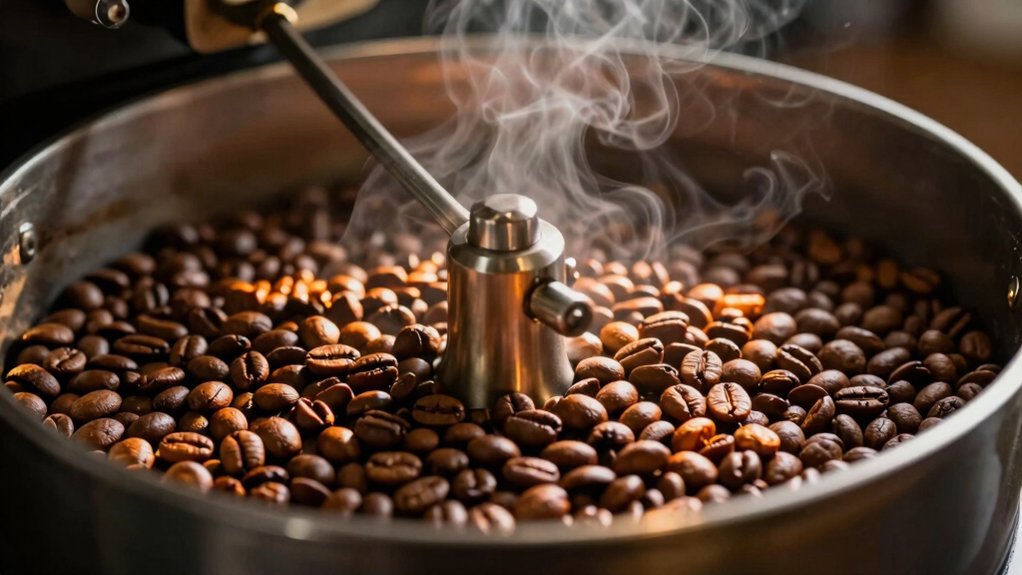
As the temperature climbs to about 385 °F (196 °C), the beans hit the point where the first crack begins, marking the Cinnamon Roast stage. At this moment, you’re still in a light roast window, and the beans retain grassy flavors and bright acidity. The drying phase has just ended, and the Maillard phase is winding down, so the sugars have barely caramelized. You’ll notice the beans start to pop, signaling that the first crack has started. This stage preserves most origin characteristics, letting the coffee’s terroir shine through. Professional cuppers often stop here to evaluate raw potential, but the flavor profile remains underdeveloped for everyday brewing. Additionally, gooseneck kettle designs emphasize precise pouring to maintain control during this early development phase gooseneck spout and temperature control features help maintain consistent extraction.
City Roast – Light, Origin‑Driven Coffee (≈400 °F/205 °C)
Curious about the sweet spot where a coffee’s native character shines brightest? At City Roast, a light roast that lands right at the end of the first crack (≈400 °F/205 °C), you capture the origin‑driven profile before roast‑driven flavors dominate. The beans stay a dry, wax‑free surface, showing a light brown hue and a subtle woody aroma. Because oil hasn’t emerged, the cup highlights brightness, fruit, and terroir notes. This stage also aligns with common guidance that lighter roasts preserve origin flavors and showcase higher acidity origin-focused notes.
Full City Roast – Light‑Medium Development (405‑410 °F/207‑210 °C)
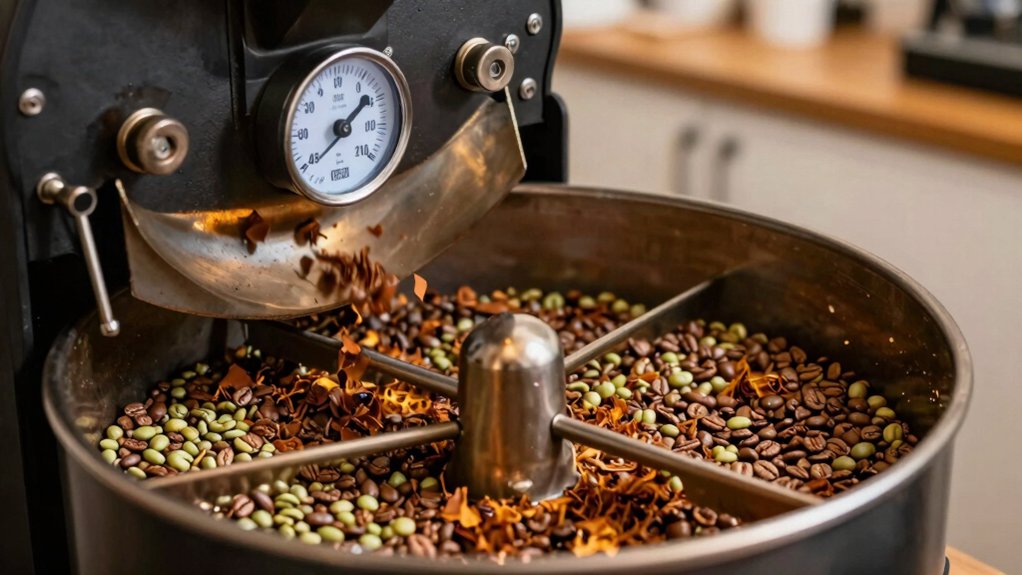
Ever wondered where the sweet spot lies between a bright city roast and a deeper, richer profile? At 405‑410 °F (207‑210 °C) you hit the Full City Roast stage, a light‑medium development just after first crack. Your heat control now fine‑tunes the temperature, letting the roast level hover at the edge of oil formation. You’ll notice origin flavors still shining through while subtle roast notes begin to emerge, and the aroma compounds shift toward caramel and toasted nuts. This balance gives a fuller body without overwhelming acidity, preserving the bean’s natural brightness. Keep an eye on the crack timing and adjust the heat curve; a precise temperature hold will lock in the desired sweetness and keep the origin character audible. First crack timing
Full City + Roast – Early Second‑Crack Development (425‑435 °F/218‑224 °C)
You’ll notice the early second‑crack kicking in as the beans reach 425‑435 °F, where a thin oil sheen appears and the surface texture deepens. At this point the roast balances a fuller body and sweet caramel notes while still letting bright origin flavors shine through. The temperature is just right to extend Maillard reactions without tipping into heavy, smoky bitterness. USB-C charging ensures the scale or related gear used in roaster setups remains powered for longer sessions.
Early 2nd‑Crack Development
How does the bean shift from a balanced Full City+ into the early second‑crack? As the first crack settles, you watch the bean temperature climb toward 425‑435 °F (218‑224 °C).
The development stage sparks the second crack, and you notice a faint oil sheen spreading across the surface. At this early second crack, the roast level deepens without drowning the origin character; you retain brightness and a hint of sweetness while the internal expansion accelerates.
Control the timing tightly—just enough to let the surface oils appear, but not so long that bitterness overtakes the profile. By managing bean temperature and development length, you preserve nuanced flavors and set the stage for the next roast phase. ATC
Balanced Body and Sweetness
What happens when the beans hit 425‑435 °F (218‑224 °C) in the early second‑crack? You enter the Full City + zone, where development pushes beyond first crack but stops before aggressive oil release. The surface shows a light to moderate oil sheen and a richer, more opaque finish than a light roast. Sweetness rises as caramel notes mingle with emerging chocolate notes, while the body thickens without drowning origin aromatics. Aroma compounds shift from bright acidity to a balanced mix of roasted depth and subtle fruit. This stage preserves enough origin character to keep the cup lively, yet delivers a fuller mouthfeel and a lingering sweetness that satisfies both delicate and robust palates.
Vienna to French Roasts – Mid‑to‑Late Second‑Crack, Oil‑Rich Profiles (430‑455 °F/221‑235 °C)
Ever wondered why the beans turn glossy and the flavor shifts to deep, bittersweet notes as you cross from Vienna into French roast? In the mid‑second crack you’ll see the oil sheen intensify, marking the move from Vienna Roast (≈430‑440 °F) to French Roast (≈440‑455 °F). This window of roast development drives acidity reduction and pushes roast flavors to dominate, while the black‑black color signals the end of the second crack. As the oil pools on the surface, the cup gains a fuller body and a bittersweet edge that defines oil‑rich profiles. Watch the color and sheen closely; they’re the most reliable cues for stopping the roast and achieving that signature, deep, roast‑forward taste.
Frequently Asked Questions
Can I Roast Coffee in a Home Oven Without a Temperature Probe?
Yes, you can roast coffee in a home oven without a temperature probe, but you’ll need to rely on visual cues, smell, and timing, watching beans closely to avoid under‑ or over‑roasting.
How Does Altitude Affect Roast Development and Flavor?
Altitude thins air, so you’ll lose heat faster, slowing the roast. You’ll need higher temperatures or longer times, which can over‑extract sugars, yielding brighter acidity and thinner body in the final cup.
What’s the Ideal Bean Storage Method After Roasting?
Store your roasted beans in an airtight container, keep them cool, and avoid light. Use a one‑way valve to release CO₂, and consume within two weeks for peak flavor.
Do Different Bean Origins Require Distinct Roast Profiles?
Yes, you’ll need different roast profiles for each origin. Adjust temperature, time, and development to match each bean’s inherent acidity, sweetness, and body, letting its unique flavors shine.
Can I Achieve a Consistent Roast Using Only Visual Cues?
Yes, you can hit consistency by watching color, cracking sounds, and bean expansion. Track first crack timing, aim for the same hue, and adjust heat quickly. Trust those visual cues, and repeat the process.
In Summary
Now that you’ve seen each stage, you can pick the roast that matches your taste—whether you crave the bright, origin‑focused notes of a City roast or the deep, oil‑rich flavors of a French roast. Understanding the temperature milestones lets you control aroma, body, and acidity, so you’ll consistently brew coffee that hits the exact profile you love. Enjoy experimenting and savor the perfect cup every time.


