
You’ll find three fundamental differences reshape your coffee experience. First, your brewing method matters—medium roasts shine with precision tools, while dark roasts tolerate less exactness. Second, origin flavors behave differently: medium roasts reveal bright, nuanced notes like berries and florals, while dark roasts emphasize smoky, toasty character instead. Third, acidity and body shift dramatically—medium roasts offer balanced brightness with medium body, whereas dark roasts deliver lower acidity and fuller mouthfeel. Each choice fundamentally changes what lands in your cup.
Which Roast Fits Your Brewing Method?
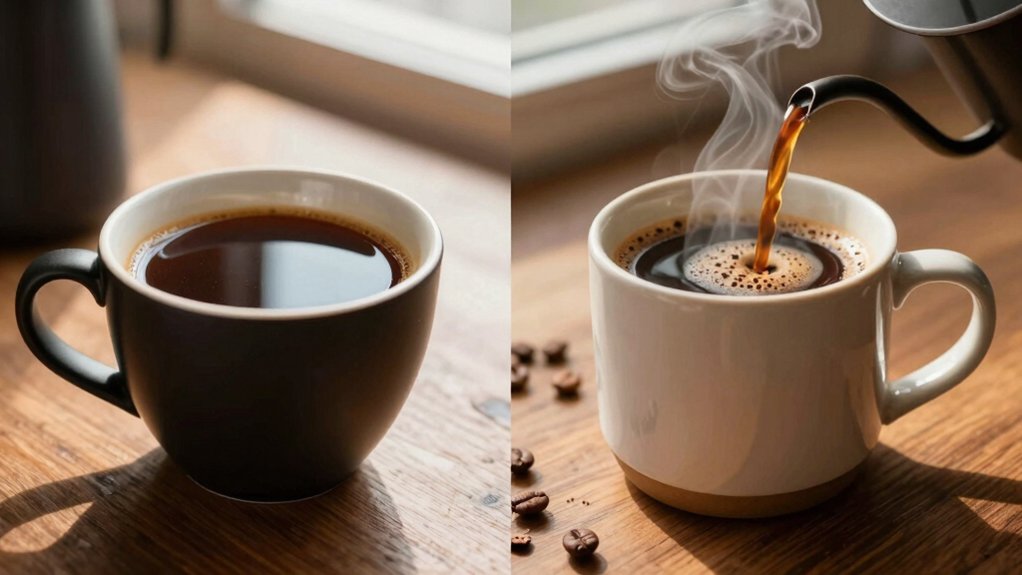
Why does your brewing method matter when choosing between dark and medium roast? Your brewing approach directly shapes which roast level’ll deliver the best results. Adding a compact design and precise measurements can help you dial in flavor more consistently with any method, especially when using scales like the 0.1 g precision models flow rate measurement to optimize extraction.
How Origin Flavors Shift Between Roasts?
Ever wonder why an Ethiopian medium roast tastes bright and citrusy while its dark roast counterpart tastes smoky and subdued? The answer lies in how roasting profiles fundamentally reshape what you’re tasting. Medium roasts preserve origin cues—think Ethiopian citrus or Colombian sweetness—because gentler heat maintains the bean’s inherent acids and nuanced characteristics. You’ll detect berry, floral, and nutty notes that reveal regional identity. Dark roasts suppress these origin flavors entirely. Instead, roast flavors dominate: smoky, toasty, cocoa/chocolate notes, and caramel/toasted depth take center stage. Lower acidity in dark roasts makes origin nuances nearly impossible to discern. This shift aligns with the broader roasting profile differences highlighted in brewing tools that help measure and control extraction, such as precision scales and timers measurement range. This flavor shift represents a fundamental tradeoff. Choose medium roasts when you want origin-driven complexity. Select dark roasts when you prefer bold, roasting-derived character over regional distinction.
Acidity and Body: What Changes With the Roast
Beyond flavor profiles, the roast level dramatically alters how coffee feels in your mouth and tastes on your palate. When you choose medium roast, you’re experiencing noticeable but balanced acidity that contributes brightness alongside its medium body. This acidity sharpens your perception of origin-driven characteristics, letting the bean’s terroir shine through. In addition, roast level also influences aroma release and tongue-coating sensation through the brewing process coffee scoop measurements and how you measure your grounds for consistency.
Frequently Asked Questions
Does Dark Roast Coffee Contain More or Less Caffeine Than Medium Roast?
You’ll find that dark roast contains slightly less caffeine than medium roast. During the roasting process, you’re exposing beans to higher temperatures longer, which breaks down more caffeine molecules. You’re losing caffeine as the roast darkens.
Why Does Dark Roast Coffee Appear Oily Compared to Medium Roast Beans?
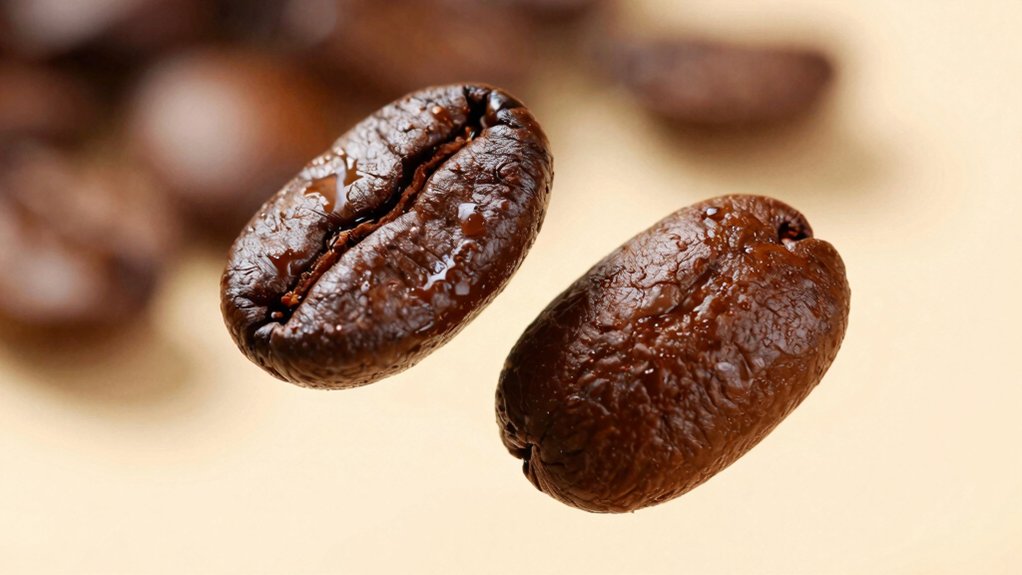
You’ll notice dark roast beans appear oily because longer roasting times bring more oils to the surface. Medium roast beans don’t roast long enough for oils to emerge visibly, so they look drier.
How Do Storage and Shelf Life Differ Between Dark and Medium Roasts?
You’ll find that dark roast beans deteriorate faster due to their oils becoming rancid quicker, while medium roast maintains freshness longer. Store both in airtight containers away from light and heat for optimal shelf life.
What Causes the Distinct Smoky or Charred Flavors in Dark Roast Coffee?
You’ll notice dark roast’s smoky, charred flavors develop from prolonged heat exposure. Extended roasting caramelizes sugars thoroughly and breaks down acids, creating bold, burnt-tasting compounds that aren’t present in lighter roasts.
Are Dark Roast Beans More Expensive to Produce Than Medium Roast Beans?
You’ll find dark roast isn’t substantially more expensive to produce than medium roast. Both require identical green beans and processing. The roasting time differs slightly, but energy costs remain comparable, so pricing reflects market demand more than production expenses.
In Summary
You’ll find that your brewing method ultimately dictates which roast works best for you. If you’re chasing bright, complex flavors, you’ll want medium roast’s pronounced origin characteristics. But when you’re seeking a fuller body and smoother cup, dark roast delivers. Consider how you’re brewing—pour-overs highlight medium roast’s acidity, while French presses complement dark roast’s richness. You can’t go wrong; it’s about matching the roast to your preferences.


