
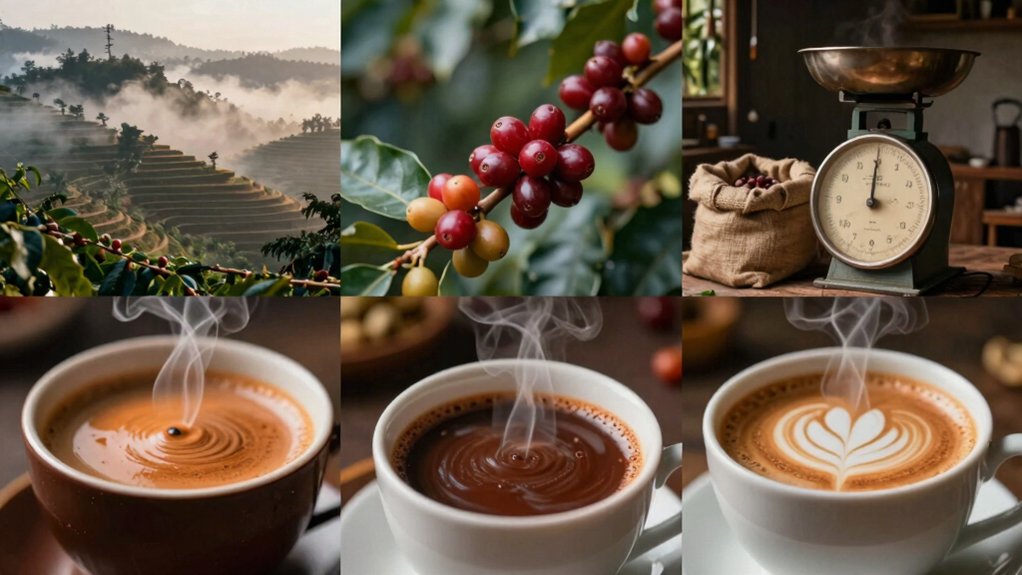
You’ll love Vietnam’s five top single‑origin terroirs: the high‑altitude Cau Dat Arabica, where slow growth at 5,200 ft yields tropical fruit aroma and low acidity; the Central Highlands’ Dalat volcanic soils that give Pacamara bright citrus and chocolate depth; Dalat’s micro‑ecosystem of basalt, persimmon and macadamia shade that creates orange, tamarind and milk‑chocolate notes; Buon Ma Thuot’s limestone‑rich Robusta, which offers full‑bodied tropical sweetness with a floral edge; and the precise medium‑roast brewing methods that let these flavors shine. Keep going to discover how each terroir shapes your cup.
Altitude’s Influence on Vietnamese Single‑Origin Coffee
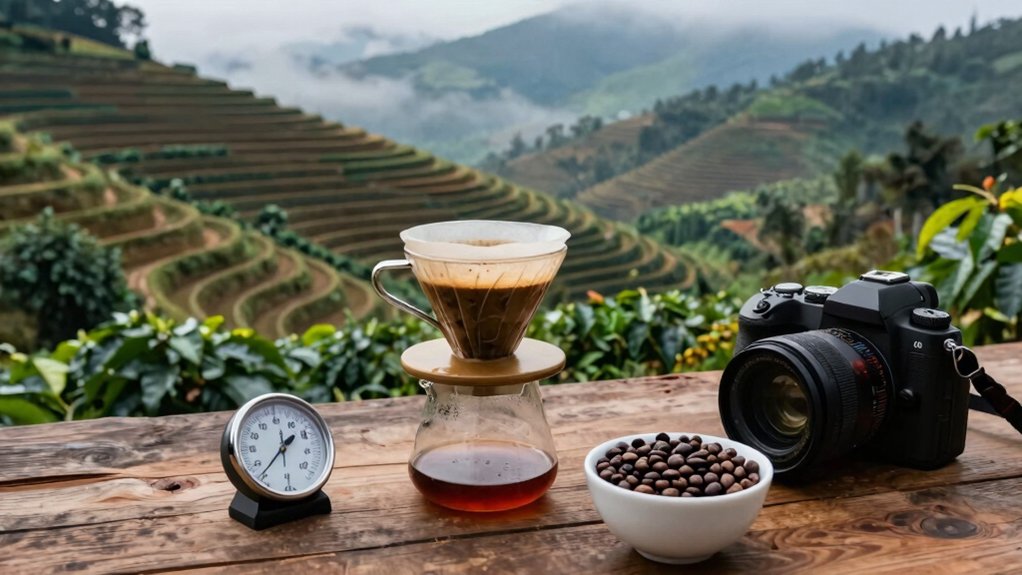
How does altitude shape Vietnam’s single-origin coffee? You’ll find that the high altitude of the Vietnamese highlands, especially around 5,200 feet, forces Cau Dat Arabica beans to develop slower, preserving sugars and enhancing flavor. The cooler climate and volcanic soil create a unique terroir that yields a tropical fruit aroma and a smooth, full-bodied cup. You’ll notice lower acidity, because the beans mature at a measured pace, and the hand-picked harvest at peak ripeness locks in freshness. This combination of altitude and terroir gives the coffee a premium Vietnamese coffee status, distinguishing it from lower-elevation blends. When you sip, you experience a balanced, less bitter profile that reflects the high-altitude, high-quality origins of the region. Stability features
Vietnamese Single‑Origin Coffee: Soil Types Shaping Central Highlands Flavor
What makes the Central Highlands’ coffee so distinct? You’ll find that Dalat volcanic soil and basalt‑rich soils at altitude 1,470–1,500 meters forge a Central Highlands terroir that sings. Arabica Pacamara thrives here, its large beans soaking up mineral‑rich volcanic soils and delivering bright citrus alongside chocolatey depth.
Single‑origin Vietnam beans from the region carry tropical fruit notes and a smooth, full‑bodied mouthfeel, while Cau Dat origin Arabica offers natural sweetness and light fruity aromas.
The unique mix of altitude, volcanic minerals, and careful farm‑to‑roaster traceability ensures each cup reflects its soil’s character, giving you a transparent, terroir‑driven experience that stands apart from other Vietnamese coffees. Terroir detail
Vietnamese Single‑Origin Coffee: Dalat’s Signature Terroirs From Pacamara to Typica
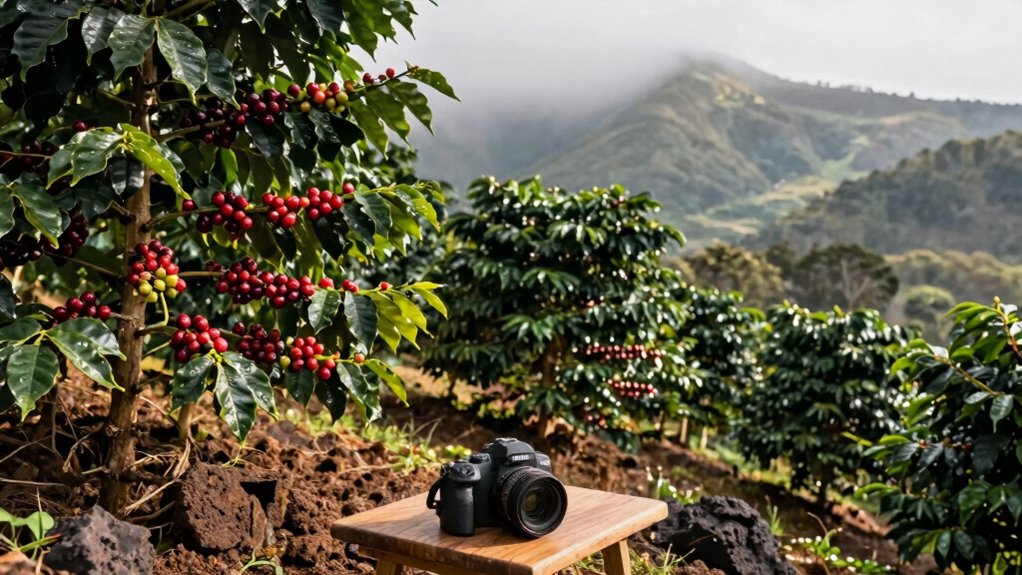
Ever wondered why Dalat’s coffee feels like a miniature rainforest in a cup? You’ll taste the highland terroir the Pac Pac’s basalt soils, where fully ripe cherries hit 16 % Brix, delivering orange, tamarind, milk chocolate, and molasses notes. The farm‑to‑roast philosophy lets you follow each Arabica bean—from Typica’s elegant richness to Mundo Novo’s sweet apricot‑apple balance—through a micro‑ecosystem of persimmon, banana, and macadamia shade. This single origin specialty coffee thrives on organic, semi‑wild cultivation, preserving insect diversity and nuanced flavor layers. Sourcing transparency supports connections to farmer communities and sustainable practices across origin regions.
Flavor Characteristics of Buon Ma Thuot’s Robusta Single‑Origin Coffee
Ever notice the way Buon Ma Thuot’s Robusta hits your palate with a full‑bodied, tropical‑fruit sweetness that feels almost floral? You’ll sense bright tropical fruit notes woven through a robust, earthy base, a gift of the highland terroir and volcanic soil. Dark roasting deepens the profile, letting chocolate and caramel aromas rise, while the inherent sweetness stays pronounced and the acidity stays low. The single‑origin nature shines in every sip, delivering a consistent, bold flavor that still feels nuanced. Because the beans grow on limestone‑rich slopes, you get a clean, mineral edge that balances the rich, burnt‑sugar undertones. In short, Buon Ma Thuot’s Robusta offers a vivid, balanced cup that’s both powerful and pleasantly sweet. Additionally, the 8‑in‑1 and 4‑in‑1 frothers highlighted in contemporary coffee gear can help you replicate this texture-rich microfoam at home for a café‑quality finish foam texture across a range of beverages.
Choosing and Brewing the Ideal Vietnamese Single‑Origin Coffee
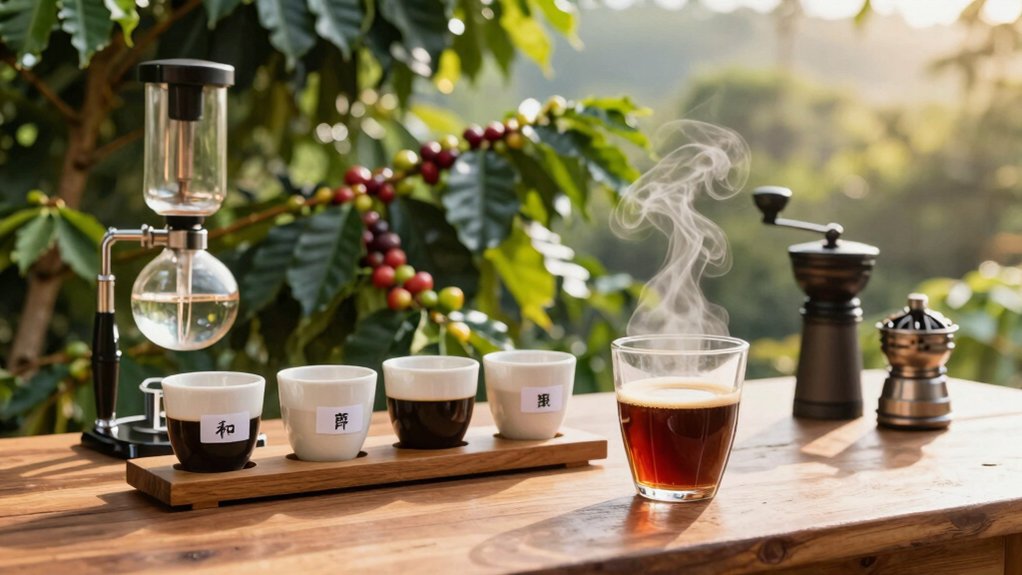
How do you pick the perfect Vietnamese single‑origin coffee and brew it to showcase its unique terroir? Start by seeking origin transparency; look for Cau Dat Arabica labeled as single‑origin, with details on its volcanic soil, microclimate, and altitude around 5,200 ft. The terroir‑driven fruit notes and floral aroma shine when you choose a medium roast that preserves acidity without excessive bitterness. For brewing, a precise pour‑over or controlled drip highlights clarity, letting the tropical fruit notes dominate.
- Verify farm‑to‑cup traceability and sustainable shade‑grown practices.
- Grind to a medium‑fine consistency for optimal extraction.
- Use water at 195‑205 °F and a 1:15 coffee‑to‑water ratio for a balanced cup.
Frequently Asked Questions
Which Vietnamese Coffee Brand Is the Best?
You’ll find Nguyen Coffee Supply tops the list; their meticulous sourcing, consistent flavor, and transparent farm‑to‑cup story make them the most reliable Vietnamese coffee brand for single‑origin lovers.
What Is the 15-15-15 Coffee Rule?
You evaluate aroma, acidity, and sweetness, each worth fifteen points. The rule guides you to score each attribute, then compare totals—aiming for balanced scores around forty‑two to forty‑five for a harmonious terroir.
What Coffee Is Best for GERD?
You should choose a medium‑roasted, Arabica‑only Vietnamese single‑origin like Cau Dat, because its low acidity and smooth, fruity profile reduce stomach irritation, while avoiding robusta‑heavy blends and high‑caffeine roasts.
What Is the Enemy of Coffee Beans?
You’ll fight mold, pests, leaf rust, and climate stress; plus improper fermentation, over‑drying, and poor processing hygiene—all of which introduce off‑flavors, degrade quality, and mask terroir.
In Summary
Now’ve seen how altitude, soil, and regional quirks shape Vietnam’s single‑origin coffees—from the bright, floral notes of Dalat’s Pacamara to the deep, earthy robustness of Buon Ma Thuot’s beans. By picking the right terroir and brewing it with care, you’ll reveal each cup’s unique story and flavor. So explore, taste, and let Vietnam’s diverse coffee landscapes elevate your brew.


