

Start with a 1:16 coffee‑to‑water ratio, weighing 50 g beans for two 12‑ounce cups, and keep the water at 195‑205 °F (90‑96 °C). Use a medium‑fine grind and a gooseneck kettle to pour in steady, circular bursts, blooming the grounds with twice the water weight. Measure everything by weight, monitor brew time (2½‑3 minutes), and adjust grind or dose only slightly before returning to the baseline. Keep your temperature and timing tight, and you’ll see consistent, high‑quality extractions—there’s more to explore if you keep going.
Coffee Brewing Guide: Master the 1:16 Coffee‑to‑Water Ratio
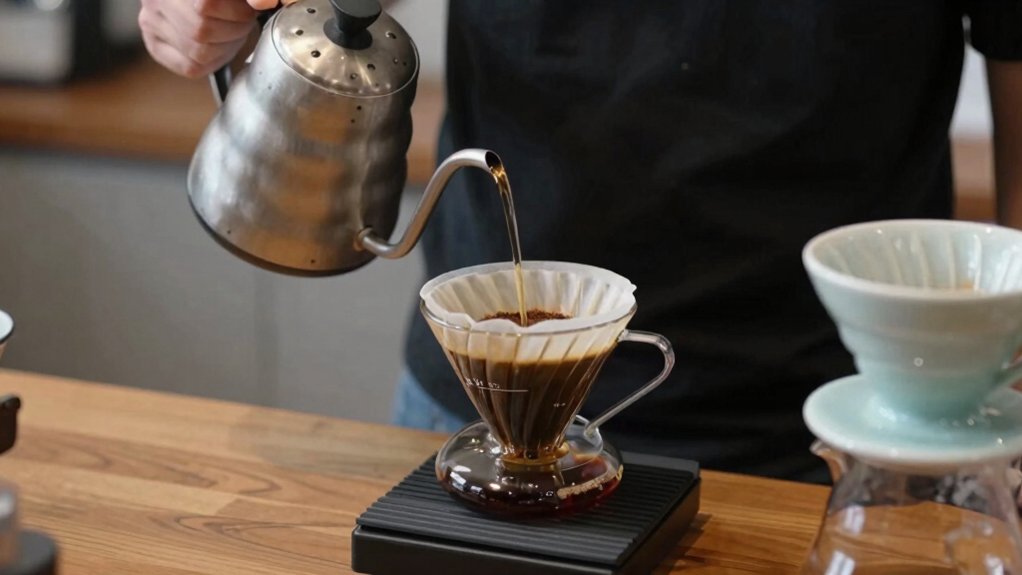
When you start with a 1:16 coffee‑to‑water ratio, you’re setting a reliable baseline that balances strength and clarity. Grab a precision scale, weigh 50 g of beans for two 12‑ounce cups, and set your water temperature to 195‑205 °F. Choose a medium grind size for pour‑over or drip brewing; it yields a smooth extraction without over‑extraction. Pour water in a steady, circular motion, keeping brew time around 2½‑3 minutes. Adjust grind or dose if you need a slightly stronger 1:17 or lighter 1:15 cup, but always return to the 1:16 ratio for consistency. By measuring, timing, and monitoring temperature, you achieve repeatable extraction, ensuring each batch matches your intended flavor profile. For ongoing reliability, consider routine maintenance like descaler tablets to keep your equipment performing at peak quality descaler tablets.
Coffee Brewing Guide: Control Temperature & Brew Time for Consistent Extraction
A steady 195‑205 °F (90‑96 °C) brew temperature is the backbone of consistent extraction, so keep the water at that range from the first pour to the final drip. Use a thermometer to verify brewing temperature and maintain thermal stability; a thermal carafe or insulated kettle helps prevent heat loss during brew time. Regular calibration of your thermometer helps ensure accurate readings temperature control. Measure coffee-to-water ratio precisely—start with 1:16 by weight, adjust within 1:15–1:17 as needed. For pour‑over, bloom the grounds with twice the weight of water, then pour in a steady, controlled stream, watching the timer to keep brew time within the method’s sweet spot. Align grind size with the chosen brew time; a medium grind for drip or pour‑over balances contact time and extraction, delivering consistent flavor.
Coffee Brewing Guide: Fine‑Tune Grind Size and Choose the Right Gear for Each Brew

Why does grind size matter so much? It controls extraction speed, flavor balance, and consistency across brew gear. For pour-over, choose a medium-fine grind, pre-wet the filter, and bloom with twice the coffee weight. Use a gooseneck kettle to pour in five pulsed bursts over thirty seconds, keeping water temperature at 195–205 °F and a 1:16 brew ratio. Temperature control specs and energy efficiency practices from car cup holder tech remind us how precise, steady inputs yield consistent results, especially when matching grind size to brew method for optimal extraction. temperature control
Frequently Asked Questions
How Does Water Mineral Content Affect Espresso Flavor?
You’ll notice that higher mineral content brightens acidity and adds body, while low mineral water yields a flat, thin shot. Adjust hardness to balance sweetness, bitterness, and overall espresso complexity.
What Is the Ideal Coffee Bean Storage Temperature?
You should store coffee beans at about 55 °F (13 °C) in a cool, dark place, keeping them sealed from air and moisture; this temperature slows oxidation and preserves flavor without freezing.
Can I Use a Single Dose for Multiple Brew Methods?
You can use a single dose across multiple brew methods, but adjust grind size and brew ratio for each. Consistency drops if you reuse grounds, so grind fresh each time for ideal flavor.
How Often Should I Calibrate My Grinder Burrs?
You should calibrate your grinder burrs at least once a week if you brew daily, and whenever you notice a change in grind consistency or flavor. Regular checks keep extraction stable and prevent channeling.
What Impact Does Cup Pre‑Heating Have on Extraction?
You’ll notice steadier temperature, fuller flavor, and reduced bitterness when you pre‑heat the cup; it stabilizes the brew’s heat, preserving aromatics and preventing rapid cooling that can under‑extract delicate compounds.
In Summary
By mastering the 1:16 ratio, nailing temperature and brew time, and fine‑tuning grind size with the right equipment, you’ll consistently extract the nuanced flavors coffee deserves. These three techniques give you the control to craft balanced, vibrant cups every time, turning ordinary coffee into a professional‑grade experience. Keep practicing, stay precise, and watch your barista skills soar.


