

You’ll start by dialing in a consistent 18‑20 g dose, grinding fine enough to avoid channeling, tamping firmly, and pulling a 36‑40 ml shot in 25‑30 seconds at stable temperature. Then steam milk to 60‑65 °C, introducing just enough air for silky micro‑foam that stays glossy for latte art. Log each shot’s grind, tamp pressure, and time, compare crema, and follow with a quick steaming drill. Keep a calibration log, rotate drills across shifts, and use SOP cards to stay on track—more details await if you keep going.
Master Core Third‑Wave Barista Skills: Espresso Extraction & Milk Texturing
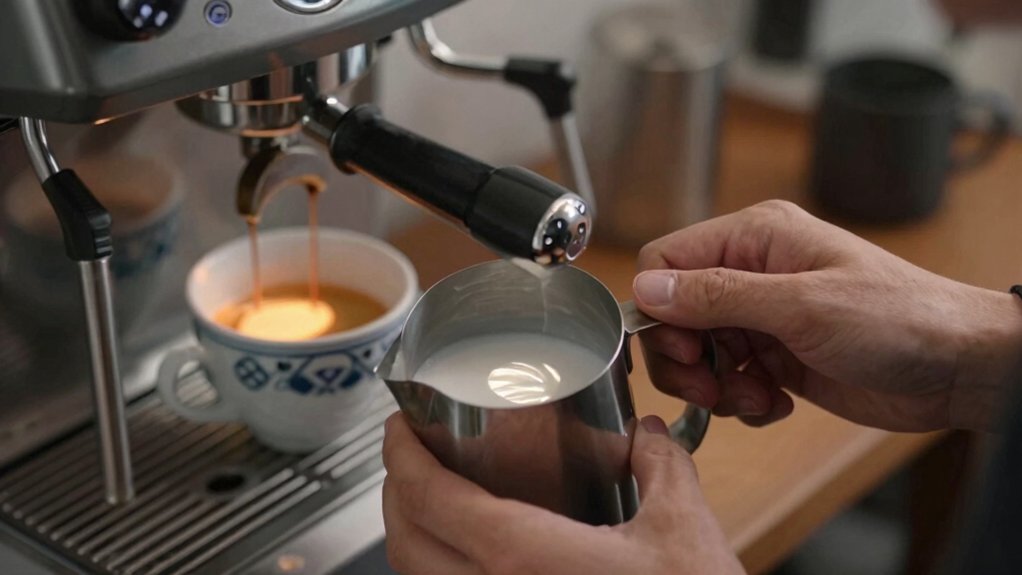
Mastering third‑wave espresso starts with precise dose, yield, and time—typically 18–20 g in, 36–40 ml out, and 25–30 seconds—while tweaking grind size and tamp pressure to avoid channeling. You’ll check dose consistency on a calibrated scale, then lock in grind calibration to match the shot timer. For espresso extraction, monitor temperature control and adjust tamp pressure until the flow is steady, producing a balanced cup that highlights origin notes. Non-slip, easily cleaned knock boxes with removable bars facilitate quick transitions between shots and keep the workspace hygienic removable knock bars. Switch to milk texturing, heating to 60–65 °C and introducing just enough air to form silky microfoam. Keep the milk’s surface glossy, then pour with steady hand for latte art that showcases the third wave coffee aesthetic. This routine sharpens both flavor and visual quality.
Create Focused Practice Drills for Consistent Shot & Foam Quality
After you’ve nailed the basic dose‑yield‑time and milk‑temperature windows, the next step is to embed those numbers in a repeatable drill routine. Design a 10‑minute espresso drill where you log grind size, tamp pressure, and extraction time for three consecutive shots, then compare crema color and volume. Follow each shot with a Milk steaming drill: heat milk to the target temperature, texture for 20 seconds, and assess microfoam consistency using a visual gauge. Record every metric in a calibration log and reference the standard operating procedures you wrote. Rotate these drills across shifts, adding speed cues during peak‑period service, so you and baristas internalize consistency, improve barista skills, and lock in espresso quality every time. Incorporate anti-static and precise hopper management practices to minimize grounds loss and keep the workflow clean grounds management.
Standardize Recipes, Tools & Calibration Logs for Reliable Results
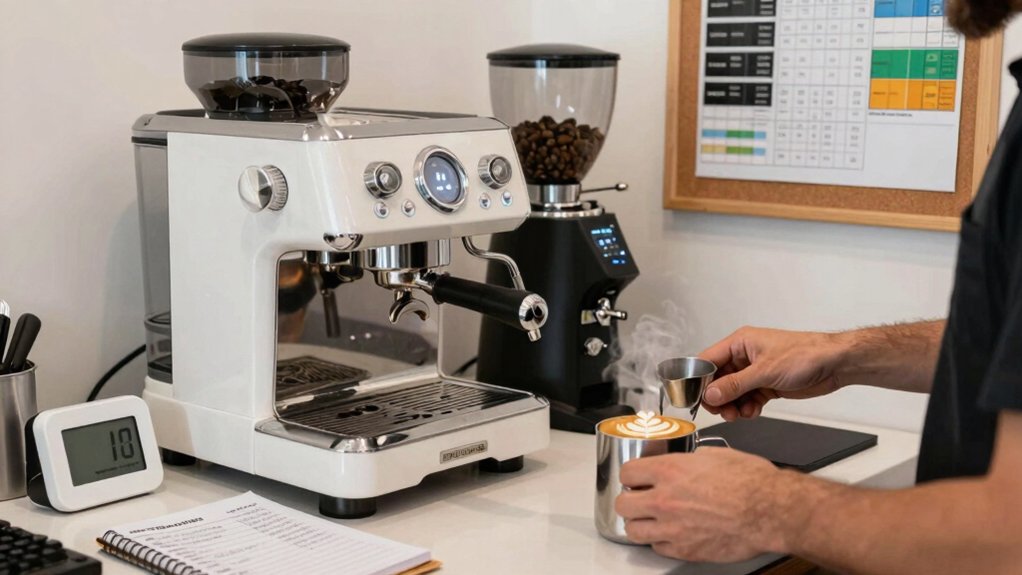
When you lock down SOPs, clear recipe cards, and calibration logs, you eliminate drift and keep every cup consistent across shifts and locations. You’ll see barista training become smoother, and quality control tighten as each barista follows the same standardized recipes. Tools standardization—grinder settings, milk pitchers, timers—pairs with equipment calibration to lock in flavor targets. Onboarding coaching leans on these documents, turning onboarding operational reproducibility.
- Draft step‑by‑step SOPs for every drink and attach legible recipe cards.
- Record dose, yield, and time in calibration logs after each cleaning cycle.
- Align grinder, pitcher, and timer settings in a master tools‑standardization sheet.
- Review logs weekly, adjust recipes, and reinforce onboarding coaching to sustain beverage consistency.
Integrate Real‑Time Coaching and Seamless Customer Service
Integrating real‑time coaching into each shift lets you correct technique on the spot, turning every service into a learning moment. You deliver barista coaching through instant supervisor notes that capture espresso dialing, milk texture, and drink assembly, creating a loop of real‑time feedback. Align those notes with SOPs and recipe cards, so each correction reinforces the standard. Schedule weekly calibration check‑ins and monthly career‑progression meetings to track growth and celebrate mastery. Blend customer service drills with technical drills: use role‑playing scripts, upselling cues, and calm greeting rituals to build a confident guest experience. This seamless mix of technique correction and service polish accelerates your path from Junior Barista to Trainer while keeping every cup consistent. Real‑time coaching reinforces both technique and service excellence across shifts.
Frequently Asked Questions
What Is the 15-15-15 Coffee Rule?
You follow the 15‑15‑15 coffee rule by dedicating 15%% workflow to process tweaks, 15% to staff coaching, and 15% to experimental methods, keeping the remaining 55% on daily operations.
How Do I Improve My Barista Skills?
Practice dial‑ins daily, tweak grind size, perfect tamp pressure, and texture milk to glossy micro‑foam. Record each shot, compare to SOPs, and ask your supervisor for instant feedback after every pour.
What Is the 4 Minute Rule at Starbucks?
You follow Starbucks’ 4‑minute rule by finishing each drink’s build within four minutes from order to hand‑off, pre‑assembling components, streamlining station flow, and communicating promptly if you’ll exceed that limit.
What Is the 80 20 Rule for Coffee?
You apply the 80/20 rule in coffee by focusing on the 20 % of variables—grind size, dose, water temperature, brew time, and tamp pressure—that deliver 80 % of flavor consistency and quality.
In Summary
Now you’ve got the core third‑wave barista skills down—precision espresso extraction, silky milk texturing, and consistent recipe logs. Keep drilling those fundamentals, calibrate your tools daily, and use real‑time coaching to fine‑tune each shot. By standardizing your process and staying focused on quality, you’ll deliver the flawless cup every customer expects, turning every brew into a showcase of your expertise.


