
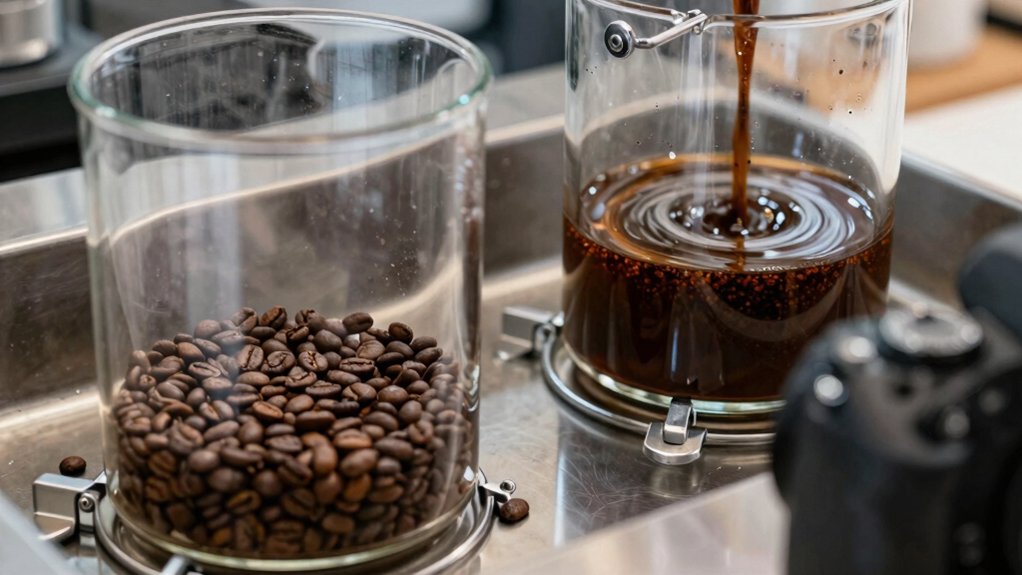
Double fermentation is a coffee‑processing method where you first soak depulped beans with their mucilage for 12–24 hours, letting lactic bacteria and yeasts lower the pH and start flavor development. After washing out the floaters, you run a second, controlled fermentation—often aerobic or anaerobic—for another 12–24 hours, monitoring temperature and pH to deepen acidity and add tropical or winey notes. Proper drying to 10–12 % moisture locks in these nuances, and if you keep going you’ll discover the detailed steps and quality controls.
What Exactly Is Double Fermentation in Coffee Processing?
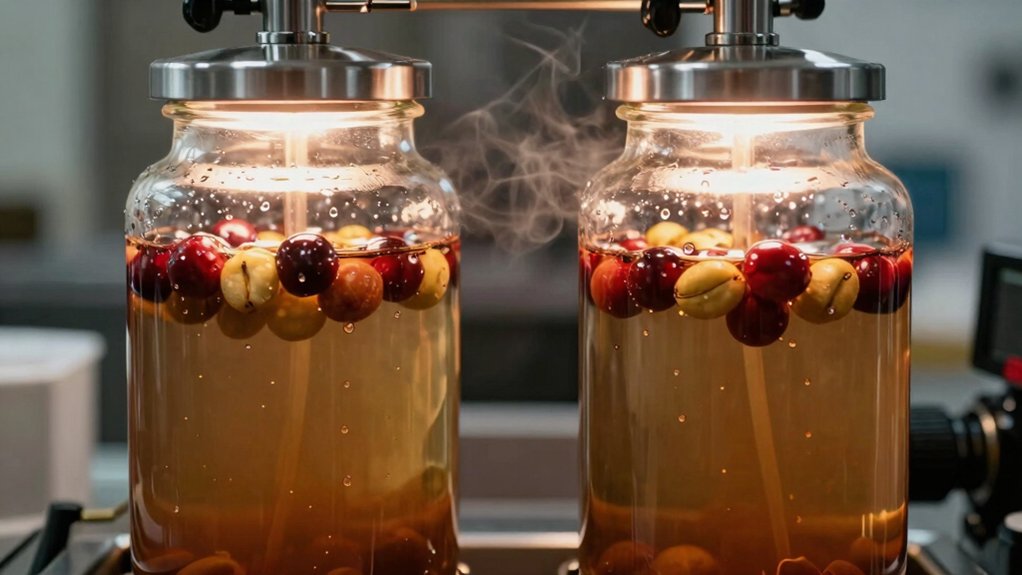
What exactly is double fermentation in coffee processing? You start with depulped cherries coated in mucilage, then run Double fermentation: Stage One. During this first fermentation, beans sit in a tank with minimal water while lactic acid bacteria and yeasts lower pH and break down the mucilage. After you wash the beans, you launch Stage Two, a controlled fermentation that can be aerobic, anaerobic, submerged, or inoculated, lasting 12–24 hours or longer under careful temperature and pH monitoring. Once the second round ends, you wash the beans again and spread them on raised beds to dry to 10–12 % moisture. The result is a cleaner cup with richer flavor profiles and balanced acidity, provided you avoid over‑fermentation. Gravity insert and screw-down mechanisms influence the extraction dynamics in shared Vietnamese coffee filter designs, underscoring how different filtration approaches can affect brew outcomes.
How the Two Fermentation Stages Work
Ever wondered how each fermentation step reshapes the coffee bean? In double fermentation you’ll see two distinct fermentation stages. During the first fermentation, you place mucilage‑coated beans in fermentation tanks for 12–24 hours. Lactic acid bacteria and yeasts break down the mucilage, lowering pH and creating a subtle, sweet character. After this period you wash the beans, discard floaters, and prepare them for the second fermentation.
The second fermentation, also 12–24 hours (sometimes up to 48), can be aerobic or anaerobic; it deepens flavor while managing sugar and acid levels. Once both stages finish, you wash the coffee again, move it to water channels or soaking tanks, and start the drying process until moisture reaches 10–12% to ensure stable storage and consistent cup quality.
What Flavor and Quality Benefits Double Fermentation Offers
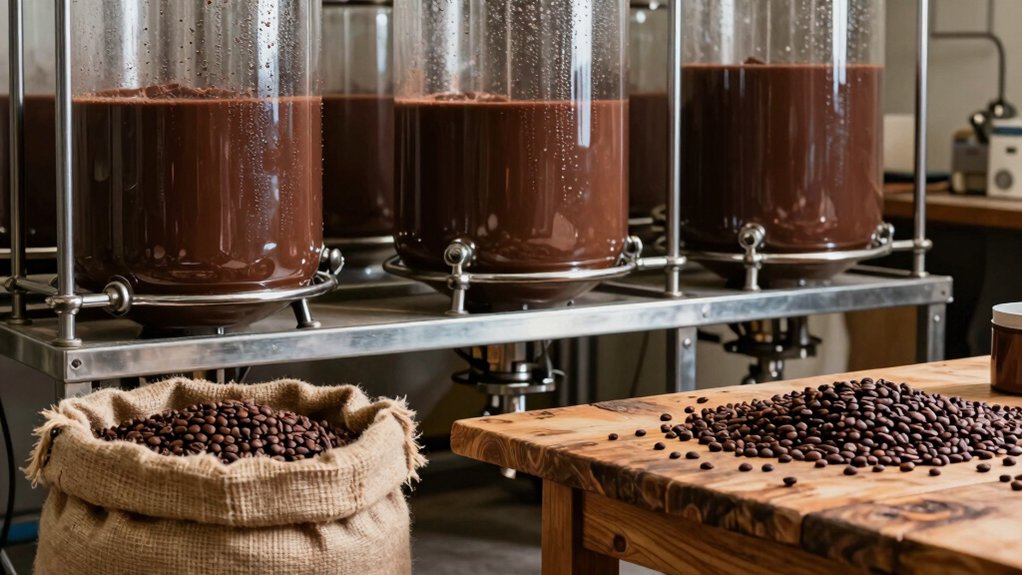
The two‑stage fermentation doesn’t just clean the bean—it reshapes its flavor profile. In the first fermentation process you let microbial activity break down mucilage, then you wash the coffee beans and send them into a second stage that fine‑tunes acidity and sweetness.
Because the two fermentation stages are tightly controlled for pH and temperature, you often get a cleaner cup with brighter acidity and a silkier mouthfeel. The extra immersion can coax tropical or winey flavor notes that a single wash can’t achieve, while the final washing removes any lingering residue. When the drying process follows promptly, the beans retain those nuanced aromas, delivering a balanced sweetness and a more complex, vibrant profile.
Frequently Asked Questions
What Is Double Fermentation in Coffee?
You get two distinct fermentation phases: first, mucilage‑coated beans ferment 12‑24 hours, then after washing you ferment them again for another 12‑24 hours, boosting sweetness and clarity.
What Is the 15-15-15 Rule for Coffee?
You follow the 15‑15‑15 rule by letting beans rest 15 minutes after washing, 15 minutes after soaking, then 15 minutes before drying, ensuring even moisture removal and consistent flavor.
What Coffee Is Best for GERD?
You should choose low‑acid beans like Colombian, Brazilian, or Sumatra varieties, preferably light‑ or medium‑roasted, and avoid dark roasts and citrus‑y citrus blends; brew with a cold‑brew method to reduce acidity further.
Is Fermented Coffee Healthier?
You can’t count on fermented coffee being healthier; studies are limited, and benefits depend on strict, clean processing. Stick with reputable sources and proper handling to avoid potential risks.
In Summary
You’ll find that double fermentation gives coffee a richer, more complex palate while preserving its natural sweetness. By letting the beans undergo two controlled fermentations, you release deeper fruit notes, a smoother body, and a brighter acidity. The result is a cup that’s both vibrant and balanced—perfect for anyone seeking a nuanced, high‑quality brew.


