
You get natural‑dry coffee flavors when the whole cherries dry on raised beds under the sun, letting the fruit’s sugars, mucilage and acids soak straight into the bean. Regular turning keeps moisture even and prevents mold, while temperature and humidity control the fermentation pace. When the beans hit about 11 % moisture, the bright, fruity notes lock in and the body becomes full‑bodied. Keep going and you’ll discover the exact steps to master this process.
What Is Natural Dry Process Coffee?
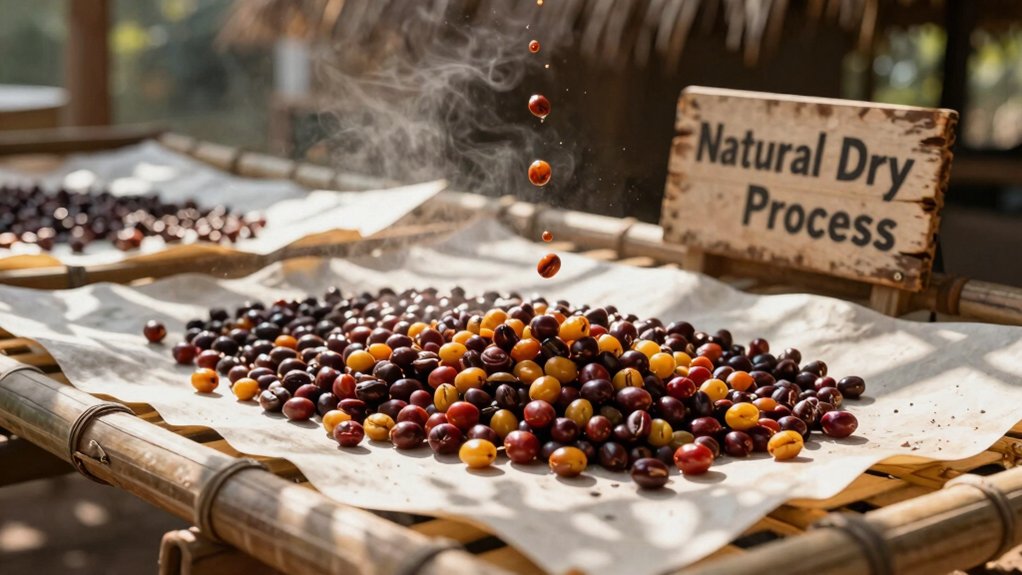
When you hear “natural dry process coffee,” think of whole cherries that dry in the sun with their fruit still clinging to the beans. You spread coffee cherries on raised beds or patios, letting sun‑drying work for weeks while you turn them regularly. The process avoids any water or washing steps, so the beans absorb sugars and acids from the pulp. As moisture drops to about 11 %, the beans develop a fuller body and vivid fruity flavors—strawberry, blueberry, tropical notes—then you hull the dried husk to reveal pale green beans ready for shipment. This method relies on airflow, night‑time covers, and careful monitoring to prevent mold, delivering a distinctive cup that showcases the natural dry process. Proper storage and transport ensure the beans maintain their nuanced aromas from farm to cup, highlighting mug racks and holders?
How the Whole Cherry Stays on the Bean in Natural Dry Processing
You’ll notice the cherry stays whole while it dries, letting the bean soak up the fruit’s sugars and acids. As you turn the piles under the sun, the extended fruit‑bean interaction infuses the bean with sweetness and body. The drying process also preserves a portion of the cherry’s aromatic compounds, contributing nuanced fruity notes to the cup discovery of aromatic compounds.
Cherry Remains Intact
Ever wondered why a natural‑dry coffee bean carries the flavor of an entire cherry? You spread the whole cherry on patios or raised beds, turning it regularly so air reaches every side. The natural, dried fruit stays intact for three to six weeks, gradually losing moisture until it resembles a raisin. Because you never wash the beans, the mucilage clings to the seed, letting fermentation continue inside the fruit’s skin. This prolonged contact lets sugars, acids, and aromatic compounds seep into the bean, creating the bright, sweet notes you taste later. Night‑covering or rain protection prevents mold, ensuring the cherry remains whole until you hull the dry beans. ATC Temperature Stability helps readings stay consistent when evaluating extraction during processing.
Fruit‑Bean Interaction
How does the whole cherry cling to the bean throughout the sun‑drying phase? You’ll notice the fruit‑bean interaction intensifies as the mucilage, sugars, and pulp sit directly on the seed. Sun‑drying lets fermentation unfold slowly, letting natural sugars permeate the bean and shape its sweetness. Managing moisture and turning the beans prevents mold, while climate and drying duration dictate the flavor depth.
- Mucilage contact – the sticky layer holds the cherry’s pulp against the bean, releasing sugars.
- Fermentation rhythm – controlled microbial activity transforms sugars into aromatic compounds.
- Drying duration – weeks of sun exposure let berry, tropical, and jam‑like notes mature without over‑drying.
The interplay of these factors reinforces how moisture control and surface contact influence the final cup profile flavor development.
Extended Sugar Infusion
Why does the whole cherry cling to the bean during sun-drying? In natural dry processing you spread the fruit‑on‑bean pods on patios or raised beds and let the sun dry them for weeks. The extended sugar infusion occurs as moisture evaporates, concentrating sugars that seep into the seed. You turn the piles regularly, keeping moisture around 11 % while preserving the cherry‑bean connection. This prolonged contact acts like a slow fermentation, boosting body and delivering bright, fruity flavors—think strawberry, blueberry, jammy tropical notes. By allowing the fruit to stay attached throughout sun drying, you maximize natural sugar transfer before hulling, resulting in a cup rich with nuanced sweetness and vivid aromatic complexity. The long‑lasting presence of the entire cherry also helps preserve the bean’s natural acidity during the drying phase natural sugar transfer.
Fruit‑Sugars and Mucilage in Natural Dry Process Coffee
What makes natural‑dry coffee so fruit‑forward is the prolonged kiss between the bean and its surrounding cherry sugars. As the cherry dries for 2–6 weeks, the mucilage layer stays glued to the seed, letting natural sugars seep in while slow fermentation unfolds. This intimate dance builds the bright, fruit‑forward flavors you taste in the cup. An important factor is the Stainless steel presence in processing or packaging that can influence cleanliness and flavor perception during handling.
Sunlight, Temperature, and Humidity in Natural Dry Coffee Fermentation
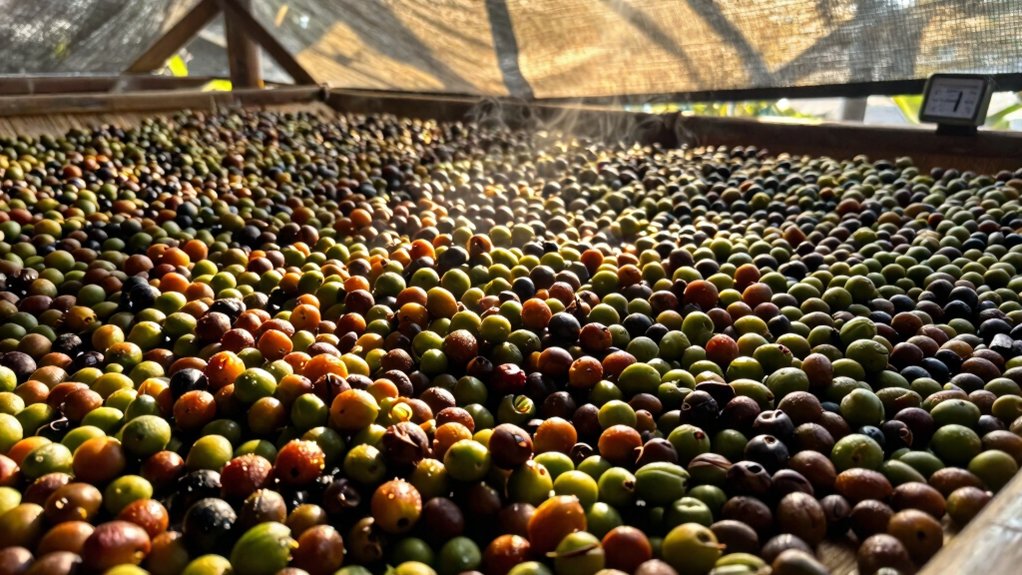
You’ll notice that bright, sustained sunlight drives the cherries’ moisture loss and speeds up fermentation. When temperatures swing, the beans’ enzymatic activity shifts, altering the development of fruity compounds. Humidity levels dictate whether the process stays clean and bright or slips into mold‑prone, muted flavors. Dried coffee cherries
Sunlight Intensity and Duration
How does the sun’s strength and length of exposure shape the flavor of naturally dry‑processed coffee? You’ll notice that intense sunlight on patios drives rapid moisture loss, pushing the beans toward bright, berry‑like notes. When the sun blazes, drying speeds up, but the heightened fermentation on the fruit skin also deepens sweetness. Conversely, gentle, extended exposure lets sugars mingle longer, adding body and complexity.
- High intensity, short duration – quick drying, crisp acidity.
- Moderate intensity, steady days – balanced moisture loss, rich fruit.
- Low intensity, long days – slow drying, mellow body, subtle fermentation.
You control these dynamics by positioning cherries to catch the right amount of sunlight, managing moisture loss, and guiding fermentation toward your desired flavor profile.
Temperature Fluctuations Impact Fermentation
Sunlight sets the stage, but temperature swings drive the fermentation that defines a natural dry‑processed coffee’s flavor. You’ll notice that daytime heat spikes accelerate sugar metabolism and microbial activity on the drying beds, pushing fruity, berry‑like notes into the beans.
When night temperatures plunge, the slowdown creates pockets of uneven fermentation, which shows up as flavor variation across the batch. Those temperature fluctuations can also stress the pulp, releasing different enzymes that alter the coffee’s acidity and body.
If you maintain a steadier, moderate climate, the fermentation stays more controlled, yielding cleaner, more predictable profiles. Conversely, large swings amplify complexity but also risk inconsistency, so monitoring the thermal rhythm is key to mastering natural processing.
Humidity Levels Shape Flavor Development
Ever wondered how humidity steers the flavor journey of naturally dry‑processed coffee? You’ll notice that when humidity is low, drying speeds up, cutting fermentation time and sharpening citrus notes. When humidity climbs, drying slows, fermentation lingers, and jam‑like, fuller‑bodied flavors emerge. The balance you strike determines whether the cup stays bright or turns heavy.
- Low humidity – rapid drying, crisp acidity, clean fruit.
- Moderate humidity – balanced drying, nuanced sweetness, stable body.
- High humidity – slow drying, risk of mold, muted clarity, richer jam tones.
Why You Need to Turn the Cherries Regularly in Natural Dry Processing
Because uneven drying invites mold and sour notes, you must turn the cherries regularly during natural dry processing. Turning creates even airflow, so each cherry loses moisture at the same rate and avoids the pockets where mold thrives. When you rotate the beans, fermentation stays in check because the sugars disperse uniformly, preventing overly rapid microbial activity that can sour the cup. Consistent handling also stops clumps from forming, which would otherwise produce a chalky, uneven texture after hulling.
In drier climates, a disciplined turning schedule shields the crop from over‑fermentation, keeping the flavor profile bright rather than barnyard or wine‑like. By managing moisture loss through regular turning, you set the stage for a balanced, sweet, and fruit‑forward coffee.
Reaching 11 % Moisture – The Sweet Spot for Natural Dry Coffee
How can you tell when your beans have hit the sweet spot? You watch the moisture drop to about 11 % during natural processing, and the flavors stay bright without turning sour. At this point the drying phase has balanced fruit‑forward sweetness and mold safety.
Moisture hits ~11 %: bright, fruit‑forward flavor, firm texture, uniform amber hue.
- Measure moisture – Use a calibrated meter after each turn on the raised beds.
- Check texture – Beans should feel firm, not brittle, and release a faint, sweet aroma.
- Observe color – A uniform, deep amber hue signals the 11 % benchmark is reached.
Staying at 11 % moisture locks in the desired flavors, prevents over‑fermentation, and readies the beans for hulling and export. Anything above risks inconsistency; anything below risks brittleness.
Typical Flavor Notes of Natural Dry Process Coffee
When the beans hit that 11% moisture sweet spot, the fruit-forward character of a natural dry process really shines. You’ll taste bright fruit notes—strawberry, blueberry, blackberry, even tropical mango—wrapped in a full-bodied, jam-like mouthfeel.
The extended drying time, often two to six weeks on raised beds, lets sugars soak into the seed, boosting sweetness and creating a wild, ferment-like edge.
Sun-drying and regular turning preserve acidity, so citrus or berry brightness can pop alongside the deeper berry tones.
Hand-turning adds variability, giving each batch a unique fingerprint, while careful monitoring ensures the signature fruit-forward profile stays consistent throughout the cup.
Preventing Mold and Off‑Flavors in Natural Dry Process Coffee
Regularly turning the cherries on raised drying beds and shielding them from rain or high humidity keeps mold at bay and guarantees an even moisture loss. In natural processing you’ll see that consistent airflow on drying beds drives moisture management, while vigilant monitoring curtails off‑flavors. Follow these three steps to lock in quality:
- Inspect and turn every 6‑8 hours, keeping the pile loose and exposing all surfaces to sun.
- Target 11 % moisture before hulling; use handheld meters to confirm the level and prevent unwanted fermentation.
- Control fermentation by adjusting shade, windbreaks, and, if needed, mechanical dryers to avoid sour notes.
Frequently Asked Questions
What Does It Mean When a Coffee Is a Natural Dry Process?
You’re drinking a coffee that was dried whole‑cherry on sun‑lit beds, so the bean absorbed the fruit’s sugars and acids, giving you a fruit‑forward, sweet, and often berry‑like flavor.
What Is the 15-15-15 Rule for Coffee?
You follow the 15‑15‑15 rule by keeping green beans at roughly 15 % moisture, roasting them to about 15 % moisture loss, and storing the roasted beans at a 15 % target to prevent staling and mold.
How to Flavor Coffee Without Chemicals?
You can infuse coffee with spices, citrus zest, or vanilla beans during brewing, use flavored syrups, add cocoa powder, or steep it with fruit peels, letting natural aromatics replace synthetic additives.
What Is the Healthiest Decaffeination Process?
You’ll find the Swiss‑Water process healthiest: it uses only hot water and carbon‑filter extraction, avoiding chemicals, preserving flavor, and leaving virtually no solvent residues in the beans.
In Summary
By now you’ve seen how the natural dry process lets the whole cherry cling to the bean, letting fruit sugars, sunlight, and careful turning shape the cup. When you hit that 11 % moisture sweet spot, you release the bright, fruity notes that define natural‑processed coffee—while staving off mold and off‑flavors. Master these steps, and you’ll consistently harvest beans that deliver the signature, vibrant flavors you crave.


