
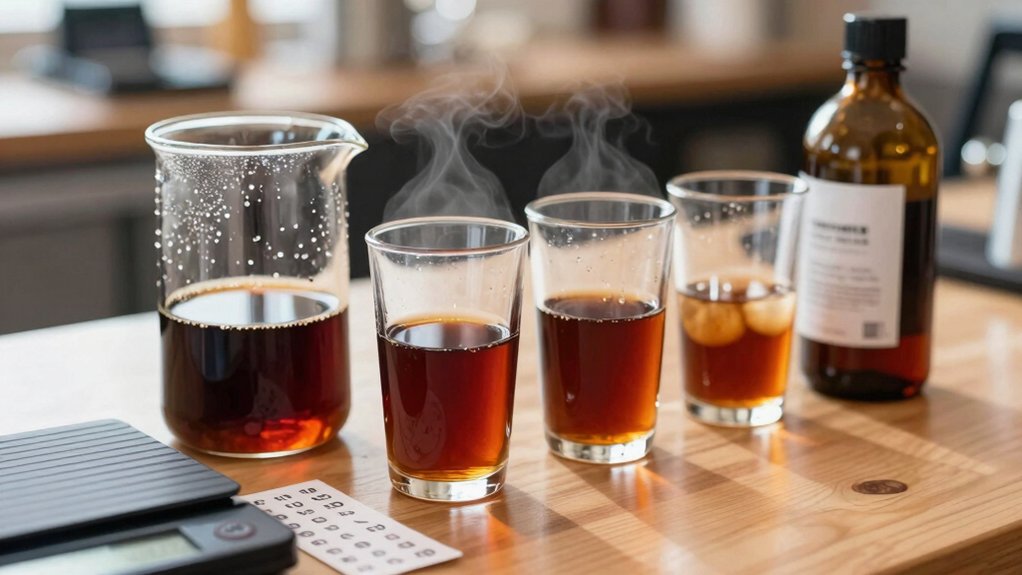
First, check your concentrate’s original ratio (1:n) and decide the final strength you want (1:m). Use the formula water = (m – n) × (concentrate ÷ n); for example, 100 g of a 1:4 brew needs 275 g of water to hit 1:15, giving a 375 g drink. Adjust the ratio to taste, using water, milk, or non‑dairy as your base, and verify the mass with a scale. Follow the steps and you’ll fine‑tune the perfect cup.
Dilute Cold‑Brew Concentrate to Your Desired Strength
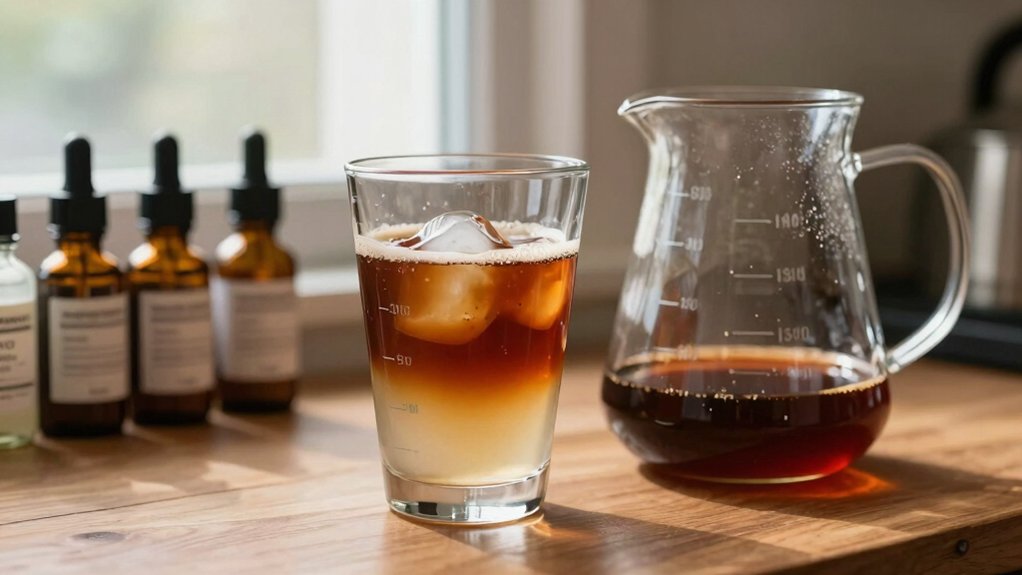
How much water should you add to your cold‑brew concentrate? You start by checking the cold brew concentrate’s original ratio, then decide the final ratio you want. Apply the dilution formula: water to add = concentrate amount × (m − n)/n, where n is the concentrate strength (e.g., 1:4) and m is your target water‑to‑concentrate ratio (like 1:10 or 1:14).
If you have 100 g of 1:4 concentrate, adding 275 g of water yields a 1:15 final ratio, perfect for a smooth ice coffee. Adjust the serving ratio until the taste matches your preference; you can tweak it further after ice melt or add milk or syrup for extra flavor.
This straightforward dilution lets you dilute cold brew to any strength you crave. Consistency
Calculate Cold Brew Concentrate Dilution Ratio
Wondering how to nail the perfect dilution for your cold‑brew concentrate? Use the simple dilution formula:
Master the perfect cold‑brew dilution with this simple ratio formula.
- Identify your concentrate ratio (1:n).
- Choose the target final strength (1:m).
- Compute water add = (m – n) × (concentrate amount ÷ n).
If you have 100 g of cold brew concentrate at a 1:4 concentrate ratio and you want a 1:15 final beverage strength, plug the numbers into the dilution calculation. The water add becomes (15 – 4) × (100 ÷ 4) = 275 g, giving a total drink of 375 g. This 1:m ratio ensures the concentrate-to-water balance hits the exact cold brew strength you crave, and the reverse‑calculation verification confirms the final beverage strength matches your target. Chilling integrates with quick‑cooling methods like frozen water chambers to preserve flavor without dilution when pairing with rapid chillers.
Choose a Dilution Base: Water, Milk, or Non‑Dairy
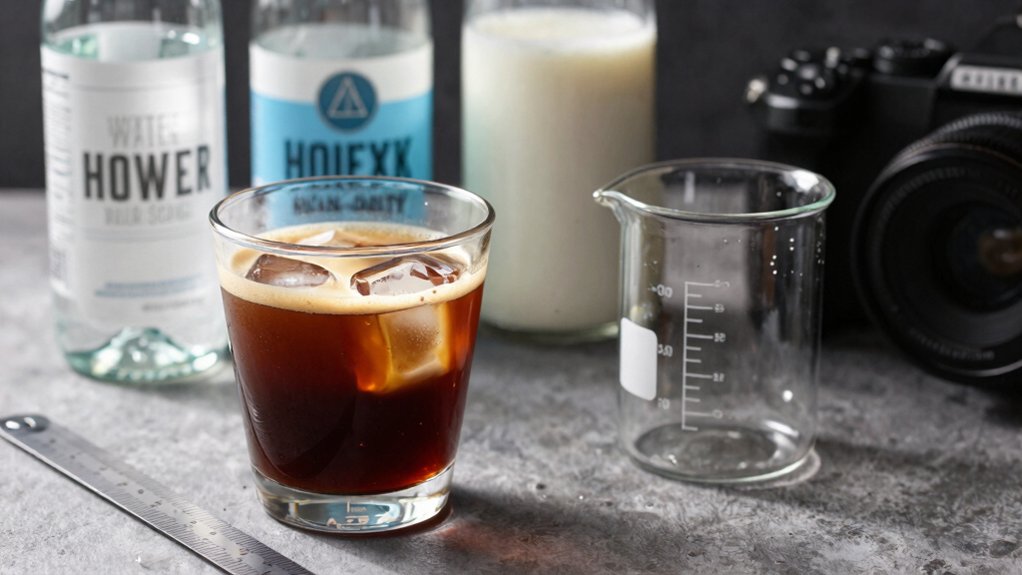
Now that you’ve nailed the math, the next decision is what to mix your cold brew concentrate with. Water dilution is the classic route; a 1:10–1:14 coffee‑to‑water ratio yields a clean cup, bright crema flavor, and a light mouthfeel. Non‑dairy milk with added flavors or sweeteners can shift the balance, so you may nudge the dilution ratio a touch stronger, like 1:9, to keep the brew’s punch. Removable interior components in certain equipment can influence ease of cleaning and setup non-slip base considerations to maintain a stable workflow.
Troubleshoot Cold Brew Concentrate Dilution Problems
Why does your cold brew sometimes taste flat or overly bitter after dilution? You’re probably mis‑managing the cold brew concentrate, dilution ratio, or extraction variables. Start by checking your precision scale and run a quick dilution calculation: concentrate × target ratio = final drink mass. If the numbers don’t line up, adjust the grind size, steep time, or ratio.
- Grind size – Switch to medium‑coarse; finer grounds over‑extract, causing bitterness.
- Steep time – Keep brew between 12–24 hours; shorten for weak, lengthen for richer flavor.
- Ratio – Move from 1:4 to 1:6 if it’s too strong; ensure the final drink matches the calculated mass.
These troubleshooting steps let you fine‑tune extraction, achieve a balanced taste, and repeat results with confidence. Precision scale supports accurate measurements and helps you align concentrate mass with your target dilution.
Frequently Asked Questions
What Is the Best Ratio for Cold Brew Concentrate?
You’ll find a 1:8 coffee‑to‑water brew works best for most tastes; it’s strong enough to dilute to a smooth 1:12‑1:14 cup, yet not overly bitter when you add ice or milk.
What Is the 15-15-15 Rule for Coffee?
You follow the 15‑15‑15 rule by aiming for a final 1:15 coffee‑to‑water ratio after dilution; you start with a concentrate (like 1:4), then multiply its weight by 15 to get the total drink weight.
What Is the 80 20 Rule for Coffee?
You apply the 80/20 rule by focusing on the 20 % of variables—mostly coffee‑to‑water ratio and grind size—that drive 80 % of flavor, then tweak steep time for finer nuances.
Is Cold Brew Good for Gastritis?
Yes, cold brew can be gentler on gastritis because it’s less acidic, especially if you use a coarse grind, longer steep, and possibly decaf. Still, monitor your symptoms and consult a doctor if needed.
In Summary
Now that you’ve nailed the ratio, experiment with water, milk, or non‑dairy to hit the perfect strength and flavor. Keep track of your measurements, adjust as needed, and enjoy a consistently great cup every time. Your cold‑brew concentrate will always be ready for a smooth, personalized brew.


